Getting the best price for your maintenance needs is essential. But, finding an affordable and professional company to handle them can be challenging. Here are some of the ways you can get the best prices.
Ask For Advice and Recommendations
Get a second opinion from another property maintenance management company. You can also ask your friends or coworkers if they know of any good maintenance companies in your area. If they don’t, they might know someone who does. By asking for advice, you will be able to find out what are the best prices for your needs. It’s always better to get many quotes than only one!
Compare Prices
Many companies offer maintenance contracts for various products and services. So, comparing their rates is important before choosing one. Try to do this by using online platforms such as Google or Bing. This is where you can compare several different options at a time, thus making things easier for you.
Know What You Are Looking For
The first thing to do is figure out what type of maintenance you want and how long it should last. You can then determine how much you can afford to spend on that service. The longer something lasts, the more it costs to maintain each year. The shorter something lasts, the less it costs per year because you need fewer repairs over time.
Buy Your Maintenance Supplies in Bulk
Buying in bulk is a great way to save money on maintenance supplies. For example, you can buy one large container of oil or grease and use it for several months or even years. You don’t have to worry about expiry dates when you buy in bulk, as long as you store your supplies properly. Buying in bulk also gives you more options for materials you want to use.
Ask For Discounts
It’s not enough to ask for a discount. You have to be able to justify it. If you’re going to ask for a discount, you need to know the average price and then compare that with your budget. Make sure the price is reasonable. Some companies will ask for a high price up front and then add on extra charges later. Others may offer discounts based on usage or frequency of service calls. So, it’s worth asking about those before making a decision.
Don’t Be Afraid To Negotiate
Negotiating is not a bad thing. It’s the best way to get what you want. Negotiate with the provider if you want to save money on a service or product. You should never feel like they are taking advantage of you or trying to pull one over on someone else. It’s a two-way street; both sides will win by getting what they want. So don’t take it personally if they don’t give in to your initial request for lower prices.
Ask About Warranties
You may be able to find the repair work you need for a fair price. But, you will pay more in the long run if you have to replace the item at some point down the road. To get the most out of your maintenance contract, buy what’s needed to keep your equipment in good working order. Make sure that it’s covered by warranty. A warranty can help you save money on repairs. This is by ensuring that it covers your repair costs if something breaks down in the future.
Consider the Season
It is important to consider the season when you need your property maintained. The maintenance costs for your home are likely to be higher in the winter than in the summer. This is because of the increased roof and paint wear and tear. Also, if you have an old home, it may need more maintenance than a new house.
Choose a Licensed Contractor
There are many ways to save money on maintenance needs, but the best way is to work with a professional. Hiring an unlicensed contractor can be expensive and unnecessary. This is because of the risk involved. When you hire a licensed contractor, you know they have received training on all aspects of the job. They also have taken their licensing exams. This gives you peace of mind knowing they know what they’re doing and will get the job done according to the budget!
Armed with this information, you can get the most value for your dollar when shopping for maintenance. There’s no reason to settle for inflated service prices anymore!
What’s not to like about Cracker biscuits? Is it the ‘crackiness’ from where it appears to have gotten its name or the taste that’s so creamy and tasty, yet not so sugary like most biscuits?
Most households favour Cracker over other types of biscuit. Parents would rather give it to their kids, and adults don’t play with it either.
You love Cracker too, don’t you? Maybe you will love it more when you read this inspiring story of Obi Ezeude, the founder of the most popular Cracker brand in Nigeria today.
Birth and Education
Obi Ezeude
Born on the 7th of July 1967, Obi Mark Ezeude is from Ubuluenu Uke, in the Idemili North local government area of Anambra state.
His education kicked off in Anambra before leaving the country for the United States, where he got himself a degree in Banking and Finance.
After graduating in his 20s, Obi returned to his motherland when most young people like him wanted to leave the country as it was under the control of the military, bringing a lot of economic and financial difficulties for many. For Ezeude, however, it was a time for him to come use the knowledge he had acquired to build his country’s economy.
Returns to Nigeria and starts importing Biscuit
So, upon returning home, he knew he wanted to start a business. Hence, he paid attention to his environment to see that the trending business at the time was trading and importation. He decided to follow the trend.
There was a problem, though – he didn’t have enough capital. That meant there was a limit to the kind of products he could import. Small items like biscuits were what he could afford, and so he went for it.
Ezeude registered his business, Beloxxi & Company Limited (BLC), as an importer and distributor of Hwa Tai and Luxury Cracker biscuit and Dean’s shortbread from Malaysia and Scotland, respectively.
Obasanjo strikes – Ezeude strikes gold!
Business was good; Beloxxi kept bringing in biscuits and distributing them across Nigeria. However, things took a different direction in 2003 when the Obasanjo-led federal government of Nigeria decided to ban the importation of biscuits to encourage local production.
“For a start, we are going to ban the importation of toothpicks, bottled water, biscuits, spaghetti and noodles and every six months; we will meet to look at other things we can ban to encourage local production. It is unacceptable that we spend up to $13 million to import toothpicks and up to $30 million to import bottled water”, President Olusegun Obasanjo was quoted to have said at a campaign (it was election season).
Of course, this was no good news to those whose means of livelihood at the time was importing those items, including Ezeude.
Opportunity disguised as a problem
However, Ezeude saw the light at the end of the tunnel. He saw an opportunity in the ban. After all, the whole idea behind the ban is to encourage local production. So, who said he couldn’t be one of those local producers? He decided to start a biscuit manufacturing business in Nigeria.
While his mates were trying to get the government to reverse the policy, he plans to have a biscuit manufacturing business in Nigeria. The plan was simple – get his Malaysian partners to set up the manufacturing factory in Nigeria and make him their partner. Perfect?
Well, the Malaysian company wasn’t having any of it. For reasons best known to them, they didn’t buy his idea of making biscuit in Nigeria. First disappointment (or second, depending on when you started counting).
“Affliction” rising the second time?
It seems that not many people thought biscuit manufacturing was lucrative enough to warrant an investment because two Nigerian banks denied him a loan. The reason they gave him was that he didn’t have enough collateral.
Ezeude then approached the US Export and Import Bank (US Exim) for a loan. The process was long and tedious, and he didn’t even have all the requirements.
“I had series of meetings with their management, and even when I did not have all that they requested, the management and officials were more interested in my ideas and how it would work, whereas my Nigerian bankers were only interested in collateral,” he remembered.
As a result of the negotiations and discussions, a $2.2 million loan was approved to Ezeude in December 2003. He did not build the factory immediately but started with a disused factory block in Ikeja, Lagos State capital. The factory became fully operational in 2006.
Another problem, but a good one
In a few years, Ezeude was faced with a problem that most entrepreneurs would call a good one.
“We faced the challenge of meeting the market expectation in product volume and had to do something about it,” he revealed in an interview.
As a result of this problem, the company expanded into Agbara, Ogun state, creating thousands of jobs for Nigerians. President Goodluck Jonathan commissioned the first phase of the Agbara project in September 2010.
Soon after, Ezeude added three more production lines to meet up the ever-increasing demand for its product. While this is certainly not a problem many entrepreneurs can boast of, it is a sure result of rolling out a quality product at a competitive price.
As a result of the second phase of the expansion, which was commissioned in February 2018, Beloxxi’s production capacity increased from 30,000 metric tonnes to 40,000 metric tonnes.
A few months after the second phase expansion, the third phase expansion was laid, adding three additional production lines, increasing the company’s staff strength from 2500 to 6000 and increasing production capacity from 40,000 to 100,000 tons of cream crackers a year.
One could easily see Ezeude’s confidence in the Nigerian economy from his speech and what he hoped to accomplish with the expansion.
Where did the money for expansion come from?
It is understandable to wonder how a company that began with a $2.2 million loan from US Exim managed to keep expanding.
The company divested a minority stake to German prime investment bank KFW-DEG in August 2016 for an estimated $85m. The third expansion to nine production lines and the establishment of an allied packaging factory in Oregun were facilitated by this sale by a joint venture between the German Investment Bank and 8Miles of London; a private equity firm focused on Africa investment.
VP Yemi Osibanjo visits Beloxxi factory
Ezeude didn’t disappoint the investors in his method for allocating and deploying the funds. When the bank’s president, Bruno Wenn, visited the Agbara factor in October 2017, he couldn’t hide his satisfaction with what had been accomplished.
In his visit, Wenn emphasised that investing with Beloxxi was worthwhile. As soon as he had toured the factory and asked all the questions he could think of; he assured the management of KFW-DEG that it would not be a bad idea to invest more funds in Beloxxi.
Awards and Recognitions
To honour the contribution of Ezeude to the country’s economy, he was awarded The Sun Manufacturer of the Year award in 2017.
The 2020 Ernst and Young (EY) Global Entrepreneur Award for West Africa, the Emerging Entrepreneur category, went to Obi Ezeude. While receiving the award, Ezeude described Beloxxi as his “modest contribution to Nigeria’s national development.”
He received the Fate foundation award for the year 2020 in June.
At 53 and as the owner of one of the most technologically advanced biscuit factories in Nigeria, Ezeude has no intention of slowing down. Social media posts reveal that the founder is still very much involved in running the company he founded at the age of 27.
Lessons and Conclusion
There are loads of lessons for entrepreneurs from Ezeude’s story. However, one that stands out is seeing opportunity in challenging situations. You’re probably tired of hearing this from motivational speakers all the time, but as demonstrated in this story, you will agree it’s true.
Most times, opportunities come in the guise of challenges. And it takes some level of doggedness and superior knowledge to see this and act accordingly.
Following the ban by Obasanjo then, while most of Ezeude’s colleagues were lobbying for the government to reconsider their stand, Ezeude saw an opportunity in the situation and quickly exploited it. There are more lessons on finding opportunities in challenging situations here.
Another lesson to take from this is, sometimes, all you need is an idea and that convincing drive. Ezeude didn’t have money too, but he had an idea.
Even though he met disappointments at different points as not everyone saw what he was seeing, he stayed true to his vision and help eventually came.
Author of two books and scriptwriter, Lois Burutu talks about her journey into what is now her career. She sheds some light on growing up in the Niger-Delta and how it influences her writing, among others in this virtual chat.
How did all of these start for you?
The first time I wrote anything at all, it was to immortalise someone. I had lost my sister, and I felt her memory had started to fade, so I decided to write something down so I would never forget her. That was the first thing close to creative writing I would do. It was a poem, and it was sometime in 2007.
I started writing more in SS1 after meeting some friends who wrote novels. They had collections that others in school then used to borrow and read. I was amazed by this and wanted to try my hands on it as well.
However, Lois Burutu did not know how to write prose fiction at that time. My type of writing at the time was more of drama.
So, I wrote one and showed it to one of the girls who made some corrections. One of the takeaways for me was to try to describe situations and not just say what people said. That was how I became a part of the novel-writing clique in class then. That, I would say, was the beginning of the creative writing part of me.
I remember one time my mum saw one of my stories and started crying after reading it. I really can’t remember what she saw then, but I understand why she felt that way because I write most of my stories like my own experiences.
Initially, I wasn’t an art person; I was more into science. But at some point, it was clear that was where I was headed, though my interest was specifically in Law.
So, I calculated the number of years I would spend in school studying law, and I felt by the time I would finish, Law may be the only thing I would say I’m knowledgeable about.
As a result, I decided to take a year out before getting into the university to learn something unrelated to Law. I chose scriptwriting (or, let me say it was recommended).
Next, there was an ad on TV, and I moved to Lagos to join Wale Adenuga’s PEFTI (The Pencil Film and Television Institute) for a scriptwriting course.
I finished the course and came back to go for my undergraduate program. Some things had happened in between that made me change my mind about studying Law, so I finally settled for English and Literary Studies at the Niger-Delta University, Bayelsa state.
After school, I returned to Lagos to pursue scriptwriting since I was now a graduate and stand a better chance of getting jobs.
Then I registered for Afrif (African International Film Festival), and I was selected to study Scriptwriting at La Cinefabrique, Lyon, France.
You said something about being a science person earlier, does that mean you were a science student in Secondary School?
My school did not separate Science students from Arts’. Everyone learnt everything together until, I think, the second term in SS3. I just knew that I did better in science subjects and paid more attention in science classes.
How old were you when you made that first attempt at writing you talked about earlier?
*checks diary*
It was in 2007, I was 14.
You’ve published two books – Gesiye and Ina. What influenced those two stories?
Ina is a prequel to Gesiye, though I wrote Gesiye first.
To answer your question, let me backtrack a little bit. One of my favourite science subjects is Geography. My dad is a hydrographer, so I had access to his geography books – books on astronomy and the rest. Then he had some history books too which explains why history is like my favourite Arts subject.
There is something about those two subjects (History and Geography) that link to patterns of lives lived by people in the past.
Now, Gesiye is my mum’s name, but the book is not totally her biography. What I tried to do with Gesiye is finding a balance between history and fiction.
My perception in storytelling is that the best stories are the ones we’ve lived. So, I often draw inspiration from actual experiences. I drew inspiration for Gesiye from my mother’s story and the stories of women she shared with me. Because we have this storytelling culture, she’d always tell me stories of different women, even in regular conversations. And all of it would come together to mean something when I sit to write Gesiye and Ina.
You grew up in South-South Nigeria, and the ‘single story’ most people have of the region have to do with oil, militancy and most recently, Goodluck Jonathan. How would you say growing up there influenced your writing, and are there some new perspectives about the region that you try to bring to the spotlight in your writing?
Yes, a great deal!
As I grow in writing, I’ve come to see that Literature is one way that we experience places. And my experience in France made me realise that people outside Nigeria are clueless about our geography and culture. They just feel there is Nigeria, and there is Lagos (because it’s popular). The next people they seem familiar with are the Igbos because of their history (Biafra war) and the export of stories through writers like Chinua Achebe, Chimamanda Adichie, among others.
Yes, South-south has produced great writers such as JP Clark, Gabriel Okara and the rest. However, I wanted to consciously tell a story that talked about the Ijaw people specifically, to explore the story beyond oil and militancy.
Those are our realities as they truly happened. But they only constitute a part of our story. There are other stories about us worth telling too.
Gesiye, for instance, is part history and fiction. Yet, when I made references to the ’50s and ’60s, I deliberately left out stories on oil exploration, politics, militancy as more than enough has been said about all that already.
My story focused more on other parts of our story that people barely know about, such as our culture, language and names. For instance, I have friends in the movie who call me to ask for Ijaw names as there are not so many books to check for this.
Which writer would you say has influenced your writing the most and why?
It’s hard for me because I’ve moved through different phases of writing with various influences, says Lois Burutu.
I started as a poet, moved on to writing drama because of Shakespeare’s influence. Then I moved on to write novels with influence from the Harley Quinn series and the rest.
But presently, since I’m more into scriptwriting, I tend to have more influence from other filmmakers like Shonda Rhimes.
But for Nigerian writers, a writer I really love is the late Chinua Achebe. I like the tone of his narration.
I didn’t say Chimamanda because I knew Chinua Achebe’s writing first, which already influenced me. So, when I read Chimamanda’s books, I saw the Chinua Achebe’s influence there as well.
Lois Burutu, You got married recently, congratulations. How has that influenced your writing or creative process?
**laughs**
Maybe I will have an answer to that in a year. But right now, I feel the same. Sometimes, I wake up, and I think, “oh, I’m married”.
There is still that confusion of how to answer when people ask my name – do I say my father’s name or my husband’s name? So, I’m still adjusting to that.
Lois Burutu,It’s evident in your writing that you’re a feminist. Why did you think it was necessary for you to be a part of the movement?
I’m a feminist because I believe in the evolution that the conversations around it is causing. The world I’m experiencing today results from ugly conversations that were had before I was born. But they were necessitated and for my benefit.
They may not have had a name for it at the time, but it resulted in a better world that I enjoy. So, if I see lapses in society and there is a need for me to lend my voice so that the person ahead of me will enjoy a better future, then yes, I would lend my voice.
Are you working on anything at the moment?
I dabble between being a novelist and a scriptwriter. I write novels because of the challenges in the Nigerian film industry when it comes to production. As a freelance scriptwriter, I can’t just go and write some kind of story and start looking for who has money to produce them.
Having it in a novel like Stephen King books or the Harry Potter series makes it a document that will always be there. One day, I will have the money to produce and make it into a script or one day, someone with capital will approach me to sponsor the production.
For now, I have different titles I’m working on. TV series, cinema films, novels are all in the working.
What would you say are the challenges of creative writing in Nigeria?
We have a lot of story problems, but I’m glad to see a new crop of writers rising to the situation. Still, the challenge is finding production houses that would accept and produce fantastic stories.
So, most times, writers have to tone down their stories; write simple things that are achievable rather than going fantastic (Fast and Furious kind of fantastic, for instance).
In terms of novel writing, one issue is publishing. Thankfully, a lot of writers are now embracing self-publishing platforms such as Bambooks and Okadabooks. However, there is still a lot of work to be done.
Most often we get to that point where we need extra push to get a business moving, or just need that extra money to keep us afloat until that break through comes. At some of those times, getting such quick loans from friends aren’t all that what we may want to consider – At such instances, we loathe the ideas of walking into a bank.
Luckily, we have some apps and online platforms in Nigeria that would be willing to give out such cash breaks without so much of a collateral that would demand for your head.
Attached is a video that I recommend; it has most of the tips that you need to know before you go for any of these apps.
https://www.youtube.com/watch?v=HDOzHtLa36s
In no particular order, listed below is a list of some of the best loan apps in Nigeria that can help you with that fast loan without collateral. All you have to do to get a loan is to get a smartphone, some data/network access, download any of the listed apps anytime.
No Paperwork needed, No Guarantor. No Collateral; and it is 24/7 Available.
There, you have it, the list of the best loan apps in Nigeria.
They have something in common, which is the fact that they are all money lending apps. However, they are slightly different from each other in terms of interest rate, amount offered, speed of delivery, mode of payment and target market (individuals, businesses or both).
Almost everyone has had those moments when they needed a money lending app to settle a personal or business need – You needed a fast cash.
No one wants to go through that stress of filling papers upon papers and having to look for collaterals to get loans from banks. Not in this era of instant gratification.
Thanks to the recent boom in the Nigerian Fintech industry, there is a rise in the number of apps that borrow money in the country. That means individuals and business owners can now access quick loans for personal use and business development.
So, it’s good news for everyone as there are now several money lending apps that you can download and get a loan from within minutes.
No collateral. No paperwork. No stress. All from the comfort of your home. And very reasonable interest rate.
Arguably the most popular of the lot, Branch is an easy to use app to borrow money in Nigeria. Are you thinking of getting “money at the speed of life”? This is what Branch represents.
The loan app says they are committed to “building a new frontier of finance — where banks aren’t physical, paperwork is obsolete, and possibility is the end game.”
From application to loan dispensation, the entire process of getting a loan from Branch money lending app starts and ends on the Branch mobile app.
While Branch doesn’t require any form of collateral to process your application, they look out for the following:
Your handset details
Repayment history
GPS data
Contact lists
SMS logs
The above are measures the loan app put in place to enable you to pay back loans taken.
How to get a loan from Branch app
The process of getting a loan from Branch is relatively easy and straight to the point.
Download the Branch app from the Google play store
Create your account by filling a form in less than 30 seconds and submit for a review
Apply for the loan that would solve your need and which you can conveniently payback, and have it delivered to your bank account within minutes
Payback your loan on time to unlock larger loan amounts in subsequent applications
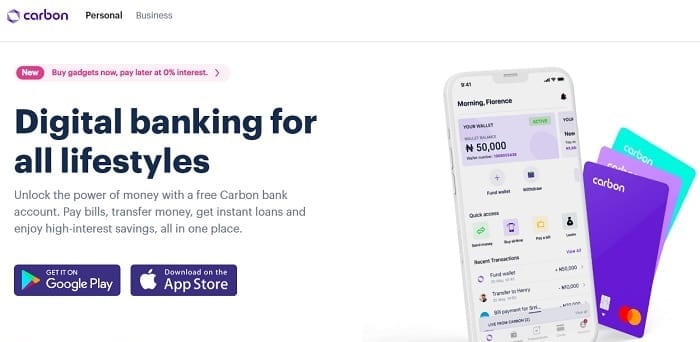
Formerly known as Paylater, Carbon is a digital banking app that also gives out loan to individuals and businesses. The app provides all sorts of exciting financial services, including savings, investment, payments and so on.
Hence, Carbon is more than an app for borrowing money; it is an app that offers “digital banking for all lifestyles”. However, for this post, let’s focus on its loan feature.
Insured by NDIC and certified by the Central Bank of Nigeria (CBN), Carbon loan does not require any form of collateral, neither would you have to fill any form. The entire process is online, and you will receive your loan within minutes.
How to get a loan from Carbon app
Download the Carbon app from the iOS app store or Google Play store
Register in few minutes by providing a few details about yourself
Go ahead and apply for loans
Your loan would be sent to your wallet on the app from where you can use it for different transactions. You can also send the money from your wallet to your bank account so you can withdraw it.
Payback your loan on time to unlock higher amounts. Also, you stand a chance of getting 10 – 100% cashback when you pay back your loan on time.
PalmCredit is another mobile app that gives Nigerians easy and convenient loan. Boasting of being “Nigeria No. 1 online loan…”, the money lending app offers flexible loans with reasonable interest rates.
As with most other loan apps, paying back your loan on time on PalmCredit helps you to update your credit score. The implication of that is you get higher offers when next you apply for a loan.
Some of its unique fixtures include offering up to 100k loan with a daily interest rate of 1.2%.
How to get a loan from PalmCredit
Download the Palmcredit mobile app from your app store
Register and set your account in minutes
Apply for a loan
Get approval within minutes
The loan is disbursed to your bank account
Interest Rate: 14% – 24%
Loan amounts: ₦2,000 – ₦100,000
Loan terms: 14 – 180 days
Target market: Individuals
Okash
A product of OPay, Okash is another loan app that offers loans to Nigerians. The app is committed to increasing access to loan facilities to the underserved section of the society.
You get loan decisions on Okash within seconds, and once your loan is approved, you’d receive funds within 5 minutes.
For your first loan application on Okash, you can’t get more than ₦10,000. The money will increase in subsequent applications, especially if you pay back your loan on time.
Okash loans are provided in partnership with Blue Ridge Microfinance bank; hence you can pay back your loan via direct transfer to Blue Ridge Microfinance bank account (Zenith Bank Account No:1130085518)
How to get loan from Okash
Download and install the Okash app from your app store
Register an account
Select the product or loan amount you’d like to apply for
Provide necessary information and submit your application
You may get a call for verification after submitting your application. Ensure you provide the right information
E-sign the loan agreement after approval
After this, the approved loan will be dispensed to your registered bank account
Interest Rate: 23 – 35%
Loan amounts: ₦3,000 – ₦500,000
Loan terms: 7 days – 365 days
Target market: Individuals and businesses
Fairmoney
Fairmoney is a money lending app for Nigerians where you can get a loan within 5 minutes. You know this is a big deal if you’ve had to wait for days to get a loan from your bank.
Fairmoney is not just a loan app, by the way. The app also provides some essential financial solutions such as airtime recharge and payment of bills.
The primary requirement for a Fairmoney loan is your BVN, and you can get as much as N500,000. And you can spread repayments in multiple instalments for ease and flexibility.
How to get a loan from Fairmoney
Download the Fairmoney app from the Playstore
Signup with your phone number and create your PIN
Click apply on the home page
Answer the few questions provided
Get a loan offer
Choose amount and tenor
Accept the loan offer
Provide bank details where you want your money sent and get it within minutes
Interest Rate: 10 – 30%
Loan amounts: ₦1,500 – ₦500,000
Loan terms: 61 – 180 days
Target market: Individuals and businesses
Aella Credit
Aella Credit is a fintech app that provides such services as payments, investment, and loans. The app makes it “super easy for anyone to borrow, invest and make payments” without excuses.
The money lending app even offers affordable insurance services for its customers. Now, that’s something different compared to others in the list.
For Aella, the end goal is to provide financial inclusion for all, irrespective of social class or profession.
How to get a loan from Aella Credit
Download the Aella app from your app store
Create your account by filling out your details in less than a minute
Answer some quick questions to update your profile
Click the “check eligibility” button to see if you qualify for a loan and how much
Apply for the loan, and it will be sent to your provided bank account within minutes
Payback your loan on time
Interest Rate: 4 – 20%
Loan amounts: ₦2,000 – ₦1,000,000
Loan terms: 1 – 3 months
Target market: Individuals and businesses
Blackcopper
If you are thinking of an app where you can borrow money to grow your business, then checkout Blackcopper. The app is committed to keeping “the wheels turning for your business”.
Aside from giving quick loans to individuals and businesses, Blackcopper also has investment opportunities for its users. Sign up to benefit from either of the two services the app offers.
How to get a loan from Blackcopper
Download the Blackcopper mobile app from Apple store or Google Play store
Register your account by providing the required information. Secure your account by verifying it via mail
Access Quick loans for your business needs or access investment opportunities on the app
Interest Rate: As low as 3.74%
Loan amounts: ₦500,000
Loan terms: Up to 6 months
Target market: Individuals and Businesses
FAQ
What are the main eligibility conditions precedent to loan
1. You must bee between the ages of 22 – 59 years old2 2. Have a verifiable source of income 3. Live and/or work in cities where we operate 4. Have a savings or current bank account with any commercial bank
What are the required documentation to apply for a loan, using any of the loan apps?
You need your bank statement, a government issued ID card and utility bill (optional).
Branch offers loans from ₦1,000 to ₦200,000. Loan terms range from 4 – 40 weeks. Interest ranges from 15% – 34% with an equivalent monthly interest of 3% – 21% and APR of 33% – 261%, depending on your loan option.
Conclusion
Accessing loans for personal needs and business development is no longer so much of an issue. However, resist the urge to get a loan when you don’t need one or don’t have a clear plan to pay back.
Also, take your time to study these money lending apps’ terms and conditions before submitting your application for loans. Be sure you agree with these terms to prevent future regrets, especially in terms of the interest rate.
Do you know of other loan apps with amazing offers and excellent services? Share in the comments.
The Federal Nigerian Youth Investment Fund is an initiative of the Federal Government of Nigeria has launched the Nigeria. It was setup to help youths achieve their dreams of being self reliant through the proliferation of the in Youth Investment Funds Program.
But, have you wondered what the program is, its primary objective, target youth category, what you require to participate, and so many other questions that should naturally come to mind?
If you are like me, I bet you have.
During the launch of the program, Sunday Dare, the Minister for Youth and Sports Development, said that the NYIF underscored the importance placed on youths by the current administration.
The Minister said that the Fund, which is an initiative of the Federal Ministry of Youth and Sports Development and funded by the Central Bank of Nigeria (CBN), would be spread over three years to cater to youth-owned businesses and investment needs.
The Fund is to help youths with bankable business ideas fund their businesses.
Types of Businesses That Get Funding for the NYIF
Agriculture and related value chain
Construction
Logistics and supply chain
Healthcare value chain
Technology/ Innovation
Creative sector
Green Economy and Renewable energy sector
Manufacturing
Hospitality/Tourism
Trading and Services
The NYIF Interest Rate
The loan provided under the NYIF has an interest rate of 5% per annum. Youth applying as an individual or non-registered businesses can draw up to two hundred and fifty thousand Naira (₦250,000.00). In contrast, youth who own registered companies can apply for up to three million Naira (₦3,000,000.00).
ELIGIBILITY CRITERIA
Official Government Identification
Applicant must be between the ages of 18 and 35 years old
Notarized Guarantor Forms
Passport photographs
Bank Verification Number
Training Certificate
Fundable business idea
Registered business
Nigeria Citizenship
NYSC certificate for graduates
Other criteria (Sole Proprietors)
Be between ages 18 and 35
Have business/enterprises domiciled and operational in Nigeria
Has a clear financial crime record from the last 10 years
Has a valid Bank Verification Number (BVN)
Possess Local Government Indigene Certificate
Formal Business Enterprises
Evidence of registration with Corporate Affairs Commission (Certificate of Incorporation and Form CAC 2A)
Business questionnaire
List of Directors with BVN numbers
Evidence of regulatory approvals will be provided on demand
Tax Identification Number (TIN)
In you need help registering your new business, call 07051114444
Loans are with a tenure of five years and moratorium of up to 12 months.
There are, however, some criteria that must be met to give you eligibility to draw from the loan’s pool of Funds – you can get details of the NYIF requirements here.
On the sustainability of the initiative, the minister said: “It is my belief that the fund will grow to become a permanent feature of our society, where beneficiaries run successful businesses and repay the loans.”
What are The Application Portals for the Nigerian Youth Invest Fund (NYIF) loan?
If you need help with processing your loan application for the NYIF or need a bankable business idea with a business plan, then send an SMS or a Whatsapp chat to 07051114444 now.
Ineligibility
Applicants who are a active part of any other NMFB loan scheme – the targeted credit facility (TCF) and agribusiness/small and medium enterprises investment scheme (AgSMEIS) and active beneficiaries of other government loan schemes that remain unpaid are not eligible to benefit from the NYIF.
Find out which of these Famous billionaires still top the chart as the richest people in Nigeria, and which of their net worth has dropped since the 2020 Pandemic.
From Aliko Dangote to Oba Otudeko, these names have been around for a while, but how rich are they and where does that leave the infamous billionaire Terry Waya?
Did you know that 90% of Nigeria’s foreign exchange comes from oil? Little wonder why a fall in the oil market has a great impact on the financial status of the richest people in Nigeria.
When the Coronavirus hit the global markets in 2020, many investments crashed and oil prices collapsed, but this isn’t the first time a market crash would affect the billionaires of Africa.
Knowing how much Nigeria’s economy depends on oil, and that the majority of these richest people in Nigeria made their money in trading oil, export, and investments, one has to wonder: How rich are they?
How hard did the pandemic affect the famous billionaires in Nigeria and where are they ranked now?
Although the oil sector took one of the biggest hit in 2020, not all businesses and business owners completely lost out of trades and shares.
Top 10 Richest Individuals In Nigeria
Aliko Dangote $8.1 billion
The CEO, Dangote Group Aliko Dangote has remained at the top of the chart since he was listed on Forbes Richest men in Africa in 2012. Dangote was worth 13.8 billion in 2011. But how much is he worth in 2020 and what can we learn?
According to Forbes Real Time Billionaire list, Aliko Dangote is currently worth $8.1 billion. Despite the slight fall, Dangote still ranks as number 1 on the list of Billionaires in Africa and 247 in the world.
Did you know Dangote’s grandfather Sanusi Dantata was a wealthy trader in Kano. He traded in rice and oats.
What entrepreneurs can learn from Dangote
As the wealthiest man in Africa, Aliko Dangote has stayed true to the business niche as opposed to ploughing the political ladder.
Another thing Dangote has proven is that one can be a jack of all trade and still master all. he started in construction then diversified to manufacturing and later fast-moving consumer goods (FMCG). One thing is clear he is not afraid to challenge the status quo.
Mike Adenuga $6.1 billion
Mike Adenuga is the second biggest name in Nigeria and Ranks as number 3 in Africa and 366 in the world. From a net worth of 2 billion in 2011, the Telcom boss and “Bull” has made considerable strides in the financial market thanks to his keen eyes for business opportunities.
Did you know: Mike Adenuga made his first million selling lace and distributing soft drinks. Despite his fame, Adenuga has lived his life on a very lowkey, granting interview ones to Bisi Olatilo on the then Bisi Olatitlo Show (BOS).
What entrepreneurs can learn from Adenuga
Hard work is the key to success.
Mike Adenuga was ahead of his competition and it gave him an edge over others. His major business break came through the selling of removable car stereos.
He believes in researching a business before going into it as it makes it easier to add value.
He also admits to knowing the workings of government very well.
Know your business, work hard and trust God.
Abdulsamad Rabiu $3.1billion
Did you know that Abdulsamad Rabiu is the founder of BUA Group, a Nigerian conglomerate active in cement production, sugar refining and real estate, and he owns 98.5% of its shares?
He currently ranks at 846 in the real-time billionaires’ list with a net value of $3.1 billion as of 6 AM September 27, 2020. He is the 8th richest man in Africa.
What entrepreneurs can learn from Rabiu
In line with business development, Rabiu like his Aliko and Otedola appear to have diversified his business toward owing an oil refinery and power.
This transition is nothing short of timing.
As entrepreneurs, timing is key to success within any field.
Amidst the pandemic, Bua Group signed an agreement with Axens of France for the supply of process technologies for its upcoming 10million tonnes per annum mega refinery and petrochemicals facility to be sited in Akwa-Ibom, Nigeria.
Rabiu’s 200,000 bpd refinery and petrochemical plant aim at producing Euro-V fuels and polypropylene for domestic and regional markets.
A few weeks after BUA Cement announced it was planning to establish a 3million metric tonnes per annum cement plant as well as a 50megawatts power plant in Adamawa State in North-East Nigeria.
Famously Rich but Not Listed on Forbes
Femi Otedola
The Internet went wild a few weeks ago when Otedola bought 3 Ferraris for his daughters. So how much is the energy magnate worth?
Ranking 16 among Africa’s 50 richest and formerly 1011 on the world’s real times list in 2017, Otedola has since dropped off the Forbes list.
Since he sold his 75% shares in Forte Oil PLC to Prudent Energy services, Otedola’s current net worth is undisclosed.
Following his divestment from Forte oil, Otedola reportedly invested $1bn in Nigeria’s power sector through Geregu Power Plc.
With the current performance of Geregu Power PLC, Otedola may be making a comeback on Forbes list.
Did you know: Femi Otedola is the son of the former Governor of Lagos state Sir Micheal Otedola.
https://youtu.be/iTm2DUDHhmI
What entrepreneurs can learn from Femi Otedola
Resilience is the word that comes to mind when one thinks about Femi Otedola, from his years in his family printing and stationary business to his venture into supplying diesel and eventually into becoming an oil magnate.
Femi Otedola’s path is littered with many stories of failure and a rise back to wealth.
In an interview he discloses that “being a good entrepreneur does not necessarily make you a good business manager. I learned to keep my hands off managing and leave it in the hands of experts”.
Femi has proved time and time again that one can lose it all and still bounce back.
Folorunsho Alakija $1 billion
Formerly ranked at 1914 on world list of billionaires, Folorunsho has since dropped out of the Forbes list in 2017 with a net worth of. She was last estimated in January 2020 at $1bn.
Alakija recently dropped out from the Forbes real time billionaires list due to inconsistencies in oil prices. The tycoon who made her wealth from oil was at some point listed as part of the 80most influential women.
Did you know Alakija’s first company was a fashion label whose customers included the wife of former Nigerian president Ibrahim Babangida.
What entrepreneurs can learn from Folorunsho Alakija
For a woman whose story has been passed around from parents to children, one lesson stands out in Alakija’s story – maximize opportunity.
A lot of people miss opportunities even when they are glaring.
Another aspect of Alakija’s story that stands out is her enterprising mindset. Be resourceful. Constantly look for opportunities to maximize and create wealth.
Theophilus Danjuma
The former Nigerian defense minister and the founder of oil exploration company South Atlantic Petroleum. He also owns real estate plus a stake in Notore Chemical Industries, a manufacturer of urea fertilizer, as well as a stake in NALComet, one of Nigeria’s largest shipping companies. His net worth fell a year ago due to the sustained weakness in oil prices.
Theophilus Danjuma like Alakija is a famed billionaire based on old stories.
Like other famed oil magnates in Nigeria, Danjuma dropped off the list of top 50 richest men in Africa in 2016.
Danjuma was last estimated at $750 million.
Tony Elumelu $700 million
The renowned philanthropist and investor is no longer listed on Forbes, since he dropped off in 2016.
His last known net worth was 700 million as at 2015.
Before dropping off the list, he ranked 31 in the list of Richest men in Africa.
Nigerian entrepreneur and investor Tony Elumelu owns a controlling interest in Transcorp, a publicly traded Nigerian conglomerate with interests in hospitality, agriculture, oil production and power generation.
He came into the limelight in 1997 when he led a small group of investors to take over a small, floundering commercial bank in Lagos. He turned it profitable within a few years and in 2005 he merged it with the United Bank for Africa.
That banking group now has subsidiaries in 20 African countries and in the U.S and U.K. Elumelu also owns extensive real estate across Nigeria and a minority stake in mobile telecom firm MTN Nigeria, among other assets.
What entrepreneurs can learn from Tony Elumelu
Speaking during the Tony Elumelu Foundation boot-camp for entrepreneurs, Tony Elumelu said; “I want them (the 1,000 entrepreneurs) to imbibe my own business values which include hard work, emotional and social intelligence, integrity, resilience, and discipline,“ he said.
You have to dream the dreams, set the milestones, develop a saving culture, and most especially, form visionable partnerships. If we imbibe these factors, then we are on the way to having future leaders in Africa,” he stressed.
“What we are doing is a means to an end. The end is to see these entrepreneurs create jobs, develop society, and enable Africa to achieve an all-inclusive growth,” he added. Elumelu pointed out that there are lots of unemployed people in Africa, while also calling on other endowed Africans to support entrepreneurs to help reduce the joblessness plaguing the continent.” Source.
Orji Uzor Kalu 1.1 billion
The name Orji Uzor Kalu is legendary amongst Nigerian youths. As a kid, I sang songs about him in the playground.
Like Dangote, Oriji Kalu is one of the few rich Nigerians whose wealth is not tied to oil.
Did you know that Orji Kalu started his trade with a $35 loan from his mother and after diverse trade in palm oil, rice, and sugar, he later traded in furniture?
He made his first million at the age of 20. He also made a huge profit in the military era in Nigeria, when he won a contract to supply ammunition to the Nigerian military.
In 2015 however, Kalu dropped off the list of richest men in Africa. He had previously ranked 49 out of 50 richest men in Africa.
Kalu’s net worth was last estimated in 2015 at $330 million a huge drop from 1billion as the previous year.
Jim Ovia $550 million
The founder of Zenith bank was at some point reportedly worth $1 billion, 850 million, and 2.3 billion.
He was listed as the 37th richest man in Africa in 2015 but dropped off in 2016.
His last estimated net worth was $550 million.
What entrepreneurs can learn from Jim Ovia
From his beginnings in sales of used cars during his NYSC, Jim Ovia success relies on a strong sense of intuition. As an entrepreneur, learn to listen to your inner self, it would guide you through instincts and impulse.
What determines whether a great idea can ever come to fruition is the initial will to act on instinct…” says Jim Ovia.
Your field of business may not turn out to be your biggest source of wealth but the experience will guide you as you grow.
Jim’s experience in negotiation during his early days in car sales eventually helped him in obtain a banking license even though he did not qualify.
Oba Otudeko $650 million
With a net worth of $550 million, Oba Otudeko the founder and chairman of Honeywell Group was once listed as the 46th richest man in Africa.
However, he dropped off the list in 2015.
His conglomerate’s operations stretch across oil and gas, flour milling, real estate, and marine transportation. And he has a stake in the oceanfront Radisson Blu in Lagos, Nigeria.
What entrepreneurs can learn from Oba Otudeko
Otudeko’s life may hold lessons for young ones given the many opportunities for skill acquisition through online learning platforms.
Otudeko began in the banking industry and diversified into manufacturing.
Terry Waya$865 million
Terry Waya is currently one of the richest and the most influential socialites in Nigeria with an estimated net worth of $865 million. Terry Waya Million Dollar Empire was brought again to limelight when his son, Teeseer KiddWaya appeared on the 2020 Big Brother Naija Reality TV Show. Since he resurfaced online, he has gone back to his old ways where he flaunts his flamboyant cars and posts live videos of himself counting huge piles of money.
Other Street Famous Billionaires and Their Tentative Net Worth
A few of these names pop on the news every now and then and they rank as one of the richest people in Nigeria.
DISCLAIMER: these figures may not be accurate.
Arthur Eze 5.7 billion
Cletus Ibeto 3.7 billion
Benedict Peters $2.7 billion
Igho Sanomi $1.3 billion
Bryant Orjiako $1.2 billion
Bode Akindele 1.2 billion
Emmanuel Ojei $1.2 billion
Bola Ahmed Tinubu $8.4 billion
Ibrahim Badamase Babaginda $5 billion
Ifeanyi Ubah $1.7 billion
Olusegun Obasanjo $1.6 billion
Rochas Okorocha $1.4 billion
Atiku Abubakar $1.4 billion
Other Famous Millionaires in Nigeria
Mohammed Indimi $670 million
Tunde Folawiyo $650 million
Hakeem Bello $600 million
Cosmas Maduka $800 million
Terry Waya UNKNOWN
Conclusion
Of all the famous richest people in Nigeria, only 3 still maintain a world record in 2020. Reed Hastings and Jeff Bezos may have made huge profits during the pandemic, but Nigeria’s billionaires weren’t as lucky. Arguably, Femi Otedola foresaw the fall of the oil market when he made the switch from Oil to Energy. Good call!
Honestly, customer acquisition is no easy feat. It is a journey – one that begins with understanding your customers; understanding your target audience is the first of your strategy implementation. Your strategy must then dive deeper into understanding their needs and why they would love to buy from you as against your competitions.
Acquiring and retaining customers regularly is what every company needs to keep its business running, and a tailoring/sewing outfit is not an exception.
Alhough, acquiring new customers may sound easy and straightforward, but trust me, it can be incredibly challenging to find opportunities in today’s saturated fashion design business world, especially if you are new in the industry.
In the fashion world, if you do not tweak your marketing strategies often to enable you to stay updated with the ever-changing trends, you may struggle to acquire customers and may not be able to retain those that you have.
I have put together a list of strategies a tailoring outfit can implement to acquire and retain customers effectively.
For clarity, I have also structured these tips into two broad categories – Acquisition and Retention strategies.
The tailoring/fashion industry is art-centric, with every single piece made – a craft on its own.
In what better way might an artist hope to acquire customers than to hone in on the right skills that help in the creation of the art. As a tailor or fashion designer, your priority is to master your skills to the level that your users, customers, and prospects identify and associate with your work, even when no label is affixed.
2. Price – Do Not Overcharge Or Compromise On Quality
Only put a price in front of your customers when you understand what is motivating them, or what value is, for them.
Olufemi Akinyemi
Finding and charging the right price is essential to winning new customers over. Price is the second of the 4Ps. The first perception or statement some clients would make most times are rhetorical – asking “hope your charges are not on the high side”. Depending on your brand equity and customer experience, most customers would naturally believe that you have overpriced your services.
It is therefore reasonable not to overcharge your clients as the motive first is to pull them in to love your brand enough to want to come back a second time. Once you pull them in, you would only have a chance at making them your brand ambassador. There is hardly any opportunity to make a second first impression, especially with the price of your products and services. Stay within an acceptable price range when dealing with customers, especially a new one.
3.Get Your Products Seen – Promote Your Products
Product promotion is at the heart of marketing. Advertisements, social media marketing, content marketing, search engine marketing, email marketing, video marketing, and other known marketing efforts all depend on a well planned-out promotional campaign.
A tailoring outfit must stand out from the competition by any means to stay relevant and competitive. And the best way to stand out, is to stand out – BE SEEN.
Advertise On Social Media: Without a doubt, the most effective means of advertisement these days due to technological advancement in this era is the use of the social media space. It is true because that is where the majority of your prospects spend their time and can be reached by your advertisements – An average person spends about 2hr:30mins on social media, daily.
Leverage influencers in the social media space: Listen, I am not referring to any influencer outside your circle of influence – please find influencers within your area and use them. A brand promotion from a known social media influencer in the fashion space would go a long way in getting you seen by your prospects—leverage such influencers to promote your brand on Twitter, Instagram, and Facebook. Offer to make them a dress and, in return, ask them to put out a word or two to promote your brand. Ask them to show your products to their friends, and if possible, ask for a photograph too.
Engage Word of Mouth Marketing: Another means of advertisement that works perfectly in the fashion industry is – Word of Mouth Marketing. Testimonials from past clients, especially those customers that have converted to become your brand ambassadors would go a long way in getting you more customers – use it.
Place: You Must Have A Brand Website As Part of Your Tailoring Strategy
In the marketing mix, the process of moving products from the producer to the intended user is called place. In other words, it is one of the places where your customers reach your products; one of your tailoring strategy is to have a well defined domain name, one that easily notify your intending customers that you are a tailor.
Moreso, you could also invest in a physical outlet – A showroom would do you some good in combination to your normal tailoring workshop.
In this era of hypercompetitive retail practices, as well as the constant need to meet the increasing demands of fickle and fragmented consumers, it is important to find ways to keep your products at their reach at all times.
Talking about reach, there is no other men’s currently available to you as an entrepreneur than to build and maintain a brand website for your business.
A well structured and functional tailoring brand website can definitely help you with your customer retention drive. It is a very good way to acquire and maintain customers for your tailoring business.
4. Do Not Compromise On Quality
The quality of service you render should never be compromised in any way, as this is the basis on which you get a multiplier or ripple effect of customers trooping in.
The quality of a design you produce would advertise itself no matter where it goes. Imagine the feeling your customer gets when they step into a gathering, and they get series of compliments of how lovely their outfit looks, it’s such feeling that brings a customer back to patronize you over and unrepentantly advertise your brand.
5.Build Engagement And Earn Trust
To win clients over and successfully retain them, you must establish some level of trust, and this trust can be built by continually engaging them in a way that they see your potential ability when it comes to fashion ideas, design, and execution.
By continually showing up and giving little advice or suggestions about new fashion trends or ideas, this would attract more people to you and want to do business with you.
A follow-up call after you have delivered your clients’ clothes to the appropriate destinations is another strategic way of building a long-term successful relationship with customers.
Send a note of thanks for their patronage, call to check up on them, strike a conversation by calling to know how they are faring and rocking the designs you made for them, request to do a pick up if necessary and look for an opportunity to continue building a stronger relationship that can lead to referrals on a long run.
In fact, a good relationship with your customers will also be to your favour during any inevitable hiccups like late delivery, poor service delivery such as errors in stitches, ironing, etc.
Promotional offers could be used as a strategy to attract new customers and also to retain existing ones. This gives a prospective client an idea to want to seize the opportunity to patronize you and have a feel of your services while existing customers are always looking forward to another amazing prize to be won on your business account
Giveaway offers such as:
sew 5 designs for the price of 3
we sew your 3rd design for free
half the charge of your 1st design is on us
give a percentage off as commission to customers that win you referrals
A catchy statement like this would make a client want to patronize you as their mind is being compelled to take advantage of the offer.
Testimonials and Recommendations
This can be put to effective use in acquiring more customers, all you need to do is get your already served customers to give a visual or written testimonial for you to use as a tool for advertisements. The more testimonials people get to see and hear from your past clients would give your prospective customers the feel of confidence to give their cloth to you for sewing.
Make sure your branded packaging form of delivery is also something that would wow your clients as this is the first thing they see when you go to deliver their attires back to them, and this alone could be captivating enough to make them give a powerful testimonial of your service.
It is, therefore, important that you activate a promo offer to them for this little kind gesture in appreciation for their feedback.
Customer Retention Strategy for A Tailoring Outfit
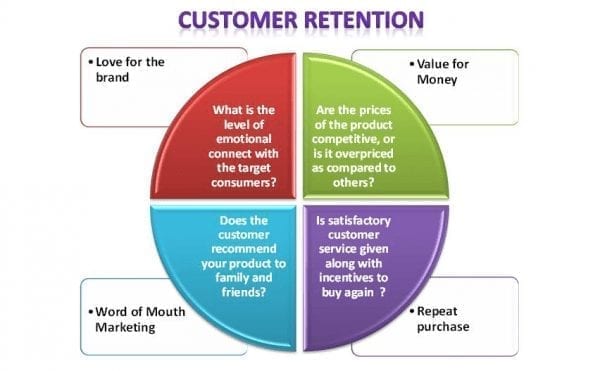
Customer retention is another effective marketing strategy or tactic a fashion outfit can use to put its brand name in the mind of its customers.
Keeping a steady flow of returning customers is equally as important as acquiring new customers. Here are the tips you need as a growing fashion outfit to expand your business reach, more of an how to promote your sewing business guide.
1. Offer Home Service Delivery
To successfully acquire new customers and retain the existing ones, you need to offer home delivery service to clients, most especially those that are too busy to drop by for pick up.
But before you deliver their clothes to their respective houses or offices, ensure that you get their clothes properly ironed and packed, Also, ensure that you are constantly meeting deadlines or target days to boost your reliability index with your customers.
2. Take Note Of Clients Special Days
Have a client’s database records where you keep the details of their measurements and attached to this would be special days in their life and occasions, this is not just for record purposes but to be able to keep track using a reminder to wish them on these special days.
You can as well go the extra mile by sending them appreciation notes, gifts, cakes to felicitate on their special days. It would help the customer build a strong bond with your brand and thereby referring and returning to engage your service as a retained client.
Such minor acts help to promote your sewing business.
3. Give Room For Partnership
In order to earn more business dealings as a fashion designer, it is imperative that you leverage your social network to seek partnership with willing investors.
This brings to memory an event that occurred during my university days – A customer who also was the school nurse gave me a very juicy offer – her offer, though tasking of me, brought one of my major breaks with my side hustle.
With her offer, I had to mass-produce clothes for a choir group on a regular basis. The partnership was great; she kept bringing in the orders while I fulfilled them and I had no reason to go in search of customers
4. Work On Self-Development To Catch Up On Latest Trends
As we all know that fashion design is the act of applying aesthetics, accessories, and tailoring clothes to project or enhance the beauty of your subject or client. Therefore, to be on top of your game at all times, you must do all possible to keep abreast of happenings in the industry – learn and perfect the current trends per time.
Always make yourself relevant in the fashion world by going for training regularly, reading journals, and fashion magazines to be abreast of the latest trend.
It is no longer news that new trendy designs come out on a daily basis as new fabrics hit the market. Knowing everything about this would help you, and knowing something about all other aspects of fashion will pave the way for you to the point that no question or design from your prospect would catch you unprepared.
This way, you would be able to retain your clients as they have an assurance that you are not just up to date on fashion trends but also up to the task.
5. Strong Customer Service Approach
This is a very important point that could keep your customers coming back for more; from the moment they initiate an inquiry, down to the point of payment and to delivery of the service you must ensure that your customers’ experience is well guided to keep them comfortable enough to become repeat customers.
In a nutshell, being the first line of contact, your customer service department must be top-notch; trained, and equipped well enough to place a premium on every call that comes in.
The ease of doing business birthed by your well-trained customer service department would give your customer an assurance that you have a system that works – that alone would keep them happy enough to be loyal ambassadors of your brand.
Furthermore, it would be easy for your When your business is expanding through additional customers added to your customer base, you need to employ competence and qualified staff to help facilitate better and fast service delivery so as to meet up with customer demand.
For ease of access and client’s confidence-boosting, always be on time. But when the time isn’t possible, build a rapport enough to be able to quickly notify your clients beforehand.
6.Increase Your Production Capacity When Needed
A major mistake that is common to most players in the fashion industry, especially the not so experienced tailors, is that they often outsource their jobs to less experienced tailors when they have their hands full.
As the founder of the tailoring outfit, it is natural that your customers associate you with your brand in person. What you should do is to first find a way to separate yourself from the business, especially with the order taking tasks.
Get your customer to become comfortable with your employees; when feasible, stand back and let them take the measurements of your clients while you watch. With time, your customer would get comfortable with your employees and that would free up time for you. Having done that, it would become easier for you to increase capacity when the need presents itself.
7. Ask For And Act On Feedback
One important aspect of customer retention that is often neglected is asking for feedback. Ensure that you always ask your customers for feedback – spend that little extra on a 5 minutes call to your customers and ask how they feel about every aspect of your service. Be sure to listen as they take you through their experience while you served them. Improving every bit of their experience the next time they come calling, is a sure way to move them from satisfied customers to become loyal customers.
That sentence is the worst mentality affecting Nigerian Business Owners.
To make sales you must attract customers, and unless you attract the right customers to your store you cannot make sales. Unfortunately, most business owners downplay the importance of marketing in sales; they hardly advertise yet want to make sales
Recently, content marketing has become the buzz word for so many people in the online community. You either pay a marketing agency, pay platforms like Facebook, Twitter, Instagram, etc or you simply do the marketing yourself, working relentlessly to get your words out there freely.
The path you choose to go is yours to take. But listen to me, you cannot make sales unless you attract the right type of customers to your store.
When starting a business, it is important to look for business ideas that have the possibilities to make your startup successful; you would do well to seek business ideas in industries with high growth potentials and profitability. One that your team and strength as a startup can effectively execute.
Are you looking for new ways of earning money? Check out a list of 100 business ideas, especially in Nigeria. While this list was created with Nigeria in focus, the business ideas are in no way limited to Nigeria.
It is a list of Untapped Business Ideas and small scale business ideas in Nigeria to start with 5k 10k 20k 30k 40k in Nigeria. Overall, please note that it is no child’s play starting a business in Nigeria.
Your first step to starting a business is to register your business, in Nigeria, you would need to register with the CAC. Kindly take your time to at least learn how to register a business name in nigeria; lets jointly make corporate governance a business culture in Nigeria.
Here is Our List of Highly Lucrative Business Ideas for Startups
Sell Products Online.
Selling products online has become very popular among people who want to make money fast. It is also a good way to start a small business because you only need a computer with internet access and a credit card to sell items online. The best businesses in Nigeria are actually online.
Some of the products or services business in Nigeria that you can sell are:
FOOD BUSINESS IDEAS IN NIGERIA
Catering Services
A sample Sweet&Savoury Table (08129820420)
Catering is one business idea in Nigeria that is hinged more on the passion than the skills of the entrepreneur.
How to start the Catering business idea
The best way to start this small business idea in Nigeria is by leveraging social media to create the needed visibility and customer awareness. Focus more on smaller parties, groups, and home gatherings. Register a business name, cook some nice meals, and showcase them using Facebook and Instagram in particular.
You really do not need to have all the categories of cookware, you could hire per need basis. Ensure that you have enough kitchen space (It could also be your backyard) to prepare food and use paid carriers, or Uber /Bolt services to transport your stuff to the client’s preferred venue.
Find, and come to some arrangements with other service companies in the hospitality industry, especially the party planners, wedding planners, Masters of the ceremony, etc.
How to keep the Catering business ideas in Nigeria successful
One of the best ways to start business in Nigeria, is to Start small. Ensure to create a brand and be known for something in particular. Think out of the box and be different. When you have more staff, you could start doing larger parties and functions. Go above and beyond by offering to clean up after the party for great customer service.
If you must, partner with complementary services in this service section, like decorators, events planners, etc. Such partnerships would definitely yield mutual gain.
Financial Capital Needed To Start The Catering business ideas in Nigeria
There has always been arguments as to if were possible to start business in nigeria with Little or no capital. Your customers most time pays for the service ahead, just ensure to get above 50% of your charges, usually, you’d be paid about 100%, and that should be enough to take care of your expenses including your hired hands such as cooks, and dishwashers (If you must).
Starting Cost Outlay:
ITEM
AMOUNT
Burners, chaffing dishes
N150,000
Stoves, Gas cylinders, etc
N50,000
Pots, Serving Plates, spoons, etc
N45,000 – N300,000
Food Trolley
N60,000
One-page website
N15,000
Food labels
N2, 000
Menu cards
N5,000
Complimentary cards
N10,000
Other essential Tips:
You need to partner with a service provider to give you well-trained ushers, servers, even photographers to make your service stand out. Practicable minimum startup cost = N157,000.
Know however that the catering business in Nigeria is particularly for the aristocratic clients and as such, it must not be treated as you would any other business in Nigeria.
However, you could choose to rent the chaffing dishes, stoves, etc and start as low as N60,000
Food DeliveryServices
My personal effort at cooking – I could start a food delivery business if I have to.
Most people love good food, but only a few know how to make very tasty meals. If you’re good at cooking food, you may wish to consider cooking it in bulk. There are a lot of 9 to 5 workers that would gladly have your meal at their launch time or some that may even ask for enough quantity to last them for a while.
How to start the Food DeliveryServices business idea
You could offer your services to working professionals, especially those in the corporate setups. All that is needed is to attract the right customers. Leverage social media, especially Facebook, and Instagram to attract your customers. Make some good looking homemade meals, take very good photos of the meal.
Try to dish your food to look very appealing, serve it on a white plate if you have one, and then set the dish in such a way that you could take photos using your phone’s camera at the least. Ensure that you have some rays of sunlight to make the photos pop.
How
to keep this business idea successful
Get yourself a
website if you can, it should not cost you much to establish a good website to
showcase your food and also collect and process orders. Once you’re established,
offer your customers a menu they can order from.
Consider picking a niche, position yourself to serve a market, either as the healthy meal sector or the local delicacy sector. Be different, ensure to give the best quality ever at as affordable as a rate you could offer. People love quality at a reasonable cost, and would readily refer other customers to you. Serve a range of meals; keep it interesting for them and you.
Financial Capital Needed for Food Delivery Services Business
You could actually start this business without cooking any sample of yours. Go to the Internet or find means of getting nice-looking photos of food in the sector you want to serve. Be persistent, put a photo at least 3 times a week.
Your capital need should be concentrated at creating a very appealing customer experience. Invest in a website, a payment gateway, and partner with a delivery company to deliver your products.
This is one business that can start with less than N20,000 ($80)
Ensure that your customers know that the cost of delivery is passed to them, and clearly state that on all your media channels including your menu. Start small; use the money paid by your customers. You’d, however, need to buy disposable plates and cutlery to get you started.
Starting Cost Outlay:
Disposable plates, spoons, and bowls = N10,000
Facebook advertisement = N8,000
Other essential tips:
You could find and take permission from other entrepreneurs in the food business to enable you to use their photographs to start your campaign. Just ensure that you know how to cook. So no excuse here that you do not have the money to start.
Do you want to open a restaurant without paying rent and having to buy tons of kitchen equipment? With a decent set of wheels and a small-scale food preparation station, you could launch a food truck business.
How to start this business idea
Starting a food truck business means you would have the availability of some funding source to offset your start-up costs. Owning a food truck is not cheap. The business is very lucrative and the entry barriers could be a bit high.
Decide on specific food especially those in the fast-food sector. Ensure to have mastered your recipes, and the act of clean-cooking (washing the dishes as you cook).
Get the right local permits and position your food truck to take advantage of the movement of your target market. Go for the working class, look for areas near Bus-stops.
How to keep this business idea successful
Focusing on a particular food niche can help your food truck business stand out from any competition and aid in your branding strategy. Master competitive pricing; it would help lower your risk of failure.
Ensure to always get fresh food items and be proactive with your service.
Financial
Capital Needed
This is a high-capital business. The entry barrier is relatively high, but the return on investment is steady and high enough to make you break even within few months. You would need a functional truck to enable you pack and change locations as market demands.
If you are a good cook, you would not need to hire any staff.
Starting Cost Outlay:
ITEM
AMOUNT
Food Truck
N2,000,000 – N5,000,000
Cookwares
N150,000 – N300,000
Advertisements
N50,000
Startup Food items
N50,000
Sit out Kit (Optional)
N85,000
Permit (Depends on Location)
N150,000 on the average
Other essential tips:
Running a food truck involves extremely long hours, no matter how good you or your staff is. The success of your food truck business is directly dependent on the amount of time and effort you put into running it.
You must understand the 4Ps of Marketing. There is no better place to put them to work than this business. Your social media strategy must be top-notch.
Fish Grill
Most people, if not everyone finds it difficult to resist a well-grilled fish. Fish grills are commonplace, especially in Nigeria. In Abuja, owners of fish grills make as much as One million Naira (N1,000,000) as turnover, daily.
You could actually make yours a mobile grill and leverage people’s movement to and fro work.
How to start the Fish Grill business idea in Nigeria
The best way to start this is by leveraging social gardens and parks. You could, in fact, make yours different from the pack by going online – YES, AN ONLINE GRILL DELIVERY SERVICE.
You really do not need a lot of items to get started with a fish grill, and yes, you can also expand to meat, snails, etc.
How
to keep this business idea successful
Start with a clear definition of your target market. Having a clear understanding of your market would help you in deciding what strategy to use in entering the market.
Your options are vast – You could go purely online, mixed, and even partner with owners of other social gathering outlets.
Financial Capital NeededFish Grill business idea in Nigeria
Little or no capital. I love the idea of a mobile grill, and that seems to be the highest on my scale in terms of barriers to entry, so I chose to reference that.
Starting Cost Outlay:
ITEM
AMOUNT
Grill (several Options available)
N10,000 – N85,000
Space Rental… You could pay this monthly
N15,000 – N50,000
Take-off stock
N100,000
Advertisements (Very important)
N50,000
Website with payment Gateway
N150,000
Sit out Kit (Optional)
N85,000
Permit (Depends on Location)
N150,000 on the average
Other essential tips: Your ultimate goal is to aim for online sales and delivery. That can only be achieved if you build an online brand, hence the budget for advertisements.
Seek out any spot at all, some may require that you get a permit. Such spots could beside car wash, market exits, gardens, churches, schools, even in front of your house.
Practicable minimum startup cost = N50,000
Bakery
If you love to bake like I do…. just kidding. I am actually surrounded by bakers and know a thing or two on baking. I know that baking is highly lucrative and you do not spend more than 20% in cost to bake anything.
So, if you are like me and know how to and also love baking, why not get paid to do it by opening a bakery? There are a lot of recipes out there, you could even create yours. Just ensure to find a recipe that you can replicate perfectly every time.
How to start the Bakery Business Idea in Nigeria
You can actually start this small business idea from home, and as part-time at your free periods; evenings and on weekends until you make enough money for you to make it your full-time gig. Once you have earned enough money, you could then expand to a space big enough to enable you to bake professionally. Ensure to incorporate online payments and marketing into your strategy from the onset.
How to keep this business idea successful
Diversify – Have multiple products/ income streams to sustain your business
Have a social media strategy
You definitely need a website.
Focus on what your customers want, and how they want it
Hire a skilled and experienced help
Don’t forget about marketing
Financial
Capital Needed
This depends mainly on how big you want to start. You would need some initial investments to get you started, but nothing an average Nigerian would not be able to afford. What takes initial capital mostly is the space and equipment needed to get you started.
If you are lucky enough to have a good-sized oven at home, then you are good to go. The next thing would be marketing. Marketing is very essential to your growth especially when you start from home or make it a side hustle.
Starting Cost Outlay
Other essential tips:
Start small and gradually grow into a fully commercial bakery. Practical minimum startup cost = N37,000. With N37,000 you could start small from your home, or that of a friend. Most friends would let you use their ovens and other facilities for some freshly baked cakes, bread, etc.
Cooking Classes
Image Source: https://chefsacademy.info/
If you love cooking, and you do not mind teaching people what you know, then this could be a money-making business for you. Why not get paid to do it by opening a training school – Online or offline.
How to start this business idea
You can start this small business idea part-time, during the evening and on weekends until you become known, your business generates regular inflow and you feel you need a bigger space. You could then go big and hire other hands to help you.
Starting this is easy. All you need is your phone, a good phone stand, some good light source, a neat kitchen, some neat napkins, and some nice looking pots. It is always the best option to start this at home. Get help to hold the camera and make a video of you teaching while you cook.
Do not bother about the quality when you start, you would eventually get better by the day. Just start.
How to keep this business idea successful
Keep learning new recipes and offering various categories, for example, you could teach your clients/audience how to make a particularly special meal per week. Call in other friends to join you once in a while to teach people other things you may not be familiar with, like desserts, or Italian meals, or vegan meals. Your ability to always bring in varieties and new stuff, especially new faces, will bring previous customers back to learn more.
Financial
Capital Needed
Little or no capital. Try to cook what you would normally eat and teach people to make what you would eat after the class. That way, you save yourself a lot of money.
ITEM
AMOUNT
Nice camera phone (If you do not have one)
N30,000 – N150,000
Phone stand
N10,000
Starting food items
N4,500 – N10,000
Data credit
N500
Marketing
N10,000
Other essentials items:
Start out with Youtube and other social media. Ensure to have your own Youtube channel and with the right marketing and execution, you could grow your brand and start an offline school.
Recipe Collection
The recipe collection is one business sector a lot of people would normally not pay attention to as a money-making business. However, there are millions of people out there searching for recipes daily. Such searches come from chefs, housewives, and other people with the mindset off their culinary skills to their willing clients.
How to start this business idea
Recipe collection can take different forms, from setting up a recipe blog, to writing your own cookbook, or even showcasing your recipes through videos on YouTube, Instagram, or your personal recipe bog.
To start, It is best to select a niche you love and are good at, one that you could be proud to build a brand around
Make a conscious effort to document the preparation of all the meals you love
Take your time to perfect the recipe by going over them several times to ensure that your recipe is accurate and can be easily replicated following the steps you documented
Pick out your preferred media for to present the recipe to your customers – viz book, audio, or video
How to keep this business idea successful
Focus on a market (Cuisine) – African, Calabar, Continental, Italian, etc
Diversify – Diversify within your market – Give your customers varieties and keep surprising them to enable them to keep coming back for more.
Have a social media strategy
You definitely need a website, regardless of the media of delivery.
Think out of the box, present your recipe in a very easy to replicate manner, do a lot of info-graphics if you must; just ensure to focus your attention on the customer experience.
Financial
Capital Needed
Little or no capital. Your capital outlay is a function of how vast you want your recipe to be. You could focus on a single recipe and make it so good in such a way that even a blind man would find it easy to replicate.
Starting Cost Outlay:
ITEM
AMOUNT (Naira)
Starting ingredients
10,000
Media platform
30,000
Marketing and Sale – Advertisement
36,000
Website
15,000
Other essentials items:
Your ability to think out of the box would make the difference between your success or lack of it. Did you know that you could sell your recipes to established restaurants?
Practicable minimum startup cost = N40,000
ONLINE BUSINESS IDEAS IN NIGERIA
The proliferation and advancements in technology have given rise to the possibility of entering new markets, developing new products, etc.
Most significantly, it has enabled entrepreneurs to create businesses that are wholly operated virtually; mainly in the digital environment. A major result of this is decreased overheads from physical space and in some cases personnel cost.
Businesses can now be run on the move, without boundaries, and in some cases, secretly.
This is a list of some businesses any focused entrepreneur can pick up and make money from, online:
1. Build a Niche Blog (or Website) and Use Affiliate Marketing
Image Source: Unsplash – Anete Lūsiņa
Blogging can be quite fun. Especially if you love to write, making money doing what you love can be very fulfilling. Earlier in June this year, I woke up and asked myself what I could do with the spare time I had and somehow make money from it now, and into the future. So blogging came to mind.
Having the right blogging platform can mean the difference between a successful blog and a failed one. I mostly use WordPress for its ease of use and support base, but I have also made use of almost all the available platforms. Overall, I highly recommend WordPress. The attached chart says it all.
Decide on a niche
One of the reasons we go into blogging is to share our knowledge of a specific field or topic we are familiar with, but it would not make sense to blog in a field that is absolutely dominated by authority sites, their expertise, authority, and trustworthiness would simply drown a newcomer.
So it is necessary to spend some time thinking about the niche you would love to blog on. Ensure that you narrow down on the niche as possible.
It is better to blog on BMW cars than it is to blog on cars generally.
Setup your domain name and get a hosting service
Picking up domain names these days is similar to being on a gold mine – the best domain names have all been taken. There have been instances when big corporations have had to buy domain names relevant to their purpose for several thousands of dollars.
That notwithstanding, if you are creative enough, there is always room for more domain names out there.
How to keep this business ideas in Nigeria successful
In the blogging world, content is king. Ensure that you dish out high-quality content frequently, preferably on a schedule. A major key to being successful as a blogger is your ability to figure out what content to write about, and when to write it.
Keep engaged follower-ship and in time everything would fall to their rightful places.
Financial Capital Needed
Little or no capital. Your capital outlay is a function of how vast you want your recipe to be. You could focus on a single recipe and make it so good in such a way that even a blind man would find it easy to replicate.
Starting Cost Outlay: Tools and supplies needed
ITEM
AMOUNT (Naira)
Starting ingredients
10,000
Media platform
30,000
Marketing and Sale – Advertisement
36,000
Website
15,000
Other essentials items:
Your ability to think out of the box would make the difference between your success or lack of it. Did you know that you could sell your recipes to established restaurants?
Party planning is one the most lucrative business ideas that anyone can easily start in Nigeria with very little financial capital.
It more than getting a DJ, entertainers, caterers, and dancers for events. This business is built on patience, diplomacy, multitasking, salesmanship, organizational abilities, and a passion for seeing your clients fulfilled.
The business involves but not limited to, planning bachelor/bachelorette parties, concerts, conferences, seminars, weddings, anniversaries, book launches, etc.
It doesn’t require any special education to start. It is usually a business born out of passion, and through experience and exposure, you will well be equipped to climb up the ladder.
What you need to start this business idea
Passion: It should be a business you’re passionate about. By going to events and volunteering to help, might help you improve your skills.
Create a business plan: Write out and plan everything that the business will need to kick off. A business plan should answer every critical question relating to the business.
Party planning is a broad business, so you can decide to tailor it to a particular niche.
State your charges and responsibilities for every event.
Decide the cost: Although it’s not advisable to have fixed prices due to the ever-changing cost of things, but try to have stipulated cost for every event.
Consider the fact that every event/client is different from the other when charging. Big outdoor events are more tasking and expensive than in-house parties.
Lawyer up: Employ the services of a lawyer to draft contracts that will cover you from any liability that might arise in the course of the business.
Business registration: Get your business licensed by the CAC – The Nigerian Corporate Affairs Commission, and try to have some insurance coverage for the business.
Marketing: Be strategic about how you’ll market your services online and offline. Don’t only rely on referrals from your clients, work towards getting new clients. Read up on customer Acquisition here.
Put up your best jobs online for people to be aware of your services. You have to be conversant with social media platforms like Instagram, Twitter, and Facebook.
But while at it, make sure you’re covering grounds offline. Create brochures, business cards, and tell friends, family, and colleagues about it. Do not fall to the If I Build It They Will come, Trap! The path you choose to go is yours to take. But listen to me, you cannot make sales unless you attract the right type of customers.
Create portfolios for your successes: Properly document all the parties you’ve planned and executed successfully.
Create a team: The importance of having a good team you can rely on to successfully execute any event can’t be overemphasized. Have a good business relationship with DJs, caterers, MCs, entertainers, photographers, decorators, rental service companies, etc.
How to keep this business idea successful
Success is guaranteed when you embrace each phase of the journey by giving every job your best. As a starter, you will quickly build your reputation by taking up jobs you can handle correctly.
Another way to build the credibility of your brand is by being truthful in your dealings because no one will like to recommend a party planner that reaped him/her off.
Financial capital needed
It needs little or no capital to start up. The clients provide the funds required for planning.
ITEM
COST (NGN:K)
One-page website
15,000.00
Business cards
10,000.00
Sponsored social media promotions
10,000.00
Brochures
5,000.00
Other essential tips
Don’t claim someone else’s work because many party planners are doing it.
Market your business aggressively if you don’t want to be overshadowed by competitors.
Lastly, party planners are outgoing and creative people. Work towards being one if you’re an indoor person.
As the name implies, the wedding marketplace is a place intending brides and grooms can hire or buy their wedding items.
Planning a wedding in Nigeria is quite a cumbersome task; that’s why there are people who specialize in making weddings less stressful – The party planners.
A wedding marketplace could be online or offline, but we’ll be focusing on the online wedding marketplace. An online wedding marketplace is cheaper and easier to own. All you need to do is have a well-designed website where buyers, sellers, and renters can meet.
What you need to start this business idea
Salesmanship: You need to have the skills of an excellent salesman to run an online wedding marketplace successfully. Your ability to bring buyers and sellers together should be top-notch.
An eye for quality: Having an eye for quality wedding materials will help in spreading your fame.
It’s the joy of every intending bride/groom to have his/her desires qualitatively met.
In Nigeria, weddings are a big deal, and you won’t want your clients to think that you lack quality wedding materials because of a poorly developed website.
Patience: As long as weddings are concerned, patience should be your watchword. Intending couples are some times indecisive. Even after you’ve shown them the best of items and given them the best advice, they will still be skeptical about their choices. That is where patience comes into play.
A well-detailed business plan: Plan this business to the very last detail. Answer every question/doubts that may arise. Decide on the prices of every item you intend to rent out or sell. Charge for the extra services you offer. If you need an expert at writing business plans, then get in touch using the contact us page.
Build a professional network: Since you’re just like the middleman between the buyers and the sellers, it is necessary to have the best sellers in your professional network. You have to know the quality of every item you’re putting up on your platform.
If it means going to the physical shops of your sellers to see their wares first hand, by all means, do it. Your success depends on the quality of the items you sell on your marketplace.
Lawyer up: Get a lawyer involved and get insurance if you can. ExpertsNG has some of the best SME friendly lawyers that the country boasts of, link up with them here.
Have a return policy: Let the buyers and sellers know what the return policy is.
Marketing: Since the business is online, you need a web developer to create a user-friendly website for you. Use social media platforms like Instagram, Facebook, and Twitter to your advantage.
Tell family, friends, and colleagues about your business. Go to events and create a strategy to convert marriageable singles into clients.
How to keep this business idea successful
There are lots of online wedding marketplaces, but very few are succeeding in Nigeria.
This business can be successful if you have a good taste for quality and the zeal to see intending couples fulfilled when they visit your site.
Aside from the quality of service, nothing sells this type of business like customer relations, so relate well with your customers to understand their needs.
Financial capital needed
It doesn’t take much capital to start. You certainly need to have a laptop, a website with a payment gateway, carry out social media marketing campaigns, and create business cards, etc.
Starting Cost Outlay
Item
Cost
Laptop
N150,000
Website with payment gateway
N150,000
Social media promotions
N10,000
Business cards
N5,000
Other essential tips
Get a website designer to build you a beautifully designed modern website with easy navigation, user friendly, and other features fit for a wedding marketplace.
Everyone loves to party, but very few are willing to clean up when the party is over. Such a reality is why an after-party cleanup business will thrive if you have the passion and the will to get your hands in soapy waters for money.
You may start gradually by asking friends, family, and colleagues to pay you an affordable fee to clean up and sort utensils, bottles, and other items for them after parties. It may not sound so Nigerian, but many people who clean up after their party wish they had a professional they could pay to do help with the dirty chores.
Small in-house parties are an excellent way to start until you have built momentum to take up more significant projects.
What you need to get started
Determination: The early days of this type of business may not boom like the other businesses you may know, and so, you need to determinedly keep doing what’ it takes to grow the business.
Note: If cleaning isn’t your thing, then the party cleanup services businessisn’t for you.
Trustworthiness: People are careful about the people they let into their homes. You need to find ways to radiate integrity and reliability for this business to scale.
A good reputation is the silver bullet in this type of business. Your customers should find you dependable, always.
Team: When picking your team of cleaners, make sure they’re people of integrity if you do not want the gavel of judgment to come down heavily on you.
Banking on your integrity alone isn’t enough because any team you take to a job represents your business.
Your team members should, therefore, appear professional and equipped to improve on your brand’s equity – representing all that you project to make your clients feel safe.
Time management: You should, and must project to be very efficient – your party cleanup service should be able to manage time as your profitability mostly is often tied to your time-management ability. If you have three jobs in a day, you shouldn’t spend the entire day on one job post.
Customer relations: How well you relate with your customers determines how far the business will go. People will need recommendations from people they know before hiring a party cleanup service.
Those online recommendations might look fake to people, but what your customers say about your brand is what it is.
Insurance: You need to have some indemnity cover on your business to help cover liabilities that might occur in the course of executing your trade.
Cleaning products: The products you need to clean up a place can be from you or the client. Some clients are allergic to some cleaning products, which means you have to ask them.
Here are some products you should have:
Brooms
Mops
Window cleaner
Brushes and dustpans
Latex gloves
Toilet brush
Toilet cleaner
High duster
Vacuum cleaner
Extension cord
Disinfectants
Feather duster
White rags
Paper towel
Waste bags
Suggested Reading: 14 Steps to Start and grow a profitable business in Nigeria
Register the business: People trust a registered company, especially when it involves going into their private space.
Marketing: Offline and online marketing strategies should be employed. Paid social media promotions are a great idea, but don’t forget that telling people your services offline pays too.
How to keep this business idea successful
Keeping a business like this successful has a lot to do with consistency and persistence. The more you offer exceptional service to your clients, the better your portfolio.
Finally, have a good team working with you.
Financial capital needed
Aside from the vacuum cleaner, every other cleaning product is quite affordable in the market.
Many people find it hard to put the right gift items together for their parties, with many not knowing where to get the right gift items.
Gift basket service is an art some people do for fun without the expectation of being paid. Some people gifted with the creativity of putting together gifts items, especially ladies, would do this for their friends as favors.
As an entrepreneur, what I see in most scenarios are business opportunities. Looking for business opportunities wherever I find myself has become second nature. I expect that you’d also develop yourself to that point.
Train your business mind to figure out how best to turn that fun activity into a money-making venture.
As simple as gifting items sounds, not everyone is good at it, and not everyone has the time to do so.
If you’re a creative genius in crafting, packaging, and delivering gift items, consider this business idea. The gift basket idea is one that full-time housewives/homemakers would be able to do with much ease.
What you need to start this business idea
Creativity: Anyone can go to the gift store and pick gift items; indeed, not everyone can be creative about it. People are willing to pay for your creative ability to make the gift unique and valuable to the recipients.
You have to think outside the box to show your uniqueness.
Do note, however, that creativity increases with practice and on-the-job experience over time.
Craftiness: Craftiness is what most gift basket service in Nigeria lack. You mustn’t buy everything needed to deliver a gift basket to a client.
Some times, the client’s request will demand you to be crafty to create one of the items yourself. It’s an edge you’ll have over your competitors.
The art of presentation: There’s no doubt that an expensive and creatively packaged gift basket can mean less when poorly presented; Presentation says so much in this business. Gift baskets for different occasions have beautiful ways you can present them.
Enthusiasm: Make sure you’re very enthusiastic about putting smiles on the faces’ of the gift baskets recipients. Remember, it takes a cheerful countenance to makes someone’s occasion special.
Register the business: Companies like to patronize registered businesses. Registering your business makes it a legal entity.
Marketing: Your marketing is majorly through the fantastic jobs you’ve delivered. Your clients’ satisfaction is your gateway to more prominent gigs.
Maximize social media platforms to enhance your online presence.
How to keep this business idea successful
Keeping your gift basket service business is achievable through exceptional customer service delivery. Don’t post a gift basket online and deliver something else offline. People are wary of online gift basket services because of this particular reason.
Integrity plays a crucial role in this business’s success. Improve your craft by watching DIY YouTube videos. And ensure to always deliver more than expected of your clients.
Financial capital needed
It takes almost nothing to start since the clients will be paying for the gift baskets. As you grow, you can add a website and pay for your social media campaigns.
Starting Cost Outlay
ITEM
COST
Social media promotions
N10,000
Website
N35,000
Business registration and reservation of business name
N15,000
Business cards
N5,000
Other essential tips
You should partner with event planners, flower shops, etc.
Practicable minimum startup cost = N45,000
PAMPER PARTY BUSINESS IDEAS
Also known as a pampering party, a pamper party is a party where people get their body massaged and enjoy beauty treatments while relaxing with family, friends, or colleagues.
You might consider this business idea if you have magical hands and a good knowledge of beauty treatments. Better still, if you could partner with someone that does.
You don’t need to have an office space since you’d be meeting your clients in their houses or hotels.
Events such as bachelorette nights, baby showers, birthdays, and engagement parties are days when some ladies would love a good massage and beauty treatment.
What you need to get started
Massage skills: As a masseuse/masseur, you need to have excellent massage skills. There are many beauty spas you can train to improve your skills.
When it comes to the human body, people want to feel safe with whoever is handling their body.
Certification: You may not need this to massage friends and family, but some clients may want to be sure that you know what onions mostly with some certifications. As you start, have it in mind that you need to be certified to scale.
Products: For a start, you need a massage table, reclining chair, beauty treatment products, and pedicure and manicure stations. There are other equipments used for a pamper party service, but you’ll have to get them with time.
Businesses registration: Get the business registered to boost your credibility and make your clients feel safer with you.
Customer relations: Friendliness and gentility are essential when dealing with your customers. Give your best to every client you get to pamper and watch your ratings increase.
Marketing: You’re to promote your service both online and offline. Do your best to leverage Offline marketing as much as possible and engage more of mouth-to-mouth marketing as it will resonate more with your offline contacts. Tell your family, friends, and colleagues that you are a masseuse/masseur.
Leverage online platforms like Facebook, Instagram, and Twitter to build your online clientele. Just ensure targeting your marketing efforts in ways that aim to get prospective clients from your geographic location.
How to keep this business idea successful
When people hear the word “Pamper party,” they tend to think it’s for the rich. And this is an impression you should change through your marketing strategy.
Promote your services in such a way that almost anyone can patronize your services. Create different packages and offer a discount when the clients based increases.
Try your best to use the right beauty treatment products. Ladies do not joke with their bodies, so avoid any product that can devalue your services.
Sell your services wherever you find yourself by talking about the solutions your products and skills will bring to people.
Financial capital needed
For a beginner, you don’t need to own all the equipment, but if you are to be effective, there are necessary products you ought to have. If you’re not financially buoyant enough to get new equipment, you can go for fairly used.
Item
Cost
Massage table, towels, robes
N135,000
Fairly used massage table
N80,000
Portable pedicure and manicure massage
N40,000
Beauty products
N12,000
Business cards
N10,000
Social media promotions
N10,000
Business registration and name retention
N15,000
Other essential tips
Partner with hair salons and local hotels around you. Practicable minimum startup cost = N150,000
Renting out party supplies is a very lucrative business that requires little or no training. All you need is to have the necessary supplies people need for their parties.
The party supplies rental business idea entails owning party supplies and renting them out to event planners or end-user customers.
It is capital intensive, but you can decide to start small with what you have. After all, some big rental companies don’t have all the supplies.
It will also require you to partner with those that have some supplies you don’t have. It will reduce your profit, but that’s the best option if you want to start small and grow. The reality is that you may never start if you wait to have all the supplies before starting. Some prominent people in the business began with small party supplies until they were able to own their supplies. It would help if you had enough patience to see it through.
What you need to start this business idea
First of all, you have to be able to identify quality party supplies. It’s expedient that you know what is in vogue; use them. Commit to working consciously towards the growth of the business because rental service takes time to pick up in sales.
Good knowledge of record-keeping is required to avoid losing your supplies. Take proper stock of all your supplies and make sure they are returned in good form.
Register the business to give it a legal identity.
Share the business idea with friends, family, colleagues, etc.
Display your wares online through social media platforms.
How to keep this business idea successful
You can be successful as a party supplies rental service owner when you treat your business as an essential service and run it as you run any other business.
Friends and family will like to use your supplies for free, don’t let them. Unless you make a profit and maintain healthy cash flow, your business would collapse.
Take collateral for every supply you rent out and adequately keep records.
Deduct the amount of any damaged supply from the collateral paid. You might also make your customers pay for the lateness in returning your supplies.
Financial capital needed
As stated earlier, it’s capital intensive, but you can always start from somewhere.
Item
Cost
Pots, plates, spoons, pans, glass cups
N50,000
Industrial gas cooker and gas cylinder
N100,000
Firewood stands
N40,000
Tables, chairs, table clothes
N150,000
Canopies
N150,000
Trays, cutlery, turning sticks
N100,000
Water drums
N20,000
Basins, bowls
N10,000
Business registration and name retention
N15,000
Printing on the items
N10,000
Business cards
N10,000
Practicable minimum startup cost for Renting Out Party Supplies = N650,000
Cleaning Services
Photo by Matilda Wormwood from Pexels
Laundry/Dry Cleaning
Fast-paced life in the cities has made laundry and dry cleaning business a prosperous one. Little wonder that it claims its spot on this list of the leading fastest growing businesses in Nigeria. People are so busy that they would instead outsource their laundry than to do it themselves.
Even the less active people hate to do their laundry themselves.
If you’re passionate about laundry and dry cleaning, this might be the business for you.
How to Start Laundry/Dry Cleaning Business
The first thing needed to start laundry and dry cleaning business is to be passionate about cleaning to come extent. Usually, laundry is a hated chore, so if you want to build a business empire out of it, you must be passionate about it.
It is also vital you understand the difference between laundry and dry cleaning. Laundry is washing clothes and other materials with soap and water, while dry cleaning is more technical. Dry cleaning involves cleaning without water; mostly with chemicals such as Perchloroethylene, Glycol Ethers, etc.
The above-mentioned difference between the two will require you learning the techniques. The best way to learn is by going to a physical laundry/dry cleaning shop for a few months. It might sound tasking, but there are tricks those professionals dry cleaners know that you might not know.
You can leverage some YouTube videos to learn the techniques needed to run a dry cleaning business successfully.
How to Keep the Business Successful
The best way to successfully run this business is by learning the ropes and going professional. Just because it’s fast-growing doesn’t mean you should jump into it without equipping yourself with the needed skills and knowledge.
Tell people about your business and the value you’re giving to them. You must be ready to bring something new to the table. You should be able to answer prospective customers’ questions on why they should use your services.
People are entirely mindful of their clothes. They may not like doing the laundry themselves, but they’re concerned about who’s doing their laundry.
Use social media to your advantage. You mustn’t have a fat bank account to push your business on social media platforms. You can start with Facebook, where you have friends, relatives, former colleagues and former schoolmates. You can run Facebook promotions on your business page with 1,500 Naira.
You can later extend to Instagram and Twitter. If you can’t create time to manage your business pages yourself, some influencers can help you out for a token.
You can register the business name with the CAC for only 5,000 Naira. People trust registered businesses more than unregistered ones.
Do all that’s needed to put your business out there.
Financial Capital Needed To Start Laundry/Dry Cleaning Business
How you start depends on your capital. The beautiful thing about this business is that you can start from your house with some essential items needed for laundry/dry cleaning. If you intend getting a shop, it will cost you more depending on your location.
Here are some things you’d be needing to start a laundry/dry cleaning business:
Item Needed
Cost Price
Washing machine
50,000
Dryer
98,000
Iron board
30,000
Electronic iron
6,000
Hangers
15,000
Pegs
3,000
Buckets
2,000
Basins
3,000
Laundry soaps and detergent
3,000
Brushes
4,000
Garment conveyor
25,000
Bleach
1,000
Power generator
85,000
Banner
10,000
Stickers
5,000
Business name registration
5,000
Social media promotions
5,000
Other essential tips to effectively run a laundry/dry cleaning business:
If you have a car, you can add “Pick and deliver” to laundry business. Customers prefer a laundry service coming to pick up their clothes and return them.
It’s a competitive advantage if you have a car and employ other hands.
Find out what your competitors are charging and know how to fix your prices.
CAR WASH
The increase in the number of busy car owners is making car wash business more profitable. Many car owners would prefer to take their vehicles to the car wash for thorough washing instead of washing their cars themselves.
This article writes on all the key essentials that you must consider before you start your car wash business – one of the leading fastest growing businesses in Nigeria.
The most exciting thing about the car wash business is that you can start at any scale, even small.
You don’t necessarily need to have big washing equipment to kick it off. With little capital, determination and hard work, you can scale that business into something big.
How to Start A Car Wash Business
Learn about the business before jumping into it. Many startups fail not because they weren’t profitable, but because the owners didn’t take time to learn about the business.
There are tricks in every business you’ll have to learn in order to excel.
Choosing the right location for the car wash is of utmost importance.
A majority of car washes are situated close to the roads. It would help if you situated your business close to your customers. Seek an open space close to a significant or busy highway.
Get the right equipment. As a starter, you mustn’t have ample equipment, but there is some essential equipment to have. We’ll be looking at some of the equipment in the starting cost outlay.
How to Keep A Car Wash Business Idea Successful
First of all, you need to have the foresight to be able to keep it thriving. Have a well-thought growth map you’re working with.
I’ve also noticed that having a sitting area where your customers (A lounge or something similar where car owners) can sit and chill while you wash their cars will increase your customer base—adding something like a lounge or a minibar to the car wash will improve patronage.
The location alone won’t draw customers. You have to market the business every chance you get, aggressively. Tell friends, family, colleagues, neighbours, cliques, and every car owner you meet about the services you offer.
Collaborating with auto repair shops, barbershops, salons, and other businesses around will help boost your clientele.
Employing experienced car washers is very important. It would help if you had a team of professionals with integrity around your business.
If the cars are thoroughly cleaned, your customers are more likely to come back.
Financial Capital Needed For ACar Wash Business
How much you need to start depends on how big or small a car wash business you’re creating. You can start with small machines in a not so ample space.
Item
Cost
Business name registration
5,000
Rented space
250,000
Social media promotions
5,000
Car wash machine
100,000
Water (Borehole)
400,000
Water tanks
45,000
Water Hose
10,000
Power generator
100,000
Brushes, Buckets, towels
7,000
Robber boots and gloves
6,400
Soaps and detergent
2000
Blowers/dryers
350,000
Vacuums
40,000
Perches
30,000
Prep guns/pressure water
100,000
Other Essential Tips To Aid The Car wash Business
Strategically partner with barbershops, salons, eateries, spare parts dealers to increase your customers. Use social media to create online awareness for your business.
You may also wish to start a membership subscription plan.
Poultry farming is a very profitable business, and that’s why it is speedily climbing up the fastest growing businesses in Nigeria ladder.
Unlike what many people think, poultry farming isn’t only about breeding chickens or egg production. There are four significant activities and possibilities with Poultry farming:
Layer breeding
Broiler breeding
Poultry feeds production
Poultry equipment production.
Poultry farming, as a business is broader than people think. And that’s the reason it’s essential to understand whichever branch you decide to venture.
Know that every branch is profitable, depending on how you run and manage the business.
Why’s Poultry Farming a Thriving Business?
Considering the profit poultry farming yields, it is only logical to understand why it’s thriving. The increase in the consumption of white meat which includes chicken, turkey, duck and other birds fall into is due to the health implications red meat has. All age groups consume white meat, unlike red meat. Apart from that, it’s affordable and readily available.
How to Start This Business Idea
The first step to take when starting this business is to take time to learn about the business. You might think breeding chicks and layers is all about feeding them, but that’s not the case. Have it in mind that one single mistake can lead to the death of thousands of chicks. There are tricks in every business you have to learn to succeed, know them.
After researching and learning about the different branches of poultry farming, you have to decide if you will be breeding chicks, breeding layers, or both. This decision is a result of the knowledge you’ve acquired from your trainer. Specialize in the area you’re good at.
Set up the poultry farm. This can be done in your house, rented land or acquired property. It depends on your budget. But wherever you choose, make sure it’s conducive for the chicks, layers and eggs.
Another factor to consider when setting up your poultry farm is your access to water, power supply, motorable roads.
Structuring the farm can be done in three ways:
Fencing system: This is a poultry farming system where the birds freely roam around in a fenced area fending for themselves. This structure isn’t advisable for a business.
Sawdust system: This is a poultry farming system that use sawdust as the main cage system. It allows the chickens to move freely. It’s imperative to change the sawdust regularly to prevent the spread of diseases.
Caging system: The is the most common system when structuring a poultry farm. Birds are caged according to their sizes.
Buying of equipment depends on the structure of your poultry farm. We’ll look at the needed equipment and their prices in the starting cost outlay.
When buying the chicks, make sure you’re buying from trusted dealers. This is one of many perks of being trained by a professional. You will be able to different healthy, malnourished and unhealthy chicks.
Already prepared feeds are highly recommended when you’re just starting. As you progress with time, you’ll be able to produce the feeds yourself.
All things being equal, your turnover will depend on your marketing strategy. You are to build a network of retailers before your first harvest. Market to the retailers around your area and let them know when the products will be ready.
How to Keep A Poultry Farming Business Idea Successful
The business will be successful if you don’t make crucial decisions from a greedy point of view. Start with a few chicks and see your progress. You don’t test the depth of a river with both feet.
Employ helping hands if you are breeding more than 400 chicks. Poultry farming requires utmost attention, so don’t give the business less attention.
Aggressively market the business to friends, family, colleagues, neighbours, retailers, food vendors, grill vendors, etc.
Financial Capital Needed To Run Poultry Farming
You can start with the sum of 100,000 with a well-structured cage. You’ll increase the chicks as time progresses.
Item
Cost
Business name registration
5,000
Banners/stickers
15,000
Social media promotions
5,000
Leased land
100,000
Feeders
12,000
Chicks (N200x40)
80,000
Waterers
30,600
Cages
92,000
Incubators
48,420
Nests
50,000
Coops
50, 000
Waste disposal
25,000
Brooders
55,000
Perches
30,000
Power generator
100,000
bags Feeds (10)
30,000
Other Essential Tips
To breed healthy birds, you must employ the services of a vet. A vet will advise you on what to do to make the birds healthier.
Partner with eateries, beer parlours, cuisines and local kitchens to provide them with fresh eggs, turkeys, and chickens.
Cassava Farming Business Ideas in Nigeria
Cassava is the source for most of the food Nigerians eat. Fufu, Garri, Abacha, Amala, Cassava flour, etc. are the products of cassava. And this has made cassava farming a fast growing business in Nigeria. Aside from the products being locally consumed, it also serve as foreign export since Nigeria produce cassava in high quantity. Statistics have it that 24 out of 36 states in Nigeria grow cassava.
Cassava production might sound like a huge task, but it’s one of the easiest things to plant. The quantity you’re planting is where the work lies.
Before choosing a location, it should be perfect for cassava farming. Go for fertile land that is well-drained. You won’t be able to tell the real nature of the soil, and this is why you should take the soil for testing to find out if it will favour cassava farming.
Check for the following:
Adequate rainfall, sunshine or access to water
Landscape topography
Proneness to pest invasion
Proneness to soil erosion
Choose Cassava Stems for Planting
Understand that planting cassava for private use is different from commercial planting. When planting for private use, you may not be so particular about the stems you’re planting, but this doesn’t apply to planting cassava for business. In planting cassava for commercial use, you have to consider the stems to know if they are high yield stems.
Different cassava stems don’t grow well on the same soil. After testing your soil you should have better knowledge of the kind of cassava stems the soil can accommodate.
Check the stems for the following:
The quality of the root they produce.
If the stems are healthy and fast-growing.
Whether the stems have a strong resistance to pests.
Rapid and rich growing stems for commercial cassava planting
NR 8082
NR 8083
TMS (2) 1425
TMS 30572
TMS 81/00110
Prepare the Soil
Well-prepared soil aid the growth of healthy of the cassava.
How do you achieve this?
Adequate use of manure and fertilizer.
Prepare the soil for irrigation because you can’t be too sure about rainfall.
Prepare the ridges to prevent rain from washing away the soil.
Prepare For Cultivation
You’re to prepare for cultivation from the very first day you planted the stems. It is highly recommended that you take good records of your activities to help you know the next step to take.
Before preparing the land, you’re to apply herbicide on the soil. Liming is also another thing to do during land preparation. You’re to apply agricultural lime of 5 (50kg) bags on the stems and land.
Plant the Stems
The Nigerian time for cassava planting is April. It takes 6-7 months to harvest early-maturing cassava, while it takes 12 months after planting the stems to harvest late-maturing cassava. It is advisable to apply fertilizer to the soil 8 weeks after planting the stems.
Weed the soil regularly to make sure the stems aren’t chocked by weed.
Harvest the Cassava
The best way to know that the cassava is ready for harvest is when the leaves turn yellow and fall to the ground, and when the root (cassava) is mature. To harvest faster, cut off the stems and preserve them for another planting season.
You can carefully use hoes to dig out the cassava root from the soil.
Marketing Cassava Products
You can either sell the cassava in its raw form or process and sell it yourself. Whatever you decide to do, make sure you have built a network of buyers for your product. There’s a big market for cassava products in Nigeria, so it won’t be that difficult to sell.
How to Keep The Cassava Farming Business Idea Successful
Your success is dependent on many factors, but you must have adequate knowledge of the business. Cassava makes our list of the leading fastest growing businesses in Nigeria because of many factors, one of which is her success rate amongst Nigerian farmers. Little wonder we are a leading producer of the tuber in the world.
Take time to learn the business by visiting cassava plantations and ask the farmers in charge questions.
Learn about the market for your product and how to sell them.
When you’re applying any chemical on the land or cassava stems, do it rightly. Wrong measurements can cost you a lot.
Have a senior in the business you consult in case anything goes wrong.
Financial Capital Needed To Start Cassava Farming
Cassava farming is capital intensive. You have to own or lease a plot of land to do this business.
As a farmer, you’ll be needing all the patience and consistency you can get to make something out of this business. Learn how to store and preserve the products and get ready buyers before harvest.
Conclusion:
These businesses are not on this list of the leading fastest growing businesses in Nigeria by accident; they are easy to venture into, highly profitable and with minimal risk.
Do you know any other business that is worthy of this list? Please give your suggestion using the comment section and I will write on them.
Making money is easy, it starts with just one simple yet very important principle – The desire to make money and the faith in yourself to make money.
A lot of people want to make money but lack this fundamental principle, so they look for the easiest of ways out of their quagmire – they engage in many unholy and unhealthy things just to make money.
This article is an answer to your question. It is packed with a lot of business ideas to help you make money. Some, with as low as N30,000 you could be smiling to the bank at the end of about 3 months of dedicated work on the idea you choose.
You may, like so many others who read this, be in search of small businesses to invest in. I would ask that you also read my post on How To Start A Business In Nigeria. The article will help you make the right decisions on company registrations, etc.
Due to my small business consulting background and training, I’ve had a lot of people ask me questions related to Small businesses in Nigeria. Some of such business-related questions are –
And many of such questions keep getting to me through emails, phone calls to my consulting agency, seminars, etc. I have, therefore, in response to these questions, created this article with these business ideas with the hope that it would give answers to at least one of your many questions.
It was designed to take the form of a mini business plan, and in categories.