Category: Business News

  • Nigerian Youth Investment Fund (NYIF)

    Nigerian Youth Investment Fund (NYIF)

    The Federal Nigerian Youth Investment Fund is an initiative of the Federal Government of Nigeria has launched the Nigeria. It was setup to help youths achieve their dreams of being self reliant through the proliferation of the in Youth Investment Funds Program.

    But, have you wondered what the program is, its primary objective, target youth category, what you require to participate, and so many other questions that should naturally come to mind?

    If you are like me, I bet you have.

    During the launch of the program, Sunday Dare, the Minister for Youth and Sports Development, said that the NYIF underscored the importance placed on youths by the current administration.

    The Minister said that the Fund, which is an initiative of the Federal Ministry of Youth and Sports Development and funded by the Central Bank of Nigeria (CBN), would be spread over three years to cater to youth-owned businesses and investment needs.

    The Fund is to help youths with bankable business ideas fund their businesses. 

    objectives of the NYIF

    Types of Businesses That Get Funding for the NYIF

    • Agriculture and related value chain
    • Construction
    • Logistics and supply chain
    • Healthcare value chain
    • Technology/ Innovation
    • Creative sector
    • Green Economy and Renewable energy sector
    • Manufacturing
    • Hospitality/Tourism
    • Trading and Services

    The NYIF Interest Rate

    The loan provided under the NYIF has an interest rate of 5% per annum. Youth applying as an individual or non-registered businesses can draw up to two hundred and fifty thousand Naira (₦250,000.00). In contrast, youth who own registered companies can apply for up to three million Naira (₦3,000,000.00). 

    ELIGIBILITY CRITERIA

    • Official Government Identification
    • Applicant must be between the ages of 18 and 35 years old
    • Notarized Guarantor Forms
    • Passport photographs
    • Bank Verification Number
    • Training Certificate
    • Fundable business idea
    • Registered business
    • Nigeria Citizenship
    • NYSC certificate for graduates
    Other criteria (Sole Proprietors)
    • Be between ages 18 and 35
    • Have business/enterprises domiciled and operational in Nigeria
    • Has a clear financial crime record from the last 10 years
    • Has a valid Bank Verification Number (BVN)
    • Possess Local Government Indigene Certificate

    Formal Business Enterprises

    • Evidence of registration with Corporate Affairs Commission (Certificate of Incorporation and Form CAC 2A)
    • Business questionnaire
    • List of Directors with BVN numbers
    • Evidence of regulatory approvals will be provided on demand
    • Tax Identification Number (TIN)

    In you need help registering your new business, call 07051114444

    Loans are with a tenure of five years and moratorium of up to 12 months.

    There are, however, some criteria that must be met to give you eligibility to draw from the loan’s pool of Funds – you can get details of the NYIF requirements here.

    On the sustainability of the initiative, the minister said: “It is my belief that the fund will grow to become a permanent feature of our society, where beneficiaries run successful businesses and repay the loans.”

    What are The Application Portals for the Nigerian Youth Invest Fund (NYIF) loan?

    www.nyif.nmfb.com.ng; and the ministry’s website, www.youthandsport.gov.ng or www.noya.ng

    If you need help with processing your loan application for the NYIF or need a bankable business idea with a business plan, then send an SMS or a Whatsapp chat to 07051114444 now.

    Ineligibility

    Applicants who are a active part of any other NMFB loan scheme – the targeted credit facility (TCF) and agribusiness/small and medium enterprises investment scheme (AgSMEIS) and active beneficiaries of other government loan schemes that remain unpaid are not eligible to benefit from the NYIF.

  • NESG: FG to Rethink Nigeria’s Economic Fundamentals

    NESG: FG to Rethink Nigeria’s Economic Fundamentals

    FG to Rethink Nigeria’s Economic Fundamentals, Says Ahmed.

    She opined that the 26th Nigerian Economic Summit (NES#26) will provide an opportunity to reanalyze the country’s economic fundamentals and have concreate deliberations on the impact of the global COVID-19 pandemic on the economy of the country. 

    She said it was important that Nigeria’s top policy makers and business leaders proactively converge and engage to address the key questions that presently confront the country. 

    Speaking at a media briefing for the NES#26, which is scheduled to commence from October 26–27 in Abuja, the minister added that the summit will emphasise the urgency to strengthen multi-stakeholder alliances between governments and businesses in co-creating a national strategy that will usher the country in the next decade.

    She said: “It will be a big conversation for public and private sector stakeholders to reflect on the state of the Nigerian economy, rethink the country’s economic fundamentals and deliberate on the impact of the global COVID-19 pandemic.”

    Themed: “Building Partnership for Resilience”, the minister expressed that the summit will be underpinned by three pillars, namely collaboration, execution, and impact adding that these pillars will resonate through all the sessions at with a strong emphasis on reinforcing the role of sub-nationals as the frontiers of economic growth and development, as the government strives to build a more inclusive and sustainable economy.

    Ahmed further said that this summit is particularly timely as the government is currently developing a Medium-Term National Development Plan (MTNDP), 2021-2025 and the Nigeria Agenda 2050-which are the successor plans for the National Vision 20:2020 and the Economic Recovery and Growth Plan (ERGP) which expires in December.

    She further stressed that the government is working on operational, regulatory and legislative interventions to enable the country move to the top 100 on ease of doing business ranking globally.

    She added that the Nigerian governments across all levels will continue to initiate business-oriented policies and ensure adequate commitment to their implementation. 

    She said as the country awaits the passage of the Petroleum Industry Bill, the Finance Act and the Companies and Allied Matters Act (Repeal and Re-enactment) which was recently signed by President Muhammadu Buhari into law will transform the business environment and re-energize the private sector as the engine of growth of the economy. 

    She further maintained that the greatest challenge facing government is inadequate revenue to execute its numerous projects and other initiatives adding that new sources of revenue were being identified and explored while coordination and cohesion among revenue generating agencies is also being improved.

    Ahmed also maintained that the closure of the country’s land borders was one of the boldest decisions ever taken by any administration to curb insecurity, smuggling and kidnapping.

    She Said:”This has in a positive way impacted Nigeria as we are closer to attaining self-sufficiency in rice production than at any point in time in the country’s history. 

    This spillover effect is also evident in other sectors such as manufacturing, livestock amongst others. This also provides an opportunity for the private sector to leverage increased local content and expand their businesses.”

    The Chairman, Nigerian Economic Summit Group (NESG), MR. Asue Ighodalo, said the summit will be held at a turning point in the history of the country.

    He said:”We have celebrated remarkable moments, we are weathering difficult times, but we will emerge stronger together.”

    According to him, though Nigeria is currently the largest economy in Africa, “every Nigerian will acknowledge that there is still a lot of work to be done as we strive for regional and global competitiveness”. 

    He said the NESG was proud to be playing its part in process, including the convening of annual Nigerian Economic Summits since 1993, the provision of platforms for sustained public and private sector engagements, and the provision of strong support in policy agenda setting.

    “Even as we celebrate 60 years of nationhood, we do so against the backdrop of a global pandemic that has interrupted our economic development and further exposed the fragilities and vulnerabilities in the structure of our economy,” he said. 

    He pointed out that the circumstances of the times had made the summit particularly important for the country, stressing that more than ever, all stakeholders must engage and feel engaged in the social and economic future of the country. 

    “We must build a resilient economy, by coming together and working together in partnership,” he said.

    Also speaking at the briefing, the Minister of State for Budget and National Planning, Prince Clem Agba, expressed optimism that the outcome of the summit will further help enrich government plans in ensuring that the impact of the pandemic on the economy and the citizens is minimised. 

    He said relevant recommendations of the NES#26 will be mainstreamed into the medium and long term plans currently being developed by the ministry and all the critical stakeholders including the subnational governments, private sector operators, civil society organisations, women and youth organisations and development partners. 

    He said:”With this assemblage of Nigerians from various works of life, the plan preparation process is designed to be participatory, inclusive and consultative. 

    The outcome will be a national plan which has the ownership of all critical stakeholders and also implementable by various levels of government working closely with the private sector”.

  • Inflation rate in Nigeria hits 13.71%, highest in two and half years

    Inflation rate in Nigeria hits 13.71%, highest in two and half years

    The Inflation rate in Nigeria has risen continously for the 13th month straight by the end of September 2020, and it has been attributed to the rise in the prices of goods and services in the country.

    According to the report released by the National Bureau of Statistics, the Consumer Price Index (CPI) increased by 13.71 percent year on year in September 2020 compared to 13.22 per cent in the preceding month. 

    According to the CPI report for September, which was released Thursday by the statistical agency, the 0.49 percentage increase occurred in all the divisions that determine the headline index.

    The composite food index rose by 16.66 per cent in September compared to 16 per cent in August.

    All items less farm produce or Core inflation, which excludes the prices of volatile agricultural produce stood at 10.58 per cent in September,  up by 0.06 per cent when compared with 10.52 per cent recorded in August.

    This rise in the food index resulted from increases in prices of bread and cereals, potatoes, yam and other tubers, meat, fish, fruits and oils and fats as the sub-index increased by 1.88 per cent in the review period, up by 0.21 percentage points from 1.67 per cent in August.

    On a month-on-month basis, the core sub-index increased by 0.94 percent in September 2020. This was down by 0.11 percent when compared with 1.05 percent recorded in August 2020.

    On the other hand, core inflation was fueled by the highest increases in prices of passenger transport by air, medical services, hospital services, pharmaceutical products, passenger transport by road, motor cars, vehicle spare parts, 

    maintenance and repair of personal transport equipment, repair of furniture and paramedical services.

  • FG: N1.2tn Released for Capital Projects in 2020

    FG: N1.2tn Released for Capital Projects in 2020

    The Minister of Finance, Budget and National Planning, Mrs Zainab Ahmed Tuesday said the federal government had released a total sum of N1.2 trillion for capital projects in the revised 2020 budget.

    She added that as at the end of September, the sum N2.14 trillion had also been disbursed to cater for debt service obligations.

    The minister said as at the end of August 2020, the FGN’s revenue available for budget funding (excluding Government-Owned Enterprises (GOEs) was N2.52 trillion, representing 71 per cent of the revenue target.

    The revenue sources included N1.105 trillion from FGN share of oil revenues (representing 164 per cent
    performance, over and above the prorated sum in the revised 2020 budget).

    She said non-oil tax revenues totalled N831.41 billion or 77 per cent of the revised target while Companies Income Tax (CIT) and Value Added Tax (VAT) collections were N447.52 billion and N117.75 billion, representing 82 per cent and 62 per respectively
    of the pro-rata revised targets for the period.

    Customs collections were N266.14 billion (77 per cent of revised target) while Other revenues amounted to N583.82 billion, of which independent revenue was N281.81 billion.

    On the expenditure side, N9.97 trillion was appropriated (excluding GOEs and project tied loans), while N6.25 trillion (representing 93.9 per cent of the pro-rata N6.65 trillion) was spent.

    Ahmed said of the expenditure, N2.14 trillion was for debt service, and N2.18 trillion for Personnel cost, including Pensions, adding that as at the end of August 2020, N761.79 billion had been released for capital expenditure, rising to N1.2 trillion by the end of September 2020.

    She, however, pointed out that to fund the proposed N13.08 trillion 2021 budget, several measures are being instituted to improve government revenue and entrench a regime of prudence with emphasis on achieving value for money.

    She said: “The goal of fiscal interventions will be to
    keep the economy active through carefully calibrated regulatory/policy measures designed to
    boost domestic value-addition, de-risk the enterprise environment, attract external investment
    and sources of funding, etc.

    “Improving the tax administration framework to optimize government revenue is a significant thrust of the Administration’s Strategic Revenue Growth Initiative (SRGI).

    “We have included a Tax Expenditure Statement (TES) as part of documents accompanying the
    2021 Budget to the National Assembly, which seeks to dimension the cost of tax waivers/concessions, and evaluate their policy effectiveness.

    Tax expenditures (TEs) are currently estimated as
    (1) CIT N1.18tr,
    (2) VAT N3.1tr,

    On Imports 64bn. Going forward, we will set annual ceilings on TEs to better manage their
    impact on already constrained government revenues.”

  • FG to Ban Milk Importation by 2022

    FG to Ban Milk Importation by 2022

    The federal government of Nigeria has concluded plans to ban the importation of Dairy milk from 2022. This development was made known by the Minister of Agriculture and Rural Development, Alhaji Muhammad Sabo Nanono on Tuesday.

    He also pointed out that Nigeria has become Africa’s largest producer of rice and the largest producer of cassava in the world. These developments he noted was due to a range of policies and initiatives that the FG put in place to strengthen the rice and cassava value chains as we advance.

    Speaking at a media briefing to mark the 2020 World Food Day celebration, he said: “We are planning in this ministry and watch my words, in the next two years we will ban the importation of milk into this country. And ask me why: we have 25 million cows in this country to produce five million litres per day.

    The issue is now logistics which we have started by setting up milk processing plants across the country. I see no reason why we should import milk in the next two years. We should stop the importation of milk.”

    He also said that an outright ban would also be considered for the importation of fish.

    Also commenting on concerns about the increasing prices of food commodities in the country, Nanono said, “In the next two, three months, most of the prices will level off to a more comfortable level adding that the price of Milled rice is expected to reduce to between N14, 000 and N15,000.

    He said: “We anticipated the reduction in the price of rice.” He further disclosed that his ministry had distributed inputs in all the states of the federation to boost food production this year, since the commencement of the farming season.

    The minister said last year, the country recorded a boost in the production of major staple crops, pointing out that Maize and rice production rose from 12.8 million metric tonnes (MMT) and 12.3MMT to 13.94MMT and 14.28 MMT respectively.

    He added that cassava production also increased from 58.47 MMT in 2018 to 73.91MMT– and further projected to rise to 93.6MMT by 2023.

    He said The country had also recorded growth in groundnut, tomatoes, and sorghum production adding that cattle beef, milk and fish production also rose by 166 per cent, 146 per cent and 11 per cent respectively between 2018 and 2019.

    Nanono maintained that significant progress had also been made to improve agricultural productivity since the inception of the present administration.

    He said through various policy initiatives; the ministry had been able to raise the country’s national food reserve stock to 109,657 metric tons, adding that the figure is expected further increased to 219,900 MT by the end of 2020.

    The minister also said that the administration of President Muhammadu Buhari in not resting on its oars in addressing challenges of the country’s agricultural sector.

    He said the federal government through the Agro Processing Productivity Enhancement, and Livelihood Improvement Support Project (APPEALS) had set aside N600 billion as loan support to farmers across the country.

    As a result, he said no fewer than 2.4 million farmers are expected to benefit from the loan at zero interest rate.

    According to him: “The gesture will support farmers in the country to improve their productivity aimed at boosting the country’s agricultural sector.

    “The support was to complement the federal government policy on agriculture, which include promoting food security, improving farmers production and also increasing exportation.”

    The minister further called for massive investment in the sector, if the agriculture must be made more productive and sustainable.

    He said such investment would help the country to quickly rise to the call against looming food crisis as already predicted by the World Bank, the Food and Agriculture Organisation (FAO) and the African Development Bank (AfDB).

    Nanono also pointed out that to mitigate the impacts of COVID-19 on the country’s food security, he had approved the setting up of a seven-member joint technical task team on emergency response to the pandemic.

    According to him, the team which was replicated nationwide had helped in facilitating the free and unhindered movement of farmers, food, livestock and agricultural inputs across the country during the lockdown.

    He said on the orders of Buhari; his ministry had coordinated the release of over 70,000 MT of grains to vulnerable Nigerians to cushion the effects of the pandemic.
    He said hundreds of thousands of hectares of rice, Maize, sorghum including livestock and fisheries had been affected by flood devastation this year.

    The minister said a special committee had been set up by the ministry to act on the emerging flood issues and come up with strategies to minimize its effects on agricultural production to avert food crisis and ensure sustainable food security for the country.

    He noted that the ministry had already finalized a comprehensive flood mitigation and resilience plan for the affected farming communities nationwide for consideration and approval by President Buhari.

    Related Read:

  • RMAFC Recovers N474m Unremitted Taxes From Guinness

    RMAFC Recovers N474m Unremitted Taxes From Guinness

    The Chairman, Revenue Mobilisation Allocation and Fiscal Commission (RMAFC), Mr. Elias Mbam Monday disclosed that the sum of N474 million had been recovered into the federation account from Guinness Nigeria PLC as unremitted excise duty.

    He said the development was part of the progress recorded by the commission’s verification exercise on selected manufacturing companies which had failed to pay excise duty into the government account.

    In a statement by the commission’s Public Relations Officer, Mr. Nwachukwu Christian, Mbam further stressed the need to give adequate attention to excise duty payments by the players in the manufacturing industries to help increase revenue inflow to the federal government.

    He further called for the strengthening of collaboration between Nigerian Custom Excise and RMAFC.

    While commending the in-house Committee on Customs Revenue monitoring, he maintained that excise duty is one of the major revenues collected by the Nigerian Custom Service into the federation account which is currently recording low revenue generation because of non-compliance by some manufacturing companies.

    In his remarks, the Comptroller General of the Nigerian Customs Service, (NCS), Col. Hameed Ibrahim Ali (Rtd), commended the commission’s effort in the exercise of its oversight functions leading to the recovery of such unremitted revenue accruable to the government. 

    He further solicited for RMAFC’S continued inter-agency collaboration in recovering of federal governments unremitted revenues, urging the commission to continue its effort in blocking revenue leakages.

    The RMAFC had recently announced that it was partnering with security agencies to embark on the verification exercise to recover outstanding revenues into the federation account. 

  • CBN Commits N374bn to Smallholder Farmers

    CBN Commits N374bn to Smallholder Farmers

    The Central Bank of Nigeria (CBN) Tuesday said the bank had funded smallholder farmers (SHFs) under the Anchor Borrowers Programme (ABP) to the tune of N374 billion across the cassava, maize, cotton and rice value chain from 2016 to date.

    CBN Director, Development Finance Department, Mr. Yila Yusuf, disclosed this at a meeting of key stakeholders in the programme.

    Specifically, he said in the 2020 wet season farming, the apex bank disbursed over N200 billion to SHFs which represented the highest amount made available in a single year from the inception of the programme. 

    He said the CBN had aggressively embarked and accentuated the importance of cultivating staple foods locally to drive its food security mandate and shore up its foreign reserves by discouraging the importation of these commodities that could easily be cultivated in the country. 

    He said, “In this season, we have emphasized the use of new improved seeds which will guarantee bumper harvest for the farmers and enable the SHFs to pay back their loans with ease. 

    “The season also saw more involvement of prime anchors participation in the programme. The proposed 2020 dry season farming, will focus on the use of contagious lands for mechanization by increasing land under cultivation with state government contributing between 20,000 to 100,000 hectares, use of improved seed and establishment of off take agreement.”

    The CBN director, also pointed out that the ABP which was introduced in 2015 had witnessed a reasonable degree of success as indicated by the reduction in commodities importation, value chain development- particularly development of processing capacity of indigenous companies, empowerment and job creation as well as financial inclusion among others.

    Yila said the stakeholders’ meeting had been convened to “take stock of our achievements and strategize on ways of achieving increased food production to meet the country’s ever-increasing food needs and avert predicting food crisis on the nearest future.

    “We will therefore capitalize on our learning experiences thus far to achieve early successes, to move the bank forward particularly in its effort to achieve employment creation, poverty reduction and sustainable economic growth.”

    He said the ABP emerged in 2015 to create a linkage between anchor companies involved in the processing and SHFs of the key agricultural commodities adding that it is primarily used to finance farmers in groups and associations so that they will have all the inputs needed by them to reap a bountiful harvest.

    According to him, the programme thrust of the ABP is the provision of farm inputs in kind to smallholder farmers to boost production of these commodities, stabilize inputs supply to agro-processors and address the country’s negative balance of payments on food.

  • Selected FG Owned Enterprises To Get Revenue Directors

    Selected FG Owned Enterprises To Get Revenue Directors

    The federal government yesterday said it had concluded plans to deploy directors of finance&accounts to selected Federal Government’s Owned Enterprises (FGOEs) to act as drivers in its efforts at increasing revenue performance, ensure transparency and prevent further leakages in accruals.

    This move was disclosed by Mrs. Zainab Ahmed the Hon. Minister of Finance, Budget and National Planning. She said the initiative which is still on pilot phase, will involve 10 FGOEs including the Nigerian  National Petroleum Corporation (NNPC), Federal Inland Revenue Service (FIRS), Nigeria Customs Service (NCS), Department of Petroleum Resources (DPR) and the Federal Airports Authority of Nigeria (FAAN).

    Others are the Corporate Affairs Commission (CAC), Nigerian Communication Commission (NCC), Nigeria Shippers Council and Nigerian Port Authority (NPA).

    Speaking at the opening of an orientation programme for the revenue directors, which was organised by the office of the Accountant General of the Federation (OAGF), the minister said government enterprises have huge potentials and capacity for revenue generation if properly managed to significantly improve the revenue base of the federal government.

    She said: “It is in this light that the deployment of the treasury directors is considered expedient to the selected FGOEs as a pilot.”

    She said the continuous reliance on oil revenue would mean that public expenditures will always be dwindled by shocks in global oil market price, which is not within the government’s control.

    Ahmed said one of the possible solutions was to look into the non-oil revenues, take advantage of the potentials and make it robust.

    She expressed optimism that the presence of directors of revenue at the FGOEs will ensure strict adherence to extant rules and regulations in the areas of compliance to approved budgets and due process mechanism in procurement and payments.

    Significantly, the minister said the directors would in the course of the discharge of their functions be involved in the revenue operations of the FGOEs, have a better understanding of business processes and procedures of the enterprises and cause improved transparency and accountability in their revenue reporting.

    She said they are also expected to seek for opportunities and avenues for revenue improvements which is the ultimate aim of the government adding that the discharge of these duties will be aided with the deployment of Information Technology tools to help their tasks.

    Ahmed further pointed out that the integrated revenue monitoring system is being put in place to help the monitoring of the revenues of the FGOEs online real-time and to ensure its improved transparency and accountability.

    The Accountant General of the Federation (AGF), Mr. Ahmed Idris, said the only solution to the serious fiscal challenges facing the country was to diversify from the volatile oil revenue and look inward into the non-oil revenues with particular attention to the FGOEs.

    He said the development was in line with the circular from the Secretary to the Government of the Federation (SGF) dated October 16, 2018, on revenue performance framework for FGOEs.

    He said: “The vision of this initiative is to achieve transparency and accountability of government revenue with special focus on FGOEs, improved revenue performance and ultimately to provide a sustainable source of funding for government budget execution.”

    The initiative will further ensure that government enterprises remit appropriate operating surpluses into the federation account.

    Also in the news: FIRS Attributes Improved Non-oil Revenue to Tax Reforms

  • CBN Reduces MPR to 11.5%

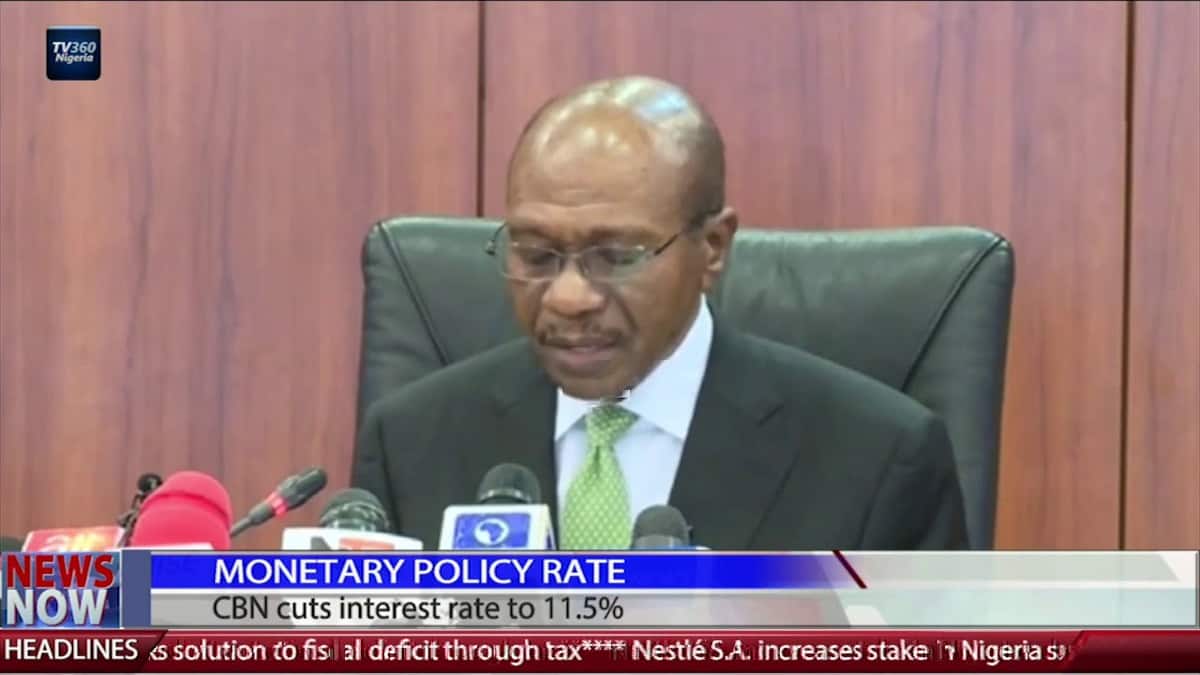
    CBN Reduces MPR to 11.5%

    The Central Bank of Nigeria (CBN) Tuesday resolved to reduce the Monetary Policy Rate (MPR) by 100 basis points to 11.5 per cent from 12.5 per cent and adjusted the asymmetric corridor to +100/-700 basis points around the MPR.

    The MPR is the rate which the apex bank lends to commercial banks and often determines the cost of funds.

    Addressing journalists at the two-day meeting of the Monetary Policy Committee (MPC in Abuja, the CBN also retained Cash Reserve Ratio (CRR) 27.5 per cent and Liquidity Ratio at 30 per cent.

  • MSME Survival Fund and Guaranteed Offtake Scheme

    As a part of the federal government plan to sustain Micro, Small and Medium Enterprises most affected by the Covid-19 pandemic, President Buhari approved N60B for the MSME Survival Fund and N15B for the Guaranteed Offtake Scheme. 

    These two initiatives are to stabilize and help micro, small and medium businesses pay employees, which will, in return, save existing jobs, and also increase employment opportunities.

    Note: If you are more interested in the Nigerian Youth Investment Funds (NYIF), go to: https://experts.ng/blog/nigerian-youth-investment-fund-opens

    MSME Survival Fund and Guaranteed Offtake Scheme are a part of the N2.3trn stimulus package of the Nigerian Economic Sustainability Plan (NESP).

    The Nigerian Economic Sustainability Plan was set up by the Federal Government to combat negative economic impacts of the Covid-19 pandemic.

    Suggested: 22 Verified FG & International Grants for Small Businesses in Nigeria

    Related: Nigerian Youth Investment Fund

    MSME Survival Fund

    The MSME survival fund is not a loan, but a conditional grant given to Micro, Small and Medium Enterprises to retain employees and save employment. 

    The Federal Government is targeting to save over 1.3 million jobs nationwide and to impact over 35,000 people per state directly.

    Read: Sources of Funding for Small Business Owners in Nigeria

    Duration of the fund:

    This initiative is to provide immediate relief to businesses for three months.

    Beneficiaries of the fund:

    The focus of the MSME Survival Fund is to help two groups of people: MSMEs and self-employed individuals. 

    Both the MSME Survival Fund and Guaranteed Offtake Scheme have made provision of a 5% special need and 45% female business owners.

    Registration Steps and Requirements

    Requirement for Registration

    To register, you must be the Founder/Proprietor/Administrator of the MSME that you are trying to register.

    Register your personal details to start the payroll support application. Instructions at the top of the form will guide you on the required fields that need to be filled to complete the initial registration.

    On registration, an activation code would be sent to your phone and also your email to enable you to activate your account. On successful activation, you would be asked to log in to your account where you would see your registration progress and other profile details.

    Step 1 – Personal Registration

    Step 2 – Register Your Organization

    Note: You must register for your unique SMEDAN Unique Identification Number (SUIN) and you would need to fill in the details of your employees, but unfortunately, that form is not available until October 1, 2020.

    Guaranteed Offtake Scheme

    While the goal of the MSME Survival Fund is safeguarding employment, the Guaranteed Offtake Scheme is to protect and sustain Micro and Small Enterprises’ income from the adverse effects of the Covid-19 pandemic. 

    This scheme will birth various initiatives geared towards boosting production capacities of micro and small businesses.

    Duration of The Guaranteed Offtake Scheme

    This scheme is to last for a period of 3 months.

    Beneficiaries of the Fund

    MSMEs registered in Nigeria

    Features of the MSME Survival Fund and Guaranteed Offtake Scheme 

    Payroll Support: For a period of 3 months, 500,000 MSMEs affected by the Covid-19 pandemic will be supported with N30, 000 – N50,000 per employees to pay their staff.

    Free Business Registration: 250,000 new small businesses will be provided with free CAC business name registration.

    General Grant: 100,000 MSMEs affected by Covid-19 are to be granted N50,000 each survival grant.

    Operations Grant: 333,000 transport business operators and artisans will be provided with N30,000 each to make up for their income loss during the Covid-19 pandemic.

    Guaranteed Offtake Scheme: The federal government will bulk purchase products from over 100,000 businesses to keep these small businesses functioning and save jobs.

    Conditions for Applicants 

    1. Must be Nigerian owned business

    2. Business must be registered with the CAC

    3. Business must have more than 3 paid employees

    4. The CEO must have BVN

    5. Self-employed individuals include the following:

    A. Transportation business operators like Uber drivers, Bolt drivers, bus drivers, Taxi drivers

    B. Artisans like electricians, bricklayers, plumbers, etc.

    Visit www.survivalfund.ng or https://www.survivalfundapplication.com/ for registration details

    Note: Please ensure you register your business at www.smedanregister.ng before applying for the payroll support fund.

    What is the Take Off Date of the SME Survival Fund

    The take-off dates of the SME Survival funds have been scheduled based on the categories of the intending beneficiaries. They are as listed in the photo attached.Dates for SME survival funds

    What is the address of the SME Survival funds Portal

    The address of the SME Survival funds portal is www.survivalfund.ng. But please ensure that you register your business at www.smedanregister.ng before applying for the payroll support fund.

    Note: If you are more interested in the Nigerian Youth Investment Funds (NYIF), go to: https://experts.ng/blog/nigerian-youth-investment-fund-opens

    RECOMMENDED:

    Loans Without Collateral in Nigeria – ExpertsNG