Category: Financial Management

  • How to Grow Your Business With Renmoney

    How to Grow Your Business With Renmoney

    Though there are a lot of money lending apps out there, When it comes to sourcing loans for your business, Renmoney is one of the leading microfinance banks providing financial solutions to small business owners.

    With its seamless interface and a convenient workspace in 25 out of 36 States in Nigeria, Renmoney offers financial solutions to individuals and small businesses in states where it owns an operating office.

    The biggest challenge of small businesses is access to funds.

    This is in spite claims by Financial institutions when campaigning about luxurious loan offers at presumably favourable costs to SME’s.

    Renmoney prides in its use of tech to provide financial solutions to businesses that fall below the Small and Medium Enterprise(SME) rankings, through easy access bite-size loans with a customized return policy that won’t break your back.

    What is SME Ranking?

    SME’s are ranked by staff capacity. Lower capacity may affect your chance at getting funds from investors.

    Of the 41.5 million enterprises in Nigeria, 99% of these enterprises rank as small scale enterprises.

    Yet, there are lots of small businesses that do not meet the criteria.

    Small firms are generally those with fewer than 50 employees, while micro-enterprises have at most 10, or in some cases 5, workers.

    This number varies across countries. In Nigeria, the upper limit designating an SME is 250 employees, as in the European Union.

    However, some countries set the limit at 200 employees. The United States considers SMEs to include firms with fewer than 500 employees. Source.

    If you run a solo outlet with no real assets or credible employment history, then accessing loans may prove difficult.

    With the upshoot of small businesses in Nigeria, a loan remains the best option in seeking funds that would help grow your business.

    The SME rank data may have placed a limitation on low-income earners when it comes to accessing funds for growing their business.

    But with Renmoney, you can access loans and grow your business with little to no hassle.

    What is Renmoney?

    Renmoney is a microfinance bank that prides itself as Nigeria’s most convenient lending company with innovations that deliver outstanding service experiences.

    They grant both personal and micro-business loans ranging from N50,000 to N6 million.

    What makes them different from other loan outlets?

    Renmoney covers a variety of loans to suit each individual’s needs. The loans can be for school fees, smartphone funding, point of sale and loan at work.

    It is open to self-employed and employed individuals.

    What Renmoney Offers:

    1. Flexible loan tenures
    2. Competitive rates
    3. No guarantor required
    4. Zero hidden fees.
    5. Does not require collateral
    6. Get money in 24 hours

    Why Get a Business Loan From Renmoney?

    At some point, you would need a business loan to scale up in other to reach a larger market that in turn guarantees profit and growth.

    1. It’s Fast and convenient
    2. No collateral or guarantor needed
    3. Flexible repayments
    4. Competitive rates

    Our loans are designed to meet your financial needs. So, whether you’re employed or run your own business, you can get a loan of up to ₦6,000,000 today.

    Renmoney currently operates in 25 out of 36 States in Nigeria.

    How Can I get a business loan from Renmoney?

    Step by Step Guide to Accessing Loan on Renmoney

    Step 1: Apply

    You can apply by visiting the official website.

    The first thing I noticed is that the user interface is cool and easy to navigate.
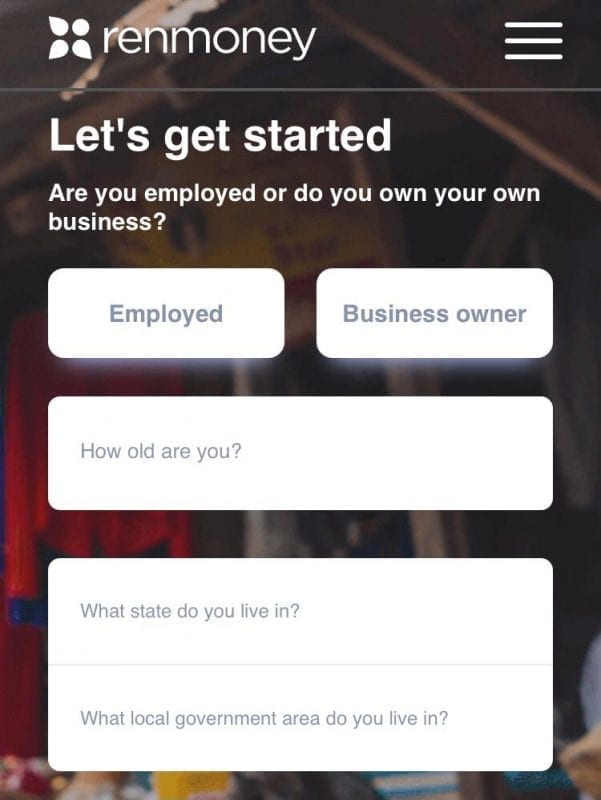
    Renmoney loans are accessible to anyone between the age of 22 and 59.

    The first part of the form requires your employment details. Next, you fill your name and other details as proof of identity and address.

    You’d notice there are two categories for employees and entrepreneurs. This would help Renmoney determine the kind of loan that is applicable to you.

    I applied for a loan as an employee. The meaning amount that you can enter as monthly salary is N1000.

    I entered an estimated salary of N50,000 and the site suggested a loan of N110,000 for a 24month tenure.

    This does not imply that I am eligible for such loan.
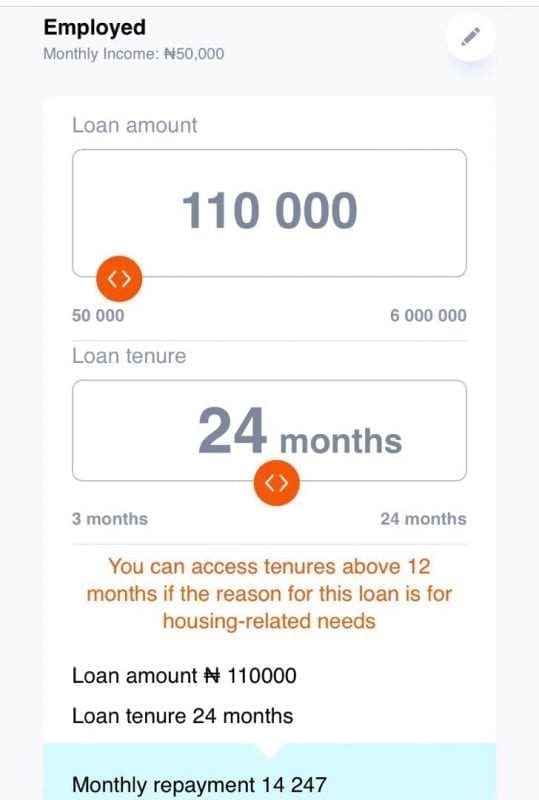
    You may have noticed red ink stating that: I can access loans outside the 12 months tenure if the purpose is for rent.

    This implies that other loans may have a maximum 12 months tenure.

    With a monthly repayment of 14,247, I’ll be paying a total of 231,928 in interest.

    Renmoney does not out-rightly state it’s interest rate on any loan, rather it uses an inbuilt loan calculator to determine interest on loan.

    After Choosing a loan amount and tenure you can move to step 2.

    Step 2: Verify

    Verify the information that you’ve provided.

    More personal information is required at this point, including your ID number for whatever mode of identification you choose (but it’s optional).

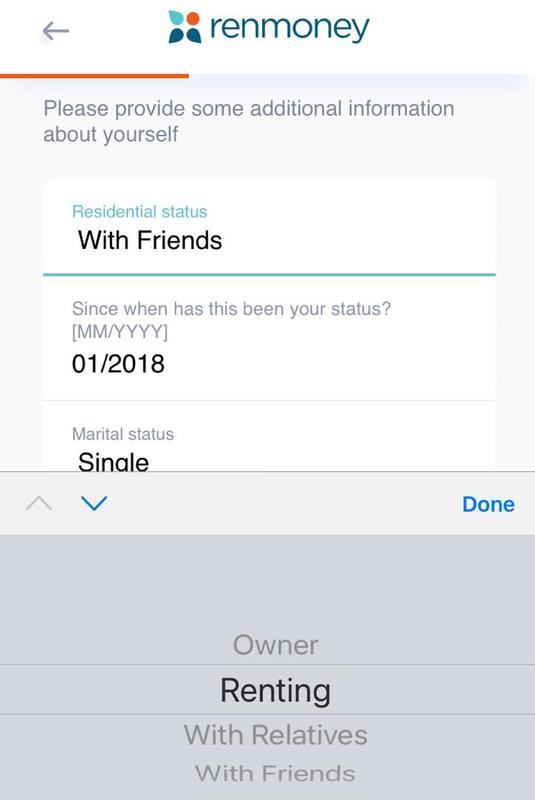
    Renmoney would require your residential and marital status to enable them work out your financial responsibilities and advice on a suitable loan.

    Upload a clear photograph or take a quick selfie for identification.

    I did not get beyond this point, considering I didn’t need a loan in the first place.

    However I got a call from a customer management staff offering to assist in completing the the form.

    Step 3: Receive loan

    I guess this is where the disgruntled reviews come in when people get loans way below their expectations.

    Financial Institutions do not give loans in good faith. Understand that it’s a business risk, and they have to tread with caution.

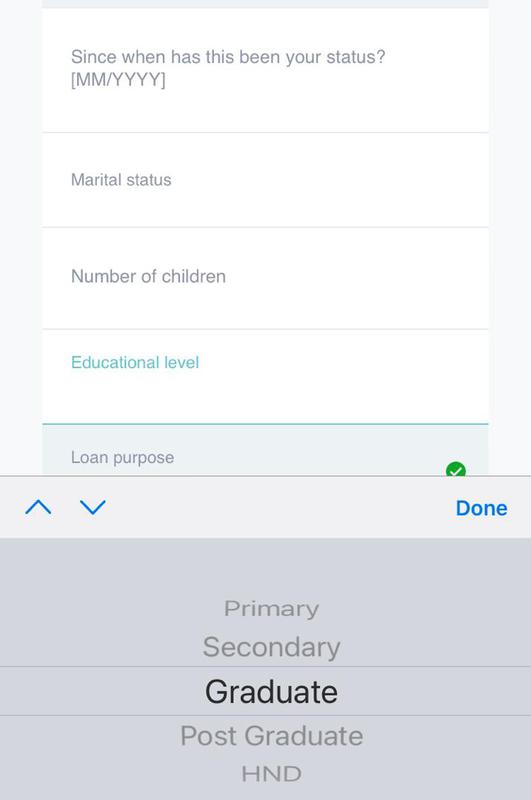
    Here are other aspects of the form that could guide you on what to expect when applying for a loan from Renmoney.
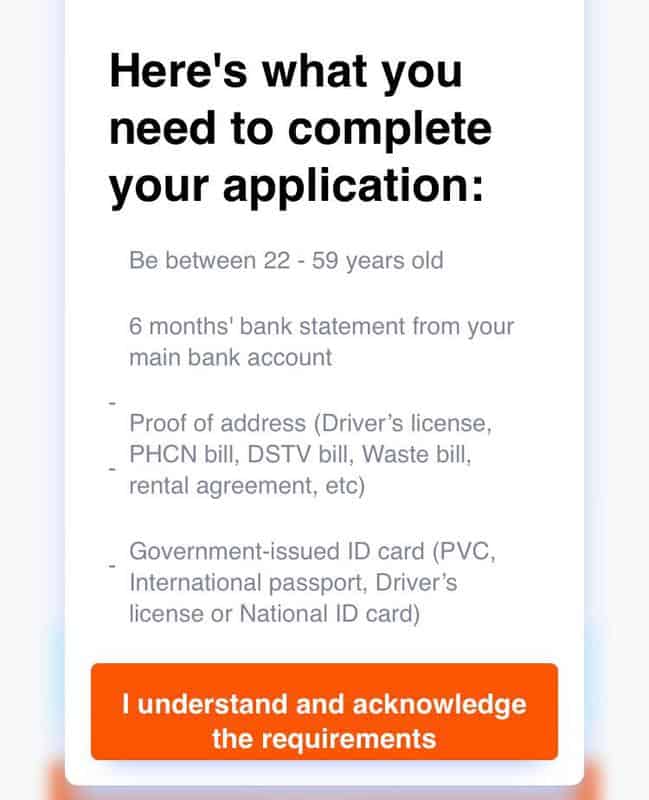
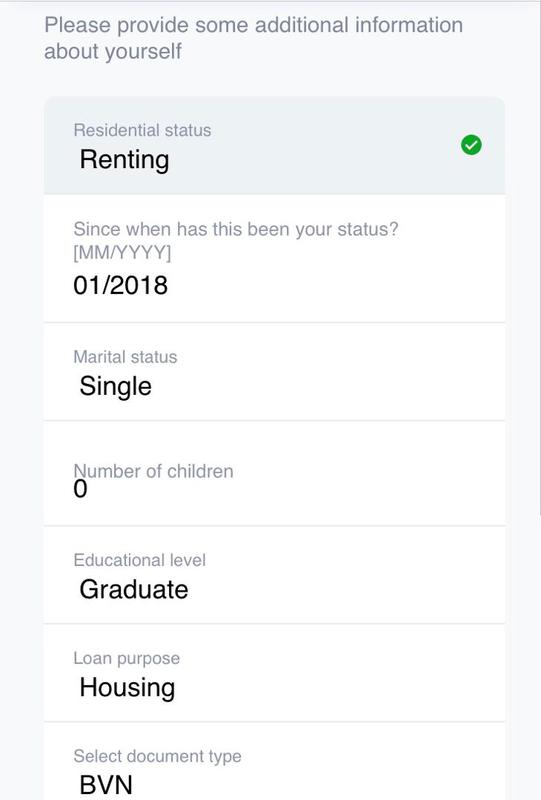
    Look through the questions in each image. Your answer might affect how you score. Work on improving your score.

    You could set a financial target to reach your desired loan and work toward it.

    Business requires planning. As you plan toward growing your business, prepare your business to be credible for loans.

    Get money in your bank account within 24 hours if your loan is approved.

    How to Get a Good Credit Score for Your Business

    If you are a sole entrepreneur who multitasks your few staff or doubles as everything, the first step to creating a good credit score is by separating business from personal finance.

    Keep proper financial records because Renmoney would request for a six months financial statement before granting a loan.

    The financial institution measures your credit score through the use of algorithms that determine if you’re creditworthiness.

    Most scoring models take into account your payment history on loans how long you’ve had accounts open, the types of accounts you have and how often you apply for new credit.

    1. Pay your bills. It’s hard to measure bill payment in Nigeria, and most financial institutions request for your Power bill at the time of opening an account. Renmoney tracks the amount of money that enters your account against the mode of spending to determine if you’d be able to meet the monthly payments. That is why it’s good to keep proper bank records for your business. If you earn cash, ensure to make deposits into the account as proof of your actual financial capacity.
    2. Don’t run your business account in the red. Set a minimum amount that must remain as a minimum balance every month. As a business owner with no real asset, your only asset is in the proof of consistent cash flow.
    3. Old credit records. Some banks offer small loans to their customers. If you plan on taking a business loan in the next 6months, try applying for a small loan. It doesn’t have to be large and ensure you refund in time. This would boost your credit score. In the absence of such record, your loan may be significantly reduced to an amount that Renmoney considers borrowable.
    4. Borrow now. Alternatively, you can start borrowing in small bits to build your credit score. As you repay loans, Renmoney increases the margin on the amount that can be borrowed to you.

    Reviews

    Before jumping into bed with any business, always consider a handful of reviews.

    While the interface was great and my short talk with the agent went smooth, here are some reviews from other customers.

    Note these reviews have been included in this post to help you make informed decisions when it comes to growing your business with renmoney.

    Hello my name is Mrs folakem, I filled out all of my information and on the final stage to get approved they went numb, waiting for the so-called code up till now to finalize my activation and still haven’t heard anything, I just hope these guys aren’t fraudsters because I have given all of my information to them Useful Share

    Source: Trustpilot.com

    I wish there was a no star option, that is the best to describe the type of horrible service that this company dishes out to her customers. I have been a customer for over 14 Months and everything was going fine but just before the corona pandemic, i had financial crisis which then was worsened by the shutdown of the nation. Through out the lock-down i keep getting calls from different agents with various threats as if threats will yield money, i tried severally to know if those agents were calling from another planet other than earth, cos i believed everyone on earth knows what is going on has the world is almost completely shut down, they told they are on earth and infact in Lagos, to me that shows the level of wickedness of a company whose only interest is how to recoup their money not even taking into consideration the payment history of the customer. Its extremely sad that at a time every corporate organization is looking for ways to impact the people by means of preaching hope, all that matters to Renmoney is their money. Let me emphasize here that threats doesnt bring about money,compassion does. I will be unfair if i do not single out a particular lady who was exceptionally different ” Ester” she spoke well and kept on encouraging me that things will get better and yes its getting better and i have since began paying, by God’s grace i will soon finish my repayment and i will warn even the worst of my enemy not to near anything that starts with REN……Its been hell of an experience. I will nominate RENMONEY for an award for the company with the most heartless set of customer care team, i am confident that you will surely have no rival for the award.

    Source: Trustpilot.com

    Yet one customer had this to say:

    Currently even having issues with renmoney , they claim you get your credit alert on or before 24hours, it’s just not true, the customer service is just inconsiderate, and some cases ill mannered.. They have no respect for client time, and they just switch off once the loan has been applied for and the payment mandate is placed on your account… Credit doesn’t come within 24hours as they advertise and their interest rates are high..i still have an uncredited loan as we speak, with a payment mandate on my account

    Source: Trustpilot.com

    Conclusion

    Now you know what to expect when applying for a business loan on Renmoney. From Snapshots of loan forms to client reviews, this article provides a step by step guide to loan application and insight on improving your credit score.

  • Tax In Nigeria – Individuals and businesses, And What You must Know About it.

    Tax In Nigeria – Individuals and businesses, And What You must Know About it.

    Tax is a mandatory financial surcharge or levy imposed on a taxable entity (an individual or legal body) by a government to fund government expenditures in delivering good governance to its people.

    In Nigeria, the government organization in charge of enforcing and collecting tax is referred to as Inland Revenue Services. 

    Tax Laws / Legislations in Nigeria

    Tax legislation is the act or process of enacting tax laws and the body of rules that provide for the levying of taxes and the administration of tax.

    Nigeria has a compendium of tax laws guiding the administration of laws at all levels. Click here to download this compendium.

    Taxes and all it embodies are usually not something most small business owners concern themselves with, and understandably so. 

    The requirements of running a business and keeping it thriving in Nigeria require a full complement of skills, of which taxation is a key but usually a neglected part. 

    Since the President signed the Finance Act 2019 into law, there has been a raft of changes across the taxation sector, and these changes also apply to small businesses. 

    It would be suicidal not to be aware of these changes, which is why we have written this guide for you. 

    Let’s dive in. 

    Tax for new businesses

    Tax Identification Number (TIN)

    The new Nigeria Finance bill (2019) made amendments to the Personal Income Tax Act, specifically in sections 33, 49, and 58. These amendments led to the mandatory design of the Tax Identification Number. 

    The TIN is now a compulsory requirement for every taxable entity (entity here means both individuals of taxable age and companies). It is a uniquely generated 14 digit number that identifies a taxable entity for payment of taxes due. 

    Application for and the issuing of your TIN is free, so ensure you are not conned into paying for it. 

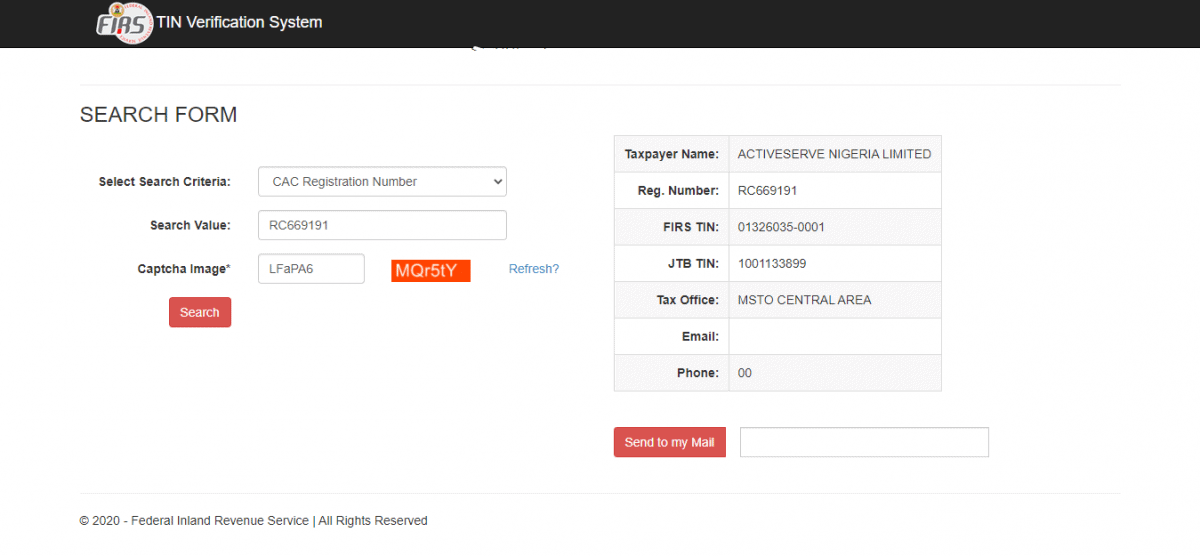
    Example of TIN search in Nigeria
    An example of a free TIN search.

    Click here to search for your TIN – Freely!

    Why Should You Get a TIN

    Getting a TIN in Nigeria is now mandatory, so that’s a good reason to get yours. But beyond that, the following are the reasons why you should get your TIN, especially as a small business owner. 

    1. Access to Government Loans
    2. Foreign Exchange
    3. Vehicle Registration
    4. Application for Certificate of Occupancy
    5. Tax Clearance for Business
    6. Access to a Bank Account
    7. Application for an import license and an export license
    8. Many more reasons abound
    1. Access To Government Loans, Grants and Other Social Safety Net Initiatives: The government has tied access to any government loan, either federal or state, to the acquisition of your TIN. It would be a shame to be denied a chance to get much-needed funds from a government loan because you don’t have your TIN. 
    2. Foreign Exchange: TIN is now a compulsory requirement to access foreign exchange at any registered BDC in Nigeria.
    3. Vehicle Registration: Without a TIN, you won’t be able to register a vehicle, be it a car, a tricycle, or a motorcycle. Using an unregistered vehicle puts you in the uncomfortable position of being accused of stealing the vehicle. Apart from that, if you run a business in which a vehicle is an asset, you’d need to register it, and not having your TIN would be a barrier to that.
    4. Application for Certificate of Occupancy: This also reinforces the need to get your TIN. Not being able to apply for a C of O means you won’t be able to take lawful possession of any property you buy, which will most likely be a problem.
    5. Tax Clearance for Business: This is quite straightforward, as not having a TIN automatically rules out the chances of you being able to pay tax. And if you can’t pay tax, how can you get a tax clearance? Not having a tax clearance certificate as a business owner limits your chances of effectively conducting your business in Nigeria.
    6. Access to a Bank Account: Either as a business or as an individual, failure to get your TIN will mean you won’t be able to open a new bank account, neither will you be able to maintain the one(s) you have. This denial of access to essential banking services hammers home the point of how important it is to get your TIN as soon as possible.
    7. Application for an import license and an export license: If you need to import or export goods or services in and out of Nigeria, a onetime license registration procedure must be completed.  Such import/export license may be obtained from concerned government department of Nigeria.

    For importing to Nigeria, you must do the following amongst others,

    a) Should register the company or business name in Nigeria with the Corporate Affairs Commission (CAC).

    b) Register the company with the Federal Inland Revenue Services (FIRS) and get Tax Identification Number (TIN Number) as the proof of tax payments.

    How To Get Your TIN in Nigeria.

    With the utmost importance of getting your Tax Identification Number highlighted above, knowing how to get your TIN is imperative. The following steps will explain how:

    1. As an Individual: Getting your TIN as an individual is a seamless and easy process. This is because the generation of your TIN is based upon your possession of either your Bank Verification Number or your National Identity Number. Having both of them, or at worst, one of them guarantees you a TIN. All you then need is to verify yours. 
    2. As a Registered Business Name: If your business is not yet incorporated, but it already has a registered business name, then getting your TIN isn’t any trouble. All you have to do is to apply for your VAT number, and once you get it, it will also be your TIN number. 
    3. As an Incorporated Business: To get your TIN as an already incorporated business, go to any FIRS office that’s close to your registered address. You can find the address of the FIRS offices on their website. Ensure you take the following documents along with you;
    • Write an application letter on a company letter headed paper. 
    • Fill a TIN application form
    • The Articles and Memorandum of Association of the company
    • The company seal
    • A copy of a utility bill
    • The Certificate of Incorporation

    You should present all documents listed above in triplicates to the FIRS to get your TIN issued; one original copy and two photocopies. Ensure you leave one photocopy with the FIRS officials, and get the other stamped by a FIRS official. 

    Note: The issuance of TIN is now automated for new registrations at the CAC, and issued on the incorporation of a new business entity – business name or company.

    Call To Action

    Contact us on +2347051114444 or send a mail to enquiries@experts.ng to have a free consultation with a trusted tax consultant to help you achieve your tax compliance

    Taxes in Nigeria

    Categories of Taxes in Nigeria:

    At the federal level, we have the FIRS – Federal Inland Revenue Services, and at the state level, we have the State Inland Revenue Services, with examples such as the LIRS, EIRS, etc. 

    Federal taxes include Companies Income Tax, Value Added Tax, Education Tax, etc. 

    State taxes, on the other hand, include Personal Income Tax, Business Premises Tax, Development levy, etc. 

    Personal Income Tax

    Personal Income Tax is another tax that a small business owner must be aware of. The Personal Income Tax Act of Nigeria prescribes the conditions in which personal income tax is payable. It also prescribes the terms of collections and the identity of the tax collector. The state government is the usual collector of personal income tax (PIT). 

    Personal income tax is a direct tax that is usually charged on the income of an individual or a business entity that has an annual turnover of less than N25,000,000. 

    Personal Income Tax Rates

    The Personal Income Tax Rate in Nigeria stands at a minimum of 7% and a maximum of 24 percent depending on a person’s taxable income level.

    Annual Taxable RevenueRate
    First N300,0007%
    Next N300,00011%
    Next N500,00015%
    Next N500,00019%
    Next N1,600,00021%
    Over N3,200,00024%
    The following table shows the rates applicable to different levels of earnings for the Personal Income Tax in Nigeria

    Conditions For the Payment of Personal Income Tax

    Personal income tax is only payable by people who gain or profit from being either self-employed or being salaried is derived from Nigeria. This means that the operations of employment are performed in Nigeria, either wholly or partly. 

    Place of Residence and Its Importance to Assessment and Collection of Personal Income Tax

    Under the provision of the PIT Act (as amended), the place of residence of a taxpayer is a place where they use for domestic purposes for each day. This rules out hotels and guesthouses. 

    A place of residence, or a principal place of residence, if the taxpayer has more than one, needs to be determined. This is because a place of residence will determine the relevant tax authority. 

    The relevant tax authority is the State Internal Revenue Service in which the taxpayer has a principal place of residence. 

    For instance, if a taxpayer lives in Ibadan, but works in Abeokuta, then the taxpayer will remit taxes to the Oyo State Internal Revenue Service. 

    Calculating your taxes has not been easier. Today, with the clicks of a few buttons on your keyboard, you could easily calculate your Personal Income Tax as well as other tax, using the FIRST Tax calculator. 

    Withholding Tax

    Withholding tax (WHT) is another area in taxation that many Nigerians claim is stressful. But is it? Sometimes, it is, especially when you don’t understand how it works.

    How Does WHT Work?

    Withholding tax is a form of indirect taxation. It is done in advance from the very source at which you make supplies. 

    To make it more straightforward, here’s a simpler explanation. Assume you make a supply of beverages to another business, and it totals 500,000 Naira. 

    At the point of delivery, you will write an invoice for your buyer, showing the amount they are to pay. From the #500,000, your buyer is expected to give you only #450,000, assuming that the supply’s WHT is 10%. The #50,000 that has been deducted by your buyer is to be remitted to the relevant tax authority, which is usually the Federal Internal Revenue System or the State Internal Revenue System. 

    The evidence of remittance must then be handed over to you as the supplier so that you can present it to tax officers when they visit you or when filing your annual taxes.

    Employers are also expected to ‘withhold’ this tax on wages, bonuses, and so on. Pensions, winnings at a gamble, and payment on residential properties are also eligible for withholding tax.

    The only exemptions provided by the law are on transactions that don’t involve a contract of purchase, that is, transactions that don’t involve supply. 13th-month pay and self-employed members of the society are also exempted. 

    Withholding tax is not deductible on everyday purchases.

    Withholding Tax Rates in 2020

    The current rates on withholding tax depends on the type of transaction involved. Different transactions attract higher or lower rates. 

    It also depends on the tax authority involved, whether it’s the Federal Internal Revenue System or the State Internal Revenue System. Currently, withholding tax ranges from 5% to 10%.

    Advantages of Withholding Tax

    Most of the merits of withholding tax come back to you as the supplier. 

    • It’s more like advance payment.

    Withholding tax is taken before you’re paid for your supply, so it makes it easier to comply with the law. Seeing how burdensome taxes may be for small businesses, it’s an excellent way to do what you have to do.

    • It reduces your tax by the end of the financial year.

    By the end of the financial year, you’ll have less to pay in taxes having paid your withholding tax as the year went by. All you have to do is ensure that you keep your credit note so that you don’t get charged extra.

    • It helps the government to curb tax evasion.

    This merit is for the government. Withholding tax has primarily helped the government to reduce how often people evade paying taxes. 

    Withholding Tax Credit Notes

    It is a document that serves as the evidence of payment of the withholding tax after a supply transaction. The tax authority is in charge of issuing the credit note to the person who purchased goods from you. You will have to return to your purchaser to obtain the document as you will need it in the future.

    The credit note includes essential details such as the credit number, date of transaction, purchaser’s name, beneficiary (supplier’s) name, and the nature of the transaction.

    Penalties for Not Paying Withholding Tax

    Generally, it’s better not to get caught detailing as the consequences can be severe, especially for small businesses.

    It attracts 200% per annum for companies that default and #5000 per annum for individuals.

    Problems of Withholding Tax in Nigeria

    For small businesses, withholding tax can get problematic in the following ways;

    1. Inefficiency in Issuing the Withholding Tax Credit Note by Relevant Authorities: In places where the credit note issuance is not automated, it is a complicated process trying to obtain it. There’s unnecessary and burdensome paperwork involved sometimes, and this can cause problems for small businesses in the country.
    2. Rigorous Refund Process: If there’s a mistake and you overpay to the government, it is nearly impossible to receive a refund. That is not good enough, and such process issues have made withholding tax a rather unattractive topic for many entrepreneurs.
    3. Lack of Clarity in Defining Rates: The withholding tax rates on certain goods and services in the country are not clearly defined. Since the 5% to 10% rate depends on the kind of transaction carried out, there should be a clear definition of what transactions attract particular rates.

    VAT

    Value Added Tax (VAT) is simply consumer tax. It’s a kind of tax imposed on goods and services, and unlike withholding tax, the burden of VAT is on the final consumer.

    Though VAT is charged at every stage of the supply chain, it does not mean that the final consumer will pay more than expected. Importers, suppliers, manufacturers, and distributors are mandated to register by obtaining a VAT registration number.

    Goods that Attract VAT

    Certain goods and services are VATable while some are not.

    All goods imported to Nigeria (with some exceptions) are charged with VAT. The payment of VAT does not take away the fact that custom duties and other charges must be paid. 

    The exemptions are:

    • Exported goods
    • Educational materials like books
    • Agricultural equipment
    • Medical services
    • Basic food items
    • Newspapers
    • Veterinary Medicine equipment
    • Commercial vehicles
    • Baby products
    • Bank services, especially community, People, and mortgage banks.
    • Zero-rated items are not charged for VAT.

    How is VAT Calculated and Paid

    Currently, in Nigeria, VAT is 7.5% of the invoice value. 

    Your output VAT is collected on your sales of VATable goods and services to ordinary customers as well as other businesses.

    Your input VAT is the VAT that you pay as a buyer in the goods and services you purchase. You can legally claim this as a credit when paying VAT to the FIRS. This will reduce the amount you’ll pay altogether.

    To claim your input VAT as credit, you must tender your tax invoice. Tax invoices are issued with supply and they show the VAT information for the supplies made to you.

    How Long Does it Take To Process TIN?

    Allowing for backlogs and slow responses due to the Covid-19 pandemic, it shouldn’t be more than two weeks. 

    Is Tax Avoidance Illegal?

    Tax avoidance is not illegal. Many small businesses do it to save as much money as possible to finance the growth of their businesses. 

    It is only illegal when you cross over into tax evasion by hiding your actual income or claiming expenses that are not true. You can also get into trouble when you dishonestly declare bankruptcy.

    What is Direct tax

    Direct tax is taxes, such as income tax, which is levied on the income or profits of the person who pays it, rather than on goods or services. It is not transferred to the final beneficiary of the taxable product or services

    Recommended: 8 Ways To Build an Effective Startup Team that will last

    Tax Avoidance

    Tax avoidance is the use of legal methods to minimize the amount of income tax that an entity – an individual or a business should pay. This is generally accomplished by claiming as many deductions and credits as are allowable. It may also be achieved by prioritizing investments that have tax advantages, such as buying government bonds.

    In Nigeria, there are loopholes in the taxation system that you can plug into to give you a breathing space on how much taxes you have to remit to the government per time. Exploiting these loopholes is called Tax Avoidance. 

    As a small business, you should have quality education on tax laws so that you will avoid paying excessively to the government each time. You’ll also get more funds to grow your business. The traps to be aware of, though, is that you must not cross the thin line into tax evasion. It’s like a criminal threshold that you mustn’t break because if you do, you can get into more trouble than you bargained for.

    Many knowledgeable individuals and business owners engage in legal tax avoidance activities. Such practices exists in Nigeria and It is only fair that you’re aware of it too.

    How to Activate Tax Avoidance

    It’s important to note that you should do this only with the help of a tax expert. That way, you’re sure of success without getting in the way of the law. To reduce the tax liability in your business, here are a few methods that you can use;

    1. Invest in Certain Sectors: There are sectors that the Nigerian government wants the citizens to invest in. To encourage this, they offer incentives such as freedom from tax payment for a period to the investors. These government promoted organizations, including the pioneer industries, can exempt you from paying tax for up to five years. There are also sectors such as Agriculture (no VAT on products) where fewer tax payments are incorporated to attract investors. You can take advantage of this.
    2. Invest Proceeds from Capital Gains into Buying Capital Gains: This method is quite direct. It’s commonly used when you sell an asset in your business. All you have to do is put back your proceeds into buying another asset that is in the same class as the one you just sold. For example, if you sold your delivery truck for 3 million naira, by investing that amount back into getting another truck, you can successfully avoid paying tax on the money you made from selling the delivery truck.
    3. Donate to NGOs: Sending donations to non-governmental organizations is rewarded by exempting you from paying tax on the part of your income that you donated. Since you’re giving to a charitable cause, it’s seen as a support of public efforts to make the country a better place. Note that you can only donate to NGOs that are stated in the Schedule 5 CIITA. Examples are the Boys Brigade, Girls Guide, and Red Cross. You can find out the rest of them by consulting a tax expert. 
    4. Depending on Your Business Type, You May Have an Advantage: Depending on the type of business you run, you may have several advantages that you can grab. For real estate companies, for example, the homes and lands are seen as inventory. That is in compliance with the Nigerian Standard Board. You can avoid capital gains tax by going through the right means. 
    5. Keep Records of Past Losses in Your Business: If your business is in debt, you should record it. If you recently hit a loss and have to pay it from a profit you just made, state it clearly. For example, if your most recent profit is 5 million naira, and you have to rectify a loss of 3.5 million naira, what you’ll be taxed on is 1.5 million naira. Losses are not meant to be taxed.
    6. Register as a Non-profit Organization: Of course, this is another way out. To avoid taxes totally, you can register your business as a non-profit. Although, if you make any investments in other sectors, you will be taxed. Another side to it is that you as the owner will not be eligible to receive dividends from the company.

    There are in fact many other ways to avoid paying taxes, and you can know them all by talking to a tax expert.

    CONCLUSION

    The world of taxation is a complex and mystifying one, which is why we have written this guide to help sort tax issues out, especially as it concerns you as a business owner in Nigeria. 

    NEED A TRUSTED TAX CONSULTANT TO HELP YOU ACHIEVE TAX COMPLIANCE?

    LOOKING TO TAKE ADVANTAGE OF SOME OF THE TAX HOLIDAYS, AND EXEMPTIONS WITHIN THE NIGERIAN TAX SYSTEM?

    Having a tax expert to go along with the information you’ve just gotten will help ensure that you are on top of tax matters in your business. If you’d like to hire a tax expert, we greatly recommend Microflex limited.

    Microflex limited is a sterling business development services expert with focus on developing MSMEs in Nigeria. She is committed to helping businesses of all sizes across several industries achieve their business development goals and tax compliance.

    Contact Microflex limited and take full advantage of all the tax holidays and exemptions.

    Contact: Info@microflex.com.ng or dial 07051114444 for a free consultation.

  • Loans Without Collateral in Nigeria – ExpertsNG

    Loans Without Collateral in Nigeria – ExpertsNG

    The term loan refers to a type of credit vehicle in which a sum of money is lent to another party in exchange for future repayment of the value or principal amount. In many cases, the lender also adds interest and/or finance charges to the principal value which the borrower must repay in addition to the principal balance. Loans may be for a specific, one-time amount, or they may be available as an open-ended line of credit up to a specified limit. Loans come in many different forms including secured, unsecured, commercial, and personal loans – Investopedia

    Online Platforms that give Quick Loans to Small Businesses

    If you’ve been wondering where you can access loans as a small business in Nigeria, here are 10 online platforms where you can get quick loans for your business in Nigeria (in no particular order)

    1. SMEDAN – SME loan supported by federal government

    Let’s start with this government-backed initiative before going to the private sector. As a way of supporting small and medium businesses in the country, Nigeria’s federal government established the Small and Medium Enterprises Development Agency of Nigeria (SMEDAN) in 2003 to help promote the growth of small and medium enterprises.

    They do this in different ways including training, mentorship and provision of loan. 

    • Minimum amount: N100,000
    • Maximum amount: N2,000,000
    • SMEDAN Loan Requirements: Business Plan and National ID
    • Interest rate: 4%/month

    You can visit SMEDAN website to apply for this loan.

    2. Renmoney – Personal and business loan

    Renmoney is a digital-friendly microfinance bank that gives quick loans to small businesses and individuals in Nigeria.

    To get SME loan from Renmoney, you have to show proof that your business has monthly earnings so that you can payback.

    • Minimum amount: N100,000
    • Maximum amount: N6,000,000
    • Renmoney Loan Requirements: Bank Statement, Utility Bill and National ID
    • Interest rate: 2.8%/month

    Visit Renmoney official website to apply for the loan.

    3. Lidya – Small business loans and working

    Lidya is a leading SME-only loan platform. The online platform was launched in 2016 to close the credit gap, in Nigeria and other emerging markets.

    If you’d like to access an easy loan for your business, you can apply for Lidya business loan online or through mobile phone and receive feedback in a couple of hours.

    Lydia makes use of technology and algorithms for risk assessment before disbursing loans. Once they run your application through their system and you are eligible for the loan, disbursement is made.

    • Minimum amount: $500
    • Maximum amount: $50,000
    • Lydia Loan Requirements: Proof of registration, Existed for 3 months+ and a Bank Account
    • Interest rate: 3.5%/month

    If you’d like to take a loan from Lydia, you can start your application here.

    4. Kiakia – Smart lending and swift loans

    Backed by a renowned commercial bank, Sterling Bank, Kiakia is an Abuja based financial institution that gives quick loan to small businesses in Nigeria.

    The online platform also makes it possible for users to give each other loans using intuitive conversations.

    • Minimum amount: N50,000
    • Maximum amount: Depends on credit score
    • Kiakia Loan Requirements: BVN, Valid ID, verified source of income
    • Interest rate: 3.5%/month

    Begin your business loan application with Kiakia on their website.

    5. Carbon – Fast, flexible loan for businesses

    Carbon is a popular digital loan platform in Nigeria. Formerly known as Paylater, Carbon was initially known as the go-to platform for instant personal loans.

    However, Carbon recently launched Carbon for business to support SMEs and startups with loans to scale.

    Using your BVN, Carbon can calculate your credit and determine how much they can give you.

    • Minimum amount: N50,000
    • Maximum amount: N20,000,000
    • Carbon Loan Requirements: Business running for 12 months +, 1 million+ monthly revenue
    • Interest rate: Depends

    You can access carbon business loan here.

    6. QuickCheck – Quick loans for Nigerians

    Quickcheck loan app gives you access to instant loan online for personal and business needs.

    • Minimum amount: N1,500
    • Maximum amount: N500,000
    • Quickcheck Loan Requirements: Depends
    • Interest rate: 5%/month

    7. C24 – Online loan without collateral

    This financial institution gives loans to support individuals and businesses with urgent financial needs. With your internet-enabled device, you can access quick business loan for your small business in Nigeria.

    • Minimum amount: N5,000
    • Maximum amount: N5,000,000
    • C24 Loan Requirements: Formal loan application, recent utility bill, means of identification among others
    • Interest rate: 4%/month

    Start your C24 loan application here.

    8. FastCredit – Fast loan for your needs

    Small and medium enterprises like yours can access quick loans from Fast Credit SME loan. This one requires a guarantor and the maximum tenor is 6 months for businesses that meet their criteria.

    • Minimum amount: N100,000
    • Maximum amount: N5,000,000
    • FastCredit Loan Requirements: 12 months business account bank statement, proof of registration, evidence of tax payment among others
    • Interest rate: 4%/month

    9. EazziCash – Easy access to loans

    Eazicash has two loan packages for small business owners, namely Eazzipawn and EazziAssist. 

    • Minimum amount: N100,000
    • Maximum amount: N6,000,000
    • EazziCashLoan Requirements: Must be resident in Lagos and its environs
    • Interest rate: Depends

    Visit Eazzicash website to apply.

    10. Zedvance – Access to quick loans without collateral

    Last but not least, Zedvance is an online platform that gives loans mostly to individuals. However, in a bid to encourage entrepreneurship, Zedvance has loan facilities for small businesses run by salary earners (as side hustle).

    So if you have a job but run a business on the side, then Zedvance loan is for you.

    • Minimum amount: N20,000
    • Maximum amount: N5,000,000
    • EazziCashLoan Requirements: NUBAN cheques or debit mandate, Employee ID, Employment letter, among others.
    • Interest rate: Risk-based

    Start your Zedvance loan application here.

    Reasons To Take Loans

    The importance of loans to a small business or individuals cannot be overemphasised. Except you want your business to remain small permanently, you are most likely going to take loans at some point.

    Before now, only big companies had access to loan facilities in Nigeria. That has changed in recent years since it’s now glaring to all that small business play important roles in the economy.

    In a report made public by PwC in 2018, SMEs (Small and Medium and Enterprises) constitute 96% of businesses in the country and the employer of 84% of Nigerians. Also, SMEs contribute 48% of Nigeria’s GDP (Gross Domestic Product).

    With this, it’s glaring that the growth of your small business has a positive impact on the country’s economy. And loans can help to make that growth you desire a reality.

    Aliko Dangote is the biggest inspiration for most entrepreneurs in Nigeria. He is the richest black man on earth, so it makes sense that he inspires us all.

    The Kano-born business mogul is currently worth over $7billion. But all of the money and success notwithstanding, Dangote too gets to take a loan sometimes. Even if we don’t know of the unpublicised loans from friends and business associates, Forbes reported in 2018 that Dangote got $650 million loan from Afreximbank (African Export-Import Bank).

    The Dangote example is just because it’s closer home and would resonate more. There are several other successful businessmen and women in the international space that had to take loans to support their businesses at some points.

    Jeff Bezos’ parents loaned him $250,000 in 1995 (about $30 billion dollars today). Bill Gates loaned Steve Jobs $150 million in 1997 as a form of investment in Apple when it was at the Brink of Bankruptcy. We can go on and on.

    The point here is not to encourage you to take needless loans. No one, absolutely nobody said you should take loans to flex. Not at all. Instead, here are a few reasons why you should consider taking loans

    • Loans can help you expand your small business
    • It can be used to offset inventory costs
    • To acquire expensive equipment or other business needs
    • For cash flow: operational costs
    • To stand the chance of getting higher loans with better terms in the future

    Top Places To Apply For Loans in Nigeria 

    Accessing loans is one of the major necessities in Nigeria. 

    To get an idea of what sort of loans are available in Nigeria, we decided to find out what funding options are available in the country. We conducted a search on various finance websites and compiled our best picks into this post.

    There are so many organisations that grant loans in Nigeria. Some of these organisations are either owned by the Government or owned by private individuals.

    This article lists the very functional, top 50 organisations in Nigeria that give loans out.

    1. Bank of Agriculture (BOA)

    The Bank of Agriculture is a Nigerian government-sponsored bank that provides loans, credits, and other forms of funding for farmers and farming businesses.

    They provide products and services such as Agro-processing facilities, Export finance facilities, and many others. They can award loans up to NGN 5 million Naira, and their interest rate is between 7% and 21%. 

    To apply for a loan at the BOA, you must first:

    • Have collateral
    • A duly completed application form
    • Three recent passport photographs
    • A current copy of utility bills
    • An initial deposit of NGN 3000
    • An existing farmland
    • A signed letter from the bank 
    1. Bank of Industry(BOI)

    The Bank of Industry Limited (BOI) is Nigeria’s oldest, largest and most successful development financing institution. It was reconstructed in 2001 out of the Nigerian Industrial Development Bank (NIDB) Limited, which was incorporated in 1964. The bank took off in 1964 with an authorized share capital of 2 million (GBP).

    The BOI’s core mandate is to provide financial assistance for the establishment of large, medium and small projects as well as the expansion, diversification and modernisation of existing enterprises; and rehabilitation of existing ones. 

    Once you meet its requirements, accessing loans from the BOI is not so cumbersome, the BOI is one of the best sources of funds available to Nigerian businesses.

    Development Bank of Nigeria (DBN)

    The Development Bank of Nigeria (DBN) was conceived by the Federal Government of Nigeria (FGN) in collaboration with global development partners to address the major financing challenges facing Micro, Small and Medium Scale Enterprises (MSMEs) in Nigeria.

    As the name implies, this bank disburses loans to SMEs. DBN loans can be accessed through PFIs, which include Commercial Banks, Microfinance Banks, Development Finance Institutions (DFIs) and other Financial Institutions.

    DBN loan repayment tenure is flexible (up to 10 years with a moratorium period of up to 18 months) and the interest rates are on a market-conforming and fully financially sustainable basis.

    How to get a DBN Loan

    You can access the DBN loan through any of these Participating Financial Institutions (PFIs) by contacting any of the banks listed below:

    Access Bank PlcOnyinyechi.Uba@ACCESSBANKPLC.com,
    CorporateFinance@ACCESSBANKPLC.com,
    Oreoluwa.Adeyemo@ACCESSBANKPLC.com,
    Omotolani.Ketiku@ACCESSBANKPLC.com,
    Moses.Osondu@ACCESSBANKPLC.com
    Ecobank Nigeria Bank PlcEbere Onyenweaku – eonyenweaku@ecobank.com,
    TOLARINDE@ecobank.com
    Fidelity Bank PlcOsaigbovo Omorogbe – osaigbovo.omorogbe@fidelitybank.ng,
    Jennifer.David-Ake@fidelitybank.ng,
    Chiwuike.Okere@fidelitybank.ng
    To get a loan, Click Here
    FCMB LtdOluremi Agboola – Oluremi.Agboola@fcmb.com,
    George.Ogbonnaya@fcmb.com,
    Toyin.Ajibulu@fcmb.com
    To get a loan, Click Here
    First Bank Nig LtdDBNFUNDS@FIRSTBANKNIGERIA.COM
    GTBanklucia.jaiyeola@gtbank.com,
    kelvin.biiranee@gtbank.com
    To get a loan, Click Here
    Providus BankEnyinnaya Akagha – eakagha@providusbank.com
    Stanbic IBTC Bank PlcUmeasala, Damian – Damian.Umeasala@stanbicibtc.com,
    Ojosipe, Ayodele – Ayodele.Ojosipe@stanbicibtc.com
    To get a loan, Click Here
    Sterling Bank Plcbusinessbanking@sterling.ng
    Union Bank of Nig Plcaoordia@unionbankng.com,
    aebassey@unionbankng.com,
    SMEProduct@unionbankng.com
    To get a loan, Click Here
    Wema Bank PlcOlolade.Adekunle@wemabank.com,
    Arthur.Nkemeh@wemabank.com
    To get a loan, Click Here
    AB Microfinance Bank Nigeria Ltd Oladapo.Ikupolati@ab-mfbnigeria.com,
    Olukorede.Ekundebe@ab-mfbnigeria.com
    Accion Microfinance Bank LimitedNdubuisi Onuoha – nonuoha@accionmfb.com,
    Adetokunbo Elliot – aelliot@accionmfb.com,
    Emeka Uzowulu – euzowulu@accionmfb.com,
    uchukwu@accionmfb.com
    Addosser Microfinance Bank Olusola Howells – howells.olusola@addosser.com,
    deji.sobulo@addosser.com,
    oluwaseun.adekanbi@addosser.com
    Astra Polaris MFB Onifade Abimbola – abimbola.onifade@astrapolaris.com,   info@astrapolaris.com,
    Baobab Microfinance Bank Achenyo Oyibo – aoyibo@baobab.bz,
    cgwehi@baobab.bz
    Bosak Microfinance Bank Toyin Peters – toyinpeters@bosakmfb.com,  teepeeters@gmail.com,
    FrancisAtiri@bosakmfb.com
    To get a loan, Click Here
    Davodani Microfinance Bankjohne.ologe@davodanimfb.com,
    aayotomi@davodanimfb.com,
    ayodejitomi@yahoo.com,
    soyebisi@davodanimfb.com,
    ufelix@davodanimfb.com
    FSDH Merchant BankAyodele Akinwunmi – aakinwunmi@fsdhgroup.com
    HASAL Microfinance Bank bukola.afariogun@hasalmfb.com,
    njoel-ezeugo@hasalmfb.com
    To get a loan, Click Here
    Infinity Microfinance Bank Ltd Oludotun Adewunmi – g.adewunmi@infinitymfb.com,   oludotunadewunmi@yahoo.com,
    s.ogunniyi@infinitymfb.com
    Infinity Trust Mortgage BankAbiodun Akanbi – abiodun.akanbi@itmbplc.com
    Jubilee Life MortgageKushiro Roli – rolikushimo@jubileelifeng.com
    La Fayette Microfinance Bank Limitedeodetayo@advans-lfmfb.com
    LAPO Microfinance Bank LtdEfosa Aigbe – efosa.aigbe@lapo-nigeria.org,
    hope.ogbe@lapo-nigeria.org
    Mainstreet Microfinance Bank LtdAdegoke E. Adegbami – aadegbami@mainstreetmfb.com,
    midris@mainstreetmfb.com,  midris@mainstreetbankmfb.com
    Microvis Microfinance Bankoolaiya@microvismfbank.com,
    oaustin@microvismfbank.com,
    eokpanachi@microvismfbank.com
    NPF Microfinance Bank PlcRotimi Dada – rotoyin1159@gmail.com,  rdada@npfmicrofinancebank.com,
    cwosu@npfmicrofinancebank.com,
    chima_wosu@yahoo.com
    Parallex Microfinance Bankabimbola.akande@parallexbank.com,
    femi.otenigbagbe@parallexbank.com
    Regent Microfinance Bankfatima.rufai@regentmfb.com
    Seedvest Microfinance BankKehinde Oyeleke – kehinde.oyeleke@seedvestgroup.com,  oyelek@yahoo.com,
    omololaakinjoko1@gmail.com,
    jannybee1@live.com
    Stanford Microfinance BankVincent Aluu – nellyvingroup@gmail.com
    Trust Microfinance Banktrustmfb@yahoo.com,
    debanjajayi@gmail.com,
    Sodiyasamusideen@yahoo.com
    Source: DBN

    NIRSAL Microfinance Bank

    The NIRSAL microfinance bank is a CBN licensed institution that offers loans for developmental purposes, mainly to households and MSMEs. 

    NIRSAL Current Loan Products:

    1. Agric Small Medium Enterprise Scheme (AGSMEIS)
    2. Anchor Borrowers’ Program (ABP)
    3. NIRSAL Access Target Savings Accounts (NAT)
    4. COVID-19 Support

    And a host of others. Kindly Click on the link above to get more details on NIRSAL loans and services.

    NIRSAL Loan Criteria: 

    • Valid Employment letter
    • Staff identity card
    • Payslip
    • Six months statement of accounts
    • National ID card of any form
    • Utility bills
    • Passport photographs and other relevant documents. 

    The Nigerian Export-Import Bank (NEXIM)

    The NEXIM Bank is mandated to help provide loans to facilitate export goods and services from Nigeria. Only Business owners and organisations related to exporting activities are required to access loans at the bank. NEXIM Bank provides products like direct lending, foreign input, local, and other related services

    Small and Medium Enterprise Development Agency of Nigeria (SMEDAN)

    SMEDAN is charged with granting loan access to MSMEs; it provides schemes such as the commercialisation empowerment initiative, conditional grant scheme and other empowerment schemes for growing business owners. 

    Conclusion

    Just as getting a loan can be good for your business, approaching it the wrong way may haunt you later. That’s why it’s always important to read every term and condition before you submit that loan application.

    Here you have 10 different options. Go through each of their offers and settle with what works best for you in terms of the amount offered, tenor, interest rates and other conditions.

    Related: Solved:

    7 Free Financial Tools for Small Business Owners

    Top 6 Challenged of Small Business Owners Today

    MSME Survival Fund and Guaranteed Offtake Scheme

  • Solved: Top 6 Challenges of Small Business Owners Today

    Solved: Top 6 Challenges of Small Business Owners Today

    The ultimate goal of every small business owner is to grow their beloved business from startup stage to maturity and probably make a Unicorn out of it, worth at least a billion USD.

    But like in many other things, the business environment has its many challenges too, ranging from Startup capital to others like cash flow challenges, having the right strategy, marketing plan, and other things as the right staff.

    Estimated reading time: 8 minutes

    This article takes a critical look at the top 6 common challenges of small business owners, SME entrepreneurs, and how best to mitigate against or solve them.

    Most entrepreneurs go into business with a lot of hope and enthusiasm; but, these, with time, are often met by challenges that ultimately make or mar the business. Below is a list of the top 6 challenges that plague most small and medium-sized business owners.

    Until you face as much challenge like this, you haven’t faced anything yet… keep moving.

    1. Startup capital
    2. Cash flow
    3. Strategy
    4. Recruitment and Staff Retention
    5. Marketing Strategy
    6. Inadequate Online Presence

    1. Startup Capital: 

    The challenge: This is by far the most significant challenge faced by almost every single small business owner out there. Fortunately, it is one that most have also solved, else we may not have lots of small businesses out there. However, to fully appreciate the sources of funds available to you as an entrepreneur, you first must understand the fundamental types of entrepreneurship practised.

    The Solution: The solutions to the funding issues faced by entrepreneurs is embedded in the understanding of entrepreneurship itself. There are fundamentally two types of entrepreneurship – The SME (Small and Medium Enterprise) and the IDE (Innovation Driven Enterprise). 

    Innovation-driven enterprises (usually large corporations) have access to a large cache of funding sources due to their potentials for a massive return on investments, thus making them magnets for venture capitalists and venture capital firms. 

    Small and Medium Enterprises, on the other hand, have only a handful of possible sources of funding because they typically do not show a profit for at least some months after startup, if not a few years. 

    Challenges of Small Business Owners

    For Small and Medium Business owners, their sources of funding are fundamentally limited to 3 sources, and because each of these sources needs some proof of concept for your planned venture, the amount of money available to you is limited, and most often dependent on your social capital and trust level between the source of fund and the founder(s).

    • Angel investors
    • Banks and other commerce centric finance houses
    • Government

    It is therefore of note to say that it is always a good practice to first bootstrap as a small business owner, prove your concept, then move out to secure further funding.

    2. Cash Flow Crunch

    The challenge: There is no better place where the statement “Cash is king” makes more sense than in running a small business.

    Unless your business is backed by some large corporations, deep pocket angel investors, or you had a cache of funds in-store before founding your company, the chances are that you would run into cash flow problems. The flow of cash is to a business, what blood is to humans; without it, we die. Yet many business owners struggle with this challenge.

    The embedded video explains a lot about what a cash flow is, and the challenges that lead to a flow crunch.

    The Solution: With the explanation given on the significance of maintaining healthy cash flow, it, therefore, means that a business owner must ensure the following:

    • Find ways to ensure that the business brings in more money than it expends
    • Ensure that the company adequately manages such funds
    • Ensure proper budgeting and cashflow forecasting
    • Find ways to develop creditworthiness with your supplies and operate on credits as much as possible
    • Open a line of credit with your bankers
    • Ensure that as a business owner, do not forget about yourself when planning for your business’s financial future

    If you lack the necessary know-how to manage money, find someone who does.

    ExpertsNG

    A crucial point to keep in mind is that you don’t just need money for your business —you must have a plan to manage such money. Do not acquire a loan or spend your own savings without knowing exactly where money needs to be spent, how the return on your investment would be made, and how long it would take. 

    3. Strategy

    The challenge: Strategy is one important aspect of running a business that most small business owners shy away from. Actually, most small business owners know little to nothing in terms of strategy.

    A strategy is a long-term plan that you create for your company to reach the desired, future state you envision. A strategy includes your company’s goals and objectives, the type of products/services that you plan to build, the customers to who you want to sell to and the markets that you serve to make profits. Source: Forbes.com

    The Solution: For a new entrant SME to succeed in its chosen market, it must create and execute a sound strategy that puts into consideration a lot of variables, especially factors as explained by Porter’s five forces.

    At this stage, it is better to call in the experts than try to play smart and be penny wise but pound foolish. This is not the time for experimentation. It is, instead, the time to set standards and baselines that work.

    You need to revisit your mission and vision statements, break them into SMART goals, and get them aligned with your capabilities and realities. After all, what’s a vision statement if you do not align it with your realities.

    Once you set your baselines with the right documentation and processes in place, your business would be better placed, and most likely be on a trajectory for success.

    4. Recruitment and Staff Retention

    The Challenge: Hire Slow Fire Fast is a common word in entrepreneurship. There are, however, a ton of problems associated with those words. From the fear of leaked company secrets to the need to keep off the bad conversations involved with firing an underperforming employer, most business owners struggle with recruitment and staff retention issues.

    According to HBR – Many startups hire fast and fire slow. A bias for speed combined with the pressure for high growth drives many leaders to be quick to hire (“We need to fill this role now!”) but slow to remove underperforming employees. To “hire slow, fire fast,” start by being absurdly selective in whom you hire. 

    Did you know that it is not the prospective candidates that dread job interviews the most? — it’s entrepreneurs, the business owners.

    The Solution: Get it right from your foundation. Even if you did not get it right earlier, it is not too late to get things right. Functional staff is needed for business growth.

    You must get an HR unit in place and set the right policies to guide you with your recruitment and staff retention issues.

    To get things right, please follow these steps:

    1.  Build a culture: Ask yourself what you want your organization to be known for in terms of its processes and how things get done. Then write it down and envision the people you would want to work for you. Note: The first thing to check while hiring your staff is their attitude. Trust me, nothing positive comes out of anything negative.
    2. Create Organizational Structure: I believe that by now, you must have listed the skills that you need to make up your team. Now sit down and write what you expect of each role in terms of skills and daily work expectations.
    3. Create A Staffing Plan: Note that the employee does not define the role; the role defines the employee. It is, therefore, profound that you identify the roles you want, when you want the roles filled, and the skills you would need on your roles.
    4. Get Essential HR Documents and Forms: It is very important that you get the essential HR documents like the under-listed:
      • Employee handbook
      • Employee job description
      • Process manuals
      • Performance Appraisal documents
      • Staff onboarding documents
      • Employee Management & Recordkeeping documents, etc.

    5. Marketing strategy

    The challenge:  Most SME type business owners do not have the right marketing skills, yet they hardly have the pockets deep enough to hire top-notch in-house marketing experts. 

    The solution: It is always a good idea to outsource the marketing strategy of a small business to experts. The challenge most times is that experts generally are mostly perceived as very expensive. The truth, however, is that what you need at this point in your business is a core marketing plan: a document to outline what marketing activities you will undertake to motivate purchases.

    It is not the time to experiment. Give the expert a budget to work with; there are always experts out there that fits your budget, find them.

    6. Inadequate Online Presence

    These days, online is the current offline. No marketing strategy is complete without a significant level of a ubiquitous online presence. A significant percentage of your marketing and sales campaigns must be done online.

    Regardless of a company’s size or the size of its business, customer acquisition is at the centre of it all, and these days, there is no better place to engage with customers than the many online platforms where they now congregate for diverse reasons.

    The challenge: The online space is filled with noise. As a business owner, it has become difficult to get your messages through the noise and reach your prospective customers.

    The solution:  Your online presence as an individual, a brand, or business, is crucial to your outbound marketing campaigns as it reinforces your brand and what you offer to your target market. 

    When it comes to online marketing, Consistency = Engagement, and Engagement = Brand awareness.

    RELATED ARTICLES

  • 5 Major Setbacks That Small Businesses Can Face

    5 Major Setbacks That Small Businesses Can Face

    Starting a small business comes with risk. You have to put time and money into the operation, and there is no guarantee that it will succeed. In fact, small business failure is much more common than you may think; they are not just often documented.

    If you want to keep your business running and prevent the possibility of losing it all, you need to understand some of the reasons why small businesses fail. Once you understand the common reasons for small business failure, you can start taking steps to protect your business from these issues.

    In this list, we will look at 5 Major Setbacks That Small Businesses Can Face; some of the common causes of small business failure and what you can do to prevent them.

    An Incomplete Business Plan

    This is a common problem among first-time business owners. They have an idea for a business, but they haven’t done the work to create a complete business plan. With a business plan, you take your idea for starting a business and define all of the things you are going to do to make it a success.

    Beyond an idea for the type of product or service you want to sell, you need to consider things like funding your business and the Unique Value Proposition (UVP) that is going to set your company apart from the competition. You also need to figure out who your customers are, how you are going to sell to them, and develop a marketing strategy. 

    Not Recognizing Your Limitations

    As a small business owner, you accept that success is going to require a lot of effort. You are ready to work long hours, learn new things, and do whatever it takes to make your business work. While this is a good attitude to have, you will need to recognize that you can’t do it all and that you may need help.

    One person can only work so many hours in a day before their performance starts to suffer. There are also several administrative tasks that may require the skills or expertise of a professional. Instead of trying to push your way through everything, try to recognize your limitations and hire people when you need help. 

    Trying to Grow too Fast

    Growth is an essential goal for a small business. Still, it needs to be at a rate your business can handle, and This can be a problem for companies that experience early success. 

    The business owner sees the progress, and they believe that they need to invest heavily in growth to keep up.

    While early success is good, and it can be a sign that growth will be needed in the future, you need to have a plan for growth. 

    If you try to expand too quickly, you might take on debt that you won’t be able to maintain, or you might not have the staff in place to manage the growth.

    In the same way that you need a plan when you start a business, you also need a plan for growth. Take the time to conduct a cash flow analysis, do some market research, and develop a plan for sustainable growth.

    A Disconnect with Your Customers

    If the customers aren’t buying, there is no chance for your business to succeed. Small businesses need to make an effort to understand their customers and respond to their wants and needs. 

    In today’s business environment, this is easier than ever. You can check out customer feedback on review sites or on social media to see what customers are saying. You can also gain deeper insights by using customer surveys to get opinions. 

    If you are willing to listen to your customers, they can provide you with information that you can use to improve your business.

    Poor Management Skills

    A lot of small business owners don’t have experience running a company. They aren’t used to making the decisions that come with being a leader, and they have no experience managing employees or handling the finances of a business.

    The only way to manage this problem is to take the time to learn how to be a company leader. Don’t avoid tasks that seem difficult or unpleasant. 

    Make sure you know what you need from employees and hire people that can do the job. If something is beyond your abilities, hire someone who has the necessary skills.

  • Bookkeeping 101 for Small Businesses in Nigeria

    Bookkeeping 101 for Small Businesses in Nigeria

    Bookkeeping is the process of recording and coordinating a business’s financial transactions. Therefore, bookkeepers record transactions, process payments, send invoices, manages accounts, and prepares financial statements.

    Though Bookkeeping and accounting are similar, bookkeeping forms the basis of the accounting process.

    Approximately 40% of small business owners believe bookkeeping and tax preparations are the tasking parts of building a business, 47% say they are against the financial cost, and 8% don’t enjoy all the paperwork.

    Why Bookkeeping is crucial to Small Businesses in Nigeria

    Bookkeeping is critical to the sustainability and success of any small business. Because you still need to have a perfect picture of all the financial inputs and outputs of your business. Understanding the state of your business’s finances helps you to make accurate financial decisions and plan for the future.

    Bookkeeping also enables you to safeguard your business. For instance, your business is involved in a dispute with a vendor or under audit by the government. Without a comprehensive financial record system, you may find yourself at risk of paying settlements or tax penalties for unnecessary financial errors. It helps you to prevent or uncover fraud and discrepancies from vendors, customers or employees.

    Bookkeeping also saves you time as it simplifies your business financial processes from payroll taxes, managing invoices; it saves you the stress of tracking down all your expenses amongst others.

    An efficient bookkeeping system makes information easy to find, because it places everything in perfect order, making your information search stress-free rather than staying up for hours to find a particular document. This is one of the best features of a great business bookkeeping system; it makes it easier to find useful numbers automatically.

    With bookkeeping, your vital information is secure. You don’t have to worry about losing information because you have a backup of everything.

    Tips for Effective Management of Bookkeeping Process

    How do you turn Bookkeeping into a new habit? Habits are loops with three parts – Cue, Routine and Reward

    Cue – Delegate an hour weekly to your business finances. Scheduling an hour per week in advance will help you in creating a weekly habit. Choose an hour in your diary when you will be available and block that time off. Then set reminders to help you stay on track with the agenda and stick to it!

    Routine: Map out the activities you plan to undertake within the allotted time weekly. The most effective way to work on it is to create a checklist.

    Reward: As a business owner, you will learn something new about your business by paying attention to your books. There is a wealth of knowledge to gain by spending regular time on your bookkeeping business. It will also make you more proactive, for example, when was the last time you reviewed your expenditure for Q3?

    Basic steps to small business bookkeeping

    • Create and manage accounts
    • Record every financial transaction
    • Balance the books and prepare financial statements

    Create and manage accounts

    The striking difference between personal budgeting and business bookkeeping is in the managing of accounts. A bookkeeping account doesn’t imply an individual bank account. It is an account that records all financial transactions of a particular activity – production or sale.

    Each account falls under one of these five types:

    • Assets – These are a total of cash and resources owned by the business.
    • Liabilities – These are obligations and debts owed by the business.
    • Revenues or income – This is money earned by the business, often through sales of products or services.
    • Expenses or expenditures – This is cash that flows out from the business to pay for some item or service.
    • Equity – This is the residual value remaining after liabilities have been deducted from assets. It represents the owner’s held interest in the business.

    How to create Bookkeeping Accounts

    Traditionally, business accounts were recorded in a physical book called the ledger. Today, the practice has evolved with technological advancement. Most businesses use computer software to record accounts, but the file is still referred to as the ledger. There are three methods for creating a ledger:

    • Spreadsheet software – Excel
    • Desktop accounting software – QuickBooks Desktop
    • Cloud-based software – Xero

    Meanwhile, there are companies you can pay to manage your business accounts and ledgers. These companies are known as outsourced accounting service providers or virtual accounting service providers because they manage your bookkeeping for you.

    Some companies that offer bookkeeping services in Nigeria include AccountingHub, PML, Audeo, Pundit Bookkeeping services, Your Accountant, amongst others.

    Record all financial transaction

    Document all your transactions to know what is happening with your money. Most bookkeeping is done using the double-entry accounting system, which is similar to Newton’s Third Law of Motion, but for finances. Newton’s law states, “For every action, there is an equal and opposite reaction.”

    In double-entry accounting, any transaction in one account requires an equal and opposite entry in another account. The single-entry system is another option for small business bookkeeping, but it is not usually recommended unless you run a small business with little financial activity. Single-entry bookkeeping is simpler and faster compared to dual-entry, but it provides only a limited picture of your business’s finances, thereby making it challenging to produce important financial documents, such as balance sheets.

    In the double-entry bookkeeping system, there are two entries for each transaction – Debit (Dr) and a Credit (Cr).

    Debits and credits are documented as journal entries in the ledger. The Debit is usually recorded first (on the left), followed by the Credit (on the right).

    To record a transaction, first determine the accounts that will be debited and credited. For example, you purchased a new point-of-sale system (POS) at N20, 000, for your retail business. You paid N20, 000 for the POS system in cash.

    The transaction will affect two accounts: cash (Asset account) and equipment (Asset account). Because you’re decreasing your cash and increasing your equipment, you would document a N20,000 debit (on the left) in the equipment account and a N20,000 credit for the cash account (on the right).

    It is important to note that journal entries don’t include specific details about the item, or vendor, you simply track debits and credits by account.

    Balance the books and prepare Financial Statements

    The final step in bookkeeping is to balance and close the books. When you tally up account debits and credits, usually at the end of the quarter or year—the total figure should match. This is what it implies by your books are “balanced.”

    Creating financial reports is a vital task of the bookkeeping process, and it is key to every business. Summing up the flows of money in each account creates a picture of the financial health of the company that business owners need to make decisions about the future.

    Below are some financial reports created in Bookkeeping:

    Balance sheet: This document summarises your business’s assets, liabilities, and equity at a single period. Your total assets should equal the sum of all liabilities and equity accounts. The balance sheet provides a look at the current health of your business and whether it can expand or needs to reserve cash.

    Profit and loss (P&L) statement: This report is also called the income statement. It breaks down business revenues, costs, and expenses over a period of time (e.g., quarter). The P&L helps you compare your sales and expenses and make forecasts.

    Cash flow statement: This statement is similar to the P&L, but it doesn’t include any non-cash items such as depreciation. Cash flow statements show where your business is earning and spending money and its immediate viability and ability to pay its bills.

    Bookkeeping software helps you prepare these financial reports—many in real-time. This can be a lifeline for small-business owners who need to make quick financial decisions based on the immediate health of their business. Read below for more details about getting help with your bookkeeping by using accounting software.

    Schedule Bookkeeping and Secure your Records

    Design a schedule for your bookkeeping activities, at least weekly or twice a month for recording all financial transactions, including invoices, sales, and purchases amongst others. Also, ensure to close your books regularly, this can be carried out every month or quarterly. It is best to work on your books when your mind is still fresh – often, at the start of the day rather than when the day’s work is over. With appropriate bookkeeping for small businesses, it’s easier for you to be compliant with the law. It saves you time from chasing down past missing invoices, and you don’t want to have misappropriation issues.

    Open a Business Account

    Opening a business account cannot be overemphasised; it helps you to separate your business money from your personal funds. Operating different bank accounts keeps records accurate and make it easier for audit when its tax time. As a small business owner, if you can afford to hire an accountant to manage your taxes, then consider it. If your personal funds is mixed with the business’s money, it will be hard to report errors, if there are any. 

    File Documents Appropriately

    Filing is a crucial part of the bookkeeping process, from transactions to receipts, invoices, and records. Record management is an integral part of running a successful business. File your documents right away to ensure that everything is in order.

    For example, start a daily routine of recording bills, expenses, and other financial transactions. By doing this, you can track your expenses and profits effectively. Efficient record-keeping ensures that vital documents and records are up to date.

    Do I need extra bookkeeping help?

    As a small-business owner, you will probably do everything by yourself, especially creating the product or service that your targeted market needs. Depending on the overwhelming demands of the business, you may consider getting extra help with your bookkeeping because bookkeeping mistakes can be costly and affect the growth and success of the business.

    For example, have you ever looked at your bank statements and wondered how much profit your business generates for the month? Then, it’s time to get help with bookkeeping.

    As a small-business owner, there are some cost-effective bookkeeping solutions to consider, such as hiring an in-house accountant and also investing in accounting software.

    Outsourcing your bookkeeping to a third-party company – managing both in-house and outsourced bookkeepers can be quite expensive. Outsourcing to a third party is a cheaper alternative that small business owners can try. An example of a third-party accounting firm in Nigeria is AccountingHub. The firm is recognised as Nigeria’s small business accountant; it offers online and retail shop accounting services. It strives to connect small business owners with trusted accounting and tax professionals.

     If you need a cheaper solution, though, bookkeeping software takes care of the basics without foisting too much manual work on you: they reconcile bank transactions, adjust account balances, and generate financial statements.

    Review your Bookkeeping System regularly

    For newbie business owners, you can start with a simple spreadsheet to manage your records. However, as the company evolves, it is crucial to consider advanced methods and systems. As the business continues rising, it is important to reassess your current system. Evaluate the volume of time you spend on managing the books. Also, review your bookkeeping system to know if it is cost-effective and how much it costs your business. When you do this assessment regularly, you can decide to transit from one system to another.

    With the right bookkeeping solutions, you are investing more time and resources in the business itself and not the bookkeeping process. In the long term, this will enable you to save money, time, and effort. And you even have more time to develop new ways of boosting your sales and business.

    Whether you manage the bookkeeping process of your small-business yourself or get help from an expert, having a clear understanding of the basics will help you manage your finances better. It will save you time chasing receipts, protect the business from costly errors, and gain valuable insights into your company’s potential.

  • Forecasting Revenue and Positioning a Company for Growth

    Forecasting Revenue and Positioning a Company for Growth

    The capability of forecasting revenue and positioning a company for growth is a skill needed by every experienced business support consultant and management guru. A startup team might likely suffer if it lacks the ability to be able to forecast the likely profitability and financial position of a planned company or business.

    Though a very overwhelming task, proper business planning with a well-thought-through financial forecast is required to validate a business especially if you desire to seek funding from venture capitalists.

    A lot of entrepreneurs actually avoid the aspect of forecasting in their business plans; they do not take the time to execute it. The problem, however, is that only a handful of investors will put their money in a business without some degree of accuracy and thoughtfulness in the aspect of the financial forecast.

    Business forecasting is a way of predicting the future in terms of economic conditions. It mixes information gathered from past events with a precise picture of the present economy to predict future conditions and strategically chat the pathway for business growth.

    There are different methods of business forecasting but they all fall into two broad categories – Qualitative and Quantitative, forecasting.

    Qualitative Forecasting

    Qualitative method of business forecasting is useful in predicting the short-term success of products, services, and organizations; however, its dependence on opinion over measurable data makes it a limited option.

    Qualitative forecasting is often built on the opinions and decisions of consumers and experts. This business forecasting method is beneficial if you do not have enough historical data to reach statistically significant conclusions. In such scenarios, an expert may be required to string together the known bits of data you have and try to make a qualitative prediction from the available information.

    Qualitative business forecasting is also constructive for cases when there is little information about the future of the company or its business. Focusing on past data is ineffective if that data is not relevant to the unexplored future you are targeting. This can be the scenario in several industries that are fast innovating today, especially the tech companies.

    A classic example of a qualitative method is market research. Market Research involves the use of search engines to get information or simply polling a high number of people on a specific type of product or service to predict revenue growth and determine growth rate from the number of respondents that signified they would buy or use it once launched.

    This process helps in determining the viability of a new service or product through research conducted directly with potential customers. Market research enables a company to discover their target user base and get feedback from the target market regarding their interest in the product or service.

    Quantitative Forecasting

    Quantitative forecasting strives to connect different variables to establish the cause and effect of certain issues that can further be maximized to the benefit of the business. Quantitative business forecasting is applicable when there is precise historical data available to predict the probability of future events.

    This method draws patterns from the data that lead to increased probable outcomes. The data deployed in quantitative business forecasting comes from business case studies and includes customer acquisition rate, customer lifetime value, product sales numbers, census statistics, conversion rates, profit margins, market share, amongst others. This method is concerned mainly with data, and it tries to predict where variables such as GDP, cost of food, housing prices will be in the long-term, it can either be measured in a week, months or years. 

    Sources of Data for Forecasting

    1. Primary sources

    Primary sources of data are time intensive because it takes a longer time to gather because they are first-hand information. Also, they are considered more reliable and trustworthy. It is the analyst or the person forecasting the business that collects the data, through interviews, questionnaires, focus groups and also analyses the data. 

    2. Secondary sources

    Secondary sources of data do not require the same time and effort with primary data because they have already been collected and published by other organizations. They are functional and adaptable because they have already been compiled and analyzed, thus making the process faster.

    Related: The need to document corporate entrepreneurial experiences

    Elements of Business Forecasting

    Develop an estimate of Future Business Operations: Before starting any business forecasting, it is critical to creating a projection for future conditions, such as the sequence that future events will probably follow in the industry.  Your projections will be based on collected data to help with quantitative estimates for the scale of operations in the future.

    Regulate Forecasts: Your forecast must be compared to actual results; regulating your forecast cannot be overemphasized. This is the primary way to finding outliers and deviations from the norm. Then the deductions for those deviations have to be figured out, so action can be taken to correct these disparities in the future.

    Review Forecasting Process: Improvements can be made when the deviations between forecasts and actual performance data are reviewed as this process enables you to analyze and refine and the information for accuracy.

    Steps in Business Forecasting Process

    1.      A problem or data point is selected:  For example, “Will women in Oshodi buy dish-washing machines?” “What will our sales be in July next year?”

    1. Theoretical variables and an ideal data set are selected:  The relevant variables that need to be considered by the business analyst are identified and also the approach to collecting the data. Assumption time: The analyst makes some open assumptions to simplify the process. To cut down the time and data needed to make a forecast, a model is selected. The analyst chooses the model that fits the data set, selected variables, and assumptions. Analysis:  Using the model, the data is analyzed and a forecast drawn from the study. Verification: The analyst compares the forecast to the actual event in order to tweak the process, identify problems or in the rare case of an accurate projection, pat himself on the back.

    Benefits of Forecasting

    Predicting the Future

    Forecasting may not provide direct information on what will exactly happen in the market and the company over the pending years, but it gives a general idea. Business forecasting offers you a sense of direction, which will enable the company to maximize the marketplace fully. Predicting the future in the construction industry can be a daunting task. But taking this step, a construction can predict future trends and then change their company objectives to achieve increased earnings.

    Customer Retention

    To ensure the sustained satisfaction of your customers, it is crucial to provide them with the products/services they want when it is wanted. Forecasting in business is greatly beneficial because it helps to predict product demand so that products are available and sufficient to fulfill customer orders. By deploying business forecasting to look ahead, FMCG companies can stay ahead of the competition and make sure they always have products readily available for purchase.

    Learning From the Past to Look Ahead

    Studying events in the past and the way they occurred will help companies predict what will happen in the future. Business forecasting has the potential to make the company stronger and more profitable. FMCG companies observe past trends and sales and employ the data gathered to predict the future. Forecasting on a steady basis enables companies to consider their future and where their company is going over a specified period. This will also help them to foresee changing market trends and keep up with the competition.

    Receive Financing and Remain Competitive

    Businesses that do not employ forecasting techniques will likely fall victim to their competitors within a short space of time. Having a broad idea of the level of performance to expect over time is critical, as it will enable the company plan to meet customer demand; otherwise, the company may lose customers because they will turn elsewhere to fulfil their needs.

    The FCMG industry is highly competitive. More than a thousand different companies are competing for the same shelf space, and trying to attract new customers with costly advertising campaigns and labels can be an expensive venture. This is why whenever a company gets a new customer, they try everything in their power to keep them.  

    A forecast is required when startups are seeking funding for their new or existing business; in many cases, the financing institution will request an estimate on the volume of sales you will have within a given time-frame before considering giving you such loan,  especially when it involves large sums of money.

    Reduce Inventory Cost and Prepares for a Drop in Sales

    With forecasting, business owners can predict how much inventory should be available at any given time. Knowledge of your stock will help your company to save cost on warehousing and transportation. It will also reduce the risk of accruing ridiculous fees or leading to discounted products because there is a surplus of goods.

    Having the right volume of inventory is vital for every business because some products have a short shelf-life; for this reason, it is essential to ensure there is no surplus of product. Another advantage of forecasting is that it helps entrepreneurs to know when there is a fall in sales. When a company predicts that there will be a drop in sales, the rate of production will slow down. This then implies having limited products in the warehouse and also decreased finished goods inventory available at different stores and distribution outlets.

    Positioning your company for growth in today’s world is cannot be overemphasized, considering the rate at which technology is fast changing the modus operandi of businesses.

    “The biggest mistake a retailer can make today is to project the past into the future,” says Dan O’Connor, RetailNet Group president and chief executive. “What retailers need to think about is how to bring a picture of the future to the present.”

    There are three different stages of position a company for growth which included the Product position, Market positioning, and Corporate positioning.

    Product positioning – This is the first stage; a company has to determine how it wants its product or service to fit in the market. What type of product branding should it have – cost-effective or high quality? Advanced technology? Will the product sell to a broad audience or a niche demographic? During this stage, it is critical to pay attention to the “abstract or intangible” positioning factors, such as the quality of product and value proposition, amongst others.

    These intangible elements are based on customer perceptions, not statistics and data or product specifications. Low prices and top product specifications will not always win sales. Instead, it is intangible factors that are the tools for gaining strong product positioning.

    Market Positioning – This is the second stage of the positioning process, for a product to gain recognition in the market, it needs to establish credibility with customers. The marketplace has to perceive the product as a champ. To be able to build a strong market position, the business is required to understand the mechanics of the industry system, the network of retailers, distributors, influencers, and build strategic partnerships.

    Corporate positioning – This is the final stage of the process; it involves the positioning of not only the products but also itself. This is implemented mainly through financial success, if the company’s profits fall, its brand becomes tainted, and customers will become disinclined to purchase products from a company in financial distress. Most times when it happens, the company often has to start over with product positioning and rebuild its position in the market.

    These stages of positioning are a fundamental part of any company; they involve business planning, growth strategies, and must be supported by all the management and employees in the company.

    Here are a few tips to stay ahead and help position your business for growth:

    Focus on Collaboration – To execute these stages of growth positioning, you need to build reliable and trusting relationships with customers, employees, and partners. Collaboration is central to building an organization where information flows freely, and innovation thrives. Furthermore, find ways to leverage social media to engage and collaborate when necessary.

    Create a Learning Culture – Stay open and curious always. It is important to connect with other individuals outside of your organization. “Change is so fast that exchanging information and knowledge is critical,” says innovation expert Gundry. “Think about forming alliances and joining trade groups.” 

    Invest in Talent building – Regardless of the high rate of unemployment in society today, many companies are still struggling for skilled professionals because they are in limited supply. Warning of “unparalleled talent scarcity,” a 2011 report by the Geneva, Switzerland-based World Economic Forum predicts skilled worker shortfalls of 25 million in the United States and 45 million in Western Europe by 2020. Investing in talents as an entrepreneur will give you edge cutting advantage over competitors. This involves employers retraining employees who need additional skills and also providing intensive training for new employees.

    “We’ve taken technology and embedded it in everything, but if you don’t have people capable of using those technologies to innovate products and services, the technology is junk.” – Edward Gordon, founder, and president of Imperial Consulting Corp.