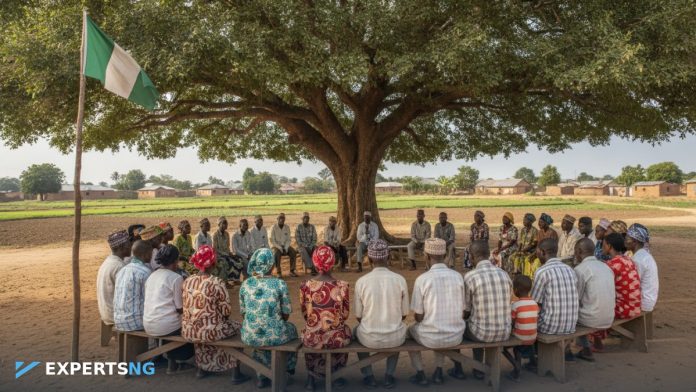


A fair beneficiary selection model is what the Social Reorientation and Empowerment Network (SREN) wants federal, state and local governments to adopt for empowerment programmes. The group says political patronage is weakening poverty reduction efforts, because support often goes to people with connections rather than people with real economic need.
In a statement signed by Dr. Daniel Evans Eshett and reported by Independent Nigeria, SREN pointed to the N1 billion Family-Based Agricultural/Business Support Initiative of Rt. Hon. Unyime Idem, who represents Ukanafun/Oruk Anam Federal Constituency, as a model other officials should study.
For small farmers, traders and micro-entrepreneurs, this matters. Government and lawmaker-funded support can change a business, but only if it reaches the right people. This guide explains how the model works, what it means for your business and how to prepare.
Key facts at a glance
| Scheme | Family-Based Agricultural/Business Support Initiative |
| Total value | N1 billion |
| Sponsor | Rt. Hon. Unyime Idem, Ukanafun/Oruk Anam Federal Constituency |
| Raised by | Social Reorientation and Empowerment Network (SREN) |
| Statement signed by | Dr. Daniel Evans Eshett |
| Selection method | Village consensus or balloting, with independent verification |
| Women’s inclusion | Every village must nominate at least one woman |
| Amount per beneficiary | Not yet announced |
| Deadline | Not yet announced |
| Official portal | Not yet announced |
How the beneficiary selection model works
According to SREN, the scheme moves beneficiary identification away from the sole control of political office holders. Nominations and verification involve several community figures:
- village representatives and traditional rulers
- political leaders and youth presidents
- women leaders and family heads
The idea is simple. When many people from the community take part, it becomes harder for one person to hand out slots to friends, relatives or political loyalists.
Safeguards built into the beneficiary selection model
SREN also highlighted several safeguards. Villages use consensus or balloting, and village committee members must sign. The Central Planning Committee attends as an observer, and nominees are independently verified.
Selection must not depend on political affiliation, religion, social status or closeness to influential people. Every village must also nominate at least one woman.
In plain terms, these safeguards do four jobs:
- Shared decisions: consensus or balloting means the village, not one person, makes the choice.
- Accountability: signatures from village committee members create a record of who agreed.
- Oversight: the Central Planning Committee observes the process without choosing for the village.
- Checks: independent verification tests whether nominees are genuine.
What SREN wants from government
The group said programmes should publish clear eligibility rules, explain how nominations work, give fair representation to women and vulnerable groups, and set up independent verification and complaint channels.
It also wants financial or material support paired with business management training, financial literacy and regular monitoring, so that businesses do not collapse soon after receiving help.
SREN stressed that fair selection will not end poverty on its own, but said it would fix one of the most damaging weaknesses in how public interventions are delivered.
Who qualifies and how to apply
The source does not give full application details for the Ukanafun/Oruk Anam initiative. What it does state is that beneficiaries are nominated through village-level processes rather than chosen by a single office holder, and that political affiliation, religion, social status and proximity to influential people must not count. Each village must nominate at least one woman.
- Amount per beneficiary: details not yet announced (the total scheme is N1 billion).
- Deadline: details not yet announced.
- Official portal: details not yet announced.
Applications for genuine public schemes should be free. Use only official channels, such as your village committee, traditional ruler or the office of the lawmaker, and do not pay anyone for a slot.
What this means for Nigerian businesses
For small farmers and micro-entrepreneurs, the lesson is that community standing and documentation can matter as much as a good business idea. If a scheme like this operates in your area, make sure your village or family head knows what you do, how long you have done it and what support would help. Ask the committee how nominations are made, and where to raise a complaint if you are overlooked.
Prepare before any call for nominations. Keep simple records of sales, costs and stock, since verification of nominees is part of the model. Our guide to accounting and bookkeeping for your small business is a practical place to start.
There are risks too. Where selection is still driven by connections, the usual warning signs remain: demands for payment, vague criteria and no way to appeal. Business owners who have been excluded should use any complaint mechanism available and, with others, press local leaders and civil society groups for transparency.
Support funds are more useful when paired with training. SREN’s call for business management and financial literacy support suggests entrepreneurs should ask for it, or seek it themselves, so that a grant or input becomes a lasting enterprise rather than a one-off boost.
Finally, SREN is asking other elected representatives and agencies to adapt this model. If they do, SMEs in more communities may see clearer rules and fairer access. For now, it remains a proposal for wider adoption, and SREN says success should be judged by fairness, reach and measurable improvement in beneficiaries’ lives.
What to do now: a practical checklist
You do not need to wait for an announcement to get ready. These steps cost little and put you in a stronger position when any support scheme opens in your community.
- Make yourself known. Tell your village head, family head or community leaders what your business does and how long you have run it.
- Write down your needs. Be specific about what would help, such as inputs, equipment or working capital, and why.
- Keep basic records. Note your sales, costs and stock, even on paper. Verification is part of the model, so records help you prove you are genuine.
- Ask how nominations work. Find out whether your village uses consensus or balloting, and who signs off.
- Know the complaint route. Ask where to report unfair treatment before you need it.
- Refuse to pay for a slot. If anyone asks for money, treat it as a warning sign and report it through official channels.
- Plan for training. Look for business management and financial literacy sessions, since SREN says support works best when paired with them.
Questions to ask your village committee
If a nomination process opens near you, these questions help you understand whether it is fair and open.
- What are the written eligibility rules?
- Will the village decide by consensus or by balloting?
- Who verifies nominees, and how?
- How are women and vulnerable groups represented?
- Is there a complaint or appeal channel, and who handles it?
- Will training or monitoring follow the support?
Clear, calm answers are a good sign. Vague or evasive answers suggest the process may need more scrutiny.
Why fair selection matters for small businesses
When support goes to people with connections rather than need, genuine entrepreneurs lose out. A farmer with a working plot or a trader with steady customers may never get a chance, while funds go to people who cannot use them well.
That wastes public money and weakens trust in empowerment programmes. A transparent beneficiary selection model aims to put resources where they can do the most good.
It also helps to build solid foundations in your own business. Our piece on how to build solid business systems and structures shows how simple processes make you more credible, whether you are applying for support or dealing with customers.
Frequently asked questions
What is the Family-Based Agricultural/Business Support Initiative?
It is a N1 billion initiative of Rt. Hon. Unyime Idem, who represents Ukanafun/Oruk Anam Federal Constituency. SREN has pointed to it as a model for choosing beneficiaries fairly.
Who is calling for changes to how beneficiaries are chosen?
The Social Reorientation and Empowerment Network (SREN), in a statement signed by Dr. Daniel Evans Eshett. The group wants federal, state and local governments to change how they select beneficiaries.
How are beneficiaries nominated under this model?
Nominations and verification involve village representatives, traditional rulers, political leaders, youth presidents, women leaders and family heads. Villages use consensus or balloting, and committee members must sign.
Can political affiliation or religion affect selection?
No. According to SREN, selection must not depend on political affiliation, religion, social status or closeness to influential people.
Are women included in the process?
Yes. Every village must nominate at least one woman, and SREN also wants fair representation for women and vulnerable groups.
How much will each beneficiary receive?
This has not been announced. The source only gives the total scheme value of N1 billion.
When is the deadline, and is there an official portal?
Neither has been announced. Use official local channels such as your village committee, traditional ruler or the lawmaker’s office for updates.
Should I pay anyone to get a slot?
No. Applications for genuine public schemes should be free. Do not pay anyone for a place, and report any such demand through official channels.
Will fair selection end poverty on its own?
No. SREN says it will not, but argues it would fix one of the most damaging weaknesses in how public interventions are delivered.
What support does SREN want alongside funding?
Business management training, financial literacy and regular monitoring, so that businesses do not collapse soon after receiving help.
Is this model already used by other officials?
Not yet. SREN is asking other elected representatives and agencies to adapt it, so for now it remains a proposal for wider adoption.
How will success be measured?
SREN says success should be judged by fairness, reach and measurable improvement in beneficiaries’ lives.
Final thoughts
A transparent beneficiary selection model will not solve every problem, but it tackles a weakness many entrepreneurs know well. Clear rules, shared decisions, independent checks and a complaint route give ordinary people a fairer chance.
Use this moment to get your records in order, make your work known in your community and ask the right questions. If you are looking for other ways to build income, see our list of small business ideas for inspiration.
Source: independent.ng