Most business owners go into business with the expectation of overall success, profitability, steady growth, and a big company. However, it takes hard work to attain such lofty goals. Yet, regardless of the work put into it, only a few businesses survive.
Data from the Bureau of Labor Statistics (BLS), shows that approximately 20% of new businesses fail during the first two years of being open, 45% during the first five years, and 65% during the first 10 years. Only 25% of new businesses make it to 15 years or more. – Investopedia
Basically, there are about 5 stages every business evolves through–
It is common to see that most businesses spend their first few years focused on survival. However, prioritizing your business’s growth is one of the best ways to increase the chances that your company will move past the survival stage, evolve through the highlighted stages to maturity, and contribute to your economic well-being and a stable financial future.
With these staggering statistics, how can business owners ensure that they do not spend so much time focusing on survival to the point that they end up being another statistic of failed businesses?
What can you do to move your beloved business beyond survival? What can you do to transform it into the income-generating machine that you envision?
Like any machine, different parts must come together in harmony to make your business function effectively as you envision.
Here are seven growth strategies that you can try; they have worked for many entrepreneurs including myself.
1. Have A Clearly Defined Business Purpose
The simpler, the better – One primary reason most small businesses find it hard to attain growth is that they do not have a clearly defined business objective. Therefore, the employees of most small businesses find it hard to define what their employers are truly into; only a handful might be able to successfully describe their business offerings in clear terms.
I’ve seen companies that most of their prospective customers do not understand what they sell or the services they render. I know this because it is one regular answer that I get when I run surveys to know why my clients are not retaining enough of their customers.
So, the clearer you make your mission statement and marketing messages, the easier it would be for your clients to know how best your product or services fit into their needs and will solve their pain points. Customers will not buy unless they are clear that you can meet their demands.
2. Choose the Right Growth Strategy for Your Business
Most growth strategies in business revolve around activities related to – market penetration, market expansion, product expansion, diversification, and acquisition.
The choice of the growth strategy that a business adopts is mostly dependent on its financial position as well as overall objectives, and are mainly affected by such external forces as government regulations, and other prevailing market forces.
A business leader must understand the various strategies available; their unique features, and when/how to adopt the most relevant strategy based on the scenario at hand. Your business growth is directly tied to your ability to identify and effectively utilize the right strategies to help your business grow.
3. Understand Your Customers
Profitable companies know their customers better than they know themselves. They sell the value, impact, and results their customers want to buy.
The very experienced entrepreneurs know that entrepreneurship is a marathon, you fail a lot of times. Yes, there would be seasons when you might be in abundance, but many more seasons when the only thing that would see you through would be your love for what you do – the solutions you provide to your clients’ problems; seeing the smiles on their faces.
So, ensure that you understand your customer, understand what they need, and ensure that you have the resources to deliver above and beyond what they require.
4. Offer great customer service
You need a ton of loyal paying customers to achieve actual business growth, and one sure way to get such loyal paying customers is to provide your customers with excellent service consistently.
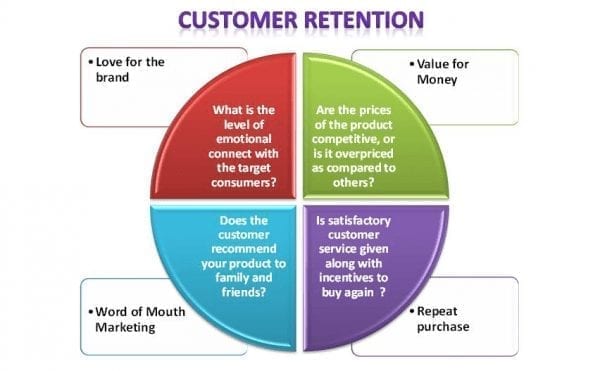
Excellent customer service creates loyal customers who often are willing to refer your business to friends, family, and colleagues. Providing such type of excellent customer service begins with genuine love to solve your customers’ pain points. However, you also have to think beyond selling your products or services.
The customer is at the heart of your business growth. In other words, you must ensure that everything you do is focused on making your customers happy.
Your ability to provide excellent customer service consistently involves carefully designing a whole customer experience covering the entire customer journey from their first contact with your service to after-sales support services. And achieving such a lofty feat takes knowing your customers.
5. Recapture Existing Customers
Acquiring new customers isn’t always the best, and certainly not the only way to grow your business. Oftentimes, your existing customers are your best bet for increasing your sales.
Furthermore, several studies suggest that asides from ensuring that a business has some level of consistent inflow, improving your customer retention rate has a direct correlation with improving the value of your company.
6. look for new opportunities
As a business, especially when you are still a small business, you must find ways to constantly seek new business opportunities to ensure sustained business growth and profitability.
Now more than ever, we need to experiment with new ideas to attract new businesses. If you can find other services to offer, set aside some time to brainstorm what those services would look like.
i. Ask for Referrals
One sure way to grow your business is by constantly attracting new paying customers and there is no better way to attract more customers than to find ways to get your existing clients to bring them in.
Customers who have experienced what it’s like to be your customers would find it easier functioning as your brand ambassadors to people in their social circles who incidentally are likely to fit into your target market.
However, do not assume that your loyal customers would naturally send referrals your way unsolicited, you must actively ask them for referrals and if they have been treated fairly as customers, they would willingly grant your request.
ii. Extend Your Market Reach
There are several ways of growing your small business, and one such approach is by Extending Your Market Reach and getting yourproduct or service more available to your existing and a new set of prospective customers.
When it comes to extending market reach you must work around the following:
Open new store locations – Physical or virtual
Promote your products in ways to encourage new uses for your products and services
Improve on your marketing efforts
Target new demographics
7. Build Required Structure
One way to ensure that your customers enjoy a quality user experience is to build structures that will help them enjoy quality user experience through your service delivery processes. One major area that is usually overlooked by most service companies is after-sales support.
Create a customer journey map and take a walk in their shoes, building relevant structures at every level to ensure that your customers have the best journey possible.
Every good salesman knows that one sure way to improve your customer lifetime value is by making the customer happy – you should endeavour to be the best in your market.
If you didn’t know anything about Sales and Marketing, here are the 4 most Essential Tips On Sales and Marketing that every entrepreneur must know:
On sales – the quality of product or service matter, And so does the number of people that know about your offerings. Promotion is a MUST DO, use every avenue and opportunity to promote your offers until you find the channel that converts best.
Analyze your sales presentation and approach from your customer’s shoes – would you buy it if it was presented to you the way it is now?
When you advertise your offerings, ensure that a primary six student would understand it at first contact, else the responses might be weak.
To sell effectively, find the right place to pitch to the right market – your target markets determine the value of your offerings.
The ability to understand and solve your customers pain points is one skill that every business owner and entrepreneur must develop.
Solving your customers problems is what every business tries to do and your ability to do it better than most of your competition, is what keeps you relevant in business.
The customer is always right – That is one statement, which in most cases, spells the difference between a successful business and a not so successful one.
With it in perspective, business owners assume that the customer often knows what he or she wants. The reality, however, is that though your customer are hardly seen as wrong, they may not always be right – They hardly ever know what they truly need.
All that a customer truly wants is to solve one or more customer pain points; it is your duty as a business owner to understand it, and also get it resolved.
You must understand that your customers don’t often care about your products or services, but about the problems you are solving for them – Their pain points.
Your customers tie their loyalty to the value that you provide to them by identifying and solving their pain points and problems. And the customer experience that you give them is, in fact, a big part of what makes them loyal to your brand.
As an entrepreneur, a business owner, a freelancer, or a small business consultant, your marketing efforts shouldn’t only target potential customers. Still, you should also focus on finding ways always to improve your customers’ last-mile delivery. Ensure that their entire experience from your marketing gigs, service delivery, and aftersales support, are all deliberately orchestrated to deliver top-notch customer-centricity.
Your customers tie their loyalty to your value proposition, and the problem-solving journey you take them through is a big part of what makes them loyal to your brand.
When you solve your customer problems, you are not only solving their problems; you are creating an experience that helps to improve your brand’s equity and trustworthiness with your client.
The challenge you have in meeting their needs is how you would identify their pain points; you have to know what their problems are to be able to solve them.
This post is an expose on how you can find and solve your customers’ problems – Solving Your Customers Pain Points
Understanding Your Customers Pain Points
Identifying Customer Pain Points @MikeMarko1
To understand your customers’ pain points, you must first understand the basic needs common to all customers, regardless of the market, or class. The seven primary needs of any customer are Empathy, Service, Choice, Price, Quality,Action, Appreciation, and Follow-up.
Empathy: Every single customer that passes through your sales process wants you to feel their pains; they need you to understand things from their perspective and be human with your responses to their questions. Empathy is the one skill that every salesperson must-have.
“I’m constantly blown away at how appreciative people are when they get human replies. Years of uncaring or even hostile support experiences have set the bar low for their expectations that they get excited by genuine answers.”
Service: Your customers want to feel special, and make them feel special, you must. Customers want excellent service – they expect that you would meet and surpass their needs.
Choice: The need to have a choice to pick from is most pronounced in monetary transactions. As a business owner, you must understand that your customers do not want to be forced to make a decision based on scarcity. Every customer desires the satisfaction derived only through having options. Notwithstanding, customers do not appreciate being overwhelmed with too many similar options – they may end up not buying at all.
Price: Your customers are always seeking prices that match their budgets; some would sometimes go for price over quality. You must ensure that you have a balance of quality and price by giving them lots of shopping choices.
Quality: Most customers need excellent and durable products; they want their product or service to be top-notch. In most cases, customers would not question the price if the manufacturer provides high-quality products, especially when shopping a brand they trust.
Action: Your customers need you to suspend whatever you are engaged with when you attend to them; they need you to act when they need your attention, especially when they have a problem.
Customers want to know that there is always someone ready to act when they need service.
Appreciation: customers want to know that they are appreciated. To build a long-lasting relationship with customers, they have to be understood and appreciated for their individualities. Companies with excellent customer service have customers that outlive their projected customer lifetimes.
Follow-up: You know that you need to follow up with prospective clients to close deals, but you often find that the customers that need your follow up are your existing customers. Customers want you to place that call to find out what their experience of your service or product is.
One sure way to boost your revenues is to leverage effective after-sales follow-up of existing customers – it is a way to turn them into your brand ambassadors.
Great customer care involves getting to know your customers so well that you can anticipate their needs and exceed their expectations – MarketingDonut
You can’t effectively serve a customer that you do not understand. And to understand your customers, you must be able to see things from their own points of view – their perspectives.
To understand your customers’ point of view, you have to accept that customers will have different opinions regarding your products or services.
Therefore, as a vendor, the most crucial aspect of your business that you must handle is to ensure that you have a well-trained staff as a customer care representative.
That is your first task as a business owner; A role that you would have to play until you can employ someone to fill in the position.
In your journey as a business owner, you will encounter different types of buyers – buyers that are different from the buyer personas you created.
You will meet the straightforward customers, the impatient customers, and the almost impossible customers. What will stand you out as an excellent business owner or salesperson, is how you understand every one of them.
You are also to understand the problems that are not related to your products or services. For example, you sell human hair, and a client complained about tangles after using the wrong product for wash and conditioning the hair. You should be able to find ways to explain why the products used by the customer damaged the hair, and not that your product was inferior quality.
Identify Your Customers’ Pain Points.
Identifying your customers’ pain points and proffering solutions to their problems puts you ahead of your competitors. Pain points vary and it depends on the type of market that you and your customers operate – B2B or B2C. The importance of identifying your customer’s pain points is to help you learn your customer’s specific challenges and to enable you to come up with a tailored solution to their problems – A win-win for everyone.
In B2C marketing, pain points often involve improving consumers’ finances or level of productivity. In B2B, pain points typically revolve around streamlining internal processes or providing critical operational support – always with an eye on improving the bottom line – Source:BAI
A crucial success factor in marketing is your ability to learn what challenges your customers intend to solve with your product or service, and then fine-tune your value proposition (what you offer) to provide an excellent solution.
So many of us have had issues while using some products and services, we didn’t really know how to relate those issues to the vendors, but the vendors figured out what the problems were and regained our faith in their products or services. If you are a business owner, a sales agent, or you interface with consumers at any point in the customer value chain, it is crucial that you learn to identify problems even when the customers cannot properly explain.
Being equipped to identify your customers pain points and proffering solutions makes you a super-brand. You can achieve this by doing the following:
Study The Industry
Talk To Customers
Ask Relevant Questions
Act on Feedback and Reviews
4 Ways To Solve Your Customers Pain Points
1. Study The Industry
To learn about consumer pain points, it’s important to study the industry which you are interested in. This can be accomplished in many ways. Some combination of research in the following areas can give you a good idea of the current pain points trying to be addressed in your niche.
Read trade publications
Join trade associations
Attend conventions and seminars involving your industry
Follow thought leaders in your industry via social media
Doing all the above will quickly give you a picture of pain points that have been addressed, those companies are currently trying to address, and insight into possible pain points in the near future.
It is crucial to study the industry which you are interested in to learn about common pain points of consumers there, and you accomplish that in many ways. A careful study into the under listed areas can give you a good idea of such common pain points that customers try to address.
Join trade unions
Read trade newsletters and publications where available
Attend industry-specific conventions and seminars
Follow thought leaders and influencers in your industry
Doing all the above will help you get a feel of some pain points that are common in your industry: those that have been addressed, the companies that addressed them, who is doing what, etc. Above all, networking with other players in your industry will give you insight into possible pain points in the near future.
Another sure way to understand your customers pain points is to call your customers and have a short interview with them. During the call, avoid leading (yes or no) questions to enable you to gain insights into the customers’ problems. A simple Yes and No answer would leave you in the dark on why they chose their answers.
3. Ask Relevant Questions
Maximize open-ended questions to give room for the customer to say precisely how they feel about the problems. Enure to ask service impact-focused questions to find out if your products or services have been meeting their needs and ask of ways you may better serve them. Such questions could be:
How do you see your needs changing post-COVID-19 pandemic?
What are your necessities from this deal should it happen?
4. Act on Feedback and Reviews
One thing many businesses have in common is asking customers for reviews they don’t review or use. When you ask for reviews, endeavor you create time to go through them, and be particular about the negative reviews. The negative reviews show there are things you are not doing right, so work on finding the roots of your customers’ problems.
Remember that reviews taken seriously can give your business a new sense of direction, help you to reposition your business, and make you more strategic about content marketing.
Identifying The Pain points of a B2B Customer
If your prospects don’t have business pain, they have no need. And without need, there’s no hope for a sale. It’s up to salespeople to ask effective sales questions and uncover business pain as quickly as possible.
Conduct qualitative research by asking your customers essential questions:
Ask them to explain their problem the best way they can.
Ask when the problem started and if the problem had occurred before.
Use their answers to the questions asked to identify the root cause of their problem. Note that it is fine not to have immediate responses to their inquiries, but take time to provide the right solutions. It’s better to take longer than to dish out the wrong answers quickly.
Conclusion: Customers are more likely to stick with the business they have built a good rapport with than trying out other solution providers. Customers understand that problems are a part of every business; they come to you because they need solutions to their pain points and do not care about the processes you take to provide adequate solutions – they just want to ease their pains. And their loyalty, therefore, lies with the provider that takes conscious steps towards consistently providing them with excellent solutions when needed.
After you familiarize yourself with the fundamentals and basics of binary options you’ll want to start digging a little deeper into specific trading strategies.
The strategies are going to inform the kinds of investment decisions you make, will help you evaluate different trades (free of emotion – as much as possible, anyway), and are going to be the foundation that the rest of your binary options decisions are built on top of.
There are literally hundreds and hundreds of different trading strategies out there to pick and choose from, though. Sifting through these options is nowhere near as simple or straightforward as some would like to believe it to be.
At the same time, as long as you focus on a single strategy (maybe two) and learned it inside out you will be able to hit the ground running with options trading far faster than you would trying to master dozens of strategies all at once.
Pick a strategy that makes sense to you, that aligns with your investment goals, and that you feel confident in and put the time and to master it.
Find a Broker You Can Trust
The broker that you pick is going to be a huge piece of the puzzle to your success or failure, and not all of them are created equally.
You’ll want to choose a binary options broker that gives you the ultimate flexibility in assets to pick and choose from, the most up-to-date charting and data to inform your trade decisions, and a deep library of resources you can pull from to learn more about the binary options world.
High-speed, reliable, and secure brokers are the only way to go these days – especially if you’re trading something like options or Forex.
Luckily, there are plenty of brokers out there to pick and choose from that can fit your needs perfectly. It’s just going to take a little bit of time to sift through the options to find one that makes the most sense for you.
Focus On a Handful of Assets and Markets to Trade
This goes hand-in-hand with settling on a single strategy or two that you base all of your binary options trades off of and it’s something that the most successful traders in the world focus on exclusively.
When you first get into binary options (or investing in general) everything is going to feel overwhelming, everything is going to feel exciting and interesting, and you’re going to want to spread yourself thin and wide to find what works for you. Resist that temptation as much as possible.
Instead, really focus on mastering a handful of asset classes or markets that you will trade exclusively.
You’ll be able to learn the ins and outs of these assets and markets are faster than you would have been able to otherwise. You’ll be able to notice patterns faster, you’ll recognize signals more consistently, and you won’t have to worry about studying the entirety of the investment world every time you want to make a trade.
Niche down and focus on a handful of assets that have the potential to create the financial future you are hoping for and you’ll be off to a great start.
Paper Trade Before to Get the Feel of Things
The world of binary options can get pretty complex and convoluted in a hurry, especially if you haven’t traded this way in the past. Those with a Forex background, as well as those purchasing puts and calls, probably have a bit of a head start – but everyone could benefit from paper trading binary options before they put their own money on the table.
A lot of great brokerages give you the opportunity to paper trade different strategies until you get the hang of things, trading with “fake money” to see if your strategies and signals worked the way you expect. This is a great way to get the kind of experience you wouldn’t have been able to generate any other way – and it’s a great way to test new approaches that you are thinking about moving forward with.
Lean on Your Signals
Some people definitely trade binary options on a wing and a prayer, throwing darts at the market and hoping to hit home runs with little information or data backing them up – but those people generally don’t have a lot of success (and certainly not consistent success).
Charts, signals, and market data will play a huge role in your success or failure. Technical analysis is critically important when you are thinking about diving into the world of binary options and it’s a good idea to familiarize yourself with successful strategies, signals, and chart reading basics before you get started.
Never Trade When Emotional
Lastly, it’s important that you do absolutely everything you can to pull a motion out of your trades – not just in the binary options world, but in any investment decision you are making.
The more emotional you are about the trade (excited or devastated, it makes no difference) the last logic you are bringing to the table. It’s just the way that our brains are wired. Try to make investment decisions as coldly and as dispassionately as possible, running off of data alone, and your results should skyrocket almost immediately.
Honestly, customer acquisition is no easy feat. It is a journey – one that begins with understanding your customers; understanding your target audience is the first of your strategy implementation. Your strategy must then dive deeper into understanding their needs and why they would love to buy from you as against your competitions.
Acquiring and retaining customers regularly is what every company needs to keep its business running, and a tailoring/sewing outfit is not an exception.
Alhough, acquiring new customers may sound easy and straightforward, but trust me, it can be incredibly challenging to find opportunities in today’s saturated fashion design business world, especially if you are new in the industry.
In the fashion world, if you do not tweak your marketing strategies often to enable you to stay updated with the ever-changing trends, you may struggle to acquire customers and may not be able to retain those that you have.
I have put together a list of strategies a tailoring outfit can implement to acquire and retain customers effectively.
For clarity, I have also structured these tips into two broad categories – Acquisition and Retention strategies.
The tailoring/fashion industry is art-centric, with every single piece made – a craft on its own.
In what better way might an artist hope to acquire customers than to hone in on the right skills that help in the creation of the art. As a tailor or fashion designer, your priority is to master your skills to the level that your users, customers, and prospects identify and associate with your work, even when no label is affixed.
2. Price – Do Not Overcharge Or Compromise On Quality
Only put a price in front of your customers when you understand what is motivating them, or what value is, for them.
Olufemi Akinyemi
Finding and charging the right price is essential to winning new customers over. Price is the second of the 4Ps. The first perception or statement some clients would make most times are rhetorical – asking “hope your charges are not on the high side”. Depending on your brand equity and customer experience, most customers would naturally believe that you have overpriced your services.
It is therefore reasonable not to overcharge your clients as the motive first is to pull them in to love your brand enough to want to come back a second time. Once you pull them in, you would only have a chance at making them your brand ambassador. There is hardly any opportunity to make a second first impression, especially with the price of your products and services. Stay within an acceptable price range when dealing with customers, especially a new one.
3.Get Your Products Seen – Promote Your Products
Product promotion is at the heart of marketing. Advertisements, social media marketing, content marketing, search engine marketing, email marketing, video marketing, and other known marketing efforts all depend on a well planned-out promotional campaign.
A tailoring outfit must stand out from the competition by any means to stay relevant and competitive. And the best way to stand out, is to stand out – BE SEEN.
Advertise On Social Media: Without a doubt, the most effective means of advertisement these days due to technological advancement in this era is the use of the social media space. It is true because that is where the majority of your prospects spend their time and can be reached by your advertisements – An average person spends about 2hr:30mins on social media, daily.
Leverage influencers in the social media space: Listen, I am not referring to any influencer outside your circle of influence – please find influencers within your area and use them. A brand promotion from a known social media influencer in the fashion space would go a long way in getting you seen by your prospects—leverage such influencers to promote your brand on Twitter, Instagram, and Facebook. Offer to make them a dress and, in return, ask them to put out a word or two to promote your brand. Ask them to show your products to their friends, and if possible, ask for a photograph too.
Engage Word of Mouth Marketing: Another means of advertisement that works perfectly in the fashion industry is – Word of Mouth Marketing. Testimonials from past clients, especially those customers that have converted to become your brand ambassadors would go a long way in getting you more customers – use it.
Place: You Must Have A Brand Website As Part of Your Tailoring Strategy
In the marketing mix, the process of moving products from the producer to the intended user is called place. In other words, it is one of the places where your customers reach your products; one of your tailoring strategy is to have a well defined domain name, one that easily notify your intending customers that you are a tailor.
Moreso, you could also invest in a physical outlet – A showroom would do you some good in combination to your normal tailoring workshop.
In this era of hypercompetitive retail practices, as well as the constant need to meet the increasing demands of fickle and fragmented consumers, it is important to find ways to keep your products at their reach at all times.
Talking about reach, there is no other men’s currently available to you as an entrepreneur than to build and maintain a brand website for your business.
A well structured and functional tailoring brand website can definitely help you with your customer retention drive. It is a very good way to acquire and maintain customers for your tailoring business.
4. Do Not Compromise On Quality
The quality of service you render should never be compromised in any way, as this is the basis on which you get a multiplier or ripple effect of customers trooping in.
The quality of a design you produce would advertise itself no matter where it goes. Imagine the feeling your customer gets when they step into a gathering, and they get series of compliments of how lovely their outfit looks, it’s such feeling that brings a customer back to patronize you over and unrepentantly advertise your brand.
5.Build Engagement And Earn Trust
To win clients over and successfully retain them, you must establish some level of trust, and this trust can be built by continually engaging them in a way that they see your potential ability when it comes to fashion ideas, design, and execution.
By continually showing up and giving little advice or suggestions about new fashion trends or ideas, this would attract more people to you and want to do business with you.
A follow-up call after you have delivered your clients’ clothes to the appropriate destinations is another strategic way of building a long-term successful relationship with customers.
Send a note of thanks for their patronage, call to check up on them, strike a conversation by calling to know how they are faring and rocking the designs you made for them, request to do a pick up if necessary and look for an opportunity to continue building a stronger relationship that can lead to referrals on a long run.
In fact, a good relationship with your customers will also be to your favour during any inevitable hiccups like late delivery, poor service delivery such as errors in stitches, ironing, etc.
Promotional offers could be used as a strategy to attract new customers and also to retain existing ones. This gives a prospective client an idea to want to seize the opportunity to patronize you and have a feel of your services while existing customers are always looking forward to another amazing prize to be won on your business account
Giveaway offers such as:
sew 5 designs for the price of 3
we sew your 3rd design for free
half the charge of your 1st design is on us
give a percentage off as commission to customers that win you referrals
A catchy statement like this would make a client want to patronize you as their mind is being compelled to take advantage of the offer.
Testimonials and Recommendations
This can be put to effective use in acquiring more customers, all you need to do is get your already served customers to give a visual or written testimonial for you to use as a tool for advertisements. The more testimonials people get to see and hear from your past clients would give your prospective customers the feel of confidence to give their cloth to you for sewing.
Make sure your branded packaging form of delivery is also something that would wow your clients as this is the first thing they see when you go to deliver their attires back to them, and this alone could be captivating enough to make them give a powerful testimonial of your service.
It is, therefore, important that you activate a promo offer to them for this little kind gesture in appreciation for their feedback.
Customer Retention Strategy for A Tailoring Outfit
Customer retention is another effective marketing strategy or tactic a fashion outfit can use to put its brand name in the mind of its customers.
Keeping a steady flow of returning customers is equally as important as acquiring new customers. Here are the tips you need as a growing fashion outfit to expand your business reach, more of an how to promote your sewing business guide.
1. Offer Home Service Delivery
To successfully acquire new customers and retain the existing ones, you need to offer home delivery service to clients, most especially those that are too busy to drop by for pick up.
But before you deliver their clothes to their respective houses or offices, ensure that you get their clothes properly ironed and packed, Also, ensure that you are constantly meeting deadlines or target days to boost your reliability index with your customers.
2. Take Note Of Clients Special Days
Have a client’s database records where you keep the details of their measurements and attached to this would be special days in their life and occasions, this is not just for record purposes but to be able to keep track using a reminder to wish them on these special days.
You can as well go the extra mile by sending them appreciation notes, gifts, cakes to felicitate on their special days. It would help the customer build a strong bond with your brand and thereby referring and returning to engage your service as a retained client.
Such minor acts help to promote your sewing business.
3. Give Room For Partnership
In order to earn more business dealings as a fashion designer, it is imperative that you leverage your social network to seek partnership with willing investors.
This brings to memory an event that occurred during my university days – A customer who also was the school nurse gave me a very juicy offer – her offer, though tasking of me, brought one of my major breaks with my side hustle.
With her offer, I had to mass-produce clothes for a choir group on a regular basis. The partnership was great; she kept bringing in the orders while I fulfilled them and I had no reason to go in search of customers
4. Work On Self-Development To Catch Up On Latest Trends
As we all know that fashion design is the act of applying aesthetics, accessories, and tailoring clothes to project or enhance the beauty of your subject or client. Therefore, to be on top of your game at all times, you must do all possible to keep abreast of happenings in the industry – learn and perfect the current trends per time.
Always make yourself relevant in the fashion world by going for training regularly, reading journals, and fashion magazines to be abreast of the latest trend.
It is no longer news that new trendy designs come out on a daily basis as new fabrics hit the market. Knowing everything about this would help you, and knowing something about all other aspects of fashion will pave the way for you to the point that no question or design from your prospect would catch you unprepared.
This way, you would be able to retain your clients as they have an assurance that you are not just up to date on fashion trends but also up to the task.
5. Strong Customer Service Approach
This is a very important point that could keep your customers coming back for more; from the moment they initiate an inquiry, down to the point of payment and to delivery of the service you must ensure that your customers’ experience is well guided to keep them comfortable enough to become repeat customers.
In a nutshell, being the first line of contact, your customer service department must be top-notch; trained, and equipped well enough to place a premium on every call that comes in.
The ease of doing business birthed by your well-trained customer service department would give your customer an assurance that you have a system that works – that alone would keep them happy enough to be loyal ambassadors of your brand.
Furthermore, it would be easy for your When your business is expanding through additional customers added to your customer base, you need to employ competence and qualified staff to help facilitate better and fast service delivery so as to meet up with customer demand.
For ease of access and client’s confidence-boosting, always be on time. But when the time isn’t possible, build a rapport enough to be able to quickly notify your clients beforehand.
6.Increase Your Production Capacity When Needed
A major mistake that is common to most players in the fashion industry, especially the not so experienced tailors, is that they often outsource their jobs to less experienced tailors when they have their hands full.
As the founder of the tailoring outfit, it is natural that your customers associate you with your brand in person. What you should do is to first find a way to separate yourself from the business, especially with the order taking tasks.
Get your customer to become comfortable with your employees; when feasible, stand back and let them take the measurements of your clients while you watch. With time, your customer would get comfortable with your employees and that would free up time for you. Having done that, it would become easier for you to increase capacity when the need presents itself.
7. Ask For And Act On Feedback
One important aspect of customer retention that is often neglected is asking for feedback. Ensure that you always ask your customers for feedback – spend that little extra on a 5 minutes call to your customers and ask how they feel about every aspect of your service. Be sure to listen as they take you through their experience while you served them. Improving every bit of their experience the next time they come calling, is a sure way to move them from satisfied customers to become loyal customers.
Watermelon farming business is one of the most lucrative agribusinesses any farmer might engage in. In Nigeria, this is particularly true because of its high demand and return on investment. It is one of the fast-selling agricultural products in the local markets. Presently, asides potatoes and tomatoes, Watermelon is the third most cultivated crop in the world. The fruit is widely eaten across Nigeria and it is also exported in large quantities.
So follow the guides below If you have the intention of starting a watermelon farm.
Watermelon Farming Process
Watermelon farming involves four significant steps –
Seeds selection and preparation
Land Preparation
Irrigation
Fertilization
Harvest
Watermelon is a short-term farming product that spans the duration of 65-90 days; it requires a clear land plantation with no trees, shrubs, or any tall plants or weeds that could obstruct its access to sunlight. A solid pH level and temperature of 6 to 6.8 and 70°-90° F respectively are needed for optimum yield.
Land preparation for watermelon farming starts with cutting, tilling, and plowing the soil, which could be divided into beds or ridges for proper soil aeration and to give room for perfect root formation.
Watermelon thrives on silt loam and loamy soil, soil with low water-retention abilities considering that the fruit doesn’t thrive in waterlogged lands. However, if you must plant it in waterlogged ground, you must improve drainage with ridging to reduce the land’s ability to retain water.
A hectare (2 and a half acres) of farmland after land preparation by plowing and tilling the land would accommodate an average plant count of about 10,000 – 12,000 watermelon plants depending on the plant spacing.
Although Watermelon would most likely grow in any soil type, it does very well in slightly acidic soil with pH in the range of 5.8-7pH level. In the same vein, it needs a soil composition that is loamy with an excellent sandy component, which would aid natural drainage for the seed to thrive well and grow without stress.
If you have no other option but to cultivate on soil with high clay content, then make beds or ridges and plant the seed on them. Following the steps below will help.
First, clear the land and burn sticks and grasses after removing them. However, burying the grasses can serve dual purposes – get rid of them and turn them into manure. Till the land when you are ready for planting to ease water penetration and make germination more comfortable.
Some bacteria and predators such as termite are destructive. Get rid of them before planting by treating the land with pesticides or insecticides. In the absence of manure, apply inorganic fertilizer to boost the land’s fertility before planting.
Seed Preparation For Watermelon Farming
The success of any Agribusiness has a lot to do with the seeds used in the process of pre-production, aside from generally putting in place all other acceptable Agricultural Practices such as pesticides, fertilizers, weather conditions, among others.
It is a good idea to treat your seeds in fungicides and pesticides to protect the seeds against pest and nematode diseases in the soil. For organic means of seed preparation, you can put the seeds in a mix of any organic oil such as castor oil, olive oil, or neem oil with ashes before planting into the soil. Better still, ensure that you purchase only treated seeds.
However, there are various seed producers and varieties of watermelon seeds in Nigeria. Each seed variety has particular qualities they are known for, an example of good watermelon seeds is Congo f1, crimson, black diamond, and the likes are seeds produced by company brands like Premier seed, East-West, Technisem, etc.
Watermelon Seed Sowing
A sachet of 600-1.5kg of seed would almost likely cover a hectare of land using a near-perfect spacing of seedbed of 5-15cm high and 1m wide. The seedbed is covered in a potting mix ( a mixture of manure, sawdust, and ashes) to loosen the soil and also aid the speedy germination of the seedlings.
The watermelon seedling is vulnerable in the first week of germination, so it is crucial to cover the seedbed with mulching film to wade away pest, disease infestation, and also heavy rain.
Watermelon seed should be planted 30cm deep into the soil, observing a row spacing of about 2metres apart while maintaining 1 meter apart in between the plant. Under a good agricultural practice, a seed of watermelon plant would produce a minimum of one big plat by harvest time and in rare cases, there could be an occurrence of more than one plat.
BRAND
SEED NAME
Technisem
Heracles F1, Congo F1
Premier seed
Crimson, Sugar queen / baby
Eastwest seed
CAOLAK, CHARLSTON GREY Black Diamond, Heirloom, El-Ghali
Planting Watermelon
A hectare (2 and a half acres) of farmland after land preparation by plowing and tilling the land would accommodate an average plant count of about 10,000 – 12,000 watermelon plants depending on the plant spacing.
Plant spacing of 1m between plants and 2m between rows would give a total of 10,000 watermelon plants, which is recommended according to NIHORT research carried out for optimum output.
Planting stage should include a step of spraying pre-emergence herbicides 4-5days after planting the watermelon seeds to kill weeds and reduce the weeding time to a maximum of 1 or 2 times.
It takes 6-7 days for the Watermelon seeds to germinate.
Weeding And Fertilizer Application
After planting, the next stage is the application of fertilizer and spraying the farm with insecticides on the 10th-12th day to reduce the infestation of pests or diseases as the plant is very vulnerable and susceptible to pest and disease attack at this stage.
Also, at this point, you should be on the lookout for seeds that did not germinate and replace them to give a perfect output at the end of harvest, as earlier stated.
On the 30-35th day, when the watermelon vine has started flowering, another light weeding should be carried out while applying NPK 15,15,15 fertilizer or UREA to the plant. It is also at this time that the second insecticide is sparingly applied to reduce the damage by insects.
Harvest
Apply the last batch of insecticides on the 60th day to keep away insects from destroying the watermelon fruit as they are well-formed and getting close to harvest.
Some of the pest, insects, and diseases to watch out for include but not limited to:
PEST: Bugs, Beetles, and Rodents TREATMENT: Spray Insecticides on recommendation from an Agro store
DISEASE: Fusarium wilt Anthracnose TREATMENT: Uproot and burn infected stand or plant
From on the 75th day to 85th day, the watermelon fruit should be getting ready for proper harvest and moved straight to the market.
Post-Harvest and Value Addition
Care should be paid to handling the watermelon fruits from harvest to the point of sales. The fragile fruits could be damaged or bruised if not carefully handled, and that could spell the difference in value and a corresponding profit or loss.
In addition, final consumer products such as watermelon juice, watermelon syrup, watermelon flavours for cooking and baking are other final products that would make an investor smile to the bank at the end of the season.
Reasons To Invest In Watermelon Farming in Nigeria
Watermelon farming is a very profitable and lucrative agribusiness to invest in this part of the world. However, it is capital intensive and would consume a lot of time to achieve results, but trust me, Watermelon is consumed by the larger population in Nigeria.
• It is very profitable • It is very lucrative • It is very marketable • It has a lot of health and medical benefits • It is very easy to start. • Short term return on investment
Watermelon Business Analysis
This short analysis shows the profitability of watermelon farming when proper agricultural practices are put in place to get the best output. But it is best that a major interest is put into marketing as soon as the fruit starts germinating on the farm, a failure to do so could deplete the profit margin to some percentage which may not be favorable to the farmer or the investor.
Investments and Returns (ROI) Analysis
According to National Institute of Horticulture (NIHORT), the research they conducted in 2019 revealed that planting Watermelon on one hectare of land would yield an average minimum of about 10,000 watermelon fruits and to achieve this an average investment of about #280,000 – #300,000
#280,000 as at the time of report compilation the breakdown is as stated below
Item
Cost (N : K)
Land clearing, plowing, harrowing mechanically
50,000
Improved seeds
30,000
Planting and weeding labour
70,000
Fertilizers (4bags) and application labour
40,000
Insecticides and application labour
40,000
Sprayer
20,000
Other expenses and Miscellaneous
30,000
TotalExpense Made
280,000
Calculations For Returns On Investment
According to the research by NIHORT at the point of the harvest, a total of 10,000 watermelon fruits are expected on our land. An offtake of the harvest would go for a minimum of N200 per fruit.
10,000 fruits * #200 per fruit = #2,000,000 at the minimum possible.
RETURNS ON INVESTMENT
Profit = Returns – Cost of production
= #2,000,000 – #280,000
MINIMUMRETURN ON INVESTMENT ON OUR SAMPLE FARM= # 1,720,000
When this return on investment is considered with the initial investment made and the time duration for which the watermelon fruit takes from land preparation to the time it gets to the market. Then it stands to say that Watermelon is a highly lucrative farm product.
Factors That Affect Successful Watermelon Farming.
There are lots of factors that affect the production of Watermelon in Nigeria, just like many other farming businesses in the country. Some of the significant factors, though common to other businesses, but mainly affect farming as a business.
Lack of Capital
This is a major factor that determines the success of any agribusiness. And in the case of watermelon production that requires a vast expanse of land for commercial farming, capital plays a major role.
Other capital dependent factors are:
The best of seeds
Proper farm equipment
Labour costs,
Fertilizers
Insecticides.
While for small scale, watermelon farming is not all that capital intensive, but the level of capital required depends more on the scale of production.
Market Knowledge
A vital point worthy of note is the advice to all intending watermelon farmers to understand the dynamics of the market as it is the second most crucial factor that determines the success or failure of watermelon farming and a farmer’s approach to the market.
Transportation Network
There is still a milestone of a hurdle to be won when it comes to road network connecting the urban where the market is, to the rural where the majority of the market is being done due to the bad road linkages.
Watermelon fruit is delicate and you should avoid damaging it, transportation. Due to the bad road networks in most rural areas where it is mostly cultivated, farmers lose a significant number during transit.
Mechanized Tools
To successfully dominate the market as a watermelon producer in a country like Nigeria, you need to adopt the system of mechanized farming.
The use of mechanized tools such as tractor, plough, harvester, Knap Sack Sprayer, etc., in the ploughing, tilling, preparation of soil, fertilization, and harvesting of Watermelon is essential to achieve optimum outputs.
But in this present-day farming, the crude level of farming tools is a serious bane to the production of most agricultural output, so to produce to scale in commercial levels you need tools beyond manpower.
Labour Efficiency
Farm labour availability has been on the continuous decrease due to migration of the able-bodied youth from the rural areas where farming is a dominant culture to the urban areas.
This migration emanates from reasons such as looking for a better lifestyle, a move that results in only the old and aged people on the farm community.
The aged people left on the farm have minimal production capability left in them, their capacity is substantially reduced, and their efficiency on the farm is minimal.
The scenario painted above results in nothing but low farm produces, season after season.
Farm output is proportional to labour efficiency on the farm – the higher the efficiency, the better the production on the farm, and the lower it is, the lower the output on the farm. On this note, it is essential to have labour that is committed to the farm output by being efficient in their line of duty.
Weather Condition
Watermelon requires an optimum amount of water hence the reason for planting it at the offset of rainfall or earlier than the commencement of the rains. The recent erratic nature of rainfall is of significant concern that needs to be put into consideration before starting a watermelon farm.
A major reason that makes Watermelon so susceptible to weather is its root structure. It is very shallow rooted that water or rainfall would make the plant even more vulnerable to pests and diseases.
HEALTH BENEFITS OF WATERMELON
There are tons of health benefits associated with Watermelon as a fruit and as a seed. Watermelon is loaded with lots of vitality such as potassium, iron, magnesium, folic acid, vitamin B, A, and C.
Watermelon also contains an antioxidant property that helps fight off infections and protect the skin from ultraviolet rays. The Lycopene content in Watermelon can help reduce cancer risk.
Watermelon is also linked to the prevention of heart-related conditions as well as correcting metabolic deficiencies. Watermelons contain phytonutrients that have excellent effects on the health and proper functioning of internal organs, eyes, and the secretion system.
However, Watermelon seeds are a well rich source of proteins, vitamins, omega3, and omega6 fatty acids, magnesium, zinc, copper, potassium, and are high in calories.
1. Watermelon Helps Hydration
Watermelon is effective in reducing both body temperature and blood pressure due to the percentage of water contained in the fruit, which is about 92 percent. It is known to help fight dehydration during hot weather and protect the body from heat stroke.
The high amount of water in watermelons also helps to stimulate the release of excess liquid in the form of sweat in the body. According to Healthline, Watermelon helps with overall hydration, and that is a great thing.
2. Watermelon Helps Reduce Inflammation
Watermelon is known to contain anti-inflammatory properties that help fight off inflammation and lower oxidative damage in the body due to its antioxidants, lycopene, and vitamin C content found in the fruit. Watermelon also neutralizes free radicals, boost the immune system and mental health while fighting off infections and bacterial in the body.
3. Watermelon Can Improve Digestion
Watermelon contains a tremendous amount of water, fiber-rich fruit, and vegetables, which enhance a healthy digestive system, prevent constipation, and help the body boost the immune system.
Watermelon is known to help promote healthy bowel movements. The fiber in Watermelon can provide a bulk of stool while the water in it helps keep the body moving efficiently.
4. Watermelon Keeps the Heart Healthy
While watermelon isn’t the only fruit that contains lycopene – it is the red pigment responsible for the red color in most fruits, the National Watermelon Promotion Board reported that watermelon has high lycopene levels. According to scientists quoted by the Board, a 2-cup serving of the fruit contains between 15 and 20 milligrams of lycopene.
The United States Department of Agriculture reported that “Scientists have found that lycopene in the diet correlates with reduced incidence of certain types of cancer. And lycopene levels in fat tissue—an indicator of lycopene consumption—have been linked with reduced risk of myocardial infarction (heart attack)”
The high levels of lycopene found in Watermelon are very effective in protecting the cells tissue from damage, and it can help lower the risk of heart disease. Watermelon extracts can also help reduce hypertension, lower blood pressure, and fight obesity in older adults.
Having a slice of Watermelon every day, according to research, can halt the accumulation of bad cholesterol in the body and fewer fatty deposits inside the blood vessels. Studies have also revealed that Watermelon can fight menopause in women if they can take watermelon extracts for six months and can help improve blood flow and may help reduce the accumulation of excess fat.
5. Watermelon Can Helps Combat Cancer
Lycopene, as the primary compound found in watermelons, has also been found to reduce the extent of cancer insurgence, fight free radicals, and protect against any form of infection. According to the study carried out by Chicago, lycopene exhibits chemopreventive properties that work better in prostate cancer cells.
Lycopene has also been found useful in the treatment of Human Papillomavirus (HPV) infection, which might lead to uterine cancer if not well correctly taking care of. However, the powerful antioxidants in Watermelon prevent certain diseases in the body.
6. Watermelon Controls Blood Pressure
As the most abundant source of natural citrulline, Watermelon helps the body to maintain healthy blood pressure. Watermelon is also a good source of potassium/electrolyte. This nutrient helps releases the tension on blood vessels and arteries, thereby stimulating blood flow and reducing the stress on the cardiovascular system. i.e., it regulates high blood pressure during physical exercise or workout.
Watermelon extract plays a significant role in lowering blood pressure in people suffering from hypertension. It as well prevents the chance of blood pressure, blood clots, strokes, heart attacks, and atherosclerosis.
7. Watermelon Help Relieve Muscle Soreness
Amino acid citrulline contained in Watermelon can help soothe sore muscles and help reduce muscle fatigue after a heavy workout or exercise. Drinking watermelon juice can also help your muscles receive more oxygen and recover faster from exercise endurance and performance. Citrulline has been found to accelerate the process of lactic acid removal, thereby relieving muscle soreness. Studies have shown that citrulline absorption is most effective when it is consumed as a component of watermelon juice.
8. Watermelon Healthy for Skin and Hair
The nutrients found in Watermelon are good for the skin and hair. They protect the skin against sunburn while keeping the skin supple. Vitamin A and C present in Watermelon can help the body make collagen, a protein that keeps the hair healthy and glowing. Watermelon, over the years, has been recounted to help the body create and repair skin cells.
The lycopene and beta-carotene may also help protect your skin from sunburn because, without adequate vitamin A derived from Watermelon, the skin may look dry and flaky.
9. It Aids Post-Workout Recovery
During workouts, you exercise your muscles and lose a great deal of glycogen in the process. One of the most effective ways to replenish the lost glycogen is to consume Watermelon. If the words of the founder of Isabel Smith Nutrition, Isabel Smith, are anything to go by, “Watermelon has useable carbs, plus magnesium and the amino acid L-citrulline, which is involved in healing and exercise recovery.”
10. It Enhances Sexual Performance
A group of researchers at Texas A & M University conducted some studies to find the correlation between libido and Watermelon. The result of their studies published in Science Daily reveals that Watermelon can have a Viagra-like effect on consumers.
These are some selected benefits of this amazing fruit from its long list of health benefits. They are reasons why the fruit has become a regular in many homes worldwide.
The growing demand for Watermelon globally has necessitated the need for more agriculture-inclined individuals to consider watermelon farming. How can you do that successfully and create a steady source of income while contributing your little quota to a healthier society?
Watermelon FAQ
How long does watermelon take to grow?
On average, with the right conditions in place, it takes between 65 and 90 days after planting for Watermelon to reach maturity and ready for harvest.
What are the common diseases of Watermelon that a farmer should look out for?
Watermelons are highly susceptible to several diseases. Mostly, these diseases attack the roots, foliage, and fruit. Mostly these diseases are caused by Fungi. Luckily, most of these diseases can be avoided by planting treated seeds. Some of the common diseases are: 1. Anthracnose. Anthracnose is a very common fungal disease and is caused by the seed-borne fungus Colletotrichum lagenarium 2. Root-Knot Nematode 3. Fusarium Wilt 4. Gummy Stem Blight 5. Downy Mildew
What is the best control for Watermelon Diseases
Watermelon diseases are mostly either Fungi or Virus diseases. They are therefore highly destructive as they spread very fast. The best control is to buy treated seeds. Other strategies are the use of insecticides, and herbicides to control the disease vectors.
Is Watermelon Farming Lucrative
Watermelon is a highly sought after fruit. Demand is high and it is very lucrative. Check the section under ROI above.
The ultimate goal of every small business owner is to grow their beloved business from startup stage to maturity and probably make a Unicorn out of it, worth at least a billion USD.
But like in many other things, the business environment has its many challenges too, ranging from Startup capital to others like cash flow challenges, having the right strategy, marketing plan, and other things as the right staff.
Estimated reading time: 8 minutes
This article takes a critical look at the top 6 common challenges of small business owners, SME entrepreneurs, and how best to mitigate against or solve them.
Most entrepreneurs go into business with a lot of hope and enthusiasm; but, these, with time, are often met by challenges that ultimately make or mar the business.Below is a list of thetop 6 challenges that plague most small and medium-sized business owners.
Until you face as much challenge like this, you haven’t faced anything yet… keep moving.
Startup capital
Cash flow
Strategy
Recruitment and Staff Retention
Marketing Strategy
Inadequate Online Presence
1. Startup Capital:
The challenge: This is by far the most significant challenge faced by almost every single small business owner out there. Fortunately, it is one that most have also solved, else we may not have lots of small businesses out there. However, to fully appreciate the sources of funds available to you as an entrepreneur, you first must understand the fundamental types of entrepreneurship practised.
The Solution: The solutions to the funding issues faced by entrepreneurs is embedded in the understanding of entrepreneurship itself. There are fundamentally two types of entrepreneurship – The SME (Small and Medium Enterprise) and the IDE (Innovation Driven Enterprise).
Innovation-driven enterprises (usually large corporations) have access to a large cache of funding sources due to their potentials for a massive return on investments, thus making them magnets for venture capitalists and venture capital firms.
Small and Medium Enterprises, on the other hand, have only a handful of possible sources of funding because they typically do not show a profit for at least some months after startup, if not a few years.
For Small and Medium Business owners, their sources of funding are fundamentally limited to 3 sources, and because each of these sources needs some proof of concept for your planned venture, the amount of money available to you is limited, and most often dependent on your social capital and trust level between the source of fund and the founder(s).
Angel investors
Banks and other commerce centric finance houses
Government
It is therefore of note to say that it is always a good practice to first bootstrap as a small business owner, prove your concept, then move out to secure further funding.
2. Cash Flow Crunch
The challenge: There is no better place where the statement “Cash is king” makes more sense than in running a small business.
Unless your business is backed by some large corporations, deep pocket angel investors, or you had a cache of funds in-store before founding your company, the chances are that you would run into cash flow problems. The flow of cash is to a business, what blood is to humans; without it, we die. Yet many business owners struggle with this challenge.
The embedded video explains a lot about what a cash flow is, and the challenges that lead to a flow crunch.
The Solution: With the explanation given on the significance of maintaining healthy cash flow, it, therefore, means that a business owner must ensure the following:
Find ways to ensure that the business brings in more money than it expends
Ensure that the company adequately manages such funds
Ensure proper budgeting and cashflow forecasting
Find ways to develop creditworthiness with your supplies and operate on credits as much as possible
Open a line of credit with your bankers
Ensure that as a business owner, do not forget about yourself when planning for your business’s financial future
If you lack the necessary know-how to manage money, find someone who does.
ExpertsNG
A crucial point to keep in mind is that you don’t just need money for your business —you must have a plan to manage such money. Do not acquire a loan or spend your own savings without knowing exactly where money needs to be spent, how the return on your investment would be made, and how long it would take.
3. Strategy
The challenge: Strategy is one important aspect of running a business that most small business owners shy away from. Actually, most small business owners know little to nothing in terms of strategy.
A strategy is a long-term plan that you create for your company to reach the desired, future state you envision. A strategy includes your company’s goals and objectives, the type of products/services that you plan to build, the customers to who you want to sell to and the markets that you serve to make profits. Source:Forbes.com
The Solution: For a new entrant SME to succeed in its chosen market, it must create and execute a sound strategy that puts into consideration a lot of variables, especially factors as explained by Porter’s five forces.
At this stage, it is better to call in the experts than try to play smart and be penny wise but pound foolish. This is not the time for experimentation. It is, instead, the time to set standards and baselines that work.
You need to revisit your mission and vision statements, break them into SMART goals, and get them aligned with your capabilities and realities. After all, what’s a vision statement if you do not align it with your realities.
Once you set your baselines with the right documentation and processes in place, your business would be better placed, and most likely be on a trajectory for success.
4. Recruitment and Staff Retention
The Challenge: Hire Slow Fire Fast is a common word in entrepreneurship. There are, however, a ton of problems associated with those words. From the fear of leaked company secrets to the need to keep off the bad conversations involved with firing an underperforming employer, most business owners struggle with recruitment and staff retention issues.
According to HBR – Many startups hire fast and fire slow. A bias for speed combined with the pressure for high growth drives many leaders to be quick to hire (“We need to fill this role now!”) but slow to remove underperforming employees. To “hire slow, fire fast,” start by being absurdly selective in whom you hire.
Did you know that it is not the prospective candidates that dread job interviews the most? — it’s entrepreneurs, the business owners.
The Solution: Get it right from your foundation. Even if you did not get it right earlier, it is not too late to get things right. Functional staff is needed for business growth.
You must get an HR unit in place and set the right policies to guide you with your recruitment and staff retention issues.
To get things right, please follow these steps:
Build a culture: Ask yourself what you want your organization to be known for in terms of its processes and how things get done. Then write it down and envision the people you would want to work for you. Note: The first thing to check while hiring your staff is their attitude. Trust me, nothing positive comes out of anything negative.
Create Organizational Structure: I believe that by now, you must have listed the skills that you need to make up your team. Now sit down and write what you expect of each role in terms of skills and daily work expectations.
Create A Staffing Plan: Note that the employee does not define the role; the role defines the employee. It is, therefore, profound that you identify the roles you want, when you want the roles filled, and the skills you would need on your roles.
Get Essential HR Documents and Forms: It is very important that you get the essential HR documents like the under-listed:
Employee handbook
Employee job description
Process manuals
Performance Appraisal documents
Staff onboarding documents
Employee Management & Recordkeeping documents, etc.
5. Marketing strategy
The challenge: Most SME type business owners do not have the right marketing skills, yet they hardly have the pockets deep enough to hire top-notch in-house marketing experts.
The solution: It is always a good idea to outsource the marketing strategy of a small business to experts. The challenge most times is that experts generally are mostly perceived as very expensive. The truth, however, is that what you need at this point in your business is a core marketing plan: a document to outline what marketing activities you will undertake to motivate purchases.
It is not the time to experiment. Give the expert a budget to work with; there are always experts out there that fits your budget, find them.
6. Inadequate Online Presence
These days, online is the current offline. No marketing strategy is complete without a significant level of a ubiquitous online presence. A significant percentage of your marketing and sales campaigns must be done online.
Regardless of a company’s size or the size of its business, customer acquisition is at the centre of it all, and these days, there is no better place to engage with customers than the many online platforms where they now congregate for diverse reasons.
The challenge: The online space is filled with noise. As a business owner, it has become difficult to get your messages through the noise and reach your prospective customers.
The solution: Your online presence as an individual, a brand, or business, is crucial to your outbound marketing campaigns as it reinforces your brand and what you offer to your target market.
When it comes to online marketing, Consistency = Engagement, and Engagement = Brand awareness.
Every business starts with an idea. We know that. But it takes more than an idea to make a business a success. It takes hard work, dedication, and one more thing: real, paying customers.
The more paying customer you have, the more your business grows. If your rate of acquiring new paying customers is low, your business will definitely simply struggle and eventually die.
Olufemi Akinyemi
So where do we get those paying customers?
This article unpacks the five top tips all business owners—whether you’re a solopreneur or a fortune 500 wonder kid—can use to attract quality customers.
If you’re serious about winning at business, here’s how to attract customers the right way.
Be Flexible
Be Social
Nurture word of mouth
Never underestimate the power of “FREE”
Form strategic alliances
These tips work just as effectively in the short-term as they do as part of your long game.
Pro tip: Don’t forget to ask. Always put a call to action in your social media marketing, so your customers know what you’d like them to do.
Be Flexible
Now more than ever, we need to experiment with new ideas to attract new businesses. If you can find other services to offer, set aside some time to brainstorm what those services would look like.
Industry events and trade shows are being canceled on a global scale. Customers aren’t just worrying about their futures; they’re worried about their situations right now. So there has never been a better time to think about how your business can deliver stronger service or product than now.
You don’t need to do it alone. Reach out to your competitors with a plan. Try to establish new ways to boost your financing and improve your industry—because your competitors are in the same situation as you are.
Are you a tradesperson unable to get out and give free estimates thanks to the coronavirus pandemic? Maybe you can offer free video conferencing estimates instead. You’ll be able to build rapport and connect at a time when people are all feeling a little—or a lot—isolated.
Pro tip: Don’t forget to ask. Always put a call to action message or a call to action button in your social media marketing campaigns, so your customers know what you’d like them to do.
Be Sociable
The way customers shop is changing. In the digital age, people choose to do business with the brands they trust and feel connected to.
One of the fastest and most meaningful ways to build this kind of connection with potential—and existing—customers is through social media platforms. Social media can be a minefield, but it can also be a goldmine, provided you use it correctly for your business. You must ensure that you have the right social media marketing strategy for your business, especially if you run a small business. Remember this always – Social marketing built around big data is the future of marketing and sales.
If you’re ready to capitalize on this digital avenue, here’s how to do it right:
Choose the right platform: There are hundreds of social media apps out there and not every app is right for every business. Is your niche market on Instagram? Then think of some exciting ways you can share business-related images on Instagram, to connect with them. Your target on Instagram, for example, should be establishing your brand awareness with your target audience.
Is Facebook where most of your customers socialize? Then concentrate your marketing effort on there, and learn how to curate effective Facebook posts. Take note that different types of content work for different social networks and the conversion rates also differ per platform.
Offer value: If you use social media to bombard your customers with ads and messages asking them to buy from you, you’re more likely to drive them away. To draw them in, share things they may like: exciting articles you’ve read, great photography that relates to your field, information about upcoming industry events, etc.
Use a Call-To-Action: Once you’ve started building customer relationships through social media, learn to sprinkle effective CTAs into your posts. Asking your customers to perform a certain action—like clicking a link, checking out a new product, or writing a review—makes them more inclined to take action. Ensure to create a sense of urgency to it all.
Nurture word of mouth
Word of mouth has been the most effective form of advertising since the dawn of sales. Its results may be slower, but it works.
A satisfied customer will always be one of the most effective advertising tools in your toolbox. Happy customers want to share their positive experiences with their friends, family, colleagues, and neighbors.
According to consumer reports, there are two main reasons we do this: to reward a company for doing a good job and to talk about our experience. If you haven’t already heard that everyone’s favorite topic is themselves—take note. When it comes to attracting customers, this insight can transform customers into your most vocal advocates.
Harnessing the power of word of mouth is simple: Step 1. Provide a great product or service. If people are happy with what they’ve received, they’ll want to talk about it.
Step 2. Take care of every customer you get. Go the extra mile to make them happy. Treat them with respect and kindness and give them your attention. We all know when we are being rushed out the door, so avoid doing this to the people who give you their hard-earned money.
Step 3. Encourage past customers to share their experiences. Word of mouth advertising doesn’t always happen naturally. You may need to offer some kind of incentive program, like a referral or rewards system. If this is the case, always ensure that the reward you offer is appealing enough to excite people. And always, always, always follow through on the reward!
Never underestimate the power of “FREE.”
Nobody is above the appeal of the freebie – Free Trial is a sales magnet. Psychological studies have shown that the words ‘free’ and ‘gift’ trigger a positive chemical reaction in our brains. Receiving free things also causes your customers to feel more obligated to reciprocate. Mostly, when you give something beautiful to your customers, they feel obliged to do something beautiful in return—like buy your products or services.
Ignoring the psychology, though, giving your customers something for free allows them to try your product or service in a limited way. If you truly stand by your business—which you do, right?—giving someone a small taste of what you have to offer should be a win/win situation for you and your customer.
For freebies to be effective in your business, the key is to know how to portion out what you sell. Brainstorm how much of your product or service you can afford to give away, and what portion you could sell as a follow-up. Think about how you can provide the absolute best customer service in the limited amount of time you spend with your customer, and how you will go about building on these new relationships after your free goods are gone.
Form strategic alliances
Whilst there will be businesses that you are in direct competition with, there are others in your industry with whom you could form a strong alliance. Look at who these businesses could be, and how you could help each other—and your industry as a whole.
Especially in uncertain times, it’s essential to maintain ties. This helps you keep the finger on the pulse of new industry development, look for ways to improve your business, and elevate your industry’s reputation as a whole. It also helps you uncover new places to find paying customers.
Sharing advice with business owners from other areas can be a fountain of knowledge. If you’re not a part of any industry networks yet, look for something local. Start small—and online—and gradually, you’ll feel more comfortable on bigger forums.
Conclusion Successful businesses don’t happen overnight. Fortunately, business owners aren’t known for taking the easy route—we love a challenge.
We also love finding ways to increase our income without leaving our desks. Now that you know how to attract customers, you can transform your income and build the business of your dreams.
Ensure to build your commercial marketing strategy with some social media management tactics in place. You can hardly overdo social marketing campaigns. If you can, get one or two publishers to write beautiful blog posts on your brand. Optimize the landing pages of your website (A must) for search engines and ensure to put in some actionable calls to action CTA buttons to direct your audience on what next to do.
Please share your thought on this article, and if you like it, please share it with your friends and family, using the social icons below.
Making the right decision when it comes to hiring staff is no easy task. A company’s staff strength and experience define the company and dictate its capabilities.
I like to define a probationary period as a trial period for newly recruited workers. It commonly lasts for three months, six months, or a year, and it is a period when the employment relationship is tested by all parties involved.
I wish there were a corporate crystal ball to look into and tell how an employee would behave in the future, but there are none such luxuries.
In the absence of one, a vital strategic resource available to employers to evaluate their choice of hire is to take the hired staff through a probationary period.
It’s usually a fixed period at the beginning of an employment relationship when the new employee gets tested for suitability and capability, in line with expectations of the position.
The probationary period otherwise called the review and evaluation period, varies from one employee to the other, depending on many factors, including the maturity level of the company.
This article gives an in-depth view of how to get the best of the probationary period.
On the part of the employee, there is no other time better to impress your bosses than the probationary period.
It is a period when the staff is allowed to make honest mistakes, learn, and show the boss that they made the right hiring decision.
During the probationary period, both the employee and the employer or supervisor should consider and evaluate the suitability of the placement.
Supervisors are encouraged to use this period to review and discuss progress or otherwise with the employee as related to the deliverable of his or her position and in adapting to the work environment as a whole —source:Harvard Information For Employees.
It should, however, be noted that when starting a new position, you are subject to more scrutiny than ever. Your early behaviors have far-reaching impacts on your future in the company. It is, therefore, imperative that you be at your best at your new post.
Why Do Some Employees Fail Probationary Periods?
A profound study by LeadershipIQ found that almost half of new hires don’t work out within the first 18 months. As a matter of fact, most new hires do not make it past their probationary period not because they do not have the right skills, in fact most of them are above the mark in terms of required technical skills needed on the job.
The main reasons most new hires fail their probationary period are:
A lack of motivation mostly due to the culture of their new organization
Having the wrong temperament for the job.
Specifically, the study found that 26% of new hires fail because they can’t accept feedback, 23% because they’re unable to understand and manage emotions, 17% because they lack the necessary motivation to excel, 15% because they have the wrong temperament for the job, and only 11% because they lack the necessary technical skills.
With a result such as this, employers and employees are usually frustrated. The good news, however, is that with the right skills for the job, all other factors come down to emotional intelligence, and Emotional Intelligence can be improved upon with the right attitude and determination.
Below Are Ten Actions To Help You Pass Your 3 Months Probation Period
Prepare For The Big Day
It is often said that preparation is the key to success. Preparing for the beginning of your probation period is, therefore, very essential to your overall success during your probation.
It is essential that you get the right clothing, the right mindset, and get yourself fully prepared for the tasks ahead. Conduct the necessary research and acquaint yourself with as much information as possible on your new employers. Trust me, your level of preparedness in this regard would be seen by experienced managers, and what a lovely first impression you would leave.
Wake Up Early
Waking up early on your first day is essential. To achieve that, you must be sure to get to bed early. Your resumption eve is not the time to go celebrating, rather it is a time to prepare adequately and ensure to have adequate rest to help your mental alertness.
Ensure to get to your office a little earlier than expected of you. You would want to be careful here; there is no sense in getting to work at 6 am for an expected resumption time of 9 am.
Make A Very good First Impression
Think of ways to genuinely impress your boss while not giving out the wrong impressions. You do not want to come off as being overly ambitious, disrespectful, and by all means, avoid office politics.
It is best to show your new employers that they made the right hire. Try as much as possible to take the initiative as much as possible. Do not wait until you are sought after.
It’s common to feel overlooked or as if you’re not really needed as it’s figured out where you fit in. Once you’ve completed certain duties, don’t hide in your cubicle until someone tells you what to do next. Instead, seek out your boss, tell him or her you’ve completed the assigned task, and ask what you can do next. When extra duties come up and you don’t have a full plate, raise your hand and volunteer to do them. Source:Salary.com
Ask Questions
Asking the right questions during your probationary period is the best way to prove to your colleagues and boss that you are teachable and willing to learn.
This is not the period to stay aloof and hope for the best, rather, it is the period to go all out and act. Do not be afraid to make honest mistakes, make them, learn from them and move on as fast as possible.
Network With Co-workers
The need to network with the existing staff of your employers cannot be overemphasized. It is important that you pick a friend and learn the ropes from your new friend.
While networking and being sociable, you should ensure to avoid the many politics that go on within the walls of your office.
Avoid Office Politics
Do not do it. Never get entangled in taking sides about things that do not concern you directly in the office environment; very often, doing so has inevitable consequences. It is easy to find yourself jumping into discussions and taking sides without realizing it.
When it comes to office politics, your position as a staff under probation should be completely neutral on all issues.
While it is easy to use such topics to open up conversations with people, it is best to keep off politics, gender, religion, or any other controversial issues that may draw unwanted attention to you.
Most often, you, at that point, do not know who is on the good or the bad books of management. Do not get entangled in such an unnecessary and avoidable web.
Know Your Organisation
Your probationary period is the best time to begin to acquire relevant knowledge about your organization, and the acquisition of knowledge is the best way to make yourself relevant.
By gaining more insight into your organization, you invariably set yourself on the path of self-discovery on your mission in your new organization.
As an employee, your mission is not just to be the best at what you do, but to understand the Difference You Make in the Lives Of People through your roles in the organization.
Know the Company Culture
Before your skills get considered during the hiring process, most experienced companies first put into consideration all factors that spell out to them that you fit into their operational culture. That is because people are more likely to remain in a company whose culture supports their values and professional success.
So as a new employee, it is, therefore, in your best interest to understand the culture of your new organization and how you fit in.
Understanding your new company’s culture is not an easy feat. It is also not something that you could ask any of the existing staff and get answers. Though as essential as it is, a lot of them may not know, because often, when people are at work daily, many of the manifestations of company culture become almost invisible to them, yet they go along with it.
Understand Your Direct Boss
Your ability to manage up is nowhere more important than during your probationary period as an employee. Your relationship with your direct superior is most likely the most critical official relationship you should have, and the direction of such relationships is oftentimes dictated by you, the new hire.
It is essential that you know the following about your direct boss:
1. What does your boss do? 2. What are your boss’s strengths and weaknesses? 3. Who does your boss answer to? 4. What are his/her deliverables? 5. What are his/her objectives? How does your role help them fulfill their objectives? 6. What are their wider concerns beyond your work in your role?
Set Expectations
Of all the actions you must take to ensure that you present your best self to your new employers, the most important of them all is to set expectations. By setting expectations both for yourself and employer, you would have put yourself ahead of the inevitable end of probation evaluation.
Take your time to understand your job description and the organization’s probation policy, thoroughly. Then, once understood, you set and, if possible, clarify with your direct boss what is expected of you during the probation period. Then, sit down with your boss or HR manager and set yourself some SMART goals.
Your smart goals will help you to focus on the expectations that you need to meet. Be proactive and remember to deliver way more than is expected of you.
Seek feedback at every milestone met, and you would have set yourself on a path of success and at becoming your employers’ beautiful team player. Your development, and jot down the challenges that you face and your achievements. This will enable you to keep track of your progress and pull evidence together to show your manager at your end-of-probation review.
Please share, like, or comment if you like this post.
Corporate and social activities have been on a standstill since the coronavirus outbreak. Governments worldwide have resorted to lockdowns of their citizens. Most people have been forced to work from home where possible, but the majority are at home hoping for the menace to end so they might go back to their normal lives.
What separates people during isolation is the skill set they have. While some have skills termed essential, some have skills that enable them to work from anywhere, including during isolation.
Mostly during isolation, however, especially in crisis situations, a majority of people waste their time away by responding to the situation as an opportunity for holidays. While yet, a set of others see it as an opportunity to use their skills to make things right, or at least make life worth living for others.
Many of the world’s best innovations and inventions, as we know them today, were inspired by major world crisis situations, including 911, which gave rise to inventions such as Superthin, Flexible Body Armorto outfit marshals and flight crews with uniforms that double as body armor.
So, what end of the divide do you belong?
If you’ve been procrastinating learning a skill or two, either due to lack of time or cash, now is the best time to put the isolation period to good use.
If you’ve been procrastinating learning a skill or two, either due to lack of time or cash, now is the best time to put the isolation period to good use.
#ExpertsNG
Instead of complaining about how much you miss work, wasting precious time on some social media challenges, and napping endlessly, why not take advantage of some free online courses to learn something new or improve on those skills you’ve been learning?
The truth is that the isolation won’t last forever; the world will get through this, and what will matter later on is how much you improved yourself as a person, entrepreneur, or an employee.
Here are ten skills you can learn during this time.
1. Culinary art
Being good at cooking pays big time, and it has been a perfect side hustle sustaining some employees. It’s undeniable that despite the quarantine, people are still patronizing cooks. After all, it takes the living to quarantine – – food gives life.
It’s a skill, not so many people would love to improve on, but if you’ve always had a flair for cooking, this period is the right time to learn and practice the art. You can log onto YouTube to learn how to prepare some mouthwatering dishes.
Everybody loves a good meal; your cooking skills will bail you out when you least expect it.
2. Painting
If you’ve always been mesmerized, fascinated, and captivated whenever you see some piece of painted art, you might want to awaken the artist inside you. Artists are born, and artists are made, but simply because you didn’t start at a young age doesn’t mean it’s too late to learn.
There’s absolutely nothing there to lose by taking some basic art lessons on YouTube. Being in isolation doesn’t mean you can’t be adventurous with brushes and paints.
With video marketing becoming more powerful by the day, video editors are one of the most sorts after people out there. All you need to learn video editing is a laptop and a determined mind. It’s not as easy as the outcomes make them appear, but it’s definitely worth giving a try.
Start with the basic ones; take it one step at a time, and you’ll see how not so hard it is when you’ve acquainted yourself with some tools and terms.
You can also follow some fantastic editors on social media to draw from their wealth of knowledge and experience.
4. Digital marketing
Digital marketing is a well that is likely not to run dry anytime soon. As the days go by, new trends are incorporated into digital marketing. It’s a broad industry, which means you have to know the niche you want to focus on.
One beautiful thing about digital marketing is that you don’t have to be physically present to render your services.
There are so many free online courses you can leverage to get you started.
5. Languages
If there has never been the most appropriate time to learn and practice a language, this is the golden time to do so because everyone is at home bored and wants to talk or teach someone.
The ability to learn a language, especially a foreign language, is not something many people have a strong will to do. You should maximize this time to reignite that passion you had for French, Spanish, Mandarin, German, etc. some years ago.
You can connect with native speakers of any of the languages you will like to learn online. YouTube and language apps are a blessing for sure.
6. Creative writing
Instead of limiting your creative writing skills to Facebook and other social media platforms, why not hone them and get paid to write?
Creative writing is a hobby many people have built online empires with. The good creative writers that broke through quitted their jobs to grow their writing businesses.
Whether you intend to be a professional creative writer or not, creative writing will always be a plus any day.
7. Data science
You can’t deny that data science isn’t the ‘in thing’ currently. Data scientists have become more valuable in this digital world of ours. It’s worth giving a try if you love solving the problem through data.
They’re also some free basic data management courses online you can start with.
8. Gele tying
Tying of gele (headgear) is one of the cheapest skills you can learn. All you need are gele, pins, and a patient head. You will need someone that can volunteer his or her head to be used for practice. You can also learn to tie different styles on your knee, but that will take some level of expertise.
People are making a living by simply learning how to tie gele. There are amazing videos on YouTube you can learn from.
9. Baking
Mastering the art of making pastries can never be a waste of time. You will be baking what your family will take to work, which helps cut down your expenses. You can help friends, family members, and colleagues bake beautiful and tasty cakes and pastries during their birthdays and other events and get paid for it. Baking as a side income is a great plus since there are big events on weekends.
10. Wig making
Ladies love wigs, and whatever ladies love, they spend money on. There are people who specialize in making and selling wigs of different types. These wig makers don’t have shops, and neither do they work in salons, but they make a lot of money from the comfort of their houses through wig making.
You can partner with weave sellers to help you display your wigs in their shops. There are a lot of YouTube videos to help you go by.
Do all you can to make sure you are not the same person you were before the pandemic.