The federal government yesterday said it had concluded plans to deploy directors of finance&accounts to selected Federal Government’s Owned Enterprises (FGOEs) to act as drivers in its efforts at increasing revenue performance, ensure transparency and prevent further leakages in accruals.
This move was disclosed by Mrs. Zainab Ahmed the Hon. Minister of Finance, Budget and National Planning. She said the initiative which is still on pilot phase, will involve 10 FGOEs including the Nigerian National Petroleum Corporation (NNPC), Federal Inland Revenue Service (FIRS), Nigeria Customs Service (NCS), Department of Petroleum Resources (DPR) and the Federal Airports Authority of Nigeria (FAAN).
Others are the Corporate Affairs Commission (CAC), Nigerian Communication Commission (NCC), Nigeria Shippers Council and Nigerian Port Authority (NPA).
Speaking at the opening of an orientation programme for the revenue directors, which was organised by the office of the Accountant General of the Federation (OAGF), the minister said government enterprises have huge potentials and capacity for revenue generation if properly managed to significantly improve the revenue base of the federal government.
She said: “It is in this light that the deployment of the treasury directors is considered expedient to the selected FGOEs as a pilot.”
She said the continuous reliance on oil revenue would mean that public expenditures will always be dwindled by shocks in global oil market price, which is not within the government’s control.
Ahmed said one of the possible solutions was to look into the non-oil revenues, take advantage of the potentials and make it robust.
She expressed optimism that the presence of directors of revenue at the FGOEs will ensure strict adherence to extant rules and regulations in the areas of compliance to approved budgets and due process mechanism in procurement and payments.
Significantly, the minister said the directors would in the course of the discharge of their functions be involved in the revenue operations of the FGOEs, have a better understanding of business processes and procedures of the enterprises and cause improved transparency and accountability in their revenue reporting.
She said they are also expected to seek for opportunities and avenues for revenue improvements which is the ultimate aim of the government adding that the discharge of these duties will be aided with the deployment of Information Technology tools to help their tasks.
Ahmed further pointed out that the integrated revenue monitoring system is being put in place to help the monitoring of the revenues of the FGOEs online real-time and to ensure its improved transparency and accountability.
The Accountant General of the Federation (AGF), Mr. Ahmed Idris, said the only solution to the serious fiscal challenges facing the country was to diversify from the volatile oil revenue and look inward into the non-oil revenues with particular attention to the FGOEs.
He said the development was in line with the circular from the Secretary to the Government of the Federation (SGF) dated October 16, 2018, on revenue performance framework for FGOEs.
He said: “The vision of this initiative is to achieve transparency and accountability of government revenue with special focus on FGOEs, improved revenue performance and ultimately to provide a sustainable source of funding for government budget execution.”
The initiative will further ensure that government enterprises remit appropriate operating surpluses into the federation account.
The Central Bank of Nigeria (CBN) Tuesday resolved to reduce the Monetary Policy Rate (MPR) by 100 basis points to 11.5 per cent from 12.5 per cent and adjusted the asymmetric corridor to +100/-700 basis points around the MPR.
The MPR is the rate which the apex bank lends to commercial banks and often determines the cost of funds.
Addressing journalists at the two-day meeting of the Monetary Policy Committee (MPC in Abuja, the CBN also retained Cash Reserve Ratio (CRR) 27.5 per cent and Liquidity Ratio at 30 per cent.
The Infrastructure Concession Regulatory Commission (ICRC) has assured that the integrity of Kainji Dam remained intact following reports of an alleged embankment breach.
The Director-General/Chief Executive, Infrastructure Concession Regulatory Commission (ICRC), Mr Chidi Izuwah, who disclosed this added that the facility is “operating flawlessly and injecting lowest-cost power to the national grid”.
The ICRC boss described recent reports about a possible dam collapse as “fake news” adding that “Kainji Dam has one of the most sophisticated real-time inflow prediction and reservoir basin management systems.”
In a statement, he said, “We inform the public that Kainji is safe and advice them to ignore the fake news. We advice all Nigerians to please kindly check status of our PPP and concession projects on the ICRC disclosure portal or directly with the Commission.”
Izuwah said during the commission’s last compliance monitoring visit to the dam before the emergence of COVID-19, all aspects of the dam were inspected and appropriate function tested.
He said: “We thoroughly inspected the Dam Crest, Reservoir, Embankment Rip Rap, Dam Toe, Toe Drain, Piezometers, Spillway, Stilling Basin, Power House etc.
“Furthermore, Kainji has one of the most sophisticated real-time inflow prediction and reservoir basin management systems. This computer-based system with feeder monitors on the upstream and downstream stretches is designed to ensure world-class hydraulics flow management for dam, upstream and downstream safety management.
“It’s important to inform Nigerians what an embankment collapse means and its implications. Kainji dam impounds over 16 billion litres of water. Embankment collapse means the dam structure is breached, leading to loss of containment of the impounded water.” According to him: “Embankment collapse will result in what is called a dam break wave. Most empirical hydraulic models will show that everything probably some decent distance on both banks of the Niger from Kainji dam location to the sea will be washed away.
“This will probably be the biggest disaster to hit Nigeria since the turn of the century – destructive power of water. A dam break wave is very similar to a Tsunami wave but is not of seismic origin. We are not sure any person would wish his or her country this.”
He, however, noted that as part of the federal government’s power sector reforms initiatives, Kainji Hydropower Facilities were concessioned to Mainstream Energy Solutions.
He said Mainstream’s responsibility included safe custody of the entire dam structure and appurtenances adding that ICRC being the statutory agency responsible for pre and post contract regulation of PPPs and concessions had continued regular technical and other compliance monitoring of the Kainji concession.
The Executive Chairman, Federal Inland Revenue Service (FIRS), Mr. Muhammad Nami said the service has continued to record a significant increase in collectable tax revenue from the non-oil sector of the economy despite the global economic crisis occasioned by the COVID-19 pandemic.
He attributed the increase in non-oil sector receipts to reform measures introduced by the FIRS board and management since inception as well as the renewed vigour in the service workforce.
Speaking when members of the board paid a courtesy call on the Minister of Finance and National Planning, Mrs. Zainab Ahmed, Nami said non-oil tax receipts had consistently contributed between 75 per cent and 90 per cent of total tax revenue in recent months.
He said out of N490 billion collected by the service in July, only N52 billion was from the oil sector as non-oil receipts accounted for the bulk of the revenue.
In a statement issued Thursday by the Director, Communications and Liaison Department, FIRS, Dr. Abdullahi Ismaila Ahmad, the FIRS boss, however, commended the minister for her support to the board since their inauguration earlier in the year and solicited closer working relationship between the service and her ministry.
Ahmed, however, commended the FIRS for working to limit the disruptive impact of COVID-19 on government revenue through proactive and bold reforms and noting that this had made it possible for the three tiers of government to receive their monthly statutory allocations from the federation accounts.
The minister specifically observed that Value Added Tax (VAT) and stamp duties receipts had boosted government revenue despite the pandemic.
She also promised to continue to support the service, urging it to work harder towards diversifying government revenue sources further away from the dependence on oil.
The Federal Government of Nigeria on Thursday, September 9, 2020, said it has commenced a comprehensive review of treasury forms and other accounting source documents that are in use in all Federal Ministries, Department and Agencies (MDAs), in Nigeria.
The Accountant General of the Federation (AGF), Mr. Ahmed Idris, who disclosed this said that the contents of the treasury forms and other accounting source documents in use were no longer relevant and useful to drive the various public finance management reforms of the Federal Government, which are mostly ICT-driven.
He noted that the review was in the exercise of the mandate of the AGF under FR.107 (n) to issue officially approved forms bearing treasury numbers for use in all to ensure uniformity.
Ahmed had earlier inaugurated an inter-ministerial committee to handle the review.
He said the committee was expected to identify all treasury forms and accounting source documents presently in use and come up with new formats in line with the public finance reforms.
The committee will also recommend additions or deletions of the contents; assign relevant number systems to the treasury forms and review the documents in line with GIFMIS operations.
In a statement by the Director of Information, Press and Public Relations, Mr. Henshaw Ogubike – the AGF further stressed that in carrying out the assignment, the committee should be guided by the federal government’s quest for adoption of e-governance at all levels.
He also endeared them to note that the fact that all the public finance reforms initiatives being driven by the treasury are predicated on a full deployment of ICT solutions.
According to the AGF, a comprehensive review and update of these accounting source documents became imperative for an efficient and successful implementation of governments financial management reforms.
He reiterated the governments resolved to ensure a successful review of the documents and charged the committee to give the assignment all amount of seriousness it deserves and delivers on time.
As a part of the federal government plan to sustain Micro, Small and Medium Enterprises most affected by the Covid-19 pandemic, President Buhari approved N60B for the MSME Survival Fund and N15B for the Guaranteed Offtake Scheme.
These two initiatives are to stabilize and help micro, small and medium businesses pay employees, which will, in return, save existing jobs, and also increase employment opportunities.
In keeping to its promise to support businesses overcome challenges posed by the COVID-19 pandemic, the FG is set to commence nationwide implementation of 2 MSMEs initiatives; the MSMEs Survival Fund (N60b) and Guaranteed Offtake Schemes (N15b). Read the details, register and RT. pic.twitter.com/hSa9llwMKu
This initiative is to provide immediate relief to businesses for three months.
Beneficiaries of the fund:
The focus of the MSME Survival Fund is to help two groups of people: MSMEs and self-employed individuals.
Both the MSME Survival Fund and Guaranteed Offtake Scheme have made provision of a 5% special need and 45% female business owners.
Registration Steps and Requirements
Requirement for Registration
To register, you must be the Founder/Proprietor/Administrator of the MSME that you are trying to register.
Register your personal details to start the payroll support application. Instructions at the top of the form will guide you on the required fields that need to be filled to complete the initial registration.
On registration, an activation code would be sent to your phone and also your email to enable you to activate your account. On successful activation, you would be asked to log in to your account where you would see your registration progress and other profile details.
Step 1 – Personal Registration
Step 2 – Register Your Organization
Note: You must register for your unique SMEDAN Unique Identification Number (SUIN) and you would need to fill in the details of your employees, but unfortunately, that form is not available until October 1, 2020.
Guaranteed Offtake Scheme
While the goal of the MSME Survival Fund is safeguarding employment, the Guaranteed Offtake Scheme is to protect and sustain Micro and Small Enterprises’ income from the adverse effects of the Covid-19 pandemic.
This scheme will birth various initiatives geared towards boosting production capacities of micro and small businesses.
Duration of The Guaranteed Offtake Scheme
This scheme is to last for a period of 3 months.
Beneficiaries of the Fund
MSMEs registered in Nigeria
Features of the MSME Survival Fund and Guaranteed Offtake Scheme
Payroll Support: For a period of 3 months, 500,000 MSMEs affected by the Covid-19 pandemic will be supported with N30, 000 – N50,000 per employees to pay their staff.
General Grant: 100,000 MSMEs affected by Covid-19 are to be granted N50,000 each survival grant.
Operations Grant: 333,000 transport business operators and artisans will be provided with N30,000 each to make up for their income loss during the Covid-19 pandemic.
Guaranteed Offtake Scheme: The federal government will bulk purchase products from over 100,000 businesses to keep these small businesses functioning and save jobs.
Note: Please ensure you register your business at www.smedanregister.ng before applying for the payroll support fund.
What is the Take Off Date of the SME Survival Fund
The take-off dates of the SME Survival funds have been scheduled based on the categories of the intending beneficiaries. They are as listed in the photo attached.
What is the address of the SME Survival funds Portal
The address of the SME Survival funds portal is www.survivalfund.ng. But please ensure that you register your business at www.smedanregister.ng before applying for the payroll support fund.
MTN Nigeria has equipped locally owned small businesses with skills on sales and marketing in a training featuring leading industry experts, as part …Read More
Schooling doesn’t guarantee employment, but having a skill does. Having a skill guarantees way more than employment – It guarantees a lifestyle; a decent living. Little wonder many governments worldwide now concentrate their efforts on some form of empowerment to their citizens.
A unique advantage of acquiring a skill is that you do not need to have a genius-level IQ to develop a marketable skill, and you can be the best in almost any skill you put your mind to develop. All it takes is to have the right support and commitment to success.
In Nigeria, the average youth is labelled lazy, and this is something that is far from being true. What is wrong, however, is the lack of youth-friendly policies and the right environment to support youth and their entrepreneurial ventures.
Regardless of the lack of adequate youth-friendly policies, there are many platforms providing individuals with the means to develop their skills – providing a form of Youth Empowerment Program.
You should know that developing new skills take a lot of willpower, practise, and persistence; in the end, you will be a better person having economically viable skills.
When you find an opportunity to enrol in any youth-focused skills acquisition program, you should be at your best and learn. You don’t have your entire life to learn new skills.
Some Youth Empowerment Programs In Nigeria
There are some laudable private and government-funded youth empowerment programs in Nigeria. Some of the most popular are:
Here are some tips to aid your chances of success at the interview stages.
What Interviewers Are Looking For:
Always be at your best during the interview stages. The interviewers are looking for the following in you:
i. Your Eligibility For The Program:
Each empowerment program sponsored by either any government, a private company or individual has specific objectives and eligibility requirements. It is important that you find out and understand these requirements and how they affect you.
ii. Your Suitability For The Program:
Again, your ability to understand what the program’s goals are is key to your success at the interviews. I would normally read why the program was established and how my participation in the program can help meet the organizer’s objectives.
The NPower of the Nigerian government for example intends to fix inadequate skills at the public services and stimulate the larger economy. It, therefore, means that what the interviewers would focus on are candidates with very high chances of filling vacancies that exist in the public service such as teachers, etc.
for example, focuses on rebuilding the Northeast part of the country by developing ICT skills in youths resident in the Northeast. The goal of the program is to build demand-driven skills with the expectation that successful candidates would, in turn, establish businesses in the Northeast, thus meeting the demand for such skills and in turn rejuvenate the economy.
It, therefore, means that to be successful, you must show some willingness and ability to start a business after your training.
iii. Your level of productivity and Program Fit
As a facilitator of some of these skills acquisition programs, I can authoritatively inform you that it helps if you display some level of business enterprise. I have been fortunate to interview well over 5,000 candidates of various skills/ empowerment programs and what strikes me is that most youths have a bias that makes them believe that unless you are gainfully employed either by the government or any other company, that they aren’t productive – I’m just an ordinary farmer, tailor, etc is what you’d hear them say.
I wonder what is ordinary in being a farmer or a tailor.
I’ve met with some youths that engage in farming but believe that they are not “Doing anything”. I’ve seen many skilful tailors that believe they are “Not doing anything”.
Most Nigerian youths want to access government funds, grants and loans even if it would not be put to good use – All they want is their own share of the “National Cake”.
The “Starting small takes too much time.” mentality
I have conversed with a lot of Nigerian youth and the mentality of not wanting to start small is common. Some believe that starting small is time-consuming. These youth see the benefits that starting small can bring, and yearn for the fruits without the growth process. Some will rather dodge meaningful things that take patience to grow.
Here are some tips to help you get the best out of any skills acquisition program.
i. Make sure a lack of talent is not your excuse
It is no doubt that talents help a lot, but you cannot be talented in everything. If you do not have a knack for the skill you are learning, it doesn’t mean that you can not be good at it. When you are determined and committed, you can achieve anything that you put your mind to doing.
Hard work beats talent all the time, and with the hard work you will put into any skills acquisition program, you will develop more persistence, willpower, and stamina.
The good thing about being untalented is that you will know how much it takes to learn new skills and you will always want to get the best out of it.
ii. Get a coach or a mentor
Getting a mentor or coach is one of the most astonishing patterns when it comes to learning a new skill. However, do not just find anybody but someone good at their job and makes sure they possess the skill you are learning at the moment.
You can go through the track records of this individual to ensure that they have been successful with what they are taking another group of people through.
iii. Find a role model
Besides getting yourself a coach, you can get a role model to look up to and analyze their success after achieving the skill you are learning.
Apart from being a motivating factor, learning from a role model will speed up your skill acquisition process.
This also gives you a challenge that if a role model could get it done, then so can you.
One sure way to learn from a role model is to watch their videos, read and listen to their interviews, and examine how their road to success started. Look for similarities with yours and learn how they made it out successfully.
iv. Create realistic expectations when learning a new skill
Acquiring a new skill is possible for everybody, but disappointment can demotivate you so fast. Having unrealistic expectations makes you start falling behind your expectations soon, and eventually, you will quit the program.
Some people will give excuses to miss training without knowing that they are the ones losing.
Other Tip To Help You Stay Focused on a Skills Acquisition Program
Commitment in terms of time and finance
Do not miss any session
Have a coach to help you through the program
Look up to someone who has succeeded using this skill before
Dedicate your time and finance
Be smart
Do a lot of practice
Get someone to coach you at home
Conclusion
To sum up, skill acquisition is a possibility and only requires little of your effort. However, some people will acquire the skill fast while others acquire it slowly. It is important to know the category you are in and decide how to improve yourself. Getting the best out of a skill acquisition program should be the dream of every individual because this will help you build your life early enough.
Remember – Skills Building Takes A Process and That Process Takes Time.
Running a business is no child’s play. Sometimes, being in the moment, you get carried away and lose sight of the big picture – The realities of your business. You forget to keep track of your business metrics and confirm if all is still going as carved out in your professionally written business plan.
While you are busy running your business, you must step back from time to time to evaluate what you are doing in a bid to validate your strategy.
What business metrics are you tracking in your business? Here is a list of key metrics every business should keep track of for growth.
Turning a small business into a big one is never easy. The statistics are grim. Research suggests that only one-tenth of 1 per cent of companies will ever reach $250 million in annual revenue.
One of the many ways to validate your strategy is to monitor specific business metrics that are essential to the growth of your business.
If you focus on the wrong metrics, you’ll waste time.
Your carefully planned business growth strategies that are often put in place by highly paid business consultants and growth experts will be in futility if you are not monitoring the right metrics.
You can best describe such neglect as ‘vanity metrics’ – metrics that add no real insight into our strategy and growth and may result in a waste of your valuable time and resources in the monitoring of the wrong parameters.
As an entrepreneur, I know how important it is to understand what works on your business and what doesn’t.
Business is unpredictable, and about the only thing that you can count on is that everything continuously changes. You need to measure your business’ performance regularly, so you know what’s successful and what isn’t.
So, how can you understand, manage and measure small business success?
The objective of this post is to highlight some universally relevant metrics that every business, regardless of industry or size, should monitor to stay relevant and profitable.
1. Lead-to-Client Conversion Rate
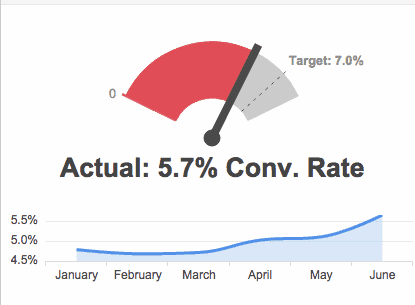
Your marketing is yielding results, and leads are pouring into your sales funnel. However, that is utterly meaningless if a good enough percentage of leads are not subsequently converting to customers. Getting customers in your business is the end game, not some fancy metrics on a social media dashboard.
Your lead-to-client conversion rate is, therefore, one metric that you should never overlook. Tracking your customer conversion rates will provide you with the needed insights required to appraise the effectiveness of your campaign touchpoints as well as your entire sales process.
How you can measure your lead to customer conversion rate?
How do you calculate your lead-to-client conversion rate? You can do this by dividing new leads by the number of new customers. I told you it was simple, didn’t I?
Conversion rates are equal to the total number of conversions divided by the number of leads and then multiplied by 100. So if you had 2000 leads, and 300 of them became new customers, your lead conversion rate is 15%.
Not bad at all!
If You Want to Attain success in your Small Business, Know How To Measure It
How you can improve your lead to customer conversion rate?
If the numbers are lower than what you expected (if you are ambitious enough, they should be), options that are open to you would include optimizing your landing pages and call-to-action (CTA) buttons; and evaluating your sales pipeline to identify where drop-offs are occurring, and or training your salespeople to improve the competence of their sales.
There is always something that you can tweak to improve conversions.
Be careful, however, that you do not tweak too many things at the same time and end up confused about what changes led to what results.
2. Customer Lifetime Value
This metric helps to determine how much revenue your business can reasonably expect from the average customer, over an indefinite period as opposed to just driving value from a single purchase.
The longer a business can retain a paying customer, the higher the lifetime value of that customer would be.
One key reason for measuring this metric is to ensure that the amount spent acquiring new leads does not exceed how much you stand to make over a given period from them should they convert into customers.
For example, how would you react when you discover that the Customer Acquisition Cost is ₦18,000 per customer, and an average customer’s lifetime spend in your business is ₦205,000 – happy?
Pause for a moment. Though the direct cost of providing your service is ₦48,000 you’d still need to account for other indirect costs and allocate a fair share per customer. ?
Additionally, knowing this metric can take you closer to identifying the higher value segments in your business, which will allow you to allocate marketing budget appropriately. If you want to improve retention of your high-value customers, then knowing how to calculate Customer Lifetime Value is not optional for your team.
How to measure Customer Lifetime Value
How you calculate your Customer Lifetime Value may depend on the nature of your products or services.
Are you offering a monthly subscription, or do your customers buy standalone large ticket items? Or, are their purchases structured as multiple repeat transactions spread over months?
One way to measure this metric, which I also consider the way to get the most realistic results, considering some of the factors mentioned above, is:
Multiply the average purchase value by the average frequency of repeat orders. Then multiply that by the average lifespan of a customer in your business to determine your Customer Lifetime Value.
If you find this to be confusing, don’t feel bad.
It took me a while to wrap my head around the math involved in this one. One resource that helped me understand calculating Customer Lifetime Value was this HubSpot article. Check it out. It breaks the math to step-by-step, making it much easier to follow.
You can also download an easy to use CLV calculator on the website.
How to improve customer lifetime value
If the numbers do not make sense, two options would be available to you. The first is that you would need to make changes in your customer acquisition strategies to remain profitable.
Are you paying too much for qualified leads from your lead sources? Find a way to negotiate it down.
Are you spending too much on ads that are not well targeted at your ideal prospects? Narrow down your targeting.
Or, maybe your salespeople are not effective at closing sales? Provide them with adequate training on how to close sales opportunities to improve their conversion rates.
It could also be that you are not selling enough to the same customers. It is established that it is easier to sell to those who have already bought from you before (provided you delivered to their expectations and above) than to sell to new prospects.
What can you upsell to your existing customers to make them buy more from your business? A more aggressive tactic here is cross-selling. Immediately after a customer has made payments for a product, offer a related product at a one-time discounted amount if they complete the purchase.
But of all the suggestions to improve Customer Lifetime Value, the most effective would be to keep improving customer retention – Do everything possible to turn your customers to your brand ambassador.
As I pointed out earlier, the longer the customer stays with your business, the more chance you have to earn repeatedly from that single customer.
Hence, a key strategy to improve CLV is getting the customer support and customer experience teams to provide an excellent experience as your customers move along their customer journey.
No matter what you do, if customers do not have a pleasant experience doing business with you, there is no way they are sticking around!
Recall, however, that no one size fits all. Learn what works best with your business and execute appropriately and effectively.
3. Customer Acquisition Cost
The simple information this metric seeks is how much it cost you to get a new customer. It is the cost of convincing a lead to try your product for the first time.
The importance of this cost cannot be over-emphasized, as this metric drives the very profitability of any business. If you find that it consistently costs your business more to acquire customers than you can make back from them, then you have a problem.
On the other hand, if a business manages to reduce the amount of money that they spend to acquire new customers while increasing its customer base, that is an indication of profitability.
To put this in context, let’s use the Oil industry example. When oil is discovered in a new field, oil companies calculate what it would cost to extract it from the field, the volume of oil in the field, and how much the oil would be sold based on current market value to determine if the field is economically viable or not.
In a similar vein, knowing the customer acquisition cost of customers allows the business owner to compare that cost with customer lifetime value to determine if the cost makes business sense. In fact, it is not possible to calculate the lifetime cost of a customer without taking into consideration the Customer Acquisition Cost.
How to measure Customer Acquisition Cost
You can measure your Customer Acquisition Cost by dividing all the costs it took you to acquire new customers by the total number of customers acquired in the same period.
As an example, your business spends ₦30,000 as customer acquisition cost and was able to attract 200 clients. That means that the customer acquisition cost is ₦30,000/200 = ₦150.
It is helpful to be holistic, as a lot of businesses make mistakes here and use a figure that is lower than actual, sabotaging the purpose of the whole exercise. Add together your customer acquisition campaign costs.
How you can improve Customer Acquisition Cost
If you depend on digital channels for your lead acquisition (and you should), a good place to start is in conversion rate optimization.
Are there any discernable friction points that are causing drop-offs along the way? How optimized is your website for mobile? Could you consider automating your sales process, so customers do not need to wait for your salespeople to finish a purchase?
Additionally, collect feedback from your customers and use that to improve and add value to your service in such a way that your customers are certain of the value that they are getting from you and want to stay with you.
It is also a great idea that instead of bundling up all your channels together, you separate them before calculating customer acquisition costs. That way you will know what works, or which channel is too expensive to be sustainable.
However, I will concede that it is more practical for online businesses to apply this aspect, as marketing online is fully attributable, and marketers can say with certainty which campaign resulted in what sale.
4. Customer Loyalty and Retention
While measuring your conversion rate is a big deal, the big picture is in measuring your concession or loyal rate.
If you lose sight of this metric, your efforts at building a business may just end up as a case of pouring water into a leaking basket.
You may be acquiring customers and making sales, but if those customers are not sticking around for the long term, and making repeat purchases from your business, the Customer Lifetime Value will be ridiculously low.
How to calculate the customer retention rate
The first thing you need to calculate customer retention rate is to determine what period you are measuring against.
There are three pieces to this puzzle. To calculate customer retention rate, you need:
Current number of customers (C)
Number of new customers added within the period measured (N)
Number of customers you had at the start of the period (S)
Here is the not so simple way of calculating customer retention rate:
Customer Retention Rate = ((C-N)/S) *100
Not so tough, right?
How you can improve customer retention rate
This simple calculation is the golden rule to building a business that is self-sustainable.
When you consider how expensive it is to acquire new customers and get them to the point where they see value in your relationship, you will learn to value them.
For your business to be considered as growing, your customer acquisition rate must be higher than your customer attrition rate (that is, the rate at which customers leave your business).
This means that for every customer that leaves your business, you will need to find a way to replace that customer, while still acquiring new ones.
Interestingly, and as I have said repeatedly, delivering a superior service that is customer-focused is the number one way to improve your Customer Retention Rate.
According to Gartner, 80% of your future revenue will come from 20% of your customers. That’s a huge figure, and if you are serious about growing your business, that research should be a wakeup call.
Obsess about providing superior value. It will save you money in the long run!
Last Words
Talk to any businessowner out there and they will tell you that they want their business to succeed.
Many, though, are at a loss as to what to measure to ensure that they are making progress on that goal, besides the obvious ones like profit and loss.
While there is some subjectivity to the metrics recommended here, I have taken care to ensure that they are as industry neutral as possible. So just about anybody can pick it up and run with it.
I hope that these suggestions give you a good start on how to measure metrics that add value to the performance of your business.
The term loan refers to a type of credit vehicle in which a sum of money is lent to another party in exchange for future repayment of the value or principal amount. In many cases, the lender also adds interest and/or finance charges to the principal value which the borrower must repay in addition to the principal balance. Loans may be for a specific, one-time amount, or they may be available as an open-ended line of credit up to a specified limit. Loans come in many different forms including secured, unsecured, commercial, and personal loans – Investopedia
Online Platforms that give Quick Loans to Small Businesses
If you’ve been wondering where you can access loans as a small business in Nigeria, here are 10 online platforms where you can get quick loans for your business in Nigeria (in no particular order)
1. SMEDAN – SME loan supported by federal government
Let’s start with this government-backed initiative before going to the private sector. As a way of supporting small and medium businesses in the country, Nigeria’s federal government established the Small and Medium Enterprises Development Agency of Nigeria (SMEDAN) in 2003 to help promote the growth of small and medium enterprises.
They do this in different ways including training, mentorship and provision of loan.
Minimum amount: N100,000
Maximum amount: N2,000,000
SMEDAN Loan Requirements: Business Plan and National ID
Lidya is a leading SME-only loan platform. The online platform was launched in 2016 to close the credit gap, in Nigeria and other emerging markets.
If you’d like to access an easy loan for your business, you can apply for Lidya business loan online or through mobile phone and receive feedback in a couple of hours.
Lydia makes use of technology and algorithms for risk assessment before disbursing loans. Once they run your application through their system and you are eligible for the loan, disbursement is made.
Minimum amount: $500
Maximum amount: $50,000
Lydia Loan Requirements: Proof of registration, Existed for 3 months+ and a Bank Account
Backed by a renowned commercial bank, Sterling Bank, Kiakia is an Abuja based financial institution that gives quick loan to small businesses in Nigeria.
The online platform also makes it possible for users to give each other loans using intuitive conversations.
Minimum amount: N50,000
Maximum amount: Depends on credit score
Kiakia Loan Requirements: BVN, Valid ID, verified source of income
Carbon is a popular digital loan platform in Nigeria. Formerly known as Paylater, Carbon was initially known as the go-to platform for instant personal loans.
However, Carbon recently launched Carbon for business to support SMEs and startups with loans to scale.
Using your BVN, Carbon can calculate your credit and determine how much they can give you.
Minimum amount: N50,000
Maximum amount: N20,000,000
Carbon Loan Requirements: Business running for 12 months +, 1 million+ monthly revenue
Quickcheck loan app gives you access to instant loan online for personal and business needs.
Minimum amount: N1,500
Maximum amount: N500,000
Quickcheck Loan Requirements: Depends
Interest rate: 5%/month
7. C24 – Online loan without collateral
This financial institution gives loans to support individuals and businesses with urgent financial needs. With your internet-enabled device, you can access quick business loan for your small business in Nigeria.
Minimum amount: N5,000
Maximum amount: N5,000,000
C24 Loan Requirements: Formal loan application, recent utility bill, means of identification among others
Small and medium enterprises like yours can access quick loans from Fast Credit SME loan. This one requires a guarantor and the maximum tenor is 6 months for businesses that meet their criteria.
Minimum amount: N100,000
Maximum amount: N5,000,000
FastCredit Loan Requirements: 12 months business account bank statement, proof of registration, evidence of tax payment among others
Interest rate: 4%/month
9. EazziCash – Easy access to loans
Eazicash has two loan packages for small business owners, namely Eazzipawn and EazziAssist.
Minimum amount: N100,000
Maximum amount: N6,000,000
EazziCashLoan Requirements: Must be resident in Lagos and its environs
10. Zedvance – Access to quick loans without collateral
Last but not least, Zedvance is an online platform that gives loans mostly to individuals. However, in a bid to encourage entrepreneurship, Zedvance has loan facilities for small businesses run by salary earners (as side hustle).
So if you have a job but run a business on the side, then Zedvance loan is for you.
Minimum amount: N20,000
Maximum amount: N5,000,000
EazziCashLoan Requirements: NUBAN cheques or debit mandate, Employee ID, Employment letter, among others.
The importance of loans to a small business or individuals cannot be overemphasised. Except you want your business to remain small permanently, you are most likely going to take loans at some point.
Before now, only big companies had access to loan facilities in Nigeria. That has changed in recent years since it’s now glaring to all that small business play important roles in the economy.
In a report made public by PwC in 2018, SMEs (Small and Medium and Enterprises) constitute 96% of businesses in the country and the employer of 84% of Nigerians. Also, SMEs contribute 48% of Nigeria’s GDP (Gross Domestic Product).
With this, it’s glaring that the growth of your small business has a positive impact on the country’s economy. And loans can help to make that growth you desire a reality.
Aliko Dangote is the biggest inspiration for most entrepreneurs in Nigeria. He is the richest black man on earth, so it makes sense that he inspires us all.
The Kano-born business mogul is currently worth over $7billion. But all of the money and success notwithstanding, Dangote too gets to take a loan sometimes. Even if we don’t know of the unpublicised loans from friends and business associates, Forbes reported in 2018 that Dangote got $650 million loan from Afreximbank (African Export-Import Bank).
The Dangote example is just because it’s closer home and would resonate more. There are several other successful businessmen and women in the international space that had to take loans to support their businesses at some points.
Jeff Bezos’ parents loaned him $250,000 in 1995 (about $30 billion dollars today). Bill Gates loaned Steve Jobs $150 million in 1997 as a form of investment in Apple when it was at the Brink of Bankruptcy. We can go on and on.
The point here is not to encourage you to take needless loans. No one, absolutely nobody said you should take loans to flex. Not at all. Instead, here are a few reasons why you should consider taking loans
Loans can help you expand your small business
It can be used to offset inventory costs
To acquire expensive equipment or other business needs
For cash flow: operational costs
To stand the chance of getting higher loans with better terms in the future
Top Places To Apply For Loans in Nigeria
Accessing loans is one of the major necessities in Nigeria.
To get an idea of what sort of loans are available in Nigeria, we decided to find out what funding options are available in the country. We conducted a search on various finance websites and compiled our best picks into this post.
There are so many organisations that grant loans in Nigeria. Some of these organisations are either owned by the Government or owned by private individuals.
This article lists the very functional, top 50 organisations in Nigeria that give loans out.
The Bank of Agriculture is a Nigerian government-sponsored bank that provides loans, credits, and other forms of funding for farmers and farming businesses.
They provide products and services such as Agro-processing facilities, Export finance facilities, and many others. They can award loans up to NGN 5 million Naira, and their interest rate is between 7% and 21%.
The Bank of Industry Limited (BOI) is Nigeria’s oldest, largest and most successful development financing institution. It was reconstructed in 2001 out of the Nigerian Industrial Development Bank (NIDB) Limited, which was incorporated in 1964. The bank took off in 1964 with an authorized share capital of 2 million (GBP).
The BOI’s core mandate is to provide financial assistance for the establishment of large, medium and small projects as well as the expansion, diversification and modernisation of existing enterprises; and rehabilitation of existing ones.
Once you meet its requirements, accessing loans from the BOI is not so cumbersome, the BOI is one of the best sources of funds available to Nigerian businesses.
Development Bank of Nigeria (DBN)
The Development Bank of Nigeria (DBN) was conceived by the Federal Government of Nigeria (FGN) in collaboration with global development partners to address the major financing challenges facing Micro, Small and Medium Scale Enterprises (MSMEs) in Nigeria.
As the name implies, this bank disburses loans to SMEs. DBN loans can be accessed through PFIs, which include Commercial Banks, Microfinance Banks, Development Finance Institutions (DFIs) and other Financial Institutions.
DBN loan repayment tenure is flexible (up to 10 years with a moratorium period of up to 18 months) and the interest rates are on a market-conforming and fully financially sustainable basis.
How to get a DBN Loan
You can access the DBN loan through any of these Participating Financial Institutions (PFIs) by contacting any of the banks listed below:
The NEXIM Bank is mandated to help provide loans to facilitate export goods and services from Nigeria. Only Business owners and organisations related to exporting activities are required to access loans at the bank. NEXIM Bank provides products like direct lending, foreign input, local, and other related services
SMEDAN is charged with granting loan access to MSMEs; it provides schemes such as the commercialisation empowerment initiative, conditional grant scheme and other empowerment schemes for growing business owners.
Conclusion
Just as getting a loan can be good for your business, approaching it the wrong way may haunt you later. That’s why it’s always important to read every term and condition before you submit that loan application.
Here you have 10 different options. Go through each of their offers and settle with what works best for you in terms of the amount offered, tenor, interest rates and other conditions.