

NDLEA rehabilitation funding is at the centre of a new proposal from the Coalition of South East Youth Leaders (COSEYL), which has asked the Federal Government to fund the National Drug Law Enforcement Agency (NDLEA) well enough to rehabilitate, train, empower and reintegrate recovering drug users, as reported by New Telegraph. The group says arrests and the destruction of drug warehouses are necessary but not enough on their own.
COSEYL wants a post-rehabilitation programme offering vocational education, technical training, entrepreneurship development and start-up capital. It has also asked President Bola Ahmed Tinubu and the National Assembly to prioritise dedicated funding. The statement was signed by its President General, Comrade Goodluck Ibem.
For entrepreneurs and SME owners, the idea raises real questions. Who would train these beneficiaries? Which businesses would supply their tools? And how might employers prepare? This guide answers those questions while staying close to what has actually been said.
Key facts at a glance
| Who is asking | Coalition of South East Youth Leaders (COSEYL) |
| Who is being asked | The Federal Government, President Bola Ahmed Tinubu and the National Assembly |
| Agency involved | National Drug Law Enforcement Agency (NDLEA) |
| Signed by | Comrade Goodluck Ibem, President General of COSEYL |
| What is proposed | Rehabilitation, vocational and technical training, entrepreneurship development and start-up capital |
| Trades named | Tailoring, automobile repairs, electrical installations, agriculture, information technology, fashion design, welding and catering |
| Status | A proposal only; no budget figure, start date or timeline announced |
What COSEYL is proposing
The coalition’s call goes beyond enforcement. It argues that a complete response must include life after rehabilitation, so that recovering users have something productive to return to.
- Training in chosen trades, including tailoring, automobile repairs, electrical installations, agriculture, information technology, fashion design, welding and catering.
- Start-up grants, equipment or structured financial assistance once training is complete, so beneficiaries can become self-reliant.
- Financial and institutional support for those whose schooling was interrupted by addiction and who want to return to class.
- Monitoring, mentorship and accountability mechanisms built into the programme.
The group argues that some people relapse after rehabilitation because they return to unemployment and financial insecurity. It also praised NDLEA Chairman Brig.-Gen. Mohammed Buba Marwa (rtd.) but said the agency needs larger budgets and more rehabilitation facilities.
Why NDLEA rehabilitation funding matters beyond enforcement
COSEYL’s central argument is simple. Arresting offenders and destroying drug warehouses removes supply, but it does not give a recovering user a livelihood. Without work, income or a skill, the pull back to old habits can be strong.
That is why the proposal links treatment to training and capital. The thinking is that a person with a trade and a means to practise it is more likely to stay on a stable path.
Whatever your view of the proposal, the economic logic is familiar to any business owner. People with skills and steady income contribute to local demand, and small enterprises are often where they start.
What this means for Nigerian businesses
This is a call to government, not an approved scheme. No budget figure, start date or timeline has been announced, so businesses should not plan around it yet. Still, the proposal points to several practical issues.
- Skills demand. The trades named are ones many SMEs already run, such as tailoring, welding, catering and auto repair. If a funded programme emerges, established workshops could be well placed to offer apprenticeships or training places.
- Equipment suppliers. The proposal includes equipment support for graduates. Suppliers of sewing machines, welding kits, electrical tools and catering equipment could see steady demand if it is funded, though nothing is confirmed.
- Workforce and hiring. Employers in the South East and elsewhere may increasingly meet candidates who have completed rehabilitation. Clear workplace policies on health, support and supervision will help you hire fairly and safely.
- Risk to productivity. COSEYL describes addiction as a loss of productivity and human capital. Owners who notice substance abuse among staff or apprentices can look into referral options and speak to the NDLEA early.
- Policy risk. Funding depends on the Federal Government and the National Assembly. Proposals like this often take a long time to become budget lines, if they do at all.
If you run a small training or production business, now is a good time to document your processes, costs and capacity for taking trainees. Our guide to starting a small business from home covers basics that apply to the micro-enterprises such a programme would aim to create.
The trades named and the business opportunities around them
The list of trades in the proposal reads like a map of everyday Nigerian small business. Each one has its own supply chain, customers and risks.
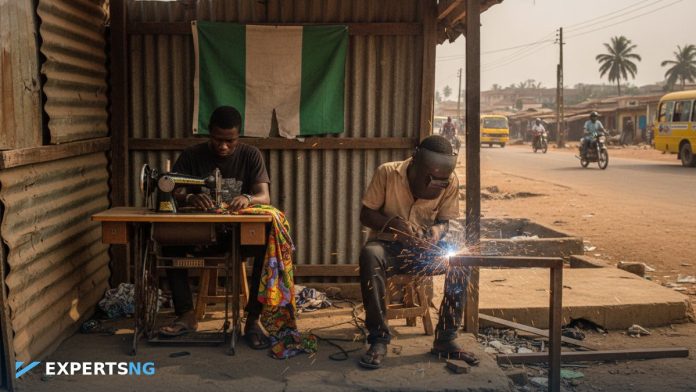
Tailoring and fashion design. These need machines, fabric, threads and a steady stream of clients. Trainers, fabric sellers and machine repairers all sit around this trade.
Welding, electrical installations and automobile repairs. These are tool-heavy trades where quality supervision matters. Experienced artisans who already train apprentices informally could formalise that work with simple records and fees.
Catering. Food businesses depend on hygiene, costing discipline and reliable suppliers. If this interests you, see our guide on how to start a food business in Nigeria.
Agriculture and information technology. These cover very different worlds, from farm production to digital skills. For ideas on the farming side, read about lucrative farming ideas and business opportunities in Nigeria.
Practical checklist: what to do now
You cannot apply for something that does not yet exist, but you can prepare. These steps cost little and are useful whatever happens to the proposal.
- Follow official channels. Watch NDLEA and Federal Government announcements for any confirmed scheme.
- Write down your training capacity. Note how many trainees you could supervise, what tools you have and what hours you can offer.
- Cost your training. Work out what a trainee costs you in materials, supervision time and tool wear, so you can price fairly if paid placements appear.
- Draft a basic workplace policy. Cover health, support, supervision and confidentiality in plain language that staff can follow.
- Keep your documents ready. Business registration, tax records and a short profile of your workshop make you easier to partner with. Our piece on business regulations every owner should know is a useful refresher.
- Plan for mentorship. The proposal stresses monitoring and mentorship, so think about who in your business could guide a newcomer.
- Stay alert to scams. Programmes that attract attention often attract fraudsters too.
Hiring people in recovery: questions to consider
Employers who meet candidates who have completed rehabilitation should approach the matter with fairness and care. A few questions can help you set sensible ground rules.
- Do you have a written policy on substance use at work, and do staff know it?
- Who is the named contact if an employee or apprentice needs support?
- Are supervision arrangements clear, especially for roles involving machinery, vehicles or cash?
- How will you keep personal health information private?
- Do you have a probation or review period with clear expectations? Our guide on getting the best of the probation period may help.
Good structure protects both the business and the individual. It also makes any future partnership with a government or NGO programme much easier.
Policy risk and realistic expectations
Funding for the proposal depends on decisions by the Federal Government and the National Assembly. Public programmes in Nigeria can take time to move from statement to budget line, and some never do.
That is why this article treats the idea as something to watch rather than something to bank on. Suppliers should not buy extra stock because of it, and workshops should not turn away current customers to wait for it.
The sensible position is to stay informed, stay prepared and keep your core business healthy. If a programme is confirmed, you will be ready to move quickly.
Who qualifies and how to apply
Details not yet announced. The source gives no eligibility rules, grant amounts, deadline or official portal, because the programme exists only as a proposal. COSEYL’s framework suggests it would target people who successfully complete rehabilitation, but the NDLEA has not confirmed any such scheme in the source material.
If a programme is launched, remember that applications should be free. Do not pay anyone for a form, slot or "guaranteed" placement, and rely only on official NDLEA and Federal Government channels for information.
Frequently asked questions
What is the NDLEA rehabilitation funding proposal?
It is a request from the Coalition of South East Youth Leaders (COSEYL) for the Federal Government to fund the NDLEA well enough to rehabilitate, train, empower and reintegrate recovering drug users. It includes vocational training, entrepreneurship development and start-up capital.
Has the Federal Government approved the programme?
No. It is a call to government, and no budget figure, start date or timeline has been announced.
Which trades are mentioned?
Tailoring, automobile repairs, electrical installations, agriculture, information technology, fashion design, welding and catering.
Who signed the statement?
The statement was signed by COSEYL’s President General, Comrade Goodluck Ibem.
Why does COSEYL want funding beyond arrests?
The group says arrests and the destruction of drug warehouses are necessary but not enough on their own. It argues that some people relapse after rehabilitation because they return to unemployment and financial insecurity.
Can I apply for a grant now?
No. There is no application process, portal or eligibility list because the programme exists only as a proposal. Do not pay anyone claiming to offer a slot.
How can my business prepare?
Document your processes, costs and training capacity, draft a clear workplace policy and follow official announcements. If you need startup funding for your own venture in the meantime, see 5 ways to get funding for your startup in 2026.
Who is the NDLEA Chairman mentioned in the proposal?
COSEYL praised NDLEA Chairman Brig.-Gen. Mohammed Buba Marwa (rtd.) but said the agency needs larger budgets and more rehabilitation facilities.
Final thoughts
The proposal pairs treatment with training, mentorship and start-up support, an approach that, if funded, would draw heavily on the skilled trades that Nigerian SMEs already practise. For now it remains a request, so the smart move is preparation rather than assumption.
Keep your records tidy, know your capacity and watch official sources. If a scheme is confirmed, businesses that have done this groundwork will be in the best position to take part.
Source: newtelegraphng.com