News from the National Bureau of Statistics (NBS) indicated that the total banking industry credit to the 36 States of the federation and the Federal Capital Territory (FCT) rose to N18.90 trillion in the second quarter of the year (Q2 2020) compared to N18.56 trillion in the preceding quarter and N15.44 trillion in Q2 2019.
Lagos state accounts for 78.94% of the rise
In its Selected Banking Sector Report: The NBS stated that the Quarterly Geographical Distribution of Credit by State Q1 2015 to Q2 2020, Lagos State recorded the highest credit by geographical distribution with N14.92 trillion or 78.94 per cent of total credit, while Yobe recorded the least credit facility with N13.8 billion accounting for 0.07 per in Q2 2020.
The NBS, however, pointed out that irrespective of the relevance of the (CPS) report, credit per state may not necessarily reflect the level of economic activity in a state.
The report noted – “For example, all the oil majors are operating outside Lagos but their credit is booked in Lagos. Similarly, Dangote Cement’s loan may have been booked in Lagos, but its major activities are outside Lagos, as an example”.
The report further stated that the total number of borrowers increased by 47.35 per cent to 2.59 million in 2019 from 1.76 million in 2018 while the number of credit facilities increased by 55.54 per cent to 3.18 million in 2019 from 2.04 million recorded in 2018.
Remittance inflows contracted by 2.06 per in 2019 to $23.81 billion from $24.31 billion recorded in 2018 while total remittance outflows increased by 33.87 per cent to $90.6 million from $67.68 million in 2018.
The total number of individuals who registered for the National Housing Fund in 2019 stood at 220,935 while the total amount of money given out as mortgage loans stood at N77.61 billion in 2019.
A further breakdown of borrowers in the banking industry showed that borrowers increased by 47.35 per cent to 2.59 million in 2019 from 1.76 million in 2018 while the number of credit facilities increased by 55.54 per cent to 3.18 million in 2019 from 2.04 million in 2018.
According to the NBS, the total value of loans distributed under the Agricultural Credit Guarantee Scheme Fund (ACGSF) stood at N4.07 million in 2019 compared to N4.37 million distributed in 2018, thus representing a decrease of -7.03 per cent year on year.
Meanwhile, the FCT accounted for N564.10 billion of industry credit within the review period, while Abia accessed N97.15 billion as well with N92. 85 billion.
President Buhari has reacted to the Endsars demonstration going all around Lagos in protest of the highhandedness of the Nigerian police tactical force, SARS (The Special Anti Robbery Squad).
His reaction came as a backdrop to that of the British High Commissioner to Nigeria, Catriona Laing, through her verified Twitter handle, where she noted that- “Peaceful protests are powerful”. She further opined that the police reforms act recently passed by President Buhari should provide a good foundation for transparency and accountability for the police force.
President Buhari mentioned that he again met with the IGP of police lastnight, and noted that his administration’s resolve and determination to reform the Nigeria Police Force should not be in doubt. He therefore, instructed the IGP to conclusively address the concerns of Nigerians on Police brutality.
In his words:
The IG already has my firm instructions to conclusively address the concerns of Nigerians regarding these excesses, & ensure erring personnel are brought to justice. I appeal for patience & calm, even as Nigerians freely exercise their right to peacefully make their views known.
It seems in the eyes of Nigeria’s police, any young man with a laptop, smartphone and an internet connection is likely a fraudster.
Such profiling has no bearing in reality, of course. It’s merely a crude extortion tactic that has fueled a long-running racket. Here’s how it often goes: the young person is stopped on suspicion, then arrested and detained followed up being hit with bogus accusations of being an internet fraudster.
In those circumstances, the options are usually paying bribes to regain freedom or facing an uncertain future decided by Nigeria’s broken criminal justice system which has left 72% of prison inmates serving time without a sentence – Source.
Unfortunately, such barbaric acts by the police Special Anti Robbery squad has left its mark on the Nigerian youth.
In a country with a majority youth population, such menace, if left unchecked would indeed put the future of the country and indeed that of her youth at risk. A future that may not guarantee that the youth are able to effectively compete online, yet other nations are doing all possible to empower her youth by ensuring their widespread digital inclusion, globally.
It’s truly high time that the Nigerian police ends her SARS unit and do a complete overhaul of her system. There is a need for a complete culture overhaul of the Nigerian police force.
The Managing Director/Chief Executive, Nigeria Export Processing Zone Authority (NEPZA), Prof. Adesoji Adesugba Wednesday, stressed the need for the government to shift attention towards the rapid development of the solid minerals sector.
He Added that the gemstones/jewellery subsector of the Nigerian economy alone has the potential to generate about $12 billion for the country, annually.
Adesugba further stressed the need for Nigeria o do all possible to benefit from the global jewellery market which is currently worth about $500 billion.
Speaking when he received members of the Nigeria Chambers of Mines (NCOM) led by its president, Alhaji Sani Shehu who paid him a courtesy visit, Prof. Adesugba also disclosed plans to establish a special economic zone for the sector.
He said the development of the sector would support President Muhammadu Buhari’s renewed vigour towards a holistic and coordinated exploration of mineral deposits for maximum contribution to the country’s Gross Domestic Product (GDP).
In his words: “Nigeria should be the gem capital for Africa because we have all kinds of gemstones, the most expensive in the world and I doubt if 10 per cent of Nigerians realise that they are living on top of enormous wealth and so we must make use of it.
We are aware of quite a lot of foreigners that come here. And a high percentage of the gemstones used in Thailand, India, and Sri Lanka are from Nigeria.”
He said a collective understanding between the authority and the chamber was critical towards actualising government’s set goal for the mining industry.
Prof. Adesugba added that repositioning the Gem-stone sub-sector is key to enhancing the industrialisation of the country, as well as conserve foreign exchange for the benefit of the economy.
He said: “I agree with you Mr. President that there’s a need for us to take a second and deeper look at that sector because of its capacity to deepen the growth of our GDP and industrialisation in Nigeria. And also to save foreign currency and increase the employability of our teeming number of youths.
The Gemstone sub-sector is a sector that we must take a second look at.”
He said the partnership should lead to the establishment of a special economic zone for solid minerals development going forward adding that this would offer relief for holders of mining licenses to escape the threat of forfeiture as enshrined in the Nigerian Minerals and Mining Act when operational.
The NEPZA boss further noted that the proposed special economic zone would ignite activities in the sector and create job opportunities for the teeming youth. At the same time, the government takes on revenues from the exploration of value-added minerals.
He said at the moment, most of the country’s mineral exports lacked value addition adding that NEPZA intended to change the narrative by using the zone to restore sanity, standard and compliance.
He said Nigeria must emulate countries like South Africa, Ghana and Kenya which had taken their mining sector to an enviable height with substantial revenues from the sector.
He said though the COVID-19 pandemic had affected the economic trajectories of nations, the only way out for the country was to think out of the box by establishing a special zone for solid minerals development.
Earlier, Shehu had also solicited for the creation of mineral export processing zones in order to build a proper structured minerals export venue.
He said the country is blessed with different categories of solid minerals including kaolin, limestone , dolomite and gypsum as well as metals namely tin, columbite, tantalite, iron ore, lead, precious stones, sapphire, garnet, topaz, aquamarine among others.
He said some of these minerals are export-based as they are only processed to end-use through a complex manufacturing processing which the country lacked at the moment.
President Muhammadu Buhari has approved the appointment of Alhaji Adamu Fanda, a former member of the House of Representative from Kano State, as Chairman of the Board of the Nigeria Export Processing Zones Authority (NEPZA).
The appointment, which was conveyed in a memo with file number FMIT/LEG/1426/17 dated October 6, 2020, and signed by the Permanent Secretary, Federal Ministry of Industry, Trade and Investment, that Dr. Nasir Sani-Gwarso, stated that the appointment of Fanda takes effect from September 26, 2020.
According to a statement issued on Thursday by Mr. Martins Odeh, the Head, Corporate Communications of NEPZA, Fanda’s appointment was the sequel to a July 23 letter by the ministry through the Office of the Secretary to the Government of the Federation to President Buhari for the replacement of Mr. Segun Oni who formerly held the position.
Meanwhile, the Managing Director of NEPZA, Prof. Adesoji Adesugba has thanked the president for the prompt manner in which the new Chairman was appointed, adding that the appointment has given the NEPZA team the privilege of a complete team.
Adesugba said the appointment of the new Chairman was indicative of Buhari’s commitment to ensuring that NEPZA got a new lease of life, adding that Fanda has the requisite exposure, experience and credentials to help in the revitalization process of the agency.
In his words, “I am grateful to President Muhammadu Buhari for the appointment of Alhaji Adamu Abdu Fanda as NEPZA board chairman. This shows the president’s commitment toward ensuring that the Authority is not hindered in any way while performing its task of growing the economy through free trade zone development.
We are elated with this development as Fanda’s coming has made our team complete. The management and staff of the Authority would not hesitate to team up with our new Chairman to fast track the impact of free trade zone scheme on the country’s economy.”
He also expressed delight over the many interventions by the Minister of Industry, Trade and Investment, Mr. Adeniyi Adebayo to stabilize NEPZA, adding that the appointment of a new board chairman was geared towards giving the agency a fully operational status.
The approval of a new special salary scale for teachers across Nigeria was today announced by the Federal Government of Nigeria.
This approval was given as part of the incentives given by the Federal Government to teachers in Nigeria to mark this year’s World Teachers Day, today, October 5, 2020.
This disclosure was made by Malam Adamu Adamu, the Hon. Minister of Education, who represented the President at the occasion.
The President also announced the increase of the approved years of service for teachers from 35 to 40 years and their retirement age from 60 to 65. The Nigerian teachers over the years have been agitating for amongst several other things increase in their retirement age, increase in salary and better welfare packages.
The President, in his speech to mark this year’s teachers day, explained that the approval of the new teachers’ salary scheme was to incentivice the teachers to deliver better services outputs.
He expressed that these developments were part of ongoing reforms by his government to revitalize and reposition the teaching profession in Nigeria.
The minister said that the new reforms in policies were to incentivice the best hands into the noble teaching profession, and encourage existing teachers to deliver better and more efficient services that would birth quality students who would, in turn, contribute to national building.
Quoting him:
Malam Adamu Adamu said, “ The Federal Government notes the emergency situation in our educational system with particular reference to the dearth of qualified and dedicated teachers to enhance the quality of teaching and learning at all levels of our educational system.’’
“To address these challenge yes and set our country on the path of industrialization where our educational system will produce the needed skills and manpower, I have approved to the following;
‘’The reintroduction of bursary award to education students in Universities and College of Education with the assurance of automatic employment upon graduation, payment of stipends to Bachelor of Education students as well as granting them automatic employment after graduation is now a government policy.’’
“The Tertiary Education Fund (TETFUND) will now fund teaching practice in Universities and Colleges of Education, special salary scale for teachers in basic and secondary schools including provisions for rural posting allowance, science teachers allowance
“Special teacher pension scheme to enable the teaching profession to retain its experienced talent as well as extend teachers retirement age to 65 years and teachers service years to 40, create a career path policy for the teaching profession in Nigeria and, teachers’ conversion programme and ICT training to mitigate the current dearth of qualified teachers in the school system.”
Some of the other incentives approved by President Buhari, to motivate and restore the lost glory of Teachers include the building of low-cost houses for teachers in rural areas, sponsorship of teachers to at least one refresher training per annum, expansion of annual Presidential teachers and schools awards to cover more categories with outstanding winners to be considered for National Awards and National Productivity Order of Merit (NPOM) awards.
Others were prompt payment of salaries and other entitlements including consideration for the first-line charge in annual budgets, timely promotion of teachers to eliminate stagnation, provision of loan facilities, free tuition and automatic admission for biological children of teachers in their respective schools to encourage and retain them in the system.
The Sultan of Sokoto, Alhaji Abubakar Sa’ad III, on Sunday, October 5, 2020, said the commencement of the national Hajj savings scheme would enable every Muslim perform the hajj without depending on the government for funding.
Hajj Savings Scheme to Reduce Pressure on Public Funds, Says Sultan
He also said the scheme would ensure proper planning while funds realized will be invested in Shari’a compliant instruments.
Speaking while he formally flagged-off the pilot scheme in Kano State, the traditional ruler also pointed out that the programme, which is currently pioneered by Jaiz Bank in partnership with the National Hajj Commission of Nigeria (NAHCON), would make it easier for intending pilgrims to perform one of the five pillars of Islam.
In a statement by the bank, the Sultan who was represented by the Emir of Bichi, Alhaji Nasiru Ado Bayero, however charged both the commission and the bank to be transparent in the operation of the scheme.
The Managing Director, Jaiz Bank, Mr. Hassan Usman however, said the scheme remained a significant milestone for all stakeholders in the hajj ecosystem in the country.
He said: “From planning, funding to actual operations, the scheme has the potentials to affect every act and actor in the process positively.
With such a scheme in place, intending pilgrims that do not have the financial strengths to afford pilgrims can gradually plan and actualize their dream without stress by saving over some time.
“Even those who did not live long enough to complete their savings might still in Allah’s infinite mercy receive the reward for Hajj, because they are pilgrims by intention (niyyat) and action (amal) together.”
He added that as the scheme grows over time, NAHCON and the various State Muslim Pilgrims Welfare Boards can have the liquid funds required to plan hajj effectively. They would thereby secure better deals on accommodation and other services for their pilgrims.
Usman said the scheme could also make the pilgrims highly self-sustaining on the long run.
On his part, the Chairman of NAHCON, Zikrullah Kunle Hassan described the event as historic adding that, “this is one of its kind in the continent as we are changing the narrative of Hajj Scheme to make it easier for people to perform hajj”.
Also, the Kano State Governor, Mr. Abdullahi Ganduje, pledged the full support of the state towards the scheme.
We can help you with your Hajj Savings, all you need do is to keep an eye on ExpertsNG for latest developments.
Tax is a mandatory financial surcharge or levy imposed on a taxable entity (an individual or legal body) by a government to fund government expenditures in delivering good governance to its people.
In Nigeria, the government organization in charge of enforcing and collecting tax is referred to as Inland Revenue Services.
Tax Laws / Legislations in Nigeria
Tax legislation is the act or process of enacting tax laws and the body of rules that provide for the levying of taxes and the administration of tax.
Nigeria has a compendium of tax laws guiding the administration of laws at all levels. Click here to download this compendium.
Taxes and all it embodies are usually not something most small business owners concern themselves with, and understandably so.
The requirements of running a business and keeping it thriving in Nigeria require a full complement of skills, of which taxation is a key but usually a neglected part.
Since the President signed the Finance Act 2019 into law, there has been a raft of changes across the taxation sector, and these changes also apply to small businesses.
It would be suicidal not to be aware of these changes, which is why we have written this guide for you.
Let’s dive in.
Tax for new businesses
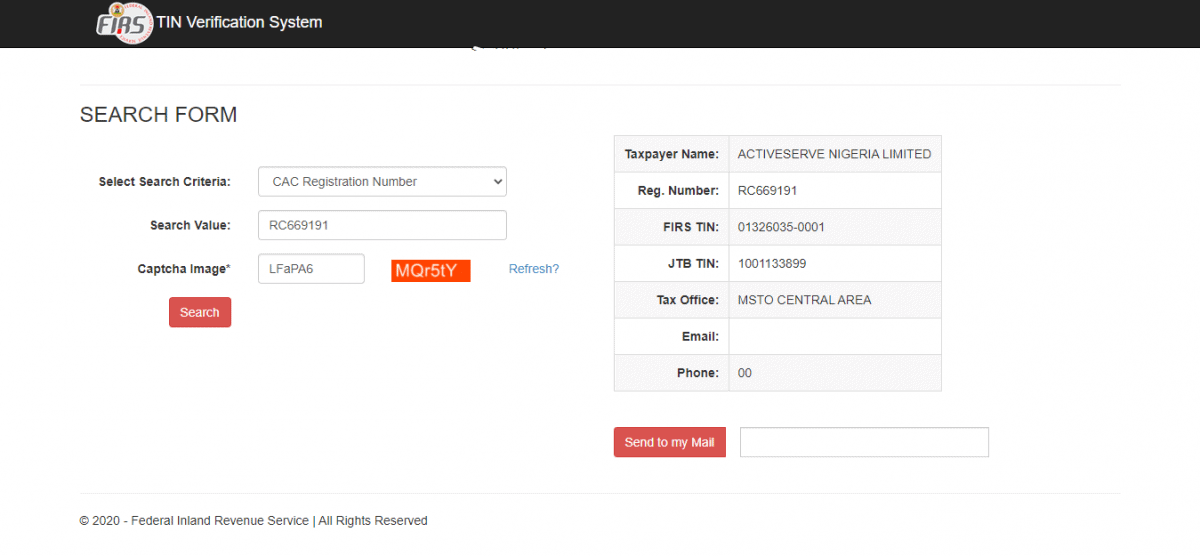
Tax Identification Number (TIN)
The new Nigeria Finance bill (2019) made amendments to the Personal Income Tax Act, specifically in sections 33, 49, and 58. These amendments led to the mandatory design of the Tax Identification Number.
The TIN is now a compulsory requirement for every taxable entity (entity here means both individuals of taxable age and companies). It is a uniquely generated 14 digit number that identifies a taxable entity for payment of taxes due.
Application for and the issuing of your TIN is free, so ensure you are not conned into paying for it.
Getting a TIN in Nigeria is now mandatory, so that’s a good reason to get yours. But beyond that, the following are the reasons why you should get your TIN, especially as a small business owner.
Access to Government Loans
Foreign Exchange
Vehicle Registration
Application for Certificate of Occupancy
Tax Clearance for Business
Access to a Bank Account
Application for an import license and an export license
Many more reasons abound
Access To Government Loans, Grants and Other Social Safety Net Initiatives: The government has tied access to any government loan, either federal or state, to the acquisition of your TIN. It would be a shame to be denied a chance to get much-needed funds from a government loan because you don’t have your TIN.
Foreign Exchange: TIN is now a compulsory requirement to access foreign exchange at any registered BDC in Nigeria.
Vehicle Registration: Without a TIN, you won’t be able to register a vehicle, be it a car, a tricycle, or a motorcycle. Using an unregistered vehicle puts you in the uncomfortable position of being accused of stealing the vehicle. Apart from that, if you run a business in which a vehicle is an asset, you’d need to register it, and not having your TIN would be a barrier to that.
Application for Certificate of Occupancy: This also reinforces the need to get your TIN. Not being able to apply for a C of O means you won’t be able to take lawful possession of any property you buy, which will most likely be a problem.
Tax Clearance for Business: This is quite straightforward, as not having a TIN automatically rules out the chances of you being able to pay tax. And if you can’t pay tax, how can you get a tax clearance? Not having a tax clearance certificate as a business owner limits your chances of effectively conducting your business in Nigeria.
Access to a Bank Account: Either as a business or as an individual, failure to get your TIN will mean you won’t be able to open a new bank account, neither will you be able to maintain the one(s) you have. This denial of access to essential banking services hammers home the point of how important it is to get your TIN as soon as possible.
Application for an import license and an export license: If you need to import or export goods or services in and out of Nigeria, a onetime license registration procedure must be completed. Such import/export license may be obtained from concerned government department of Nigeria.
For importing to Nigeria, you must do the following amongst others,
a) Should register the company or business name in Nigeria with the Corporate Affairs Commission (CAC).
b) Register the company with the Federal Inland Revenue Services (FIRS) and get Tax Identification Number (TIN Number) as the proof of tax payments.
How To Get Your TIN in Nigeria.
With the utmost importance of getting your Tax Identification Number highlighted above, knowing how to get your TIN is imperative. The following steps will explain how:
As an Individual: Getting your TIN as an individual is a seamless and easy process. This is because the generation of your TIN is based upon your possession of either your Bank Verification Number or your National Identity Number. Having both of them, or at worst, one of them guarantees you a TIN. All you then need is to verify yours.
As a Registered Business Name: If your business is not yet incorporated, but it already has a registered business name, then getting your TIN isn’t any trouble. All you have to do is to apply for your VAT number, and once you get it, it will also be your TIN number.
As an Incorporated Business: To get your TIN as an already incorporated business, go to any FIRS office that’s close to your registered address. You can find the address of the FIRS offices on their website. Ensure you take the following documents along with you;
Write an application letter on a company letter headed paper.
The Articles and Memorandum of Association of the company
The company seal
A copy of a utility bill
The Certificate of Incorporation
You should present all documents listed above in triplicates to the FIRS to get your TIN issued; one original copy and two photocopies. Ensure you leave one photocopy with the FIRS officials, and get the other stamped by a FIRS official.
Note: The issuance of TIN is now automated for new registrations at the CAC, and issued on the incorporation of a new business entity – business name or company.
Call To Action
Contact us on +2347051114444 or send a mail to enquiries@experts.ng to have a free consultation with a trusted tax consultant to help you achieve your tax compliance
Taxes in Nigeria
Categories of Taxes in Nigeria:
At the federal level, we have the FIRS – Federal Inland Revenue Services, and at the state level, we have the State Inland Revenue Services, with examples such as the LIRS, EIRS, etc.
Federal taxes include Companies Income Tax, Value Added Tax, Education Tax, etc.
State taxes, on the other hand, include Personal Income Tax, Business Premises Tax, Development levy, etc.
Personal Income Tax
Personal Income Tax is another tax that a small business owner must be aware of. The Personal Income Tax Act of Nigeria prescribes the conditions in which personal income tax is payable. It also prescribes the terms of collections and the identity of the tax collector. The state government is the usual collector of personal income tax (PIT).
Personal income tax is a direct tax that is usually charged on the income of an individual or a business entity that has an annual turnover of less than N25,000,000.
Personal Income Tax Rates
The Personal Income Tax Rate in Nigeria stands at a minimum of 7% and a maximum of 24 percent depending on a person’s taxable income level.
Annual Taxable Revenue
Rate
First N300,000
7%
Next N300,000
11%
Next N500,000
15%
Next N500,000
19%
Next N1,600,000
21%
Over N3,200,000
24%
The following table shows the rates applicable to different levels of earnings for the Personal Income Tax in Nigeria
Conditions For the Payment of Personal Income Tax
Personal income tax is only payable by people who gain or profit from being either self-employed or being salaried is derived from Nigeria. This means that the operations of employment are performed in Nigeria, either wholly or partly.
Place of Residence and Its Importance to Assessment and Collection of Personal Income Tax
Under the provision of the PIT Act (as amended), the place of residence of a taxpayer is a place where they use for domestic purposes for each day. This rules out hotels and guesthouses.
A place of residence, or a principal place of residence, if the taxpayer has more than one, needs to be determined. This is because a place of residence will determine the relevant tax authority.
The relevant tax authority is the State Internal Revenue Service in which the taxpayer has a principal place of residence.
For instance, if a taxpayer lives in Ibadan, but works in Abeokuta, then the taxpayer will remit taxes to the Oyo State Internal Revenue Service.
Calculating your taxes has not been easier. Today, with the clicks of a few buttons on your keyboard, you could easily calculate your Personal Income Tax as well as other tax, using the FIRST Tax calculator.
Withholding Tax
Withholding tax (WHT) is another area in taxation that many Nigerians claim is stressful. But is it? Sometimes, it is, especially when you don’t understand how it works.
How Does WHT Work?
Withholding tax is a form of indirect taxation. It is done in advance from the very source at which you make supplies.
To make it more straightforward, here’s a simpler explanation. Assume you make a supply of beverages to another business, and it totals 500,000 Naira.
At the point of delivery, you will write an invoice for your buyer, showing the amount they are to pay. From the #500,000, your buyer is expected to give you only #450,000, assuming that the supply’s WHT is 10%. The #50,000 that has been deducted by your buyer is to be remitted to the relevant tax authority, which is usually the Federal Internal Revenue System or the State Internal Revenue System.
The evidence of remittance must then be handed over to you as the supplier so that you can present it to tax officers when they visit you or when filing your annual taxes.
Employers are also expected to ‘withhold’ this tax on wages, bonuses, and so on. Pensions, winnings at a gamble, and payment on residential properties are also eligible for withholding tax.
The only exemptions provided by the law are on transactions that don’t involve a contract of purchase, that is, transactions that don’t involve supply. 13th-month pay and self-employed members of the society are also exempted.
Withholding tax is not deductible on everyday purchases.
Withholding Tax Rates in 2020
The current rates on withholding tax depends on the type of transaction involved. Different transactions attract higher or lower rates.
It also depends on the tax authority involved, whether it’s the Federal Internal Revenue System or the State Internal Revenue System. Currently, withholding tax ranges from 5% to 10%.
Advantages of Withholding Tax
Most of the merits of withholding tax come back to you as the supplier.
It’s more like advance payment.
Withholding tax is taken before you’re paid for your supply, so it makes it easier to comply with the law. Seeing how burdensome taxes may be for small businesses, it’s an excellent way to do what you have to do.
It reduces your tax by the end of the financial year.
By the end of the financial year, you’ll have less to pay in taxes having paid your withholding tax as the year went by. All you have to do is ensure that you keep your credit note so that you don’t get charged extra.
It helps the government to curb tax evasion.
This merit is for the government. Withholding tax has primarily helped the government to reduce how often people evade paying taxes.
Withholding Tax Credit Notes
It is a document that serves as the evidence of payment of the withholding tax after a supply transaction. The tax authority is in charge of issuing the credit note to the person who purchased goods from you. You will have to return to your purchaser to obtain the document as you will need it in the future.
The credit note includes essential details such as the credit number, date of transaction, purchaser’s name, beneficiary (supplier’s) name, and the nature of the transaction.
Penalties for Not Paying Withholding Tax
Generally, it’s better not to get caught detailing as the consequences can be severe, especially for small businesses.
It attracts 200% per annum for companies that default and #5000 per annum for individuals.
Problems of Withholding Tax in Nigeria
For small businesses, withholding tax can get problematic in the following ways;
Inefficiency in Issuing the Withholding Tax Credit Note by Relevant Authorities: In places where the credit note issuance is not automated, it is a complicated process trying to obtain it. There’s unnecessary and burdensome paperwork involved sometimes, and this can cause problems for small businesses in the country.
Rigorous Refund Process: If there’s a mistake and you overpay to the government, it is nearly impossible to receive a refund. That is not good enough, and such process issues have made withholding tax a rather unattractive topic for many entrepreneurs.
Lack of Clarity in Defining Rates: The withholding tax rates on certain goods and services in the country are not clearly defined. Since the 5% to 10% rate depends on the kind of transaction carried out, there should be a clear definition of what transactions attract particular rates.
VAT
Value Added Tax (VAT) is simply consumer tax. It’s a kind of tax imposed on goods and services, and unlike withholding tax, the burden of VAT is on the final consumer.
Though VAT is charged at every stage of the supply chain, it does not mean that the final consumer will pay more than expected. Importers, suppliers, manufacturers, and distributors are mandated to register by obtaining a VAT registration number.
Goods that Attract VAT
Certain goods and services are VATable while some are not.
All goods imported to Nigeria (with some exceptions) are charged with VAT. The payment of VAT does not take away the fact that custom duties and other charges must be paid.
The exemptions are:
Exported goods
Educational materials like books
Agricultural equipment
Medical services
Basic food items
Newspapers
Veterinary Medicine equipment
Commercial vehicles
Baby products
Bank services, especially community, People, and mortgage banks.
Zero-rated items are not charged for VAT.
How is VAT Calculated and Paid
Currently, in Nigeria, VAT is 7.5% of the invoice value.
Your output VAT is collected on your sales of VATable goods and services to ordinary customers as well as other businesses.
Your input VAT is the VAT that you pay as a buyer in the goods and services you purchase. You can legally claim this as a credit when paying VAT to the FIRS. This will reduce the amount you’ll pay altogether.
To claim your input VAT as credit, you must tender your tax invoice. Tax invoices are issued with supply and they show the VAT information for the supplies made to you.
Allowing for backlogs and slow responses due to the Covid-19 pandemic, it shouldn’t be more than two weeks.
Is Tax Avoidance Illegal?
Tax avoidance is not illegal. Many small businesses do it to save as much money as possible to finance the growth of their businesses.
It is only illegal when you cross over into tax evasion by hiding your actual income or claiming expenses that are not true. You can also get into trouble when you dishonestly declare bankruptcy.
What is Direct tax
Direct tax is taxes, such as income tax, which is levied on the income or profits of the person who pays it, rather than on goods or services. It is not transferred to the final beneficiary of the taxable product or services
Tax avoidance is the use of legal methods to minimize the amount of income tax that an entity – an individual or a business should pay. This is generally accomplished by claiming as many deductions and credits as are allowable. It may also be achieved by prioritizing investments that have tax advantages, such as buying government bonds.
In Nigeria, there are loopholes in the taxation system that you can plug into to give you a breathing space on how much taxes you have to remit to the government per time. Exploiting these loopholes is called Tax Avoidance.
As a small business, you should have quality education on tax laws so that you will avoid paying excessively to the government each time. You’ll also get more funds to grow your business. The traps to be aware of, though, is that you must not cross the thin line into tax evasion. It’s like a criminal threshold that you mustn’t break because if you do, you can get into more trouble than you bargained for.
Many knowledgeable individuals and business owners engage in legal tax avoidance activities. Such practices exists in Nigeria and It is only fair that you’re aware of it too.
How to Activate Tax Avoidance
It’s important to note that you should do this only with the help of a tax expert. That way, you’re sure of success without getting in the way of the law. To reduce the tax liability in your business, here are a few methods that you can use;
Invest in Certain Sectors: There are sectors that the Nigerian government wants the citizens to invest in. To encourage this, they offer incentives such as freedom from tax payment for a period to the investors. These government promoted organizations, including the pioneer industries, can exempt you from paying tax for up to five years. There are also sectors such as Agriculture (no VAT on products) where fewer tax payments are incorporated to attract investors. You can take advantage of this.
Invest Proceeds from Capital Gains into Buying Capital Gains: This method is quite direct. It’s commonly used when you sell an asset in your business. All you have to do is put back your proceeds into buying another asset that is in the same class as the one you just sold. For example, if you sold your delivery truck for 3 million naira, by investing that amount back into getting another truck, you can successfully avoid paying tax on the money you made from selling the delivery truck.
Donate to NGOs: Sending donations to non-governmental organizations is rewarded by exempting you from paying tax on the part of your income that you donated. Since you’re giving to a charitable cause, it’s seen as a support of public efforts to make the country a better place. Note that you can only donate to NGOs that are stated in the Schedule 5 CIITA. Examples are the Boys Brigade, Girls Guide, and Red Cross. You can find out the rest of them by consulting a tax expert.
Depending on Your Business Type, You May Have an Advantage: Depending on the type of business you run, you may have several advantages that you can grab. For real estate companies, for example, the homes and lands are seen as inventory. That is in compliance with the Nigerian Standard Board. You can avoid capital gains tax by going through the right means.
Keep Records of Past Losses in Your Business: If your business is in debt, you should record it. If you recently hit a loss and have to pay it from a profit you just made, state it clearly. For example, if your most recent profit is 5 million naira, and you have to rectify a loss of 3.5 million naira, what you’ll be taxed on is 1.5 million naira. Losses are not meant to be taxed.
Register as a Non-profit Organization: Of course, this is another way out. To avoid taxes totally, you can register your business as a non-profit. Although, if you make any investments in other sectors, you will be taxed. Another side to it is that you as the owner will not be eligible to receive dividends from the company.
There are in fact many other ways to avoid paying taxes, and you can know them all by talking to a tax expert.
CONCLUSION
The world of taxation is a complex and mystifying one, which is why we have written this guide to help sort tax issues out, especially as it concerns you as a business owner in Nigeria.
NEED A TRUSTED TAX CONSULTANT TO HELP YOU ACHIEVE TAX COMPLIANCE?
LOOKING TO TAKE ADVANTAGE OF SOME OF THE TAX HOLIDAYS, AND EXEMPTIONS WITHIN THE NIGERIAN TAX SYSTEM?
Having a tax expert to go along with the information you’ve just gotten will help ensure that you are on top of tax matters in your business. If you’d like to hire a tax expert, we greatly recommend Microflex limited.
Microflex limited is a sterling business development services expert with focus on developing MSMEs in Nigeria. She is committed to helping businesses of all sizes across several industries achieve their business development goals and tax compliance.
Contact Microflex limited and take full advantage of all the tax holidays and exemptions.
The best way to make money online in Nigeria is by selling services and monetizing your skills and knowledge online, either as a freelancer or an agency.
Anyone anywhere can make money online in and from Nigeria, not just through selling skills but by selling virtually anything online; you just need to know-how and what it takes to truly Make Money Online in Nigeria.
So, do you want to learn how to make money online in Nigeria? Then follow me on a journey with this article. I promise you that if you do the things I’ve put forward here, not only would you Make Money Online in Nigeria, but you could make it passively and consistently too.
Most interesting is that you do not need to have a lot of initial cash capital to get started with most of these opportunities. I am not saying money is not important to make money online in Nigeria; having extra money to start would give you that extra traction, but you do not need a lot of it.
These are the best and surest passive ways to make money online in Nigeria.
1. Create and Sell NFTs
What is NFT? NFT stands for non-fungible token. Non-fungible tokens are digital sets that are unique and not interchangeable. To better understand what NFTs are, you should know that the opposite of NFTs are fungible assets which include money and even bitcoin. For instance, you can swap your N10,000 for $24. This is however not possible with an NFT because it’s not interchangeable.
2. Start a Blog
Blogging is one of the ways to make money online in Nigeria. And it’s not that hard.
To put it simply, blogging means writing about various topics of interest and publishing them online for people to read.
Dropshipping is another lucrative way of making it on the internet in Nigeria. Perhaps you’ve been hearing the word dropshipping but not sure what it means; below is an attempt to explain.
You place orders with your suppliers only when your customers have placed orders with you in dropshipping.
That means you are not taking any risk, nor do you necessarily have to involve your capital.
And with the help of social media, dropshipping has become a lot easier.
Yes, you are not a Wole Soyinka or Chimamanda Adichie. But no one ever said you have to be as good as they are to make money from writing and publishing in Nigeria.
It’s the era of ebooks, and more people are getting comfortable with reading on their smart devices.
How to make money from publishing a book
There are two broad types of books that you can write and publish to make money online.
I. Fiction
Fictions are simply made up stories. Of course, they can be influenced by real-life events. However, they are mostly products of imagination.
Writing fiction may be challenging if you are not a very good creative writer.
Examples of common genres are crime, adventure, science fiction, action, and romance, among others.
II. Nonfiction
Nonfiction books are based on real-life events. They are books where you can share your knowledge or experience with your readers.
Writing a nonfiction book is relatively easier compared to fiction. All you have to do is write about something you’re knowledgeable about.
Some of the popular genres of nonfiction books you can write include memoir, DIY, inspirational, self-development, and educational, among others.
Where you can publish your book and get paid in Nigeria
Here is a list of different platforms where you can publish your books and make money in Nigeria.
We started from trade by barter, then moved on to pebbles. Finally, we got to printing stuff on paper and calling them legal tender in exchange for goods and services (money).
Even that is about to become a thing of the past as the world is now moving towards Cryptocurrency.
Of course, you must have heard of Bitcoin. But did you know that Bitcoin only happens to be the first of many cryptocurrencies?
And just as you buy stocks of companies and get dividends when their values increase in the stock market, Cryptocurrency also provides a similar investment opportunity.
Before going into making money from Cryptocurrency, first, let’s educate ourselves on the different types of cryptocurrencies.
Types of Cryptocurrency
According to Wikipedia, there are over 1,600 cryptocurrencies on the internet as of August 2018. Bet the number has increased by now.
However, there are just about ten major ones getting most investors’ attention, and here they are
Bitcoin
Ethereum
Tether
XRP
Bitcoin Cash
Binance Coin
Polkadot
Chainlink
Litecoin
Bitcoin SV
How to make money from Cryptocurrency
Cryptocurrency has opened flood gates of opportunities to make money online. But make no mistake, some of them are frauds.
We will look at how to avoid scams in Cryptocurrency later. But before that, here are two significant ways of making Cryptocurrency.
·HODLing
Formed from the word “Holding”, Holding refers to the act of buying and holding cryptocurrencies for a long time to make a profit.
This makes sense because the value of Cryptocurrency changes from time to time.
For instance, Bitcoin was valued at N2.3 million sometime in March 2021. The same value of Bitcoin is now worth over N5 million.
Anyone who bought 1 Bitcoin in March is now about N3 million richer if he decides to sell now. Cool cash, just like that. The same for other cryptocurrencies, though the profit may be smaller depending on the unit of the currency bought.
· Trading
This is trading Cryptocurrency in the forex market. You buy Cryptocurrency when its price increases to make a profit or sell it when it’s depreciating and still make a profit.
It appears to be similar to Holding, but it’s completely different. We will talk exhaustively about forex trading later so you will get a clearer picture of how this works.
How do you avoid being scammed while trying to make money from Cryptocurrency?
How to avoid Cryptocurrency scam
Just as there are legit ways of making money from Cryptocurrency, there are also those who sell seemingly incredible opportunities to make money from digital currencies, but that is nothing but a scam.
Here are ways you can avoid scams in Cryptocurrency
I. Avoid Quick/High returns Investment
The golden rule is – if it looks too good to be true, then it’s most likely a scam.
Nobody can guarantee what direction any cryptocurrency is headed. The best we can all do is predict based on analysis.
So, just run once they tell you that there is a guaranteed 200% ROI (return on investment) in two weeks.
II. Flee from Pyramid/Ponzi schemes
The MMM experience is still fresh for many people. Yes, that’s precisely how the Ponzi scheme works.
Pyramid networking is a bit different, however. Here, you get paid a stipulated amount based on the number of downlines or referrals.
The truth is that none of these two models can last the test of time. Getting into it with your crypto with the hope of making quick money is not a very good idea. You may have yourself to blame later.
III. Don’t Invest in Every Cryptocurrency out there
As mentioned earlier, there are over 1,600 cryptocurrencies on the internet today. Bluecoin, Betacoin and all forms of coins you can think of. But the truth is that not all of them will bring returns over time.
You must understand that there are people behind each of these cryptos. And for them to be profitable, they need you to invest in their Cryptocurrency. So, they will say anything and everything to convince you to bring your hard-earned money.
But you just make sure you do your research before buying any cryptocurrency advertised to you. We already highlighted the top 10 cryptos you can invest in, but still, go-ahead to carry out extra findings.
IV. Use reliable Exchange Platforms only
Luno, Coinbase, BuyCoins, Binance are some of the trusted exchange platforms where you can securely exchange cryptocurrencies. Don’t just jump on any platform to transact cryptos, as some of the platforms are either not secured or are scams.
Again, do your research.
6. Engage in Forex Trading
Forex is one of the cool ways to make money from home in Nigeria. And oh, it’s also a quick way to lose money so please pay attention.
Forex trading involves buying and selling different currencies to make a profit.
As a forex trader, your job is to predict the direction of the value of these currencies and act (buy or sell) accordingly.
You can also trade company stocks, indices, and minerals, apart from currencies.
And all you NEED to trade forex is just your smartphone. With time though, you may WANT to use a laptop or devices with bigger screens for your analysis.
How to make money from forex trading
To join the significant number of young Nigerians making money from Forex trading, here are the steps you can take
· Learn, learn and learn again
The forex market is quite broad, and if you are going to make anything off it, you’ve got to commit yourself to learning all its intricacies.
Read on the basics of forex trading, fundamental and technical analysis, price action, pips, spreads, charts and everything you can lay your hands on.
While you can find most of this information on Google and Youtube, Babypips is an excellent place to start your research.
·Start Trading with a demo account
Forex is one of the few businesses that let you learn on the job without making any financial commitment. You can take your learning to the next level by opening a demo account to trade and better understand how the forex market works.
Download either MetaTrader4 or MetaTrader5 from your app store and sign up to a demo account to start.
·Choose your broker
This is another point in forex trading where you have to be careful. The forex breaker you choose can make or mar you while you trade.
Why do you even need a broker?
Brokers are your access to the forex market. Without them, you can’t trade. Your forex broker will give you login credentials to the MetaTrader app, where you can trade.
Read reviews about brokers – their pros and cons. Some of the information you should look out for include
· Spread
Spread is the difference between the asking price and the bid price. In other words, it is the profit your brokers make from each of your trades.
The higher the spreads, the less you are likely to make. So, your goal is to find brokers with low spreads.
· Funding method
You can’t trade forex without money in your trading account, so you will have to fund your account at different points. It’s therefore essential to know how it’s done with your broker before getting started.
Some brokers accept bitcoin, some card payments, others bank transfers. Just know what works for different brokers and decide which is most convenient for you.
· Withdrawal method and time
This is a two-in-one issue – withdrawal method and how long does withdrawal take. Know this before registering with any broker, so you won’t have to beg for your own money.
· Verification Requirements and procedure
Some brokers won’t let you do anything with your trading with your forex trading account until you verify your account. On the other hand, some brokers will only limit the benefits you enjoy on their platform until you register.
But what most brokers do is, allow you to fund your account and start trading without verification. However, they will hit you, “sorry, you can’t access this until your account is verified,” when you want to withdraw.
That shouldn’t be a problem, provided you have verification requirements, which vary from broker to broker. That’s why it’s essential to research this before signing up with any broker.
· Location
Nigerians do not establish most of these brokers. However, some of them have offices and representatives in Nigeria.
It’s always best to use brokers with representatives or at least an office in the country for obvious reasons.
· Start Trading with a Live Account
At least two to three months should have passed while doing all of the above (depending on the other activities you engage in).
Now, you should be ready to start trading with a live account.
Register with a broker of your choice. Follow that up with verifying your account with whichever document your broker demands of you (usually an international passport, national ID card, voters card, utility bill, statement of account, among others).
Next, fund your account with any amount you are willing to start with. For most forex brokers, the minimum you can fund your account with is $50. Some are a lot more than that or smaller. OctaFX, for instance, accepts $10. Do your research and do what works for you.
Now, you can start trading and making profits following your analysis.
Note that there are people who have been trading long before you and understand the forex market better. Some of them provide trading signals for a fee based on their experience.
Since you’re just starting, you may want to register with one or two of them with a good track record.
Pro Tip: Treat forex like a gamble, and you may have yourself to blame. Instead, treat it like an everyday business where you make small, regular income.
Some people will want to make 100% of their capital in a day. You may be lucky, and the market will give you just that. But that rarely happens. Instead, every attempt to make an excess profit often results in an excess loss.
7. Offer Professional Services Online
The recent worldwide lockdown because of the COVID 19 pandemic has shown a lot of people that it is possible to be productive, even working outside an office environment. With the lockdown, there have been a lot of people working as freelancers and selling services online. Some of such services that would get you quick money online are by offering the following services and any other services that you know online: Content writing, social media management, website design, graphic design, search engine marketing, etc.
Tools to make money online in Nigeria
The most important thing you need to start making smart and legit money online in Nigeria is that device you are most likely reading this from – your smartphone, a laptop or a good old desktop. In most cases, any of these money-making devices is all you will need.
However, with time and as you grow in what you do, you may need to get some additional equipment and/or gadgets (depending on what you decide to do).
Here are some of the other gadgets or equipment you may need as you grow in making money online. Note that these are generic. When we get to each of the specific opportunities, we will discuss what you’d need for them.
A Laptop
A modem for internet connection
That’s all. Seriously.
Again, these are not mandatory. In most cases, your smartphone is enough for you to get started and start making money online in Nigeria, even as a student.
Conclusion
Gone are the days when you can’t work until you get a white-collar job. These days, opportunities abound on the internet.
The question is, are you utilizing these opportunities?
If you came here looking for the fastest ways to make money online in Nigeria, you might have entered the wrong page. None of these online money-making opportunities is a get-rich-quick scheme. You have to put in the work before you start expecting results. That’s how things work everywhere, so it’s no different online.
Here are some recommended articles to help you on your journey towards making money.
Assist students in typing or proofreading their projects
Start Tutoring Sessions
All the ideas mentioned in the bonus part were actually done by me at one time or the other, and I can confidently inform you that you can make money online as a student in Nigeria by doing any of the listed online money making ideas.
Aliko Dangote, like most billionaires in Nigeria, lives his life on a very lowkey, making it hard to demystify the secrets to his success.
Yet as entrepreneurs, we know that every success story thrives on a set of principles.
Hence, we continue to scavenge like hungry hounds, following each trail of a success story to unravel its mysteries.
Here’s what entrepreneurs learn from Aliko Dangote?
His lifestyle, ethical values, prudence, simplicity, ability to spot talents, the fear of God and other similar characteristics of other billionaires of the world are not hereditary but distinctly Aliko
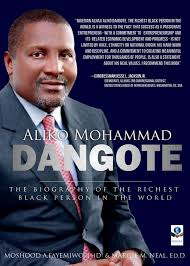
Excerpt from: “Aliko Mohammad Dangote: The Biography of the Richest Black Person in the World” by Moshood Fayemiwo. Scribd.
Mind you; this is not another inspire to perspire type of post.
What this Article Entails:
While you may be familiar with motivational talks that don’t tell you anything new, this detailed breakdown may lead you to break bad financial habits and challenge you to dare like Aliko Dangote.
When I wrote a post about the top 10 richest people in Nigeria, one of the things that caught my attention is that they are hardly open to interviews.
No, they’re not trying to sell you another get rich quick scheme which is fronted as a book on how to succeed or 20 things Rich and famous people do.
Before I go further, you might want to read the book; Aliko Dangote. It’s available on Amazon, or you can read it on Scribd.
“A highly recommended book to anyone who enjoys learning about how different people of all walks of life become rich and successful, and what it takes to get to the top” —Readers Favorite Book (Starred Review), USA. “A compelling book about a unique personality in Africa” —Goodreads, USA. GoodReads
There are no shortcuts to success, and while most of this post are lessons from the book Aliko Dangote, I’ll encourage you to read the book for yourself.
Did you know Dangote’s maternal grandfather Sanusi Dantata was a wealthy trader in Kano? He traded in rice and oats. Sanusi’s father and founder of the Dantata legacy – Alhassan Abdullahi Dantata was also a wealthy trader whose cooperation with the Lever Brothers (Now Unilever), saw the establishment of the British Bank of West Africa now First Bank. But the era of the groundnut pyramid brought great fortune to Alhassan Danta. And few people recall that Dangote’s father was at some time the richest man in Nigeria.
But not all the fortune of rich men can boast of such trans-generational impact.
About Aliko Dangote
Early life
Born to Mohammad Dangote and Mariya Dantata, Aliko Mohammed spent very little time with his biological parents. For a while, he had come to know his mother’s sister as his mother and his grandfather as a father.
The Dantata boys come from a linage of wealth and business legacy. Their avoidance in direct politics even up to their fourth and fifth generation sterns from an oath made to their father – Pa Alhassan Dantata. This promise was born from a terrible experience that led to the death of a family member who had at the time dabbled into politics.
It was this commitment to stay off politics that led to Aliko stay in the Danata house.
Mohammed Dangote at the time was a famed Politian, and when he showed interest in marrying Mariya Dantata, her father Sanusi Dantata instead that his daughter would remain I his house after marriage.
So it was in this house in Koki Quarters kano that Dangote was born. The patriarch of the Dantata house named him Aliko while he took hi other names from his father.
The death of Mohammad Dangote further solidified Aliko’s opinion on dabbling into politics.
However, he has had great influence on the government for sole reasons of preserving his business investment.
Aliko disclosed in his biography that the reason he would be interested in the political future of Nigeria: he does not want “bad” politicians to control power and enact antiinvestment policies that would make him poor. “I do not want Nigeria to be another Zimbabwe so I am concerned about the political direction of my country, because if bad and inexperienced politicians control power in Nigeria, my wealth may turn into poverty.
Failed Businesses
Although Dangote is famed for his business conquest and house hold name, so much so that he was nicknamed Risk and who dares win.
Dangote prides on risk. His matra is that avoidable risk is not a reciepe for success in business and in life.
But Dangote hasn’t always won especially in an unstable business environment like Nigeria.
In May 2007 umaru Musa Y’ar’Adua seized the two Nigerian-owned refineries in Kaduna and Port Harcourt that were earlier sold to aliko Dangote. Instead of being fazedout, Aliko set up to building his own refinery.
Speaking about the refinery sale in his biograbhy, he says:
“How much did the government spend in 1989 to build these refineries? Obviously there would be depreciation after these many years. Here is something that was run down. You don’t now go and recover your money. We paid the price of $1.1billion, because the $561million we paid for Port Harcourt is 51 percent of $1.1billion. We didn’t buy the whole refineries. The government still owns 49 percent. We only bought 51 percent. And 51 percent of $1.1billion is only $561million. That’s how we arrived (at) $561million. In the case of the Kaduna Refinery, the Chinese which Nigerians don’t mind, if it goes to a foreigner, the Chinese were given juicy oil blocks. The day that they signed the production sharing agreement that was the day that they said: “We are not bidding, unless we sign and collect the oil blocks.” These guys signed and collected the oil blocks and they still priced the refinery at $102million. And they vowed they would not pay more than $102million. Then we said, fine, rather than allowing this thing to decay like that, we wrote to say we were interested also in bidding. The price that they gave was far below the reserved price. And now, we gave 60 percent more than the Chinese. And the Chinese said they were not going to put a dime more than $102million.”
Mr. Dangote continued; “We bought at $160million with all the challenges. But I thought this same refinery was given to Shell, to Chevron, to Texaco and they rejected them, saying they don’t want to even run them for nothing. And we have now paid over ₦100billion and people are shouting. I believe people should focus more on shouting about Eleme Petrochemical. Government spent almost $1.5billion and it was sold for $200million. And we bid. And we lost. And people didn’t see that. We bid for the same Eleme Petrochemical with a company that has never ever visited Nigeria. But because they are foreigners, they bought not even 51 percent, they bought 75 percent. And they were hailed. And they paid. And they got it. We lost as Dangote. And we spent more than $5 to 7million doing things like bringing experts to come and check and (follow) due diligence and all that. We lost our money and time. But Nigerians didn’t say anything because these are foreigners. That is by the side.”
“Look at the way and manner foreigners bought Ajaokuta” referring to his nation’s largest steel complex located in central Nigeria. “Ajaokuta almost made Nigeria bankrupt. The government of Nigeria spent $4.4billion on Ajaokuta. And all these foreigners don’t bring their money in here. Majority of the money they borrowed locally. They didn’t bring fresh cash. And these same people paid a paltry $300million for 60 percent of a plant that government spent $4.4billion
Delta Steel, government spent $1.45billion, then renovated it with ₦45billion (about $42million) and they sold it for $30million to be paid over three years. This one was also sold to an Indian company. They don’t have anything in Nigeria, but people now are not complaining. I am not complaining about the price these things were sold. What I am complaining about is that if you have to complain; then complain about foreigners taking our assets.”
Similarly, he took swipes at the sale process of Nigeria’s aluminium smelting company that was sold to a Chinese company as well “At ALSCON the smelting company, government spent $3.4billion. The Russians that have never ever visited Nigeria bought the company at $200million, with the condition that it is after the government dredges the river they would pay the $200million. And the cost of dredging the river is $260million. So you can see that government had to give out $60million out of their pocket to get rid of ALSCON. Excerpt from: “Aliko Mohammad Dangote: The Biography of the Richest Black Person in the World” by Moshood Fayemiwo.
Also, in his bid to purchase the Sugar plant at Bacita, Dangote went as far as making a marriage proposal to Mrs Josephine Oluwadamilola Kuteyi. The relationship did not work out for religious reasons and in 2006, Mrs Kuteyi would go on to own the Sugar plant after making a 2.5 billion naira down payment.
Mrs kuteyi ran the sugar plant with her sons up till 2011 when she died in a plane crash, while flying from her sugar plant to her home town in Ondo, Nigeria.
Going Global
According to a confidential cable message quoted in dangote’s biography, In 2011, the United States Embassy in Nigeria sent another confidential cable message to the State Department in Washington DC about Mr. Aliko Dangote. “Alhaji Aliko Dangote (Dangote) is founder, president and CEO of Nigeria’s largest national company, Dangote Group of Companies (the Group).
Dangote’s wealth and prestige are based on his family connections and political friendships yet he is esteemed by many Nigerians for his business acumen.
He has led the Dangote Group of Companies to unprecedented success in Nigeria, starting the company as a trading entity in 1977 and growing it to an estimated $700 million manufacturing or semimanufacturing behemoth that it is today.” The cable continued: “The Group is a household name in Nigeria and comes closer than any Nigerian company to market domination in many sectors.
The Group employs roughly 10,000 Nigerians and turns over a profit estimated at $1.3 billion. It runs 15 manufacturing and bagging facilities nationwide and has operations in industries as wide ranging as cement, sugar, wheat, textiles, polypropylene sacks, and property leasing. Part of the Dangote business strategy is to focus on provision of basic human needs: food, shelter, and clothing.”
In a December 1996 interview, Aliko Dangote admitted that a government mandate once forced him to import so much rice that the local market crashed by almost 80 percent. The direction of Government of Nigeria trade barriers also suggests preferential treatment. High tariffs or outright bans on imported items favor the Group in nearly all areas in which they do business including wheat flour, cement, certain textiles, sugar and pasta.
Further, the Government of Nigeria is normally slow in privatizing stateowned production facilities.
Yet the Dangote Group swiftly won bids on Government of Nigeria-owned manufacturing installations such as the Benue Cement Company and the Savannah Sugar Company, and constructed its own berth at Government of Nigeria-owned Apapa port in Lagos where ships with production inputs offload directly at the Dangote Group factory.”
The highly-classified cable concluded that Mr. Dangote was not operating according to market forces but like an insidertrading environment in which the Nigerian Government was his agents, disclosing that Dangote’s obvious unfair advantage and support from the Government of Nigeria are disturbing for US companies wanting to enter a market with over 130 million consumers. Conversely, some US companies indirectly benefit from Government of Nigeria restrictions protecting the Dangote Group of Companies, adding complexity to the Dangote paradigm. For example, Dangote allegedly receives unfair, preferential treatment to import bulk commodities. However, he is a loyal U.S. wheat customer and buys millions of dollars worth of other US products. General Electric makes much of Dangote’s machinery and the Group will buy about 300 used trucks (mostly made by International) from the US this year. Further, the Group secured a USD 310,000 grant from the Trade Development Agency in 2000 and aspires to a future Export-Import Bank loan.” – Excerpt from: “Aliko Mohammad Dangote: The Biography of the Richest Black Person in the World” by Moshood Fayemiwo.
What Values Can Entrepreneurs Learn From Dangote?
As the wealthiest man in Africa, Aliko Dangote has stayed true to the business niche as opposed to ploughing the political ladder. Another thing Dangote has proven is that one can be a jack of all trade and still master all. He started in construction then diversified to manufacturing and later fast-moving consumer goods (FMCG). One thing is clear he is not afraid to challenge the status quo.
Beyond this, Aliko Dangote is a big fish that is impossible to hide.
Although we know of his heritage, there may be more to Aliko Dangote’s. His success sterns from his mastery of the rules of success.
Over the years, Dangote has learned to apply these rules to his business while maximizing the opportunities around him.
Lessons for entrepreneurs: LEARN TO MAXIMIZE OPPORTUNITIES.
The Laws of Success
Recognize God’s Guidance and blessing:
Aliko’s most outstanding value is his faith in God. Like most rich people, Aliko always credits his success to God. He recognizes that his efforts may quickly work against him but for the mercies of God.
It’s amazing how people continue to make a mockery of religious organizations, yet the wealthy people continue to give their support to religious organizations. And these are not just by Nigerian standards only.
Dangote believes that one can go from the very top to the very bottom, and with the help of God, such a person will not find it difficult to adjust.
Like Rocke-Feller, Dangote belives that “the power to make money is a gift from God”.
The Law of Discernment
The law of discernment also refers to current information. Remember that one of the secrets of Dangote’s success was staying ahead of his competition. This comes through knowledge of the happenings around us.
As an entrepreneur, it is dangerous to lack discernment.
Aliko’s timely move from Kano to Lagos having discerned the capacity of the purchasing power of the residents in Lagos.
Success is 90% per cent guts and 10% capital. – Raymond Akerman.
Lessons for entrepreneurs: TAKE BOLD AND CALCULATED STEPS BY LEARNING TO READ EVENTS AND TRENDS INSTEAD OF WAITING FOR TIME
The Desire to Create a Need or a Service
Aliko, like other successful people in business, does not have money as their primary focus. Aliko understands the power of why.
His business decisions are inspired by the need for countries to look inward toward private entrepreneurship.
Little wonder why he consistently recognizes the opportunities within the manufacturing industry and conquered.
For all my life St. Louis sugar has been the household brand of Sugar in Nigeria, but with his insight, Dangote was able to create a need for home-grown sugar brand, and in a short time he surpassed the competition.
While most young entrepreneurs in Africa continue to explore the import trade, the tides are changing toward home-grown brands.
Lessons for entrepreneurs: DO NOT CHASE MONEY. RATHER, UNDERSTAND THAT MONEY MATERIALIZES AS A REWARD FOR IDEAS CONCEIVED AND EXECUTED
Savings and Prudence
This is one law that requires a lot of discipline.
Many are familiar with this law, but the challenge is in upholding it. And if you intend to succeed, you must pass this test with your finances.
Some business never grows above a certain level not because the business module is wrong or that the market is unfavourable, but because of lack of prudence.
Know this, Dangote was listed in Forbes as the richest man in Africa in 2012 and has held this position 12 years strong. It takes discipline, it takes guts, it takes a certain level of know-how and in the words of Dangote, it takes God.
Here is how Moshood Fayemiwo describes prudence in “Aliko Mohammad Dangote: The Biography of the Richest Black Person in the World.”
– Prudence entails punctuality, ability to exploit enterprising attitude for success, native intelligence, purposefulness, perseverance, and the spirit of not giving up in the face of multitudes of adversities. Prudence builds professionalism, optimism, inventiveness, versatility, tolerance, sociability, agility, efficiency, patience, and responsibility. As will be seen in the biography of Mr Dangote, the virtue of prudence permeates his entire business conglomerate.Excerpt from: “Aliko Mohammad Dangote: The Biography of the Richest Black Person in the World” by Moshood Fayemiwo. Scribd.
The Law of Hard Work
Passion is what drives me forward. – Aliko Dangote
There’s this common saying among young people; “Work hard, so your children don’t have to work.” Or they’ll say “Work hard so you can make money while sleeping.”
While it makes a catchy tweet, it’s built on the false notion that billionaires like Aliko Dangote sleep and make money.
Billionaires work hard, especially those with a genuine source of wealth. They don’t consider hard work has been hard, and it’s become a part of them, it excites them!
“I have never seen any Nigerian that has really made money from inheritance. It is very, very difficult. And that is why I would always encourage my own children to work very hard especially when it comes to making their own money. I am not saying that they shouldn’t rely on the fact that yes, they come from a rich home. But sometimes, it can be a great disadvantage. Because there are some certain businesses that you wouldn’t like to do because you name is so and so.” – Aliko Dangote
The notion that you can get rich and stop working and yet stay rich is as ridiculous as the idea that adulthood is a time to have fun and do whatever you want to do. It downplays the level of work required to build a lasting legacy.
Dangote’s passion for Nation building ahs kept him going strong. While he may have benefited from Nigeria’s privitization of it’s public assets, hi brand remains one of the most successful amongst all investors.
He has ecome a house hold name not out of share luck but for consistentle delivering quality products to the Nigerian market.
The Law of Contentment and Simplicity
This law may be hard for the millennial entrepreneur, whose existence is hooked to the Instagram lifestyle.
Aliko once said; “I am just myself, it does not matter if you have a dollar or a million; life is very transient.”
In 2016 when Mark Zuckerberg visited Nigeria, one thing that stood out was the simplicity of his person.
Many of the worlds wealthiest people live a simple and contented life.
Often, it is the not-so-rich that tend to flaunt their wealth in a desperate attempt to flaunt their possessions and gain approval.
Inspite of all of these, some still critize Aliko’s breakthrough to his link with the government, forgetting that like his father’s who succeeded in business, Aliko was raised to respect constituited authorithy.
On Building Business Relationships
Another credit to the Danatata legacy which dangote incorporated is in clan solidarity. A threat to one is treated as a threat to all. This has helped dangote in building the dominating brand Dangote in any field he has been involved in. from textile, to Cement, to Sugar and salt and all other fast moving consumer goods.
His relationship with Obasanjo dates back to his days in Kano when young Dangote lived amongst his family, learning how to navigate the polital and business sphere of Nigeria. Dangote also builth a relationship with Atiku Abubakar in the days when Atiku was the chief of Nigerian Customs and Aliko was an importer.
Dangote learned from the Dantata’s who were known to not create business partnership. They practised a neopatrimonial system of business which helped them maintain dominance. Though the brand Dangote as grown into a publically traded company, Dangote remains the highest share holder.
Business Requires Dynamism
Dangote has moved from being an importer to a manufacturer. This shift was inspired by a vist to brazil in the 1980s.
Dangote saw that Latin America was able to sustain home-grown needs despite its foreign debts.
He was particularly inspired by Arisco Produtos Alimenticios SA located in the Arisco region of Brazil. Arisco at that time could be regarded as the Wal-Mart of Brazil. Arisco manufactured canned and household goods, grew foods and groceries and concentrated on the three essential human needs of food, clothing and shelter, ranging from salad dressings, tomato products, canned soups, mayonnaise, seasonings, ketchups, noodles, to deserts, bouillons and many more. Today, the Brazilian food chain has been acquired by Unilever Best Foods Holding Corporation.
This new revelation led to Aliko repositioning his companies through what he describes as “backward integration toward manufacturing instead of importation.”
Lessons for entreprenuers: IN THE CHANGING ATMOSPHERE OF THE BUSINESS WORLD, BE WILLING TO EVOLVE, TO UNLEARN AND RELEARN AND IF NECESSARY, RESTRUCTURE.
From the patriarch Alhassan Danatata, who rebuilt his father’s trade route at an early age, the Danata’s have made a legacy from rebuilding and refining ancient landmarks.
Dangote was able to accomplish such fit by hiring proffessionals that
“My story is the story of a man and a brand Nigerians have come to know, to love and to accept. Nigerians are investing in us because they believe in us, they believe in the name Dangote. Apart from believing in us, we have a track record which we have actually shown. If you look at all our factories, they have grown steady and gradually to where we are today. In all modesty, we can say we have done very well. There is no business that we are in and we are not No.1. The worse one that we have, maybe we have a second position. That in itself is our business strategy. We aim to dominate our market, to lead in every market segment. They have all been run efficiently and professionally by people who really know the business very well. We have a very good brand name and that is part of what many people are actually investing in. They are not really investing in Aliko Dangote only. They are investing in the Dangote brand. They believe in my own business acumen but it is not the only thing that people are investing in. – Aliko Dangote.
Conclusion
It takes a wise man to build a house, how much more a legacy. Wealth, like anything of value in life, is based on laws, principles, and secrets. While most of the books on wealth creation are mostly foreign. An in-depth study, such as this may reveal a lot about what it takes for an entrepreneur to succeed in the business terrain of Nigeria.
The discussion on whether NYSC has outlived its importance remains an impassioned debate among Nigerian youths. Many youths are of the opinion that it’s high time the program took a new turn, while many believe it’s a total waste of time. Whether you are for or against the program, you have to agree that NYSC is a necessary evil.
Both government and private organizations have been mandated to request for NYSC dispatch certificates before employing graduates. Even if you don’t intend to work for anyone in the near future, you can’t tell when having an NYSC dispatch certificate would give you an edge when pursuing a political position or a contract.
The NYSC, just like everything in life, has its pros and cons. If you are a new or a prospective corp member who wants to grasp what the program is all about, and how to best put that one year into excellent and productive use, then, this article is for you.
What You Should Know Before Going in for The NYSC Program
Before embarking on a life-changing journey like NYSC, it is important to research into what awaits you and you might best leverage what lies ahead.
Here is a list of some the things you should know before going for your NYSC program:
Community Development Service (CDS): Corpers are to work together to positively impact their host communities. This is usually once a week.Download the CDS survival guide here.
Place of Primary Assignment (PPA): After passing out of the orientation camp, the next stop is the PPA. PPA is the place that corps members are posted to, to serve for the next 11 months. It can be a school, private organization, local government, hospital, or other places. Your place of primary assignment is essential to your future. It is a place that has been a determining factor to the success or otherwise of the most corps member. You may find information on how best to leverage the Place of Primary Assignment here.
2. Understand the Purpose
The best way to get the best out of anything is to identify its purpose. Quite a number of corpers and ex-corp members are passing or have passed through the program without adequate knowledge on why the program was established. The main purpose of the program is to bridge the gap in cultural diversity among Nigerian youths.
Involve Nigerian youths in nation-building, raise the moral tone, inculcate discipline through industrial work and impact the spirit of self-reliance through skill development. A proper understanding will help to rightly position yourself to make the most of NYSC.
3. Research About Your Choice States
While registering for the program online, you are to choose four states out of four regions you’d like to be posted to. It is important you ask the right questions, carry out proper research before choosing any state, because you are likely to be posted to any of the four states if you register early. Ask recent ex-corpers that served in those four states everything about the state. Here are a few things to consider before picking the four states:
Security
Standard of living
State allowance
Growth potential
Network coverage
Power supply
Distance from your base
Business opportunities
Social life
4. Have the Right Mindset
A large percentage of people who never got the best out of the program were mostly people who went with prejudice. They already passed judgment on the program before they started the program. Most people concluded it was a waste of time and didn’t do much to make the program worthwhile.
Don’t conclude before starting the program that it will be a wasted one year. Leave an open mind until you get there and see things for yourself. See opportunities where many people see problems, think growth where people think stagnation, and believe that everyone’s experience mustn’t be the same.
5. Be Ready to Associate
Have it on your mind that you will meet Nigerian youths from different ethnic groups. This is one of the core purposes of the program – youths to meet other youths of different cultural backgrounds. The people you’ll meet during the program goes a long way to determine how fun and worthwhile it will be for you.
Some of the people you’ll mingle with will become life-long friends and helpers when you least expect them. Don’t be a lone ranger because you’ll end up missing out on other perspectives.
Documents Required For NYSC Clearance
You are to present the following documents on your arrival in the orientation camp:
1. NYSC call-up letter: A print out of this letter serves as proof that you were called up by NYSC to attend the program. You’ll need about 5 copies of this letter. Please, note that you are not to laminate your call-up letter for any reason.
2. Green card: The green card contains your bio-data. You are required to present the signed copy during your registration.
3. Medical report: This was introduced in 2017 to prove that you are physically and mentally healthy to partake in the orientation camp. You are required to present a medical report from any government or military hospital as a clearance. If you have any illness, it is advisable to make it known in your medical report. Without this document, you will not be allowed to register in the orientation camp.
4. Statement of the result: Your statement of result from your school proves that you are a bonafide graduate of that school. Mind you, you shouldn’t laminate your statement of result because if anything happens to the seal on the document, it is declared invalid.
5. Valid school identity card: You’ll be needing this as a means of identification in the camp until the original NYSC identity card is given to you.
6. Licenses and certifications: Lab scientists, nurses, pharmacists, doctors, and other medical graduates are to present their licenses and certification. Pharmacists are to present their certificate issued by the Pharmacists Council of Nigeria (PCN), Nurses are to present a certificate issued by the National Association of Nigeria Nurses and Midwives (NANNM), and doctors are to present their license from the National Medical and Dental Council of Nigeria (NMDCN).
7. Passport photographs: You will have to provide about 15 passport photographs taken in a white background.
8. Foreign students: Foreign students are to come along with ALL the documents they uploaded when they registered online.
9. Photocopies: To save your time, money, and energy, and help you quickly settle in, it is advisable you make 5 photocopies of every document.
Your Daily Needs
White shorts, and white t-shirts
Plain white tennis shoes or sneakers
Waist bag or pouch
Treated mosquito net
Small padlocks for locking your bags
Toothbrush and toothpaste
Drugs like painkillers, antibiotics, anti-cold, cramps, allergies, catarrh. Aboniki balm and shea butter for massaging your legs.
Towels, soap, detergent, disinfectant, and antiseptic
Face towel and handkerchiefs
Sunglasses and anti-sunburn cream
Bed covers, pillow, and pillowcase
Plate, cup, flask, spoon, water bottles, and fork
Beverage, golden morn, cornflake, oat, and custard
Cash and ATM cards
Extra SIMs: Get all the network services if you can. You don’t know the network service that will be active in the camp.
3 colored clothes for Sunday services.
Running or football boots if you are a track or football lover
Camera for capturing the moments
Advantages and Disadvantages of The NYSC Scheme
The NYSC like everything in life has its pros and cons. A large percentage of these debates about the NYSC hinge on the positives and negatives.
What are the Importance/Positives of the NYSC?
1. Self-discovery: NYSC has given corpers the platform for self-discovery. Through Skills Acquisition & Entrepreneurship Department (SAED), many corpers were able to discover themselves and create a path for their lives and careers. SAED classes are a bedrock on which a number of enterprises are being born. As mentioned earlier, the program will be profitable if you embark on it with the right mindset.
2. Federal immunity: As a corper, you’ll enjoy federal immunity due to the fact that you are seen as federal government property. The uniform or identity card gives you an audience in places ordinary people can’t get through to. You’d be given preferential treatment unlike every other civilian because you are seen as a person who is serving his or her nation.
3. Networking and socializing: People have met people who positively influenced their lives during their service year. Some found love, while some found friendship and connections. NYSC is a platform that brings the rich, poor, and influential youths to the same level.
4. Creation of job opportunities: This is arguable, but we can’t deny that ex-corpers who were exceptional haven’t been retained in the places of primary assignment (PPA). It is common among those corpers that served in private organizations.
5. Dispatch certificate gives you an edge: This is the most important reason most Nigerian youths partake in this program. The dispatch certificate issued by the NYSC makes them employable. Most companies in Nigeria would ask for your NYSC dispatch certificate before employing you.
6. Respect and recognition: The respect and recognition that comes with the NYSC uniform is quite enviable. People will respect you, give things to you, and even sell things to you at cheaper prices for simply being a corper. Those who serve in rural areas enjoy a little privilege from their host communities.
7. Soft loans: The NYSC in collaboration with the Central Bank of Nigeria CBN and Bank of Industry (BOI) grant loans to interested corpers who would like to start a business. Your collateral is your dispatch certificate.
What are the Disadvantages/Negatives of the NYSC?
1. Time wastage: People who are calling for the cancellation or the restructuring of NYSC say so on the basis of time wastage. They believe that if a large percentage of corpers are forced to teach in classrooms, work in government parastatals, and places not relevant to their career growth, then, it’s a waste of time. Everyone can’t be classroom teachers.
2. No insurance scheme protects corpers: It’s absurd that a program as big NSYC doesn’t have any insurance scheme protecting corpers from harm and risks. People have lost their lives in the process of serving Nigeria, and the federal government didn’t do anything for their families. Training a child to the level of serving Nigeria and losing that child during NYSC is something most parents are scared of.
To make the matter worse, the program keeps posting corpers to dangerous environments that endanger their lives.
3. Lack of job security: It is devastating to pass through the program only for youths to go back to joblessness. NYSC to an extent should serve as a means of employing exceptional youths into the civil/public service. When this is done, youths will take the program seriously and not only do so because of the dispatch certificate.
Survival Tips For NYSC Orientation Camp
How Corp Members Can Channel Their energy During NYSC
1. Skill acquisition: You don’t need to pass out of NYSC to know that there are very limited jobs for Nigerian youths. To avoid frustration and depression while job hunting, it is advisable to learn a skill or two to help keep body and soul together before the dream job comes. There are many skills you can learn during your NYSC. Here are some of them:
Decoration and event management
Cake baking
Makeup and hairstyling
Barbing and dreadlocking
Driving
Auto repairs
Digital marketing and social media management
Video and photo editing
Graphic designs
Sound engineering
Cosmetology
Car tracking
2. Take professional courses: Entrepreneurship isn’t for everyone, so if you fancy corporate life, you can improve and update your knowledge by taking some professional courses. Some of the certificates issued after completing the courses help boost your chances of getting a job. These courses are discounted to corpers.
Here are some of the certificates you can acquire during your NYSC:
National Institute of Management (NIM)
Project Management Program (PMP)
Advertising Practitioners Council of Nigeria (APCON)
Health, Safety, and Environment (HSE)
Environmental Impact Assessment (EIA)
Institute of Chartered Accountants (ICAN)
Chartered Institute of Personnel Management (CIPM)
3.Learn how to apply for scholarships: If you are among those that have concluded that Nigeria is no longer for them, the best time to strategize on leaving the country is during your NYSC. There are many scholarship tutors that will teach you how to successfully apply for scholarships. Make sure you take your IELTS and TOEFL exams while you are learning and applying for scholarships.
4. Intensify your jobhunt: If you’re already well-equipped for the labor market, there’s no need to wait until you pass out of NYSC to start applying for jobs. You can decide to dedicate your service to applying for jobs and going for interviews. People have done this and they landed jobs even before they were done with service. Your monthly allowance can help you scale this phase.
5. Start a business: You can make money while serving by starting a business. Look around and see what people lack that you can easily sell to them. There are business opportunities everywhere, so it’s up to you to locate them. With the loan from the Bank of Industry (BOI) and Central Bank of Nigeria (CBN), you can kick start that amazing business idea you have.
Possible Changes To the NYSC
We’ve heard a lot of suggestions from people regarding how the program should be restructured to make it more efficient for everyone. But, there’s a problem with all the suggestions we’ve received about the program.
Here are some of the popular suggestions:
1. NYSC should be optional: You must have heard the “NYSC shouldn’t be compulsory” statement a couple of times. People are of the opinion that youths should decide if they want to participate in the program or not. We all know that if this is made possible, the program will die a natural death because youths won’t participate, especially when the certificate is no longer a compulsory employment requirement.
2. Financial empowerment for corpers after orientation camp: People with this opinion believe that after the three weeks orientation camp, that the government should pay the corpers the sum of the total allowance at once. They believe that teaching and working in other government parastatals are a total waste of time and resources. And, that the full allowance should be given to corpers to help finance their dreams.
If this is to happen, we’ll have to agree that a lot of people who are employed by the NYSC and vendors with losing their jobs/businesses. Aside from that, the main purpose of uniting Nigerian youths will not be accomplished.
3. NYSC should be scrapped: As shocking as it may sound, this is the most popular opinion regarding the NYSC. People have come out to talk about how disadvantageous and dangerous the program has become. Their pain is based on the killings, kidnapping, and raping of corpers. These people also believe the program has outlived its relevance, and that the country isn’t worth the sacrifice.
4. Corp members should serve in their regions: These are from people who still have a little faith in the program. They support everything about the program, but they are of the opinion that corpers from each region should serve their region, and not travel to other regions due to the killings and accidents. If this opinion is adopted, it means the main purpose of the program has been defeated.
How do they bridge the gap in cultural and tribal differences if corpers are to serve regions?
Has NYSC Been a success?
For something to be a success, it must have impacted up to 80% of the population. Sadly, only a very few can say that NYSC has been a success. NYSC has left many voids to be filled and many unanswered questions. Take away the N33,000 monthly allowance and dispatch certificate, and there might be nothing left to pick on the positive sides of the NYSC scheme.
The Experience of A Corp Member
Grounds For NYSC Redeployment
Redeployment is a process that should be initiated by the corp member. Redeployment can only be started in the camp after the swearing-in ceremony which can only be implemented only after the camp. There are however laid down conditions/factors that make the redeployment possible – Awajis
Here are some plausible factors why your redeployment might be granted:
Marital reason: Female corpers who are married are to apply for redeployment after the swearing-in ceremony. They are to write a letter to the Director-General addressing it through the State Coordinator. Attached to the letter are their marriage certificate, change of name in any national newspaper, and a letter from the husband’s place of work which shows that he lives in the state the wife wants to redeploy to.
Medical reason: If you are redeploying on medical ground, you’ll need a medical report from any government or military hospital stating that you have such an illness. Mind you, the medical report isn’t the only clearance you’ll need. They are likely to further investigate your claim.
Security reason: Security is a good reason to seek redeployment if the corper feels he/she isn’t safe in a state of deployment. Corpers posted to Gombe, Borno, and other northern states are plagued with security issues tend to redeploy to other states.
The issue of Boko haram in these northern states has made it possible for corpers posted there to seek redeployment. Besides, families aren’t at peace whenever their loved ones are posted to any of those states.
How to Redeploy While in NYSC Orientation Camp
There’s no need to get worked up if you don’t like your state of deployment. While in camp, you would have the opportunity to apply for redeployment. You won’t be the only one redeploying, you’d find other corpers seeking redeployment.
You’re to write an application letter, fill a redeployment form, and attach your documents/evidence that back up your reasons for redeployment.
How to Apply for NYSC Redeployment/Relocation Online
Log into the NYSC Portal with your email and password
Click on the “Relocation” option to register.
Fill and answer each question
Wait for your approval or rejection of SMS/email.
You’ll be notified via SMS/email if your redeployment was approved or rejected.
Application Requirements for Relocation/Redeployment in the NYSC Orientation Camp
Letter of application
Redeployment form
Documents/evidence backing up your reasons for redeployment.
How to Print Out Your Online NYSC Redeployment/Relocation Letter
Log on to NYSC Portal with your email and password.
Click on “Manage Relocation.”
Make a payment of N1000 through Remita.
Print out your payment receipt.
After payment, you’ll see “Print out relocation/redeployment letter” on your dashboard.
Print your relocation letter and photocopy.
Take the letter to your new state of deployment.
What is the Age Limit for NYSC?
The age limit for eligibility for the NYSC scheme is 30. If you’re 30 years after completing your HND or BSc, you’re to apply for the NYSC exemption certificate. Click on the link to find out more about the certificate of exemption.
What is FAQ?
Lorem ipsum dolor sit amet, consectetur adipiscing elit, sed do eiusmod tempor incididunt ut labore et dolore magna aliqua. Ut enim ad minim veniam, quis nostrud exercitation ullamco laboris nisi ut aliquip ex ea commodo consequat.