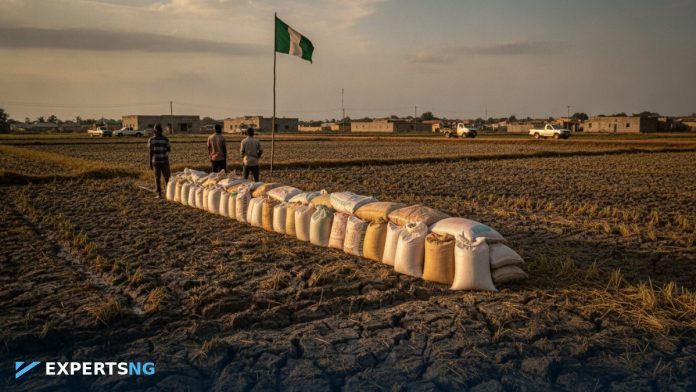


Kogi flood relief has come in the form of farm inputs from the Federal Government, which, through the National Agricultural Development Fund (NADF), has provided support to 3,520 farmers in Kogi State whose farms were hit by flooding, as reported by New Telegraph. The intervention was flagged off in Lokoja.
The aim is to restore livelihoods and boost food production among farmers whose farmlands and crops were destroyed. Each beneficiary is to receive a package meant to help them return to the field quickly.
Key facts at a glance
| Programme | Farm input support for flood-affected farmers |
| Implementing agency | National Agricultural Development Fund (NADF) |
| Location | Kogi State, flagged off in Lokoja |
| Number of beneficiaries | 3,520 farmers |
| Inputs | Urea and NPK fertilisers, 15kg bags of rice seed, pre-planting, pre-emergence and early post-emergence chemicals, and insecticides |
| Who benefits | Farmers in Kogi State whose farmlands and crops were destroyed by flooding |
| NADF Executive Secretary and CEO | Mohammed Ibrahim |
| NADF Team Lead for Kogi State | Muhammad Gidado |
| Kogi Commissioner for Agriculture and Food Security | Timothy Ojomah |
| Cash amount, deadline, application portal | Not announced |
What is in the Kogi flood relief package
According to NADF’s Executive Secretary and CEO, Mohammed Ibrahim, beneficiaries will get:
- Urea and NPK fertilisers
- 15kg bags of rice seed
- Pre-planting, pre-emergence and early post-emergence chemicals
- Insecticides
Ibrahim was represented at the event by the Fund’s Team Lead for Kogi State, Muhammad Gidado. He described the programme as part of the Federal Government’s commitment to farmers’ welfare, agricultural resilience and sustainable food production. In his words, it is “a demonstration of solidarity with our farmers”.
He urged the Kogi State Government, community leaders and other stakeholders to make sure the inputs reach the intended beneficiaries transparently and promptly. He also asked farmers to use the inputs wisely so the objectives of the intervention are met.
The Kogi State Commissioner for Agriculture and Food Security, Timothy Ojomah, called the support timely and said it would help affected farmers bounce back. He thanked President Bola Ahmed Tinubu, the Minister of Agriculture and Food Security, Senator Abubakar Kyari, and NADF’s leadership for extending the intervention to the state.
Understanding each input in the package
Not every farmer knows exactly what each product does, and using inputs wrongly can waste them. Here is a plain-English guide to the items listed, based on general farming practice rather than the report itself.
Urea and NPK fertilisers. Urea is a nitrogen-rich fertiliser, while NPK blends nitrogen, phosphorus and potassium. Farmers usually apply them at different stages of the crop cycle, so ask your extension officer for the right timing and quantity for your plot.
15kg bags of rice seed. Quality seed is the foundation of a good harvest. Store the bags in a dry, cool place away from rodents until planting day, and avoid mixing them with seed from previous seasons.
Pre-planting, pre-emergence and early post-emergence chemicals. These are herbicides used at different points to control weeds before the crop is planted, before it emerges and shortly after emergence. Weeds compete with rice for nutrients and water, so timing matters.
Insecticides. These protect the crop from insect damage. Always read the label, wear protective clothing and keep chemicals away from children, food and water sources.
Who qualifies and how to apply for Kogi flood relief
- Eligibility: the source describes beneficiaries as farmers in Kogi State whose farmlands and crops were destroyed by flooding. Detailed selection criteria have not been announced.
- What you get: the inputs listed above. No cash amount is stated.
- Deadline: details not yet announced.
- Application portal: details not yet announced.
Applications for genuine government programmes are free. If you believe you qualify, speak to your local agriculture office, your farmers’ association or community leaders, and use only official channels. Do not pay anyone to be added to a beneficiary list.
What to do now: a practical checklist for farmers
If you farm in Kogi State and your land was affected by flooding, these steps will put you in the best position, whether or not you are on the first list.
- Visit your local agriculture office or farmers’ association and ask how beneficiaries are being identified.
- Confirm that your name, farm location and contact details are correctly recorded.
- Gather simple proof of your farming activity, such as photos of damaged farmland, association membership details or past input receipts.
- Ask when and where the inputs will be distributed, and who will be present.
- Check each item against the list in this article when you collect your package.
- Keep any distribution slip, and note the date and quantity of what you received.
- Plan your planting calendar early so the seed and fertiliser are used at the right time.
- Report any request for payment to the state agriculture ministry.
What this means for Nigerian businesses
For farmers. Fertiliser, seed and chemicals are among the biggest costs in rice production. Receiving them free lowers the cash a farmer needs to restart. If you are a beneficiary, plan your planting calendar early, apply the products as directed and keep the bags and any receipts or distribution slips as records.
For agro-dealers and input suppliers. A large giveaway can reduce demand from beneficiaries for the same products. Farmers outside the programme, and those who need more than they received, remain your market. Stock complementary items such as sprayers, protective gear and extra fertiliser, and offer practical advice on application rates.
For processors and rice buyers. If the inputs are delivered on time and used well, supply from Kogi could improve after the flood losses. Millers and aggregators in the area should speak early with farmer groups about forward purchase arrangements.
For lenders and cooperatives. Farmers who have lost a season often struggle to repay old loans. Input support may help them get back on track, so cooperatives should review repayment schedules sensibly rather than write farmers off.
The main risk is delivery. Ibrahim’s call for transparent and prompt distribution points to a familiar concern: inputs arriving late or being diverted. Farmers’ groups should ask for beneficiary lists to be shared openly and report irregularities to the state agriculture ministry.
Turning input support into a sustainable farm business
Free inputs help a farmer restart, but they do not replace sound business habits. A farmer who treats the plot as a business is better placed to recover from a flood and to cope with the next shock.
Start with records. Write down what you received, what you spent on labour and other costs, and what you harvest and sell. Our guide to accounting and bookkeeping for your small business in Nigeria explains simple ways to keep track of money without complicated software.
Next, think about organisation. Farmers who join cooperatives or associations are easier for government agencies, buyers and lenders to reach. Group membership can also help with sharing equipment, negotiating prices and learning from neighbours.
Finally, think about the whole value chain. Rice farmers can increase their income by looking at drying, storage and local milling, rather than selling everything immediately after harvest. If you are considering a new venture alongside farming, our guide on how to start a successful small scale business in Nigeria offers a useful starting point.
Staying safe from scams around government programmes
Whenever a government programme is announced, fraudsters tend to follow. Farmers in flood-hit communities are especially exposed because they are often under financial pressure and eager for help.
- Never pay a fee to be listed as a beneficiary. Genuine government support is free.
- Be wary of anyone who claims to be able to “fast-track” your name.
- Rely on your local agriculture office, farmers’ association and community leaders for information.
- Do not share personal details with unknown callers or social media accounts.
- Check any announcement against reports from established news outlets and official bodies.
Planning for the next flood
Flooding is a recurring risk for farms along Nigeria’s river corridors. Relief is welcome, but prevention and preparation reduce the damage in the first place.
Farmers and agribusiness owners can think about several practical steps. Consider the position of your land relative to rivers and low-lying areas, and choose planting dates that give crops the best chance of maturing before peak flood periods. Where available, look into crop insurance, and keep emergency records and contacts in a safe, dry place.
Anyone planning to enter agriculture can read our guide to farming business opportunities in Nigeria, and should factor flood exposure, site selection and crop insurance, where available, into their plans.
Frequently asked questions
What is the Kogi flood relief programme?
It is an intervention by the Federal Government, through the National Agricultural Development Fund (NADF), that provides farm inputs to 3,520 farmers in Kogi State whose farms were hit by flooding. It was flagged off in Lokoja.
How many farmers are receiving support?
A total of 3,520 farmers in Kogi State are receiving the inputs, according to the report.
What do the farmers receive?
Beneficiaries will get urea and NPK fertilisers, 15kg bags of rice seed, pre-planting, pre-emergence and early post-emergence chemicals, and insecticides. No cash amount has been stated.
Who qualifies for the support?
The source describes beneficiaries as farmers in Kogi State whose farmlands and crops were destroyed by flooding. Detailed selection criteria have not been announced.
Is there a deadline or application portal?
Details of a deadline and an application portal have not yet been announced. Farmers should speak to their local agriculture office, farmers’ association or community leaders, and use only official channels.
Do I have to pay to be added to the list?
No. Applications for genuine government programmes are free, so do not pay anyone to be added to a beneficiary list.
Who spoke at the flag-off?
NADF’s Executive Secretary and CEO, Mohammed Ibrahim, was represented by the Fund’s Team Lead for Kogi State, Muhammad Gidado. The Kogi State Commissioner for Agriculture and Food Security, Timothy Ojomah, also commented and called the support timely.
What did officials ask of the Kogi State Government and farmers?
Officials urged the Kogi State Government, community leaders and other stakeholders to make sure the inputs reach the intended beneficiaries transparently and promptly. Farmers were asked to use the inputs wisely so the objectives of the intervention are met.
What is the main risk with the programme?
The main risk is delivery. Inputs can arrive late or be diverted, which is why farmers’ groups should ask for beneficiary lists to be shared openly and report irregularities to the state agriculture ministry.
Source: newtelegraphng.com