Category: Marketing Businesses

  • How To Promote a New Product

    How To Promote a New Product

    ICON_PLACEHOLDEREstimated reading time: 7 minutes

    Developing a new product takes a lot of resources; time, energy, capital and so on. But the work does not end there. After developing the product comes promoting it.

    You’ve created the product to be consumed or used by a target market. And only through product promotion can this information get to the intended audience. So, how do you promote a new product?

    Fun fact: Thousands of products out there are made for you, but somehow you’ve never heard about them. The difference between the products you know and use today and those you’ve never heard about (even though they are made for you) is product promotion.

    The question now is; do you want your product to be one of those other products that no one knows about? You sure said no. So, here is how to promote your new product.

    But just before that, in case you have a product idea but not sure how to develop it, here is a comprehensive guide on product development.

    Even though most of your promotions will be online, there are a couple of other offline promotions strategy that you can also use. But let’s start online for obvious reasons.

    How to Promote a New Product Online

    The obvious reasons? Well, because almost everyone is now online these days.

    Product promotion online can be done in countless ways. In fact, the options are almost limitless. Take a look at some of them

    Email marketing

    Email is one of the most effective marketing approaches since the advent of the internet. About 76% of email subscribers say they have purchased a product through an email marketing message. Yeah, email is that powerful. And affordable too.

    In the post on how to develop a new product, you’d find that you can start promoting your product even before it’s ready. Along with social media, email marketing is very useful for this.

    You can use email marketing to keep your target market anticipating your product while it’s in the making. Share the product development journey and all that you’re putting in place to make it a masterpiece. They will definitely look forward to it.

    And when the product is finally ready, email is also an excellent way to make the announcement.

    Here are a few tips to help you get the desired result from email marketing when using it to promote your new product

    • Place more emphasis on what they stand to benefit from the product, not features
    • State “the catch” in the subject line
    • Make use of preheader text to boost the open rate

    If you are new to email marketing and want to learn how to begin, check out this guide on email marketing.

    Write blog posts

    Most businesses don’t pay attention to blogging, and you can’t afford to make that mistake; especially as you set to promote your new product.

    Influencer marketing and trending of hashtags seem to be the order of the day for announcing a new product. But what most businesses don’t understand is this approach, most times, don’t convert. Instead, it arouses curiosity to enquire more about the product. And that’s why blogging about the product comes in handy.

    Having blog posts about your new product is a fantastic way of digging into more details about the product features and benefits.

    You can go on to share links to the blog post on social media for your followers to read.

    Talking of social media…

    Social media

    Every business needs a social media account, so you most likely have one.

    You can promote your new product on social media through varieties of way. One has been briefly mentioned – influencer marketing and trending of hashtags. All amazing and useful. Other ways to use social media in product promotion include:

    1. Social media posts

    With this, you can announce your product launch with a series of posts on the platform. Use relevant hashtags while at this to increase visibility.

    This guide will help you get engagement on Instagram when promoting your product.

    2. Social media contests (giveaway)  

    Who says no to free things? Absolutely nobody. That explains why some of the world’s biggest brands still run contests and promos to promote their products. And you should too, using social media.

    Give out some of your products in exchange for simple tasks which will all be promotional to your product. You may ask your followers to make videos of themselves using your product, and the videos with most engagements win. This is a typical contest you can run to promote your product on social media.

    3. Social media ads

    This one will cost you some money but quite useful too. Run ads on social media to reach new customers. Social media even has data of people on the platform, making it even easier to get the intended market.

    You can target your ads considering gender, location, age, marital status, interests, profession and so on. Save for location; you can’t get all these even when you use electronic billboards.

    Share customer reviews

    How many times have you bought a product because someone else shared their experience using the product? Several times, maybe.

    Word of mouth advertising remains of the most effective form of advertising. It is an unpaid form of advertising in which pleased customers go about spreading the word. And it works almost all the time.

    To promote your new product, encourage those who have used it to leave a review, sharing their experience. And what do you do with such reviews? Share, of course.

    Sharing customer reviews is the closest to the word of mouth advertising as it provides almost the same results.

    Consistently share product story

    So why did you develop this product? What problem were you looking to solve? Did you experience some challenges while developing the product? How did you raise funds? How about the team you worked with to develop the product? 

    These and more make up the product story you can share to endear people to the product further.

    A brand that appears to be doing this so well on LinkedIn is Utiva. Anyone who follows the company CEO and almost any other Utiva staff on LinkedIn would attest to how they are doing with storytelling.

    Simon Sinek said people don’t buy what you do; they buy why you do it. And there is no better way to share your why than through storytelling.

    Referral program

    This is another very effective way to promote a new product. Encourage users to refer family and friends to get different forms of rewards. The reward could be a free product, subsidised price, cash reward and so on.

    This is quite effective and not too far from the word of mouth advertising. The only difference is that this one is not organic. And oh, you can do this offline also.

    How to Promote a New Product Offline

    Most marketing efforts these days focus online, and that’s quite understandable. However, the offline marketing approach cannot be wholly left out as it still converts too, especially if your product is not exclusively available online.

    Having pushed your product online, these are the ways you can promote offline as well.

    Introduce the product with a special offer

    You can do this in different ways. Examples include

    1. Buy one and get one free offer
    2. Joint promotion with a complementary product
    3. Discounted pricing
    4. Free coupon or voucher on each purchase

    Don’t forget to mention that this will not last forever when you start any of these promotions. That way, you let customers get a pressing sense of urgency to participate.

    Billboards and newspaper ads

    They may not be as trendy and effective as before, but they still are not a bad idea for product promotions offline.

    For billboards, location is crucial as you don’t want to promote your product on a billboard where no one (or your target audience) will see.

    Flyers, stickers and posters

    Maybe old skool, but still cool. These are traditional ways of promoting a product that can be used today. Stickers especially, when strategically done, give excellent results.

    Well, you may want to think twice about flyers as, more often than not, they end up in the trash can. However, if the product offers irresistible value and is well communicated in the flyer, best believe people will keep it and act on it.

    Organise free events

    A training perhaps. Or maybe a seminar. Just put together an event your market wouldn’t want to miss.

    Covid is still very much with us, so organising a physical event won’t be a smart idea. And that leaves you with the option of organising virtual events. Just make sure the subject is exciting, and the speakers are authorities in the industry. And don’t miss the opportunity to subtly market your product in the event as that’s the whole essence of organising it in the first place.

    Conclusion

    All of these are effective ways of promoting a new product online and offline. But which is the best? 

    Well, the best is relative. The best will depend on your type of product and the channels your audience uses the most.

    So, everything boils down to knowing your audience and communicating your product to them exactly where you can find them.

    Have you promoted a new product before? How did you go about it and what was the result like? Leave a comment.

  • Understanding Product Trends

    Understanding Product Trends

    Estimated reading time: 8 minutes

    It’s the start of a new year, and like most business owners, you may have asked yourself several questions relating to your business. Especially, considering your sales figures for last year, you may want to know which products to add to your market; which to improve on, and which to drop.

    That’s what everyone is doing! Keep up! It’s pretty unnerving to be stuck in the past.

    As a business owner, your understanding of product trends will determine the pace at which your company grows.

    It’s pointless trying to sell a mug to a market demanding a pen. Asides from the fact that your potential customers will think you’re not paying attention, you are not solving any of their problems.

    And business is about solving problems – trading solutions.

    Suggested Reading: Solved: How To Understand And Solve Your Customers’ Problems

    Keeping up with product trends can be a bit tiresome, especially for entrepreneurs and retailers. However, for your business to succeed, you should stay up to date with the current trends in your industry. 

    People will give a second look at a product generally because they think it fulfils their particular need or it doesn’t.

    Truth be told, most of these trendy products are twists or modifications of what’s previously or currently on the market. Meeting basic needs is crucial for any successful product these days. However, it doesn’t debunk facts that someone in a room might feel entitled to raise their hands to iterate the dangers of instant noodles, but it’s still thriving.  

    It’s fascinating how these trends are updated yearly on media through glass breaking headlines and captivating images with prognostics by experts or companies well saturated in the business. These trends cover many products, including:

    • Fashion, 
    • Beauty, 
    • Health and fitness, 
    • Technology, 
    • Sports
    • Food and beverages. 

    Over the years, a prevailing challenge in the trends industry is “change”. This is why keeping track of these trends could be tardy, especially when they are promotional products. One minute a product is in high demand, and the next, it’s out of style. 

    • They keep you on top of your competitions:  You can only be unique when you have information. Understanding product trends gives you a chance to stay on top of your game. It hands you the right expertise to understand what is currently happening and the strategies others in the industry are implementing. Through this, you may be able to know the strategies that work and those that don’t. Having an idea of these product trends position you in the market and helps you be unique.
    • They help you understand your customers: Understanding who your customers are in the market is an integral part of your achievements. Keeping track of the latest product trends in the current market will give you knowledge about your customers’ behaviour. It will provide you with insights into what products they respond better to. It provides you with the pattern or traits of your customers for product trend analysis. It is actually a major part of any customer acquisition strategy.
    • They help you expand your possibilities: Examining the product trends allows you to identify gaps in the business’s extension. The trends of valuable product in the industry can help you see the bigger picture where another product could be added to make a unique combination of both products. It allows you to see an opportunity to improve your business and make it a blockbuster. 
    • They give you a direction to where the business is going: Ignorance, to an extent, contributes to the failure of companies. A hairstylist who has no idea of trends in the hair industry risks losing customers and overtime business. Examining trends gives a beam and direction to where the company should go next.

    What is Product Trend Analysis?

    Predictions and ideas for these trends come from understanding customer’s behaviours and habits over time. An approach that works seamlessly in putting these trends to work is called Product Trend Analysis.

    Read More on: Customer Acquisition and Retention Strategy

    Statistical data over time can be analysed to generate useful information that can be used afterwards to make decisions. When customers’ information is collected over time, on the use of certain products, it is possible to analyse these results to get insights about the product’s future. 

    Product trend analysis describes the extensive study of different customer data; usually, the past and current insights about the customer’s behaviours collected over time. These are the information used to have an idea of the next product that will break market charts. And since these analyses follow a systematic pattern, they are always accurate. 

    Following these trends, it is fascinating to note the intentional steps businesses and brands take to study their customer’s behaviours and review what products piqued their interests more. A problem with production companies is that they manufacture products because they “feel they can,” not because they have studied the trend to know their customers’ needs. 

    They fail to remember that these products must fill a need their customers have. This is the reason why some products have a shorter lifespan and others never kickoff. Performing market research and collecting customer experience data is a significant part of the product’s trends analysis. It helps understand how the market reacts and identifies the customers’ immediate needs and wants. This kind of data-driven trend analysis will let you know what a brand has to do to stay ahead of the competition.

    SEE: Trending Products to sell

    No matter how motivated you are to win over customers and meet your sales goals if you don’t know what to sell to them, it’s pointless. Making assumptions about what you think your customers will desire to buy is a risk not worth taking, so it’s safe to clearly point out the need to get acquainted with the trends. 

    Unlike, the physical stores, there are many e-commerce products to buy online ranging from behemoths like Amazon to niche sellers like Etsy. Apparently, every seller is in a chase to better serve their customers. Some even take extra measures at increasing the usability and user experience of their online stores to improve convenience and serve their customers better. 

    But how can you identify what products are trending?

    At one time, everyone seemed to want a Blackberry phone, but if you try to jump on that now, it’d be pointless.

    Let’s consider that you’re ready to dive into a business. You have acquired a physical store. You’ve identified a particular niche (Fashion, health, food, lifestyle, sports etc.). You own a functional website, social media pages, brand materials, and a handful of customers; who could be family and friends.

    Here are some useful tactics that can be used to identify trending products to get your sales curve shooting up.

    1. Listen to Your Customers

    Your customers are solely the reason you are going into business, well that’s besides profit and getting rich. But since they’ll be the determiners to whether you get rich, you’ll have to place their interests as a priority. You could reach out to them in different ways. It could be through surveys, feedback forms, Social Listening, or physical conversation with them. To make your decisions, you have to consider their interests to stay on top of your competition and lead to better earnings.

    SOLVED: How To Understand and Solve Your Customers’ Problems

    2. Observe Your Competition

    You must observe every entity of your market to keep up with the trend. A great place to watch is what your competitors are doing. Although it’s quite not advisable to compare oneself to competitors, it is wise to see what strategy works. It helps with the plan to innovate and create groundbreaking ideas that change the industry. This could be done simply by reviewing websites, to get a good picture of their market positioning to understand their reactions.

    Considering what product types are relevant to the news trend is an excellent way of knowing what products will trend. Types of products and services change according to seasons and times and reflect our cultures. For example, the pandemic shot up the demand for products that ordinarily weren’t what some people will have in their homes. The society had to look for products that could guarantee their safety even while trying to stay alive.

    You have to stay up to date with information about the current happenings in your industry.

    4. Make the Most Use of Digital Tools to Track the Industry

    Technology has made things more manageable with digital tools and software to help solve business problems. Various analytical tools are useful in giving a good idea of what to expect on products that will trend. These tools will help collect and analyse the customers’ data, and they are relatively easy to use. 

    The use of search engines has gone beyond just looking for meanings of things and locating spots. Search engines are now used to know what people frequently search for and how popular their searches are. If the same keyword is queried by many people on Google’s search engine, the keyword begins to trend. These trends are easily tracked afterwards by Google’s trends tool. Other tools include digital analytics and Google keyword planner.

    Here are some emerging product trends to look out for in 2021.

    Social media is taking the mainstream of the digital industry; there is no doubt about the flood of information. Reviewing social media posts to see what most appears will do the trick. One can get information about the most prominent trends from influencers and celebrities before they go mainstream.

    There are basically too many networks to choose from. Identify the social network that works for you and review the “explore” or “trends” pages for products. An effective way to use social media to find current trends is through hashtags. This is a targeted way of identifying influencers’ accounts and communities to follow within your specified selling niche. 

    It is important to note that not all product trends will find relevance in your brand. Since change is constant even in the marketplace, trends will come and go. Your shoppers might not be interested in particular products you sell. It will need creativity and a blend of precision to identify what products will appeal to your customers. 

  • Price and Its Place in Marketing

    Price and Its Place in Marketing

    Price details value. It’s the first thing everyone wants to know. How much was it?

    It defines status. Shoppers want to brag about how expensive a product is or how well they bargained on a deal?

    Price is an intricate part of any business process, as it sets the market value of the product or service rendered by a business.

    This is why pricing is integrated into a company’s marketing plan.

    While marketing is the summary of activities that promote the buying and selling of products and services, price is essential to marketing.

    The price determines if a deal would close.

    Now, the aim of marketing is costumer satisfaction and business profit.

    This definition makes it look easy, but marketing entails a whole lot. It makes coming up with a product idea look easy.

    Drawing up a marketing plan, now that’s real work.

    As an entrepreneur, you have to anticipate consumer needs and proffer solutions that are timely and more efficient in other to attract customers and make sales.

    Then you have to consider the cost of acquiring goods, manufacturing, marketplace, competition, market condition, brand, and quality of the product.

    Then you have to consider other factors such as, the product, place and promotion in other to determine the price.

    These four Ps are the pillars in marketing: Product, price, place, promotion.

    1. Product refers to all services designed to meet consumer need. The product design, range and quality are put into consideration under this aspect of marketing decisions.
    2. Price refers to the amount paid by the consumer, and it takes into consideration the customer’s perceived value of the product.
    3. Place describes the channel of distribution and location of the business as well as other logistics.
    4. Promotion entails all details and channels for advertising and PR.

    Marketing strategies

    Marketing strategies can be based on any of the following marketing orientation:

    1. Product
    2. production
    3. Sales
    4. Marketing orientation which could be customer orientation or organizational.

    Your product may meet an immediate need of a customer or satisfies a customer’s wants, but demand chain determines sales.And demand is only possible when consumers have the buying capacity.

    In the Nigerian Market, one of the ways businesses have approached demand-related problems in Nigeria is by creating cheaper options.

    The market reacted unexpectedly in what is termed the Sachet economy. or as one user described it; ‘the sachetization of Nigeria market’.

    SEE: 5 Developmental Strategies For Small Businesses

    What is a Sachet Economy?

    https://twitter.com/YoungOtutu/status/1328385587695521793?s=20

    Sachet economy refers to the practice of buying consumer goods in single use packs. The term ‘Sachet Economy’ Derived it’s name from the mode of packaging.

    Pricing Strategy

    Note that your pricing strategy differs from pricing tactics. Your pricing strategy is a long term pricing model that is sustainable, while pricing tactics are short term goals to enable you to clear up inventory or beat competitive prices. Here are seven price strategies to consider:

    Customer-based pricing —Recognizing varied customer base and differentiating prices to cut across the different market.

    Relationship-based pricing —In other to attract new customers and maintain older clients marketers adjust pricing based on customer relationship with the business.

    Operational based pricing —simply calculating your costs and adding a mark-up the goal is to match demand and supply

    Revenue oriented prices —setting a price with the aim of Maximizing profit in other to create surplus income.

    Optional pricing — Creating product variety in other to give the consumer an option to add or remove certain features in other to alter the bargain.

    Value-Based Pricing — Setting a price based on how much the customer believes what you’re selling is worth, luxury brands and art creations are mostly priced based on perceived value.

    Social oriented pricing —These prices are set to discourage or encourage certain social behaviors.

    Pricing tactics

    Giveaways:

    This is a tactic used by marketers to attract or reward loyal customers. Depending on the model of your business, giveaways require a level of commitment from the client, in terms of participating in raffle draws.

    Price bundling:

    You’ve seen this often. Buy one get one free. Markets merge products that attract sales with other products in other to encourage sales.

    Discounted sales:

    Perhaps the biggest sales season is the black Friday discount sale. This is mostly done to discard old inventory and is often seasonal. The catch is these products are hardly truly discounted. It’s a tactic to attract customers to believe they’re getting more for less. Few brands run honest discount.

    Penetration pricing:

    This is a tactic employed by new brands. They enter the market at low prices and then increase it over time. Underdogs use this approach to poach customers from competitors. A good example is Bigi Cola disrupting the Lagos market, and threatening brands like Pepsi and Coca-Cola. How? At a time when Coke introduced a solo bottle for 100Naira, and bigger boy for 150Naira Bigi offered to sell at 100 for a bottle size slightly bigger than coke’s bigger boy. Bigi also targeted their promo to benefit hawkers and retail sellers, a strategy that had never before been used.

    Price skimming:

    Like penetration approach, but this time, brands approach the market with slightly higher prices. These prices drop when competition enters the market.

    Limited offers: Time-bound product and limited offers create a sense of importance and has had a great influence on the minds of consumers.

    There are no bad tactics; there are, however, tactics that do not suit your brand. Luxury brands avoid giveaway approach but may opt for the sales bundle tactics.

    YOU MIGHT LIKE: NESG: FG to Rethink Nigeria’s Economic Fundamentals

    Mistakes in Pricing

    The market is never stable as a result, brands have to constantly evolve to meet the market demand and consumer values.

    The factors that guarantee the success of a pricing strategy are fleeting.

    When Cowbell introduced sachet milk in the Nigerian market, it was well-received. It made a huge mark on the childhood stories of many Nigerians. In 2020, brands who used the same strategy met a rather hostile audience.

    This LinkedIn user says that; Although producing in sachets might be the best marketing strategy for Nigeria, especially with a high inflation rate – it leads to an increase in trials and sales among the underprivileged. It is a terrible idea for the environment as these types of plastics are almost impossible to recycle.

    Before you copy a brand pricing tactics, consider your users and social influences. Run close surveys and take note of feedback. This would save cost and business image.

    Conclusion

    Pricing is as important to the business as it is to the consumer, so it’s worth studying. Your goal as an entrepreneur is to make sales. Slow on sales? Try a new marketing strategy or change tactics!

  • 5 Must-Read Marketing Books for Business Owners in Nigeria 2020

    5 Must-Read Marketing Books for Business Owners in Nigeria 2020

    According to Vanguard Newspaper, about 80 percent of businesses in Nigeria fail within the first five years of their existence. There are a lot of factors responsible for this, but the prominent one is the Nigerian factor.

    Running a successful business is hard everywhere around the globe, but harder if your host country is the giant of Africa – Nigeria. Like the giant that the country is, the challenges you have to face as a small business in Nigeria is massive.

    There is no constant power supply, basic infrastructure is almost non-existent, corruption is at an all-time high which is largely responsible for unfriendly government policies (ask Gokada, Opay, Maxng and the rest).

    However, in the midst of all these, there are stories of successful businessmen and women out of this same Nigeria. The richest black man on earth, for instance, is Nigerian businessman, Aliko Dangote. And he is just one of several others succeeding in Nigeria against all odds. The question now is how are they doing it?

    The Place of Marketing

    If there is any part of your business that deserves the most attention, it is marketing. Marketing ensures the money keeps coming in.

    Forbes Contributor, Denise Lee Yohn has this to say on the importance of Marketing in this dispensation:

    Marketing as it was originally intended, in its fullest, truest, and greatest form, is more important today than ever before.  The world is awash in innovative products, services, technologies, solutions, business models, etc. today.  These new offerings must be brought to market and commercialized in order to generate revenue and profit.

    Denise Lee Yohn

    So, whether you’re just starting out or you’ve been running your business for years, it’s important you have a proper marketing strategy. Especially if you’re operating from Nigeria where there is stiff competition and the people are highly diversified.

    If there is any part of your business that deserves the most attention, it is marketing. Marketing ensures the money keeps coming in.

    Experts.ng

    So, how do you come up with the best marketing strategy to sell to Nigerians?

    If you have to go at it on your own, it may be quite challenging. You would have to start running tests and experiments, doing trial by error.

    Guess what?! You don’t have to do all that. We have compiled a list of 5 marketing books for small business owners in Nigeria. These books would help you come up with the best marketing strategy to sell in the Nigerian market.

    Before you get to the list though, you need to understand that books are very powerful. Reading a book is like tapping from the knowledge of the author (and the several other authors referenced in the book)

    These books are written by men who understand and have experience in Marketing, business development. One of them knows the Nigerian market way too well.

    So, here are the 5 must-read marketing books for entrepreneurs in Nigeria.

    1. Crushing It: How Great Entrepreneurs Build Their Business and Influence and How You Can, Too by Gary Vaynerchuk

    Is this your first time of hearing of Gary Vaynerchuk? If yes, best believe it won’t be the last time. Not that you know him, you’re going to be seeing him a lot these days. That’s how well he has positioned himself on social media (a skill you also need).

    This book will teach you how to define your brand and use it to attract the attention of customers. It’s a very practical book and can be easily understood by anyone.

    Who is Gary Vaynerchuk?

    Gary is a Belarus-American entrepreneur, New York Times best selling author, internet personality and public speaker.

    He is famous for turning around the fortune of his family liquor store to a $60 million business.

    2. Permission Marketing: Turning Strangers into Friends and Friends into Customers by Seth Godin

    Published in 1999, this is one of the books that changed marketing to how we know it today.

    If you’re looking for some book with different research and theories of marketing, Permission Marketing may not be ideal for you. However, if you are looking to have practical and doable tips to improve your marketing, then check out this book.

    As the founder of Yoyodyne, Seth had discovered how powerful the internet was in connecting businesses and their customers in ways that are impossible on traditional media.

    Also, he discovered that the most effective marketing campaigns were there ones that first got permissions from the consumers. The type of marketing that was personal, anticipated and relevant. Permission Marketing was born.

    Who is Seth Godin?

    Seth Godin is an American teacher, entrepreneur and best-selling author. So far, he has written 19 best-selling books including Purple Cow, What to do When It’s Your Turn, The Dip, Tribes, Linchpin, This is Marketing among others.

    Also, Seth is the founder of two companies including Yoyodyne (now acquired by Yahoo!) and Squidoo.

    3. Top of Mind: Use Content to Unleash Your Influence and Engage Those Who Matter to You by John Hall

    Of course, you have competitors and that’s fine. But is your brand top of mind everytime someone thinks of your product?

    For instance, it’s really to think of smartphones today without thinking of iPhone. iPhone is top of mind, are you?

    This book teaches how to be top of your target audience’s minds using content strategy, branding and relationship building.

    You would learn how to build an authentic and meaningful relationship with your customers. Think about it – you tend to remember people you are in a relationship with right?

    Who is John Hall?

    John Hall is the president and co-founder of time management and co-scheduling app, Calendar.

    4. Buyology: Truth and Lies About Why We Buy by Martin Lindstrom

    From the wordplay in the title, you can bet your mind is about to be blown by this book. The book explores the process customers go through before making buying decisions.

    To arrive at his submissions in this book, Martin conducted a three-year neuro-marketing study of 2000 volunteers as they to ads, brands, commercials, logos and products.

    Among others, you’d learn from this book the important role of superstitions, rituals, religions and senses in selling and branding.

    Who is Martin Lindstrom?

    Martin Lindstrom is the Chairman and founder of a culture and business transformation company, Lindstrom Company. He was once named by TIME Magazine as one of the 100 most influential people in the world.

    Martin is the author of 7 New York Times best-selling titles including Brand Sense, Big Data among others.

    5. Small Business, Big Money: How to Start, Grow, and Turn Your Small Business by Akin Alabi

    In the book synopsis, Akin Alabi asked for just “3 hours and I will show you how to start, grow and turn your small business into your personal ATM…” You don’t get that kind of promise from someone who doesn’t know what he is saying. And did he fulfil his promise? You only need 3 hours (and 3k) to find out.

    Who is Akin Alabi?

    Oloye Akin Alabi is currently a member of Nigerian Federal House of Representative, representing Egbeda/Ona Ara Federal Constituency in Oyo state. Well, call that his side hustle.

    Look around, you’d find that one business that has taken over the streets is Sports betting. And guess who pioneered sports betting in Nigeria. That’s right, Akin Alabi’s Nairabet was the first sports betting company in Nigeria. Akin literally started an industry in Nigeria. He sure understands the Nigerian market.

    Conclusion

    There you have the five books you need to read to get your marketing right as a business owner in Nigeria. Of course, there are several other books you will need to read but just start with these five.

    Have you read any of these books? Are there some books you think should have been included in this list? Share in the comments.

  • 4 Ways To Solve Customers Pain Points and Problems

    4 Ways To Solve Customers Pain Points and Problems

    The ability to understand and solve your customers pain points is one skill that every business owner and entrepreneur must develop.

    Solving your customers problems is what every business tries to do and your ability to do it better than most of your competition, is what keeps you relevant in business.

    The customer is always right – That is one statement, which in most cases, spells the difference between a successful business and a not so successful one.

    With it in perspective, business owners assume that the customer often knows what he or she wants. The reality, however, is that though your customer are hardly seen as wrong, they may not always be right – They hardly ever know what they truly need. 

    All that a customer truly wants is to solve one or more customer pain points; it is your duty as a business owner to understand it, and also get it resolved.

    You must understand that your customers don’t often care about your products or services, but about the problems you are solving for them – Their pain points. 

    Your customers tie their loyalty to the value that you provide to them by identifying and solving their pain points and problems. And the customer experience that you give them is, in fact, a big part of what makes them loyal to your brand.

    As an entrepreneur, a business owner, a freelancer, or a small business consultant, your marketing efforts shouldn’t only target potential customers. Still, you should also focus on finding ways always to improve your customers’ last-mile delivery. Ensure that their entire experience from your marketing gigs, service delivery, and aftersales support, are all deliberately orchestrated to deliver top-notch customer-centricity. 

    Your customers tie their loyalty to your value proposition, and the problem-solving journey you take them through is a big part of what makes them loyal to your brand.

    When you solve your customer problems, you are not only solving their problems; you are creating an experience that helps to improve your brand’s equity and trustworthiness with your client.

    The challenge you have in meeting their needs is how you would identify their pain points; you have to know what their problems are to be able to solve them.

    This post is an expose on how you can find and solve your customers’ problems – Solving Your Customers Pain Points

    Understanding Your Customers Pain Points

    Identifying Customer Pain Points @MikeMarko1

    To understand your customers’ pain points, you must first understand the basic needs common to all customers, regardless of the market, or class. The seven primary needs of any customer are Empathy, Service, Choice, Price, Quality, Action, Appreciation, and Follow-up.

    Empathy: Every single customer that passes through your sales process wants you to feel their pains; they need you to understand things from their perspective and be human with your responses to their questions. Empathy is the one skill that every salesperson must-have.

    “I’m constantly blown away at how appreciative people are when they get human replies. Years of uncaring or even hostile support experiences have set the bar low for their expectations that they get excited by genuine answers.”

    –Micah Bennett, Zapier

    Service: Your customers want to feel special, and make them feel special, you must. Customers want excellent service – they expect that you would meet and surpass their needs.

    Choice: The need to have a choice to pick from is most pronounced in monetary transactions. As a business owner, you must understand that your customers do not want to be forced to make a decision based on scarcity. Every customer desires the satisfaction derived only through having options. Notwithstanding, customers do not appreciate being overwhelmed with too many similar options – they may end up not buying at all.

    Price: Your customers are always seeking prices that match their budgets; some would sometimes go for price over quality. You must ensure that you have a balance of quality and price by giving them lots of shopping choices.

    Quality: Most customers need excellent and durable products; they want their product or service to be top-notch. In most cases, customers would not question the price if the manufacturer provides high-quality products, especially when shopping a brand they trust.

    Action: Your customers need you to suspend whatever you are engaged with when you attend to them; they need you to act when they need your attention, especially when they have a problem. 

    Customers want to know that there is always someone ready to act when they need service.

    Appreciation: customers want to know that they are appreciated. To build a long-lasting relationship with customers, they have to be understood and appreciated for their individualities. Companies with excellent customer service have customers that outlive their projected customer lifetimes.

    Follow-up: You know that you need to follow up with prospective clients to close deals, but you often find that the customers that need your follow up are your existing customers. Customers want you to place that call to find out what their experience of your service or product is.

    One sure way to boost your revenues is to leverage effective after-sales follow-up of existing customers – it is a way to turn them into your brand ambassadors.

    Recommended: 5 Excellent Tips To Attract New Customers

    Understand Your Customers’ Points of View – How They View Their Pain Points

    Understand your customers
    Image Source: Quotefancy

    Great customer care involves getting to know your customers so well that you can anticipate their needs and exceed their expectations – MarketingDonut

    You can’t effectively serve a customer that you do not understand. And to understand your customers, you must be able to see things from their own points of view – their perspectives. 

    To understand your customers’ point of view, you have to accept that customers will have different opinions regarding your products or services.

    Therefore, as a vendor, the most crucial aspect of your business that you must handle is to ensure that you have a well-trained staff as a customer care representative. 

    That is your first task as a business owner; A role that you would have to play until you can employ someone to fill in the position. 

    In your journey as a business owner, you will encounter different types of buyers – buyers that are different from the buyer personas you created. 

    You will meet the straightforward customers, the impatient customers, and the almost impossible customers. What will stand you out as an excellent business owner or salesperson, is how you understand every one of them.

    Recommended: Understanding Product Trends

    You are also to understand the problems that are not related to your products or services. For example, you sell human hair, and a client complained about tangles after using the wrong product for wash and conditioning the hair. You should be able to find ways to explain why the products used by the customer damaged the hair, and not that your product was inferior quality.

    Identify Your Customers’ Pain Points.

    Identifying your customers’ pain points and proffering solutions to their problems puts you ahead of your competitors. Pain points vary and it depends on the type of market that you and your customers operate – B2B or B2C. The importance of identifying your customer’s pain points is to help you learn your customer’s specific challenges and to enable you to come up with a tailored solution to their problems – A win-win for everyone.

    In B2C marketing, pain points often involve improving consumers’ finances or level of productivity. In B2B, pain points typically revolve around streamlining internal processes or providing critical operational support – always with an eye on improving the bottom line – Source: BAI

    Identifying The Pain points of a B2C Customer

    A crucial success factor in marketing is your ability to learn what challenges your customers intend to solve with your product or service, and then fine-tune your value proposition (what you offer) to provide an excellent solution.

    So many of us have had issues while using some products and services, we didn’t really know how to relate those issues to the vendors, but the vendors figured out what the problems were and regained our faith in their products or services. If you are a business owner, a sales agent, or you interface with consumers at any point in the customer value chain, it is crucial that you learn to identify problems even when the customers cannot properly explain.

    Being equipped to identify your customers pain points and proffering solutions makes you a super-brand. You can achieve this by doing the following:

    • Study The Industry
    • Talk To Customers
    • Ask Relevant Questions
    • Act on Feedback and Reviews

    4 Ways To Solve Your Customers Pain Points

    1. Study The Industry

    To learn about consumer pain points, it’s important to study the industry which you are interested in.  This can be accomplished in many ways. Some combination of research in the following areas can give you a good idea of the current pain points trying to be addressed in your niche.

    • Read trade publications
    • Join trade associations
    • Attend conventions and seminars involving your industry
    • Follow thought leaders in your industry via social media

    Doing all the above will quickly give you a picture of pain points that have been addressed, those companies are currently trying to address, and insight into possible pain points in the near future.

     It is crucial to study the industry which you are interested in to learn about common pain points of consumers there, and you accomplish that in many ways. A careful study into the under listed areas can give you a good idea of such common pain points that customers try to address.

    • Join trade unions
    • Read trade newsletters and publications where available
    • Attend industry-specific conventions and seminars
    • Follow thought leaders and influencers in your industry

    Doing all the above will help you get a feel of some pain points that are common in your industry: those that have been addressed, the companies that addressed them, who is doing what, etc. Above all, networking with other players in your industry will give you insight into possible pain points in the near future.

    Recommended: How To Improve Sales Through Excellent Customer Service

    2. Talk To Customers

    Another sure way to understand your customers pain points is to call your customers and have a short interview with them. During the call, avoid leading (yes or no) questions to enable you to gain insights into the customers’ problems. A simple Yes and No answer would leave you in the dark on why they chose their answers.

    3. Ask Relevant Questions

    Maximize open-ended questions to give room for the customer to say precisely how they feel about the problems. Enure to ask service impact-focused questions to find out if your products or services have been meeting their needs and ask of ways you may better serve them. Such questions could be:

    • How do you see your needs changing post-COVID-19 pandemic?
    • What are your necessities from this deal should it happen?

    4. Act on Feedback and Reviews

    One thing many businesses have in common is asking customers for reviews they don’t review or use. When you ask for reviews, endeavor you create time to go through them, and be particular about the negative reviews. The negative reviews show there are things you are not doing right, so work on finding the roots of your customers’ problems.

    Remember that reviews taken seriously can give your business a new sense of direction, help you to reposition your business, and make you more strategic about content marketing.

    Identifying The Pain points of a B2B Customer

    If your prospects don’t have business pain, they have no need. And without need, there’s no hope for a sale. It’s up to salespeople to ask effective sales questions and uncover business pain as quickly as possible.

    Conduct qualitative research by asking your customers essential questions:

    • Ask them to explain their problem the best way they can.
    • Ask when the problem started and if the problem had occurred before.

    Use their answers to the questions asked to identify the root cause of their problem. Note that it is fine not to have immediate responses to their inquiries, but take time to provide the right solutions. It’s better to take longer than to dish out the wrong answers quickly.

    Conclusion: Customers are more likely to stick with the business they have built a good rapport with than trying out other solution providers. Customers understand that problems are a part of every business; they come to you because they need solutions to their pain points and do not care about the processes you take to provide adequate solutions – they just want to ease their pains. And their loyalty, therefore, lies with the provider that takes conscious steps towards consistently providing them with excellent solutions when needed.

    Suggested

  • How To Find Customers For Your Tailoring Business

    How To Find Customers For Your Tailoring Business

    Honestly, customer acquisition is no easy feat. It is a journey – one that begins with understanding your customers; understanding your target audience is the first of your strategy implementation. Your strategy must then dive deeper into understanding their needs and why they would love to buy from you as against your competitions.

    ExpertsNG

    How do I get customers for my tailoring business?

    Acquiring and retaining customers regularly is what every company needs to keep its business running, and a tailoring/sewing outfit is not an exception.

    Alhough, acquiring new customers may sound easy and straightforward, but trust me, it can be incredibly challenging to find opportunities in today’s saturated fashion design business world, especially if you are new in the industry.

    In the fashion world, if you do not tweak your marketing strategies often to enable you to stay updated with the ever-changing trends, you may struggle to acquire customers and may not be able to retain those that you have.

    I have put together a list of strategies a tailoring outfit can implement to acquire and retain customers effectively.

    For clarity, I have also structured these tips into two broad categories – Acquisition and Retention strategies.

    Related article: How To Start Successful Tailoring and Sewing Business in Nigeria

    Customer Acquisition Strategies

    1. Keep abreast of trends and master your art

    The tailoring/fashion industry is art-centric, with every single piece made – a craft on its own.

    In what better way might an artist hope to acquire customers than to hone in on the right skills that help in the creation of the art. As a tailor or fashion designer, your priority is to master your skills to the level that your users, customers, and prospects identify and associate with your work, even when no label is affixed.

    2. Price – Do Not Overcharge Or Compromise On Quality

    Only put a price in front of your customers when you understand what is motivating them, or what value is, for them.

    Olufemi Akinyemi

    Finding and charging the right price is essential to winning new customers over. Price is the second of the 4Ps. The first perception or statement some clients would make most times are rhetorical – asking “hope your charges are not on the high side”. Depending on your brand equity and customer experience, most customers would naturally believe that you have overpriced your services.

    It is therefore reasonable not to overcharge your clients as the motive first is to pull them in to love your brand enough to want to come back a second time. Once you pull them in, you would only have a chance at making them your brand ambassador. There is hardly any opportunity to make a second first impression, especially with the price of your products and services. Stay within an acceptable price range when dealing with customers, especially a new one.

    3. Get Your Products Seen – Promote Your Products

    Product promotion is at the heart of marketing. Advertisements, social media marketing, content marketing, search engine marketing, email marketing, video marketing, and other known marketing efforts all depend on a well planned-out promotional campaign.

    A tailoring outfit must stand out from the competition by any means to stay relevant and competitive. And the best way to stand out, is to stand out – BE SEEN.

    Get Your Products Seen - Promote Your Products
    • Advertise On Social Media: Without a doubt, the most effective means of advertisement these days due to technological advancement in this era is the use of the social media space. It is true because that is where the majority of your prospects spend their time and can be reached by your advertisements – An average person spends about 2hr:30mins on social media, daily.
    • Leverage influencers in the social media space: Listen, I am not referring to any influencer outside your circle of influence – please find influencers within your area and use them. A brand promotion from a known social media influencer in the fashion space would go a long way in getting you seen by your prospects—leverage such influencers to promote your brand on Twitter, Instagram, and Facebook. Offer to make them a dress and, in return, ask them to put out a word or two to promote your brand. Ask them to show your products to their friends, and if possible, ask for a photograph too.
    • Engage Word of Mouth Marketing: Another means of advertisement that works perfectly in the fashion industry is – Word of Mouth Marketing. Testimonials from past clients, especially those customers that have converted to become your brand ambassadors would go a long way in getting you more customers – use it.

    Place: You Must Have A Brand Website As Part of Your Tailoring Strategy

    In the marketing mix, the process of moving products from the producer to the intended user is called place. In other words, it is one of the places where your customers reach your products; one of your tailoring strategy is to have a well defined domain name, one that easily notify your intending customers that you are a tailor.

    Moreso, you could also invest in a physical outlet – A showroom would do you some good in combination to your normal tailoring workshop.

    In this era of hypercompetitive retail practices, as well as the constant need to meet the increasing demands of fickle and fragmented consumers, it is important to find ways to keep your products at their reach at all times.

    Talking about reach, there is no other men’s currently available to you as an entrepreneur than to build and maintain a brand website for your business.

    A well structured and functional tailoring brand website can definitely help you with your customer retention drive. It is a very good way to acquire and maintain customers for your tailoring business.

    4. Do Not Compromise On Quality

    The quality of service you render should never be compromised in any way, as this is the basis on which you get a multiplier or ripple effect of customers trooping in.

    The quality of a design you produce would advertise itself no matter where it goes.
    Imagine the feeling your customer gets when they step into a gathering, and they get series of compliments of how lovely their outfit looks, it’s such feeling that brings a customer back to patronize you over and unrepentantly advertise your brand.

    5. Build Engagement And Earn Trust

    To win clients over and successfully retain them, you must establish some level of trust, and this trust can be built by continually engaging them in a way that they see your potential ability when it comes to fashion ideas, design, and execution.

    By continually showing up and giving little advice or suggestions about new fashion trends or ideas, this would attract more people to you and want to do business with you.

    A follow-up call after you have delivered your clients’ clothes to the appropriate destinations is another strategic way of building a long-term successful relationship with customers.

    Send a note of thanks for their patronage, call to check up on them, strike a conversation by calling to know how they are faring and rocking the designs you made for them, request to do a pick up if necessary and look for an opportunity to continue building a stronger relationship that can lead to referrals on a long run.

    In fact, a good relationship with your customers will also be to your favour during any inevitable hiccups like late delivery, poor service delivery such as errors in stitches, ironing, etc.

    6. Promotional Offers And Giveaways

    Promotional offers could be used as a strategy to attract new customers and also to retain existing ones. This gives a prospective client an idea to want to seize the opportunity to patronize you and have a feel of your services while existing customers are always looking forward to another amazing prize to be won on your business account

    Giveaway offers such as:

    • sew 5 designs for the price of 3
    • we sew your 3rd design for free
    • half the charge of your 1st design is on us
    • give a percentage off as commission to customers that win you referrals

    A catchy statement like this would make a client want to patronize you as their mind is being compelled to take advantage of the offer.

    Testimonials and Recommendations

    This can be put to effective use in acquiring more customers, all you need to do is get your already served customers to give a visual or written testimonial for you to use as a tool for advertisements. The more testimonials people get to see and hear from your past clients would give your prospective customers the feel of confidence to give their cloth to you for sewing.

    Make sure your branded packaging form of delivery is also something that would wow your clients as this is the first thing they see when you go to deliver their attires back to them, and this alone could be captivating enough to make them give a powerful testimonial of your service.

    It is, therefore, important that you activate a promo offer to them for this little kind gesture in appreciation for their feedback.

    Customer Retention Strategy for A Tailoring Outfit

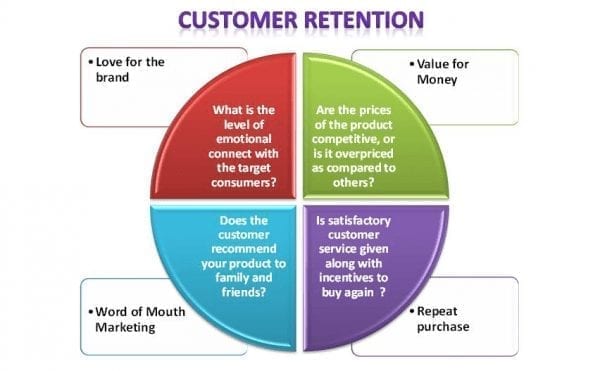
    Customer retention is another effective marketing strategy or tactic a fashion outfit can use to put its brand name in the mind of its customers.

    Keeping a steady flow of returning customers is equally as important as acquiring new customers. Here are the tips you need as a growing fashion outfit to expand your business reach, more of an how to promote your sewing business guide.

    1. Offer Home Service Delivery

    To successfully acquire new customers and retain the existing ones, you need to offer home delivery service to clients, most especially those that are too busy to drop by for pick up.

    But before you deliver their clothes to their respective houses or offices, ensure that you get their clothes properly ironed and packed, Also, ensure that you are constantly meeting deadlines or target days to boost your reliability index with your customers.

    2. Take Note Of Clients Special Days

    Have a client’s database records where you keep the details of their measurements and attached to this would be special days in their life and occasions, this is not just for record purposes but to be able to keep track using a reminder to wish them on these special days.

    You can as well go the extra mile by sending them appreciation notes, gifts, cakes to felicitate on their special days. It would help the customer build a strong bond with your brand and thereby referring and returning to engage your service as a retained client.

    Such minor acts help to promote your sewing business.

    3. Give Room For Partnership

    In order to earn more business dealings as a fashion designer, it is imperative that you leverage your social network to seek partnership with willing investors.

    This brings to memory an event that occurred during my university days – A customer who also was the school nurse gave me a very juicy offer – her offer, though tasking of me, brought one of my major breaks with my side hustle.

    With her offer, I had to mass-produce clothes for a choir group on a regular basis. The partnership was great; she kept bringing in the orders while I fulfilled them and I had no reason to go in search of customers

    4. Work On Self-Development To Catch Up On Latest Trends

    As we all know that fashion design is the act of applying aesthetics, accessories, and tailoring clothes to project or enhance the beauty of your subject or client. Therefore, to be on top of your game at all times, you must do all possible to keep abreast of happenings in the industry – learn and perfect the current trends per time.

    Always make yourself relevant in the fashion world by going for training regularly, reading journals, and fashion magazines to be abreast of the latest trend.

    It is no longer news that new trendy designs come out on a daily basis as new fabrics hit the market. Knowing everything about this would help you, and knowing something about all other aspects of fashion will pave the way for you to the point that no question or design from your prospect would catch you unprepared.

    This way, you would be able to retain your clients as they have an assurance that you are not just up to date on fashion trends but also up to the task.

     5. Strong Customer Service Approach

    This is a very important point that could keep your customers coming back for more; from the moment they initiate an inquiry, down to the point of payment and to delivery of the service you must ensure that your customers’ experience is well guided to keep them comfortable enough to become repeat customers.

    In a nutshell, being the first line of contact, your customer service department must be top-notch; trained, and equipped well enough to place a premium on every call that comes in.

    The ease of doing business birthed by your well-trained customer service department would give your customer an assurance that you have a system that works – that alone would keep them happy enough to be loyal ambassadors of your brand.

    Furthermore, it would be easy for your When your business is expanding through additional customers added to your customer base, you need to employ competence and qualified staff to help facilitate better and fast service delivery so as to meet up with customer demand.

    For ease of access and client’s confidence-boosting, always be on time. But when the time isn’t possible, build a rapport enough to be able to quickly notify your clients beforehand.

    6. Increase Your Production Capacity When Needed

    A major mistake that is common to most players in the fashion industry, especially the not so experienced tailors, is that they often outsource their jobs to less experienced tailors when they have their hands full.

    As the founder of the tailoring outfit, it is natural that your customers associate you with your brand in person. What you should do is to first find a way to separate yourself from the business, especially with the order taking tasks.

    Tailor your customer journey to each unique customer
    Photo by malcolm garret from Pexels

    Get your customer to become comfortable with your employees; when feasible, stand back and let them take the measurements of your clients while you watch. With time, your customer would get comfortable with your employees and that would free up time for you. Having done that, it would become easier for you to increase capacity when the need presents itself.

    7. Ask For And Act On Feedback

    Ask For And Act On Given Feedback

    One important aspect of customer retention that is often neglected is asking for feedback. Ensure that you always ask your customers for feedback – spend that little extra on a 5 minutes call to your customers and ask how they feel about every aspect of your service. Be sure to listen as they take you through their experience while you served them. Improving every bit of their experience the next time they come calling, is a sure way to move them from satisfied customers to become loyal customers.

    Must Read: How To Improve Sales Through Excellent Customer Service

  • Solved: Top 6 Challenges of Small Business Owners Today

    Solved: Top 6 Challenges of Small Business Owners Today

    The ultimate goal of every small business owner is to grow their beloved business from startup stage to maturity and probably make a Unicorn out of it, worth at least a billion USD.

    But like in many other things, the business environment has its many challenges too, ranging from Startup capital to others like cash flow challenges, having the right strategy, marketing plan, and other things as the right staff.

    Estimated reading time: 8 minutes

    This article takes a critical look at the top 6 common challenges of small business owners, SME entrepreneurs, and how best to mitigate against or solve them.

    Most entrepreneurs go into business with a lot of hope and enthusiasm; but, these, with time, are often met by challenges that ultimately make or mar the business. Below is a list of the top 6 challenges that plague most small and medium-sized business owners.

    Until you face as much challenge like this, you haven’t faced anything yet… keep moving.

    1. Startup capital
    2. Cash flow
    3. Strategy
    4. Recruitment and Staff Retention
    5. Marketing Strategy
    6. Inadequate Online Presence

    1. Startup Capital: 

    The challenge: This is by far the most significant challenge faced by almost every single small business owner out there. Fortunately, it is one that most have also solved, else we may not have lots of small businesses out there. However, to fully appreciate the sources of funds available to you as an entrepreneur, you first must understand the fundamental types of entrepreneurship practised.

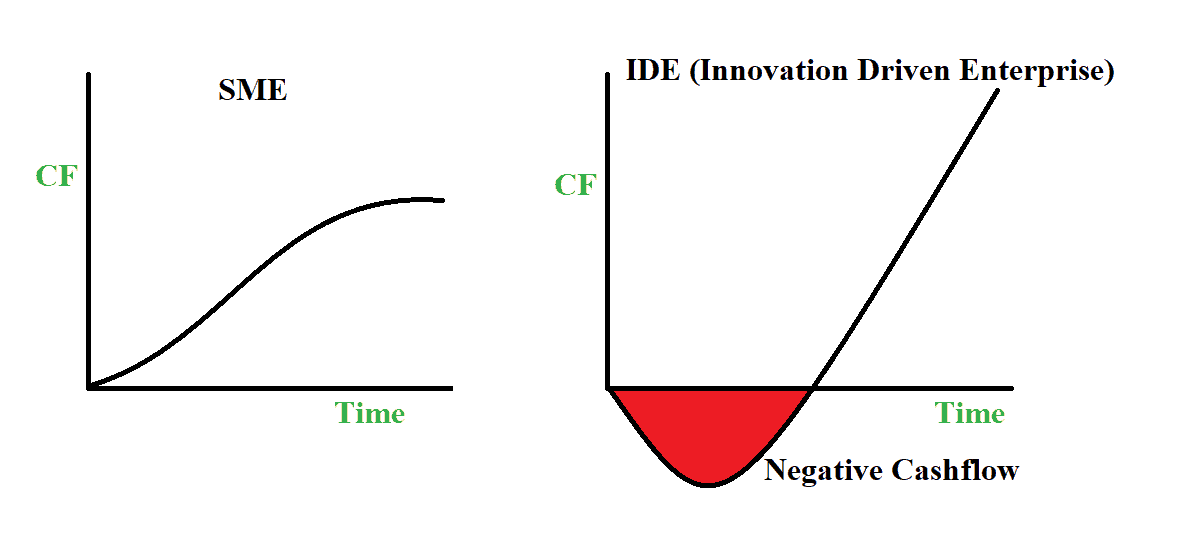
    The Solution: The solutions to the funding issues faced by entrepreneurs is embedded in the understanding of entrepreneurship itself. There are fundamentally two types of entrepreneurship – The SME (Small and Medium Enterprise) and the IDE (Innovation Driven Enterprise). 

    Innovation-driven enterprises (usually large corporations) have access to a large cache of funding sources due to their potentials for a massive return on investments, thus making them magnets for venture capitalists and venture capital firms. 

    Small and Medium Enterprises, on the other hand, have only a handful of possible sources of funding because they typically do not show a profit for at least some months after startup, if not a few years. 

    Challenges of Small Business Owners

    For Small and Medium Business owners, their sources of funding are fundamentally limited to 3 sources, and because each of these sources needs some proof of concept for your planned venture, the amount of money available to you is limited, and most often dependent on your social capital and trust level between the source of fund and the founder(s).

    • Angel investors
    • Banks and other commerce centric finance houses
    • Government

    It is therefore of note to say that it is always a good practice to first bootstrap as a small business owner, prove your concept, then move out to secure further funding.

    2. Cash Flow Crunch

    The challenge: There is no better place where the statement “Cash is king” makes more sense than in running a small business.

    Unless your business is backed by some large corporations, deep pocket angel investors, or you had a cache of funds in-store before founding your company, the chances are that you would run into cash flow problems. The flow of cash is to a business, what blood is to humans; without it, we die. Yet many business owners struggle with this challenge.

    The embedded video explains a lot about what a cash flow is, and the challenges that lead to a flow crunch.

    The Solution: With the explanation given on the significance of maintaining healthy cash flow, it, therefore, means that a business owner must ensure the following:

    • Find ways to ensure that the business brings in more money than it expends
    • Ensure that the company adequately manages such funds
    • Ensure proper budgeting and cashflow forecasting
    • Find ways to develop creditworthiness with your supplies and operate on credits as much as possible
    • Open a line of credit with your bankers
    • Ensure that as a business owner, do not forget about yourself when planning for your business’s financial future

    If you lack the necessary know-how to manage money, find someone who does.

    ExpertsNG

    A crucial point to keep in mind is that you don’t just need money for your business —you must have a plan to manage such money. Do not acquire a loan or spend your own savings without knowing exactly where money needs to be spent, how the return on your investment would be made, and how long it would take. 

    3. Strategy

    The challenge: Strategy is one important aspect of running a business that most small business owners shy away from. Actually, most small business owners know little to nothing in terms of strategy.

    A strategy is a long-term plan that you create for your company to reach the desired, future state you envision. A strategy includes your company’s goals and objectives, the type of products/services that you plan to build, the customers to who you want to sell to and the markets that you serve to make profits. Source: Forbes.com

    The Solution: For a new entrant SME to succeed in its chosen market, it must create and execute a sound strategy that puts into consideration a lot of variables, especially factors as explained by Porter’s five forces.

    At this stage, it is better to call in the experts than try to play smart and be penny wise but pound foolish. This is not the time for experimentation. It is, instead, the time to set standards and baselines that work.

    You need to revisit your mission and vision statements, break them into SMART goals, and get them aligned with your capabilities and realities. After all, what’s a vision statement if you do not align it with your realities.

    Once you set your baselines with the right documentation and processes in place, your business would be better placed, and most likely be on a trajectory for success.

    4. Recruitment and Staff Retention

    The Challenge: Hire Slow Fire Fast is a common word in entrepreneurship. There are, however, a ton of problems associated with those words. From the fear of leaked company secrets to the need to keep off the bad conversations involved with firing an underperforming employer, most business owners struggle with recruitment and staff retention issues.

    According to HBR – Many startups hire fast and fire slow. A bias for speed combined with the pressure for high growth drives many leaders to be quick to hire (“We need to fill this role now!”) but slow to remove underperforming employees. To “hire slow, fire fast,” start by being absurdly selective in whom you hire. 

    Did you know that it is not the prospective candidates that dread job interviews the most? — it’s entrepreneurs, the business owners.

    The Solution: Get it right from your foundation. Even if you did not get it right earlier, it is not too late to get things right. Functional staff is needed for business growth.

    You must get an HR unit in place and set the right policies to guide you with your recruitment and staff retention issues.

    To get things right, please follow these steps:

    1.  Build a culture: Ask yourself what you want your organization to be known for in terms of its processes and how things get done. Then write it down and envision the people you would want to work for you. Note: The first thing to check while hiring your staff is their attitude. Trust me, nothing positive comes out of anything negative.
    2. Create Organizational Structure: I believe that by now, you must have listed the skills that you need to make up your team. Now sit down and write what you expect of each role in terms of skills and daily work expectations.
    3. Create A Staffing Plan: Note that the employee does not define the role; the role defines the employee. It is, therefore, profound that you identify the roles you want, when you want the roles filled, and the skills you would need on your roles.
    4. Get Essential HR Documents and Forms: It is very important that you get the essential HR documents like the under-listed:
      • Employee handbook
      • Employee job description
      • Process manuals
      • Performance Appraisal documents
      • Staff onboarding documents
      • Employee Management & Recordkeeping documents, etc.

    5. Marketing strategy

    The challenge:  Most SME type business owners do not have the right marketing skills, yet they hardly have the pockets deep enough to hire top-notch in-house marketing experts. 

    The solution: It is always a good idea to outsource the marketing strategy of a small business to experts. The challenge most times is that experts generally are mostly perceived as very expensive. The truth, however, is that what you need at this point in your business is a core marketing plan: a document to outline what marketing activities you will undertake to motivate purchases.

    It is not the time to experiment. Give the expert a budget to work with; there are always experts out there that fits your budget, find them.

    6. Inadequate Online Presence

    These days, online is the current offline. No marketing strategy is complete without a significant level of a ubiquitous online presence. A significant percentage of your marketing and sales campaigns must be done online.

    Regardless of a company’s size or the size of its business, customer acquisition is at the centre of it all, and these days, there is no better place to engage with customers than the many online platforms where they now congregate for diverse reasons.

    The challenge: The online space is filled with noise. As a business owner, it has become difficult to get your messages through the noise and reach your prospective customers.

    The solution:  Your online presence as an individual, a brand, or business, is crucial to your outbound marketing campaigns as it reinforces your brand and what you offer to your target market. 

    When it comes to online marketing, Consistency = Engagement, and Engagement = Brand awareness.

    RELATED ARTICLES

  • How To Close A Sales Deal Fast

    How To Close A Sales Deal Fast

    The goal of just about any company out there is closing sales and growing revenue – fast. This is because business is a game of both numbers and speed. The higher the number of transactions that you bill for, the higher the turnover for the period.

    Your ability to shorten the sales cycle will therefore lead to explosive growth, the very fact that ongoing sales determine if a business remains in business can make a sales closing conversation with a prospect a nerve-bending experience. 

    Just a misplaced sentence or two and the prospect could ask to delay making a decision for some months, make an offer at a price level that you cannot agree to, or worse, accept a competing offer from one of your competitors.

    Let’s look at some simple ideas/strategies that you can build into your sales flow that will both help you close sales cycles fast and help improve your closing rate.

    While most of these ideas may be suggestions you are familiar with, you may have not been implementing them in your business and this must have cost you a lot in closure rates. It doesn’t matter what your products or services are,if you have a well-structured sales process, the results will be seen in your rate of closures, and in meeting your revenue projections. 

    Always put this somewhere close to your heart – When it comes to sales, the customer MUST come first.

    Below are some of the most effective strategies that top companies use to close sales faster than others:

    Do your research

    Before starting out on a sales project, it is important that you start with a thorough in-house research so as to have an in-depth understanding of your services and offers and how they provide value to your customers. This also means that your research cannot end in-house. You cannot provide a solution to a problem that you do not fully understand.

    How To Close A Sales Deal Fast

    You don’t need to be stealthy about the research you are carrying out on the company. Your prospects want solutions to the challenges that they are facing; so, feel free to talk to the point of contact at the company to get as much details as they can freely share about their situation. If you can get access to other employees in multiple departments, start off conversations with them to gather more background. This will allow you to create a presentation that has depth and that considers the big picture of the organization’s goals.

    While it may seem counter-intuitive that I am recommending that you conduct a thorough research when we are looking at increasing your closing speed, it really isn’t. Never put yourself in a situation where you go into a sales call without having an end game clearly in mind.If you have gotten to the point where a phone call is necessary, arm yourself with details of your prospects before you touch the dial.

    Instead of just doing hit and run on strange businesses, focusing your sales pitches on prospects that you have a thorough understanding on will significantly improve your conversion rate as well as improve the efficiency of your sales process. 

    While the company website can give you information about the prospect, you have to go beyond just their site and see what you can learn about them from the web. Additionally, you can use data enrichment tools to quickly mine more information about your prospect which an ordinary Google search may take you too long to process.

    The duration of time that you spend on research is dependent on the length of the sales cycle in your industry. However, it will be time well spent as it impacts on the whole sales process.

    Know your ideal customer

    Who are the best customers in your business? This is very important information to have as it can help define where you focus your efforts. When you put your sales effort on the type of prospects that has been the revenue source for your business, the result is a predictable boost in sales productivity. 

    Additionally, the more you know about your ideal customer, the easier it becomes for you to close them. This is because you would have become familiar with their pain-points, the likely objections to your offers and the features of your service to lead with. 

    Recommended Read: Attract The Right Customers To Your Store

    Qualify the prospect

    Extending from knowing who your ideal customer is, your salespeople should only make calls to pre-qualified prospects. Running after weak leads would end up wasting precious sales time on people who may never convert to customers.

    If you want to know how to close deals more efficiently, this is it! Define who qualifies as a lead well in advance to both your marketing and sales teams and have a clear checklist that your people use to measure any prospect they are considering.

    You could even use automation to filter prospects so that as they take actions across your channels, they gradually qualify themselves until they get to a point where they popup in salesperson’s dashboard as a qualified lead.

    Here are some questions that you may use as a basis in setting up your automated lead scoring system: 

    • What is the lead’s industry?
    • How many employees do they have?
    • What’s the annual turnover?
    • Did the lead initiate a follow-up request?
    • What challenges is the lead struggling with?
    • What context does one see about the firm from data enrichment platforms?
    • What call to actions did the lead engage with?
    • What pages on the website has the lead visited?

    By combining optin landing pages and some automated behavior-based segmentation with insights derived from data enrichment tools, your lead qualifications can mostly run independent of human contact, and your sales people will only be fed with qualified leads to maximize both their efficiency and productivity.

    Deal with the decision maker

    Who signs the cheque? That is who your salespeople should be talking to, that is, if they can pull off that coup. However, that is not always possible as in real life most decision makers insulate themselves with a retinue of assistants, junior executives and so on. The more efficiently they handle interaction with the gatekeepers, the sooner your salespeople will have access to the decision maker.

    In whatever industry you may find yourself, your sales cycle will become shorter if your salespeople can get in front of decision makers earlier than the competition can.

    Earn the trust of your prospect

    Show your prospects from the very first interactions you have with them that you take them seriously. Most businesspeople drop the ball here. This is a worst case in Nigeria where some have engrained the notion that if you are early to a meeting then you are desperate. Never keep clients waiting. If you say you would give them a call back at this time, do it.

    If it needs using a scheduling software to get your appointments right, then use one. In fact, use an alarm clock if that is what works for you! But whatever you do, make sure that you keep your word even in the small stuff. 

    Additionally, do not be one of those salespeople who would say black is white just to gain access. Establish a reputation early in your relationship as someone who has integrity and does not cut corners.By saying establish a reputation, I am not talking about setting up a façade of honesty that sticks out like a sore thumb due to the variance with everything that you say and do. 

    When your client catches you trying to pull a fast one on them, it is highly unlikely that they will ever extend the privilege of trust to you again, not to talk of going ahead with the deal. 

    Create a sense of urgency

    When there is urgency, things get done faster. It is a good habit to establish a deadline when you initiate negotiations for a sale. It helps you in two ways. First, you will close the deal faster if the prospect is ready, and second, it will help you avoid wasting valuable time with a prospect that is not just there.

    A deadline assigned to a deal increases the motivation of the prospect to close and protects your most valuable resource – time. 

    A way of handling this without appearing to be putting too much pressure is by offering a discount if the transaction is handled within a certain time-frame. 

    Suggested Read: How To Improve Sales Through Excellent Customer Service

    Be ready to handle objections

    Being ready to handle objections is what true preparedness is for a sales call. You need to think early about what likely objections will come up during your call and decide on how those objections will be handled. This is because if an objection derails your conversation and you have to take time out to research a solution, you may have lost momentum that had been gathered thus far, meaning the prospect will be less likely to close than if you had been more effective initially.

    I suggest bringing your sales team together and having them come up with as many objections as possible. Then, as a team, decide on how best those objections can be handled. That process is what Tom Searcy calls “landline map”. When your people can anticipate objections that they may likely face and can clearly articulate a thoughtful response to those objections, they reduce the likelihood of their sales call ending with a “No!”.

    If a prospect has any objections, be careful not to sound overly rehearsed in making a response. Listen to the prospect attentively; then proactively address their objections without giving the impression that you are minimizing them. You may even want to ask a couple of questions to clarify what their objections are, as a way of emphasizing that you take the objections seriously. 

    Ask for the sale

    No matter how well you apply all the other strategies we have suggested here, if you do not ask for the sale, the prospect is very unlikely to beg for the privilege of buying from you. 

    To improve the confidence with which you handle the decisive moment, here are some closing approaches that you may want to employ:

    1. Unless you still have concerns that we have not addressed, it appears that we are a good fit and are ready to begin. When do I come with the contracts?
    2. If we can find a way to handle the concerns that you expressed, would you be ready to sign the sales contract by [date]?
    3. Based on the considerations we have discussed, I would say that either A or B are the best options for your use case. Which one do you prefer?
    4. If you make a deposit now, I can have the contract mailed to you before the close of work today.

    Build follow-ups into your sales process

    Have you ever sent a quote to a prospect and then never heard back from them again? What was your response? A lot of salespeople would just move on without skipping a bit, and then complain later that they are getting very poor conversion rates!

    With this simple technique built into your process, you will close more deals, guaranteed with almost no additional effort on your parts.

    Most prospects who do not get back to you may have completely forgotten. Some may have proceeded on vacation and forgotten about the quote sitting in their email. By taking a few seconds to say, “Hey Emeka, did you get a chance to review this?”,you may open the conversation again and potentially increase your success rate.

    A software like Jobber allows you to automate the quoting process, as well as the follow-up to ensure that no prospect falls through the cracks. 

    As you can see, sales is more art than science. Try to implement these ideas in your industries and let us know in the comments what kind of results you are able to deliver. 

  • 5 Steps To Your Biggest Black Friday Sale

    5 Steps To Your Biggest Black Friday Sale

    If you are a Nigerian business owner, you may want to know how to make your biggest sale of any season, especially on Black Fridays.

    It is almost the end of the year 2021. I bet like most people, you also started the year with some resolutions. Hey, did you keep to them? I bet No.

    Earlier in the year, I noticed that it would not be easy to keep to resolutions, so I chose to set goals instead. My goal for 2021 was to start the ExpertsNg blog. I, however, toyed with the idea for so long that I kept postponing it until late in June of 2021 when I penned down my first words.

    If you are like me, I bet you chose to set goals and probably have one goal pending at the moment. If your goals are sales-related, I’ve got good news for you – We are getting into the biggest sales period of year 2021 and you can still surpass your sales target.

    This sales period starts at the last weak of November and stays up until the second week of January the following year. It normally starts with the USA Thanksgiving holiday that brings with it the black Friday sales rush.

    Click here for the origin of the Black Friday

    Black Friday is the Friday after Thanksgiving and companies and business owners alike offer massive discounts to attract customers. In 2018, Black Friday sales hit $717.5 billion in the US and this is expected to grow at about 16% in 2020.

    Nigeria is not left out as we have also joined the bandwagon and now celebrate all possible discount periods worldwide, including Black Friday.

    What is unique about Black Friday is that it kickstarts the holiday season and indeed the shopping frenzy for the holiday season.

    So, If you are yet to meet your sales target goal for the year, you have the best opportunity yet to meet it during this season. The question is if you are prepared and know just how to get things done right.

    Here is a list of 5 steps to your biggest sales this Black Friday:

    1. Get Your Products / Services Right
    2. Get your sales-funnel right
    3. Advertise your sales offering
    4. Automate your processes
    5. Build an active customer care structure

    1. Get Your Products / Services Right

    If you cannot explain your product or service to a 10-year-old, you probably do not have a well-defined product or service. Your ability to define your products will determine how you position it and how customers see the value in them.

    Remember, in marketing one of the essential success factors is your ability to get a sellable product, with such product well priced and suited to the place you intend to sell to.

    2. Get Your Sales Funnel Right

    As a business owner, you do understand the place of marketing and the need to keep selling. Without sales, your business will eventually collapse from inadequate cash flow challenges.

    To make sales, you must learn to attract the right set of customers, and understand marketing’s importance and how to persuade customers to buy from you. The best way to get customers and be very good at it is by understanding and utilizing sales funnels.

    A sales funnel is a strategy that is so named because of the shape it takes when represented by a diagram. Learn how to build your first sales funnel by clicking here

    3. Advertise your sales offering

    Note: Advertise, not entertain.

    The purpose of an advertisement is to work on the thought process of your prospective customer; affecting the way they think about your value proposition, more like to educate and persuade them on your offerings, with the end result being that they open their wallets and buy from you.

    “The first step to affecting the way your customers think is to make them look at what you offer in a new or different way. A good ad has the power to completely change the mind of the reader, viewer or listener”

    Source

    So, by all means, advertise. And when you are at it, ensure to hire the services of professionals. Know where your potential clients are, and reach them with your strategic advertisements.

    4. Automate your processes

    How To Make Your Biggest Sale of 2019 This Black Friday

    By all means, automate your processes. If you truly want to make your biggest sale this Black Friday and other holiday seasons, you must understand the role of automation in sales and deploy it to every aspect possible.

    With sales automation, you could set up chatbots to respond to your clients in your absence, you could take and even fulfill orders while sleeping, all thanks to automation. The level of AI integration to sales and above have been significant. If you must jump on a bandwagon, this is certainly one with a destination, by all means, jump on it.

    5. Build an active customer care structure

    While a lot of business owners believe that it is good practice to build an active customer care structure, only a handful actually invests in customer service management.

    Ideas Don’t Count Execution Does

    At first glance, you may have the illusion that what determines a company’s success are their big ideas, products or the services they render!

    Customer is King, Listen To Them.

    However, company success is determined by her sales figures – her profit. So without sales, a company will eventually fizzle out. So, it, therefore, means that the customer is truly king. As such, the company-client relationship is possibly the single most important factor at play in determining business success.

    Related: When It Comes To Customer Service – Don’t Be Good, Be Outstanding.

    Always Enhance Your Customer Experience

    Take a look at your processes with the view of enhancing your customer experience and you would have done what is needed to satisfy your potential customers, and won their hearts through your customer satisfaction mechanisms.

    Recommended:

  • How To Craft A Vision And Mission Statement

    How To Craft A Vision And Mission Statement

    Most Nigerian companies do not know how to craft their vision and mission statement. Walk into the offices of most small and medium scale businesses in Nigerian and the vision and mission statements that you would see hanging on the walls are effectively useless.

    While the great mission and vision statements inspire loyalty, innovation, and hard work, the statements adopted by most small businesses are mere recitations of what the company does.

    It appears to me that most small businesses adopt mission and vision statements just to be fashionable – an item to be ticked off on a checklist as done, without really considering how strategic those two statements can be to the reputation and growth potential of their businesses. In the real sense of things, these statements ought to be the foundation of the very system that drives the business.

    Unfortunately, these statements are mostly forgotten even before they are hung up!

    When you have strong vision and mission statements in place, they serve as a funnel through which you arrive at decisions and prioritize what needs to be done, what is important and what is not.

    I have to acknowledge, though, that the bad treatment that has been given to vision and mission statements can be owing to the fact that most small businesses do not even understand the purpose they serve, what they mean, and even how they differ from each other, nor how to get one into existence and write it out in a way that makes sense.

    That said, after reading this article, a business owner who is willing to put deliberate efforts and work hard can craft vision and mission statements capture the core idea of the business while serving as a roadmap to where the path his or her company should go.

    If you are ready for the task ahead, a great place to begin is to look at the definitions of the two statements.

    How do you define a vision statement?

    A vision statement is that big idea that the company is working towards as a goal. In the book, Vision: Your Pathway to Victory, Gordon D’Angelo describes a vision statement as “the definable intention from which preparation is formed.”

    Plenty of grammar, I agree. Let’s break it down a bit.

    A vision statement expresses in simple terms, what an organization hopes to become and accomplish in the long term.

    It is aspirational. By the very definition, ‘vision’, it holds that it ought to be a lofty purpose – something that internal stakeholders must stretch to attain, yet completely believe it’s attainable.

    Here are some things to keep in mind when writing a vision statement:

    • It should be future-oriented
    • It should be brief and concise
    • It must be deeply oriented in your core values
    • It must reflect your self-image as a company
    • It must be easy to remember

    Some questions to consider when creating a vision statement include:

    • What are our hopes, dreams, and aspirations?
    • What are the problems we are solving and how does that contribute to the greater good?
    • What change are we bringing about?

    A purpose-driven company knows their big why – which helps them to envision success as a whole.

    What purpose does a vision statement serve?

    Countless researches show that employees of companies who have meaningful vision statements have engagement levels of 68% – 18% higher than average. When employees are more engaged, they are both more productive at their jobs, and effective as corporate ambassadors of the company.

    Since a vision statement sets the vision for the long-term success of a business, you will agree that it is worth taking time to craft a good one that can turn your people into believers and mobilize them to act.

    What is a mission statement?

    While I was studying at Harvard business school, I was taught that to establish a very vibrant company with the prospect for growth, we should start the company with the Mission statement.

    It should be clear to all employees and they should be able to recite it without necessarily memorizing it – they should understand it and align their everyday activities to focus on achieving the goal of the mission statement.

    While the vision statement is future-oriented, a mission is more realistic and present-based and is designed to communicate where the organization is at the present time and what they ought to be doing on an ongoing basis.

    Mission statements are as important to a business as a business plan.

    A mission statement is a broad declaration of your purpose that clarifies (1) What you do, (2) who you do it for, and (3) how you do what you do.

    Apart from capturing the essence and philosophy behind your business in a few sentences, a great mission statement flags what your business is all about to both your internal stakeholders (employees, management, board) and external stakeholders (customers, suppliers and the larger community).

    Your mission statement sets the agenda for the company. It defines what you do, what is at the core of the business and highlights the objectives of the company and the pathway towards which those objectives can be realized.

    It is the most significant contributor to setting the culture of your company.

    Some questions to consider when creating a mission statement include:

    • Why are you in business?
    • Which audience does your business?
    • How do you serve them?
    • What products and services do you bring to the marketplace?
    • What quality and price should your customers expect?
    • What kind of experience do you provide to your customers?
    • What role do you and your team perform?
    • What stands you out from the competition?

    A company can use mission statements to establish a framework for acceptable behavior and performance standards for its people. This can help provide guidance for decision making on an ongoing basis.

    What is the difference between a vision and mission statement?

    To put it in as few words as possible, a mission statement is a summary of what a company is already doing, while a vision statement is the broader goal they would love to accomplish.

    The vision statement focuses on the future and what the company would love to become, while the mission statement focuses on today and what the company is doing on a day-to-day basis in the process of becoming what they envision to become.

    Keep in mind that the primary difference between a mission and a vision statement is the timeline. While sometimes there can be an overlap between the two, the mission statement captures what people do daily for the company to eventually achieve its vision. So, while the vision is the why, the mission is the how.

    Are the two interchangeable?

    Obviously not. This is a mistake that a lot of companies do, but it is not just important, but also critical that a business should have both. One does not work without the other. While the vision statement gives your company a sense of purpose, the mission statement provides meaning to what you do.

    How to write an effective vision statement

    1. Decide who will play a role in writing it: For a small business, you could gather insights from all employees and use that in crafting a vision statement, however, for bigger corporations, you would need to be more strategic than that in selecting those you work with. You may want to host a series of workshops during which you capture the voices of a representative cross-section of your employees and base your vision statement off that. This is important because if employees do not buy into the vision, they will not work with you to carry it out.
    2. Have a look at the vision statement of competitors: Apart from showing you what is important to them, it can also help you to see how you can differentiate yourself from those in your market.
    3. Project ten years into the future: Imagine a world in which your company is either the market leader in your industry or competing very favorably. How will the world and your company look like if you achieved on those goals? That world you see is what should inform your vision statement.
    4. Determine your purpose and market position as an organization: To write an effective vision statement, you need to consider your company’s objective, advantage, and scope (OAS).

    Providing answers to the questions below can help you write an OAS statement that truly reflects your company’s strategy.

    • Objective: “Why do we exist as a company?”
    • Advantage: “How are we different, better or more innovative?”
    • Scope: “What do we need to do and avoid towards achieving our objective?”
    • Describe a measurable goal: Vision statements are achievable. If you need to know when you have achieved it, then it is obvious that the statement better be measurable.

    Consider the hypothetical vision statement: To become number one in the sports apparel industry.

    Is that measurable? Of course, it is!

    27 Examples of vision statements that inspire confidence

    1. Guaranty Trust Bank: “We are a team driven to deliver the utmost in customer services. We are synonymous with innovation, building excellence, and superior financial performance; and creating role models for society.”
    2. Unilever: “To make sustainable living commonplace. We believe that this is the best long-term way for our business to grow.”
    3. Intel: “If it’s smart and connected, it’s best with Intel.”
    4. LinkedIn: “Create economic opportunity for every member of the global workforce.”
    5. Oxfam: “A world without poverty.”
    6. Guinness Nigeria: “To be the best performing, most trusted and respected consumer products company in Nigeria.”
    7. Life is Good: To spread the power of optimism.
    8. Sweetgreen: To inspire healthier communities by connecting people to real food.
    9. Patagonia: Build the best product, cause no unnecessary harm, use business to inspire and implement solutions to the environmental crisis.
    10. Flour Mills Nigeria: “To be the leading food and agro-allied group in Africa.”
    11. Amazon: “To be Earth’s most customer-centric company where customers can find and discover anything they might want to buy online.”
    12. TED: Spread ideas.
    13. Access Bank: “To be the world’s most respected African bank.”
    14. Nordstrom: To give customers the most compelling shopping experience possible.
    15. Google: “To provide access to the world’s information in one click.”
    16. Invisible Children: To end violence and exploitation facing our world’s most isolated and vulnerable communities.
    17. American Express: We work hard every day to make American Express the world’s most respected service brand.
    18. Warby Parker: To offer designer eyewear at a revolutionary price, while leading the way for socially conscious businesses.
    19. InvisionApp: Question Assumptions. Think Deeply. Iterate as a Lifestyle. Details, Details. Design is Everywhere. Integrity.
    20. Honest Tea: To create and promote great-tasting, healthy, organic beverages.
    21. IKEA: To create a better everyday life for the many people.
    22. Cradles to Crayons: Provides children from birth through age 12, living in homeless or low-income situations, with the essential items they need to thrive – at home, at school and at play.
    23. Universal Health Services, Inc.: To provide superior quality healthcare services that: PATIENTS recommend to family and friends, PHYSICIANS prefer for their patients, PURCHASERS select for their clients, EMPLOYEES are proud of, and INVESTORS seek for long-term returns.
    24. JetBlue: To inspire humanity – both in the air and on the ground.
    25. Workday: To put people at the center of enterprise software.
    26. Prezi: To reinvent how people share knowledge, tell stories, and inspire their audiences to act.
    27. Tesla: To accelerate the world’s transition to sustainable energy.

    How to write a great mission statement

    The goal that you should have in mind for this exercise is that at the end of the day, the mission statement would be uniquely yours so much so that if a competitor would want to borrow it, they would have to rework it extensively to get it to fit.

    1. Have a market-defining story in mind: Imagine a real person making the decision to buy whatever it is that you sell. What exactly does the person want? How does the person find you and what does her buying from you do for her? The more concrete and detailed you can make this story, the better. By identifying your buyer persona and how what you do does for her, your mission statement will be grounded and useful to both those who work for you and your publics.
    2. Keep it succinct: A mission statement is a statement and not an essay. This is not the idea behind your creating this brand-building asset. You need a statement that is memorable and that will be easy to reflect on – long-drawn-out essays do not fit that bill. However, still ensure that it captures using a few words, the essence of your business goals and how you go about achieving them. It should clearly signal to your customers, employees, suppliers, and community what it is what you do, and how you are different from others who do similar stuff. Your task here is to communicate your business plan in a few words.
    3. Use vibrant emotive words: Your mission statement should be able to galvanize your people to act every day. Hence, it best serves your purpose to use vibrant, exciting words.
    4. Communicate it: Once you are done creating a great mission statement, your work is only half-done. The other half is to communicate it to your people and have them align their actions with the mission of the organization.
    5. Don’t be afraid of changing it: As your business evolves, it may be necessary to reflect again on your mission statement and see what needs to be changed. The mission statement is not cast in concrete – at best, it is a shifting goal post that captures where the company is headed. Always make sure that the mission statement clearly captures that.

    10 Examples of mission statements

    1. Andela: “to advance human potential by empowering today’s teams and investing in tomorrow’s leaders.”
    2. Flour Mills Nigeria: “To produce and supply products of superior quality and value to the market, thereby enriching the lives of consumers, customers, communities, employees and all stakeholders.”
    3. Facebook: “To give people the power to build community and bring the world closer together.”
    4. Jumia: “Creating a connected digital Africa to improve people’s lives on the continent, thanks to the internet.”
    5. Amazon: “We strive to offer our customers the lowest possible prices, the best available selections, and the utmost convenience.”
    6. Access Bank: “Setting standards for sustainable business practices that unleash the talents of our employees, deliver superior value to our customers and provide innovative solutions for the markets and communities we serve.”
    7. Samsung: “We will devote our human resources and technology to create superior products and services, thereby contributing to a better global society.”
    8. Guaranty Trust Bank: “We are a high-quality financial services provider with the urge to be the best at all times whilst adding value to all stakeholders.”
    9. Cadbury Nigeria Plc: “To serve Nigerians with products of consistently high quality, made readily available at prices which offer real value for the money spent.”
    10. Flutterwave: To inspire a new wave of prosperity across Africa by building payments infrastructure to connect Africa to the global economy.

    Conclusion

    You have seen that crafting valuable mission and vision statements take time and effort. However, the investment is well worth it. Most business owners have found that the process of coming up with thoughtful vision and mission statements is as beneficial, if not more beneficial than the mission statement in itself, as it can help bring about clarity into aspects of what you do that you have not previously given concerted thoughts to. Additionally, the process will help you solidify your concept of what it is you do as a business and the motives that drive you to do what you do.