Category: General Management

  • Big Brother Naija: Lessons for Business Enthusiasts

    Big Brother Naija: Lessons for Business Enthusiasts

    For the next few weeks, Nigerians will stay glued to their televisions to watch and talk about the Big Brother Naija reality TV show.

    The housemates would need to sell themselves in order to be the favourite housemates of their audience. And yes, Nigerians will rally around their favourite housemates.

    One after the other, the housemates would be evicted, based on the votes cast for them by Nigerians. Like any other reality show out there, Big Brother Naija may hold lessons for us as business enthusiasts.

    The reality show has successfully aired for five seasons since 2004. Regardless of its many challenges, it has lasted way more than many small businesses in Nigeria and has been more successful than most reality shows in Nigeria.

    Given the few reality shows that succeed on local television, you’d assume Nigerians don’t like reality TV. Yet we’ve had Project Fame, Nigerian Idols, Gulder Ultimate Search, Maltina Dance All, and very recently, Love. How are they all doing?

    So what’s behind the success of Big Brother Naija?

    What business lessons can we learn from the BBN?

    The BBN holds several lessons, especially to an entrepreneur. While you may find other lessons, for me the lessons that resonate most are:

    1. In Business You Need The Right Partners To Succeed
    2. Quality is key – You must know your target market and serve them quality

    Big Brother Naija (BBN) formerly Big Big Brother Nigeria is a spin-off from Big Brother Africa. A good show that sadly ended in 2014 after airing its 9th season. By the company’s official press release, they claimed sponsorship was the reason it closed, but I’m sure our prayer warriors and holier than thou opinion leaders would beg to differ.

    Whatever your reservation on the moral conducts of BBN, no doubt you can agree that it is a show that requires a lot of money, creativity, and teamwork to be successful. But above all, there’s a deliberate systemic, strategic flow behind the show’s success.

    Endemol and the Genius John De Mol Jr

    I know the word genius gets thrown around a lot. But, what do you call the mind that created Big Brother and The Voice? Genius! There’s no other word for that. It’s simply awesome!

    Of course, no great company succeeds by a single effort but John deserves the spotlight. This is why I say every business enthusiast or business owner could learn a dozen lessons to learn from John.

    The company was originally founded as John De Mol Produkties in the Netherlands and in 1994 it became Endemol through a merger with Joop Van den Ende.

    In 1997 John produced The Dutch version of Big Brother and The Voice.

    In 2000 John sold his shares to Telefonica yet continued to serve as creative director until 2004 and founded Talpa Media Holding.

    Remaining as creative director was a smart move because Talpa – later named Tien – would rank poorly on TV ratings leading to John selling off to RTL Netherlands but retaining some of its shares.

    Another smart move if you’re following. As business enthusiasts, you have to know when to hold ‘em and when to fold ‘em. I picked that up from some Hollywood film. Some type of gambling slang.

    After jumping ship on Tien, John De Mol returned to Endemol in 2007 as a major shareholder together with Mediaset of Silvio Berlusconi.

    In 2011 Endemol relaunched The Voice. This time it was a global success, giving Rise to several editions of The voice in other Countries.

    Endemol was succeeded in 2015 by Endemol shine group growing into a Global force with 120 production companies operating in 20+ countries. That is huge!

    Now if you’ve been following dates, you’d see that each merger made Endemol bigger and its shows grew popular with TV fans. I mean I’m stuck on some moments from the voice and Big Brother.

    But honestly, Endemol has given us good content for years. From Big Brother to The Voice and Fear Factor, Love Letters, 1 vs 100, Deal or No Deal, Your Home Made Perfect. And many more.

    68,000 hours of finished programming!

    Yes! That is some success story.

    Later as Endemol Shine Group, it created the Money drop, Peaky Blinders, Masterchef, Black Mirror, Humans, Grantchester, and Tin star.

    It’s recent acquisition by Banijay on July 3, 2020 made grand records in the history of Business merger.

    Deal or No deal!

    I say deal already!

    Content

    I’m sure you heard the famous Bill Gates quote – content is King. Among Kings, Big Brother Naija has proven to become an empire. With its Fifth season underway, Twitter will never be normal. All types of debates would set the trend table on fire. With the Betway ambassadors keeping its fandom active.

    You see when it comes to content, Big Brother delivers.

    This is what has kept the audience- At least its Nigerian audience – actively engaged since it premiered as Big Brother Africa in 2000.

    So what’s so special about the content that has never been seen on screen?

    You’d think it’s the adult content. But sleazy shows turn people off. If you are on Nigerian Twitter, you know what I mean. The activist in union with the unpopular Nigerian mothers’ Whatsapp group would make sure such a show never sees the light of day.

    But here we are. There’s already the Nengi vs Dorothy debate and this season has only begun.

    In some way Big Brother Naija directly affects lives. That’s soft power and the show runners recognize this power.

    Investors

    As business enthusiasts, perhaps, and this is me taking a wild but obvious guess. One of the reasons the show has successfully found sponsors is the biding style that allows different businesses with multiple interest bid for ad placements in the show.

    That’s one business lesson for show creators and business enthusiasts.

    This is different from other shows as Gulder Ultimate search, Project fame, and oh who remembers You see the difference. The others are either owned by a Bank or a breweries company. Then they want to fund it all by themselves to advertise their own product thereby monopolizing the market. How has that worked so far? Which is why I worry for all these Bank owned online Film platforms.

    Endemol recognizes its strength as an independent production company. It has a success record and has continued to build on it.

    This is something content writers understand. If a post gets good engagement on one platform a smart content person takes it up and tweaks it for another platform. Same Content.

    Over time you build a good record of success story. Enough to convince an investor.

    Now you’d think it’s the adult content that attracts investors. Don’t do that, you’d never learn. First, you’ve thought yourself to believe a lie. Secondly, you’ve invariably stopped yourself from expecting a positive response from your investors just because you think people only invest in cheap thrills. Suddenly, you’d find yourself shifting from your true intent in a bid to score cheap points in advertising.

    Unlike other TV shows, BBN doesn’t end when a brand cuts sponsorship. The show continues. MTN is written all over Project fame it almost isn’t project fame without the obvious sponsor. If I never told you, you’d never know the name Endemol or its new owner Banijay.

    Funds appropriation

    As someone who knows someone who knows someone that makes content for Nigerian TV, I’d tell you one thing – misappropriation of funds is the chief problem with many productions on our TV.

    MONEY will never be enough but money can do more than we are letting it do as business people.

    Read the article on finance tools for small businesses. It starts here.

    I’ve seen filmmakers eat the funds for their production before production begins. In the long run, they start micromanaging just to complete the production. Very few Media houses in Nigeria run on proper structures. I said it.

    It takes more than a registered business name to grow a company. Financial know how is key.

    Lessons for Business Enthusiasts

    Here’s a highlight of todays discuss; when you find a good product make sure it delivers on its promise.

    Secondly,

    Dey your dey.

    Stop jumping on every trend if it doesn’t fit your business. Except your team is as good as the guys at Durex. They can turn anything to fit their brand.

    Lastly, Finance.

    Understand how to separate your personal money from your business. You see that popular debate amongst married people about husband’s money vs wives’ money, whose money should fund the home?

    As a business owner you need to be very clear about whose money runs the business if you want to see your business grow.

    Your money is the business money but the business money is not your money.

    Once again.

    Understand how to manage money using financial tools as discussed in this article.

    BBN compulsorily created pairs- it’s part of the game but if you looked closer, you’d have seen that not all members of each pair have been particularly acting like they were part of a team. It is also no coincidence that the strongest teams were the most voted to remain in the house- MiNa and BamTeddy. Who’s your numero uno fan in your life who genuinely wants the best for you? Team up and do great things together.

  • Solved: Top 6 Challenges of Small Business Owners Today

    Solved: Top 6 Challenges of Small Business Owners Today

    The ultimate goal of every small business owner is to grow their beloved business from startup stage to maturity and probably make a Unicorn out of it, worth at least a billion USD.

    But like in many other things, the business environment has its many challenges too, ranging from Startup capital to others like cash flow challenges, having the right strategy, marketing plan, and other things as the right staff.

    Estimated reading time: 8 minutes

    This article takes a critical look at the top 6 common challenges of small business owners, SME entrepreneurs, and how best to mitigate against or solve them.

    Most entrepreneurs go into business with a lot of hope and enthusiasm; but, these, with time, are often met by challenges that ultimately make or mar the business. Below is a list of the top 6 challenges that plague most small and medium-sized business owners.

    Until you face as much challenge like this, you haven’t faced anything yet… keep moving.

    1. Startup capital
    2. Cash flow
    3. Strategy
    4. Recruitment and Staff Retention
    5. Marketing Strategy
    6. Inadequate Online Presence

    1. Startup Capital: 

    The challenge: This is by far the most significant challenge faced by almost every single small business owner out there. Fortunately, it is one that most have also solved, else we may not have lots of small businesses out there. However, to fully appreciate the sources of funds available to you as an entrepreneur, you first must understand the fundamental types of entrepreneurship practised.

    The Solution: The solutions to the funding issues faced by entrepreneurs is embedded in the understanding of entrepreneurship itself. There are fundamentally two types of entrepreneurship – The SME (Small and Medium Enterprise) and the IDE (Innovation Driven Enterprise). 

    Innovation-driven enterprises (usually large corporations) have access to a large cache of funding sources due to their potentials for a massive return on investments, thus making them magnets for venture capitalists and venture capital firms. 

    Small and Medium Enterprises, on the other hand, have only a handful of possible sources of funding because they typically do not show a profit for at least some months after startup, if not a few years. 

    Challenges of Small Business Owners

    For Small and Medium Business owners, their sources of funding are fundamentally limited to 3 sources, and because each of these sources needs some proof of concept for your planned venture, the amount of money available to you is limited, and most often dependent on your social capital and trust level between the source of fund and the founder(s).

    • Angel investors
    • Banks and other commerce centric finance houses
    • Government

    It is therefore of note to say that it is always a good practice to first bootstrap as a small business owner, prove your concept, then move out to secure further funding.

    2. Cash Flow Crunch

    The challenge: There is no better place where the statement “Cash is king” makes more sense than in running a small business.

    Unless your business is backed by some large corporations, deep pocket angel investors, or you had a cache of funds in-store before founding your company, the chances are that you would run into cash flow problems. The flow of cash is to a business, what blood is to humans; without it, we die. Yet many business owners struggle with this challenge.

    The embedded video explains a lot about what a cash flow is, and the challenges that lead to a flow crunch.

    The Solution: With the explanation given on the significance of maintaining healthy cash flow, it, therefore, means that a business owner must ensure the following:

    • Find ways to ensure that the business brings in more money than it expends
    • Ensure that the company adequately manages such funds
    • Ensure proper budgeting and cashflow forecasting
    • Find ways to develop creditworthiness with your supplies and operate on credits as much as possible
    • Open a line of credit with your bankers
    • Ensure that as a business owner, do not forget about yourself when planning for your business’s financial future

    If you lack the necessary know-how to manage money, find someone who does.

    ExpertsNG

    A crucial point to keep in mind is that you don’t just need money for your business —you must have a plan to manage such money. Do not acquire a loan or spend your own savings without knowing exactly where money needs to be spent, how the return on your investment would be made, and how long it would take. 

    3. Strategy

    The challenge: Strategy is one important aspect of running a business that most small business owners shy away from. Actually, most small business owners know little to nothing in terms of strategy.

    A strategy is a long-term plan that you create for your company to reach the desired, future state you envision. A strategy includes your company’s goals and objectives, the type of products/services that you plan to build, the customers to who you want to sell to and the markets that you serve to make profits. Source: Forbes.com

    The Solution: For a new entrant SME to succeed in its chosen market, it must create and execute a sound strategy that puts into consideration a lot of variables, especially factors as explained by Porter’s five forces.

    At this stage, it is better to call in the experts than try to play smart and be penny wise but pound foolish. This is not the time for experimentation. It is, instead, the time to set standards and baselines that work.

    You need to revisit your mission and vision statements, break them into SMART goals, and get them aligned with your capabilities and realities. After all, what’s a vision statement if you do not align it with your realities.

    Once you set your baselines with the right documentation and processes in place, your business would be better placed, and most likely be on a trajectory for success.

    4. Recruitment and Staff Retention

    The Challenge: Hire Slow Fire Fast is a common word in entrepreneurship. There are, however, a ton of problems associated with those words. From the fear of leaked company secrets to the need to keep off the bad conversations involved with firing an underperforming employer, most business owners struggle with recruitment and staff retention issues.

    According to HBR – Many startups hire fast and fire slow. A bias for speed combined with the pressure for high growth drives many leaders to be quick to hire (“We need to fill this role now!”) but slow to remove underperforming employees. To “hire slow, fire fast,” start by being absurdly selective in whom you hire. 

    Did you know that it is not the prospective candidates that dread job interviews the most? — it’s entrepreneurs, the business owners.

    The Solution: Get it right from your foundation. Even if you did not get it right earlier, it is not too late to get things right. Functional staff is needed for business growth.

    You must get an HR unit in place and set the right policies to guide you with your recruitment and staff retention issues.

    To get things right, please follow these steps:

    1.  Build a culture: Ask yourself what you want your organization to be known for in terms of its processes and how things get done. Then write it down and envision the people you would want to work for you. Note: The first thing to check while hiring your staff is their attitude. Trust me, nothing positive comes out of anything negative.
    2. Create Organizational Structure: I believe that by now, you must have listed the skills that you need to make up your team. Now sit down and write what you expect of each role in terms of skills and daily work expectations.
    3. Create A Staffing Plan: Note that the employee does not define the role; the role defines the employee. It is, therefore, profound that you identify the roles you want, when you want the roles filled, and the skills you would need on your roles.
    4. Get Essential HR Documents and Forms: It is very important that you get the essential HR documents like the under-listed:
      • Employee handbook
      • Employee job description
      • Process manuals
      • Performance Appraisal documents
      • Staff onboarding documents
      • Employee Management & Recordkeeping documents, etc.

    5. Marketing strategy

    The challenge:  Most SME type business owners do not have the right marketing skills, yet they hardly have the pockets deep enough to hire top-notch in-house marketing experts. 

    The solution: It is always a good idea to outsource the marketing strategy of a small business to experts. The challenge most times is that experts generally are mostly perceived as very expensive. The truth, however, is that what you need at this point in your business is a core marketing plan: a document to outline what marketing activities you will undertake to motivate purchases.

    It is not the time to experiment. Give the expert a budget to work with; there are always experts out there that fits your budget, find them.

    6. Inadequate Online Presence

    These days, online is the current offline. No marketing strategy is complete without a significant level of a ubiquitous online presence. A significant percentage of your marketing and sales campaigns must be done online.

    Regardless of a company’s size or the size of its business, customer acquisition is at the centre of it all, and these days, there is no better place to engage with customers than the many online platforms where they now congregate for diverse reasons.

    The challenge: The online space is filled with noise. As a business owner, it has become difficult to get your messages through the noise and reach your prospective customers.

    The solution:  Your online presence as an individual, a brand, or business, is crucial to your outbound marketing campaigns as it reinforces your brand and what you offer to your target market. 

    When it comes to online marketing, Consistency = Engagement, and Engagement = Brand awareness.

    RELATED ARTICLES

  • How To Close A Sales Deal Fast

    How To Close A Sales Deal Fast

    The goal of just about any company out there is closing sales and growing revenue – fast. This is because business is a game of both numbers and speed. The higher the number of transactions that you bill for, the higher the turnover for the period.

    Your ability to shorten the sales cycle will therefore lead to explosive growth, the very fact that ongoing sales determine if a business remains in business can make a sales closing conversation with a prospect a nerve-bending experience. 

    Just a misplaced sentence or two and the prospect could ask to delay making a decision for some months, make an offer at a price level that you cannot agree to, or worse, accept a competing offer from one of your competitors.

    Let’s look at some simple ideas/strategies that you can build into your sales flow that will both help you close sales cycles fast and help improve your closing rate.

    While most of these ideas may be suggestions you are familiar with, you may have not been implementing them in your business and this must have cost you a lot in closure rates. It doesn’t matter what your products or services are,if you have a well-structured sales process, the results will be seen in your rate of closures, and in meeting your revenue projections. 

    Always put this somewhere close to your heart – When it comes to sales, the customer MUST come first.

    Below are some of the most effective strategies that top companies use to close sales faster than others:

    Do your research

    Before starting out on a sales project, it is important that you start with a thorough in-house research so as to have an in-depth understanding of your services and offers and how they provide value to your customers. This also means that your research cannot end in-house. You cannot provide a solution to a problem that you do not fully understand.

    How To Close A Sales Deal Fast

    You don’t need to be stealthy about the research you are carrying out on the company. Your prospects want solutions to the challenges that they are facing; so, feel free to talk to the point of contact at the company to get as much details as they can freely share about their situation. If you can get access to other employees in multiple departments, start off conversations with them to gather more background. This will allow you to create a presentation that has depth and that considers the big picture of the organization’s goals.

    While it may seem counter-intuitive that I am recommending that you conduct a thorough research when we are looking at increasing your closing speed, it really isn’t. Never put yourself in a situation where you go into a sales call without having an end game clearly in mind.If you have gotten to the point where a phone call is necessary, arm yourself with details of your prospects before you touch the dial.

    Instead of just doing hit and run on strange businesses, focusing your sales pitches on prospects that you have a thorough understanding on will significantly improve your conversion rate as well as improve the efficiency of your sales process. 

    While the company website can give you information about the prospect, you have to go beyond just their site and see what you can learn about them from the web. Additionally, you can use data enrichment tools to quickly mine more information about your prospect which an ordinary Google search may take you too long to process.

    The duration of time that you spend on research is dependent on the length of the sales cycle in your industry. However, it will be time well spent as it impacts on the whole sales process.

    Know your ideal customer

    Who are the best customers in your business? This is very important information to have as it can help define where you focus your efforts. When you put your sales effort on the type of prospects that has been the revenue source for your business, the result is a predictable boost in sales productivity. 

    Additionally, the more you know about your ideal customer, the easier it becomes for you to close them. This is because you would have become familiar with their pain-points, the likely objections to your offers and the features of your service to lead with. 

    Recommended Read: Attract The Right Customers To Your Store

    Qualify the prospect

    Extending from knowing who your ideal customer is, your salespeople should only make calls to pre-qualified prospects. Running after weak leads would end up wasting precious sales time on people who may never convert to customers.

    If you want to know how to close deals more efficiently, this is it! Define who qualifies as a lead well in advance to both your marketing and sales teams and have a clear checklist that your people use to measure any prospect they are considering.

    You could even use automation to filter prospects so that as they take actions across your channels, they gradually qualify themselves until they get to a point where they popup in salesperson’s dashboard as a qualified lead.

    Here are some questions that you may use as a basis in setting up your automated lead scoring system: 

    • What is the lead’s industry?
    • How many employees do they have?
    • What’s the annual turnover?
    • Did the lead initiate a follow-up request?
    • What challenges is the lead struggling with?
    • What context does one see about the firm from data enrichment platforms?
    • What call to actions did the lead engage with?
    • What pages on the website has the lead visited?

    By combining optin landing pages and some automated behavior-based segmentation with insights derived from data enrichment tools, your lead qualifications can mostly run independent of human contact, and your sales people will only be fed with qualified leads to maximize both their efficiency and productivity.

    Deal with the decision maker

    Who signs the cheque? That is who your salespeople should be talking to, that is, if they can pull off that coup. However, that is not always possible as in real life most decision makers insulate themselves with a retinue of assistants, junior executives and so on. The more efficiently they handle interaction with the gatekeepers, the sooner your salespeople will have access to the decision maker.

    In whatever industry you may find yourself, your sales cycle will become shorter if your salespeople can get in front of decision makers earlier than the competition can.

    Earn the trust of your prospect

    Show your prospects from the very first interactions you have with them that you take them seriously. Most businesspeople drop the ball here. This is a worst case in Nigeria where some have engrained the notion that if you are early to a meeting then you are desperate. Never keep clients waiting. If you say you would give them a call back at this time, do it.

    If it needs using a scheduling software to get your appointments right, then use one. In fact, use an alarm clock if that is what works for you! But whatever you do, make sure that you keep your word even in the small stuff. 

    Additionally, do not be one of those salespeople who would say black is white just to gain access. Establish a reputation early in your relationship as someone who has integrity and does not cut corners.By saying establish a reputation, I am not talking about setting up a façade of honesty that sticks out like a sore thumb due to the variance with everything that you say and do. 

    When your client catches you trying to pull a fast one on them, it is highly unlikely that they will ever extend the privilege of trust to you again, not to talk of going ahead with the deal. 

    Create a sense of urgency

    When there is urgency, things get done faster. It is a good habit to establish a deadline when you initiate negotiations for a sale. It helps you in two ways. First, you will close the deal faster if the prospect is ready, and second, it will help you avoid wasting valuable time with a prospect that is not just there.

    A deadline assigned to a deal increases the motivation of the prospect to close and protects your most valuable resource – time. 

    A way of handling this without appearing to be putting too much pressure is by offering a discount if the transaction is handled within a certain time-frame. 

    Suggested Read: How To Improve Sales Through Excellent Customer Service

    Be ready to handle objections

    Being ready to handle objections is what true preparedness is for a sales call. You need to think early about what likely objections will come up during your call and decide on how those objections will be handled. This is because if an objection derails your conversation and you have to take time out to research a solution, you may have lost momentum that had been gathered thus far, meaning the prospect will be less likely to close than if you had been more effective initially.

    I suggest bringing your sales team together and having them come up with as many objections as possible. Then, as a team, decide on how best those objections can be handled. That process is what Tom Searcy calls “landline map”. When your people can anticipate objections that they may likely face and can clearly articulate a thoughtful response to those objections, they reduce the likelihood of their sales call ending with a “No!”.

    If a prospect has any objections, be careful not to sound overly rehearsed in making a response. Listen to the prospect attentively; then proactively address their objections without giving the impression that you are minimizing them. You may even want to ask a couple of questions to clarify what their objections are, as a way of emphasizing that you take the objections seriously. 

    Ask for the sale

    No matter how well you apply all the other strategies we have suggested here, if you do not ask for the sale, the prospect is very unlikely to beg for the privilege of buying from you. 

    To improve the confidence with which you handle the decisive moment, here are some closing approaches that you may want to employ:

    1. Unless you still have concerns that we have not addressed, it appears that we are a good fit and are ready to begin. When do I come with the contracts?
    2. If we can find a way to handle the concerns that you expressed, would you be ready to sign the sales contract by [date]?
    3. Based on the considerations we have discussed, I would say that either A or B are the best options for your use case. Which one do you prefer?
    4. If you make a deposit now, I can have the contract mailed to you before the close of work today.

    Build follow-ups into your sales process

    Have you ever sent a quote to a prospect and then never heard back from them again? What was your response? A lot of salespeople would just move on without skipping a bit, and then complain later that they are getting very poor conversion rates!

    With this simple technique built into your process, you will close more deals, guaranteed with almost no additional effort on your parts.

    Most prospects who do not get back to you may have completely forgotten. Some may have proceeded on vacation and forgotten about the quote sitting in their email. By taking a few seconds to say, “Hey Emeka, did you get a chance to review this?”,you may open the conversation again and potentially increase your success rate.

    A software like Jobber allows you to automate the quoting process, as well as the follow-up to ensure that no prospect falls through the cracks. 

    As you can see, sales is more art than science. Try to implement these ideas in your industries and let us know in the comments what kind of results you are able to deliver. 

  • How To Grow Your Business Innovatively

    How To Grow Your Business Innovatively

    According to Wikipedia, Innovation in its modern meaning is “a new idea, creative thoughts, new imaginations in the form of device or method”.

    Innovation is often also viewed as the application of better solutions that meet new requirements, unarticulated needs, or existing market needs.

    Look in the mission statement of most businesses – tucked somewhere in there, either in its actual form or its many synonyms, is the word “innovation”, or its most similar word, “creativity”.

    Most entrepreneurs may want nothing more than being perceived as innovative or at the cutting edge of something disruptive. But, just as hanging photos of nutritious meals on the walls of your kitchen does not make you dish out nutritious meals from your kitchen, innovation will not come from just talk. Innovation is an active word and it takes work and practice to become innovative.

    Discussions about innovation are often made difficult because people are unclear about the exact meanings of some key terms. In particular, there is confusion about the difference between creativity, innovation, and invention.

    Let us start with some definitions:

    Creativity is the capability or act of conceiving something original or unusual.

    Innovation is the implementation of something new.

    While Invention is the creation of something that has never been made before and is recognized as the product of some unique insight.

    Like many other businesses out there, you may find innovation to be a valuable trait that should be identified with your business, but your corporate culture may be steeply anti-innovation without your even knowing it. Read up on how to adjust your company culture here

    This is not surprising, as creativity and a culture of innovation does not pay in the short term, and most businesses are obsessed about cost, efficiency and short-term metrics that will have an immediate impact on the bottom-line. Hence, the body language of the organization may just shift the focus on pushing short-term metrics up, with expectations of management focused on the need to do more with fewer resources. So, more structures are put in place to improve stability, rather than innovation that could end up being a time waster.

    But it is important that business founders keep in mind that the strategies required to grow a business are not the same with what is required to keep the business from going, well, out of business. And, when one pulls to the left to ensure stability and predictability, it is important to have a measure of rightward push to foster an environment that can produce an innovative leap instead of just a gradual incline of improvements.

    A business that focuses on the short term will likely get short term results, while a business that focuses on both short-term metrics and long-term innovative practices will embed long-term sustainability and ongoing profitability into the business.

    This awareness requires a shift in the mindset of the business owner and the willingness to play at the fringes of uncertainty and risks, albeit at a measured extent. The business climate now in virtually all industries is too competitive and dynamic for any business owner to assume that business can go far just by playing it safe. In this knowledge and sharing economy enabled by the internet, your competition may even be from the other end of the globe, which may spell doom if you are just another local player.

    This blog post will explore how you can infuse innovation into the culture of your business to ensure that you stay at the head of the pack no matter how many winds of change blows on your industry. While innovation comes with some risks, not innovating is even riskier. This post will present you with a measured manner of planning and implementing innovation to foster a creative environment for your business.

    You cannot force innovation to happen

    This needs to be said.

    Most companies that attempt to implement an innovation program at their business fail.

    What are the unsuccessful CEOs doing wrong that is sabotaging the innovation efforts at their businesses? Something to keep in mind is that innovation is not something that you turn on like a switch. It takes a gradual effort for you to seed an enabling environment for innovation and creativity to thrive. An innovative culture is one that supports the rapid creation of bold ideas and the seeking of creative ways to make things that are already functional better.

    Sadly, when some entrepreneurs start an innovation program in their businesses, they expect immediate results which sometimes end up in their eventually micromanaging the program to death.

    However, just because innovation should not be micromanaged does not mean that business owners are supposed to completely hands-off control. An innovation culture is one that fosters both the creation of innovative ideas and the implementation of those ideas. Hence, leaders have a responsibility to ensure that their employees see innovation as a core aspect of how business is done in the organization. You can’t achieve that without some element of oversight, measurements, optimization and strategy.

    See innovation as a skill

    Consider innovation as a competency that can be studied by anyone who joins your team and applied systemically.

    Innovative companies treat innovation as a core skill like they would treat skills like leadership and integrity. Companies that are serious about their innovation culture make this a core part of job interviews to ensure that candidates coming in have a mindset of trying things out, or at least are willing to imbibe that mindset.

    Larger companies may see the need to have innovation experts within your teams to guide them on their implementation path and enable their success. The role of these experts would be to conduct periodic or even regular trainings on creativity and innovation practice, and steer the innovation strategy of the organization in the right direction.

    Additionally, you should incentivize innovation within your organization, both in terms of results from innovative practices as well as of the effort that employees put to be innovative.

    See Innovation as a competitive edge

    Businesses are always faced with the challenge of finding some way to engrain competitive advantage over their competitors. Finding that way may often be the difference between the success of the enterprise, and certain failure. One sure way using a competitive advantage in today’s hyper-digital and connected world is by using innovation.

    Innovation is the act of being one’s fiercest competitor. That is why it is so difficult to imbibe it as a culture. If one does not innovate to stay ahead, one’s underbelly is opened to the sharks and the results can be devastating. When others out-innovate your business, it could lead to severe job losses if not an outright closure of your business. Remember, candlemakers did not invent the lightbulb, neither did horse breeders invent the motorcar, nor did the postal services invent the email. That is why creativity and innovation is critical in running your business. Horse breeders may have been focused on the horse breeder down the road, not seeing clearly where the disruption would come from.

    In hindsight, we all have foresight. The question is; would you have known what to do when you are distracted by the day to day running of a complex organization? Many established businesses struggle to innovate out of fear of ruining a good business. They follow the adage, ‘don’t fix it if it isn’t broken!’, and that leads us to the next topic we are going to address.

    Stop Doing What Works

    Are you proud of your company’s products, processes, and services? Well, I have bad news. You need to trash them in favor of new ones – incessantly; whether they are still working fine or not.

    As radical as it sounds, this is where most innovative companies start out. An attitude of dissatisfaction is inevitable if we are to truly implement a culture of innovation in our organizations.

    This is what Joseph Schumpeter called creative destruction. The endless cycles of product and process creation which see new products replace older ones. He coined that term in 1942 and described it ‘the essential fact about capitalism’.

    Let’s talk a bit about this.

    If you were a competitor looking to upstage your industry, what would you do? It is likely that you would consider your existing products, services, and processes with a view to seeing how they can be dramatically improved.

    So, are you going to sit around there feeling satisfied with your efforts so far, while some hungry and relentless upstarts are spending sleepless nights strategizing on how to capture your market?

    An innovative startup has the mindset of continuous product and service cannibalism. If there is a way this product or service can be improved to become faster, better or smaller, then it better be us who come up with the improvements rather than one of our competitors.

    And the kind of thinking that is bound to keep you on your toes is asking yourself, what products or services will make us money in the future? What advantages will cloud-based distributed platforms with their global ecosystem have that could be a threat to our business? What will we do when The Big Four – Google, Facebook, Apple or Amazon – comes after our business? You see, no industry is completely free from these four. How they impact your field when they eventually make a detour your way? What aspect of your business should new investments go to ensure that technology does not rip the carpet from under your feet soon?

    Give your people permission to try

    Innovation thrives when supported actively by management. It is important that your people know that it is okay to try to do something in a new way to come up with faster or better products. Put structures in place to ensure such tinkering do not stand in the way of short-term profitability since the business must survive in the short-term to be able to achieve long-term sustainability. That said; each employee in our team should be aware that they have a level of creative autonomy to think independently and find new ways of solving both existing and future problems. While great leaders are generally good decision-makers, they know that it is counterproductive to hire people and make all decisions for them – so your organization should prioritize listening, mentoring and trusting of your people to do the right thing.

    Understand that it is okay to fail

    If you are starting an innovation culture in your business, it is important that you keep in mind that most of the ides that you will get from your people are not going to be great. And even for those you thought were good, there is also a good chance that you will fail in the implementation. You see, if you are not failing often, it likely means that you are not innovating enough. Fostering innovation comes with the assurance that most of what you try may not pan out, but the few that do pan out will often make the difference. As successful as Tesla is, every year they abandon tens of millions in research programs for products that turned out to be duds. But you bet that they will never stop innovating! This also means that when they fail in their efforts to innovate, no finger-pointing or blame games are allowed as long as ethics and safety principles are not compromised.

    Measure the right metrics

    You may often hear people use the expression “You can’t manage what you can’t measure”. While we all know that data is useful for strategic decision making, how do you measure an abstract like an idea, or a culture of ideas for that matter? It may be very difficult to do that, and your success may well depend on how mature your processes have evolved.

    Measuring innovation requires a different set of metrics than traditional business metrics that your may have been using. Keep in mind that here you are looking out for indicators of what will be useful to your organization in the long run.

    These kinds of metrics will enable you to see if you are recording enough innovative activities, and whether those activities are getting enough results. Some key input metrics to watch out for here include the amount spent on R&D as a percentage of sales, the number of innovation projects started, the number of overall ongoing projects, the number of employees that have been trained in creativity and innovation, and so on.

    On the other hand, output metrics that you can monitor in your organization include the number of innovation projects that lead to major product or service outcomes within a given period of time, revenue and earnings attributed to new products, cost savings as an outcome of innovating on processes, and the return on investment of innovation activities.

    Eliminate Unnecessary Bureaucracy

    The long lag times associated with bureaucracies in especially in large organizations put unneeded speed breakers in the path of innovators, making it frustrating and a major demotivator for innovative practices to thrive. While not relinquishing control completely, it is important that if leaders are serious about embedding a culture of innovation in their businesses, they must consider eliminating bureaucracy as their number one job.

    An example that comes to mind immediately is a former colleague of mine who mentioned avoiding potentially rewarding event trips because of the burden of paperwork and frustrating approval process in his current organization. If innovators must thrive, they must remain at the cutting-edge of their industries. Hence, such processes end up as a killer disincentivized innovation in his organization.

    Support Cross-Functional Team Collaborations

    The final factor I will consider is the need to get units and departments collaborating on projects together. Teams should not be straight-jacketed based on roles; neither should they be put in competition mode where information flow may be hindered across units as a means of maintaining an edge. While the intentions of pithing teams against each other may be seen as a motivator, the prize is paid in innovation.

    This even holds true when different organizations collaborate on projects. An example that buttresses this fact is a study that involved 10 mature tech companies who collaborated on a number of projects with each other.[1] The study found a correlation between collaboration levels and innovation levels that was too significant to ignore. The more the collaboration levels recorded, the higher the number of patents that were produced at the end of the project.

    The highest collaboration level resulted in 18 new patents and participants rating of 9, while the lowest collaboration levels produced no patents and the participants rating was 2.

    Takeaways

    ·       Leaders should encourage failure in their teams as a breeding ground for innovation. If you are not failing often, then you are not trying hard enough.

    ·       Be a cannibal and rip out your best products – then make them better.

    ·       Measure how you are doing, then reinforce what works.

    ·       Collaboration, not competition.

    Can you think of any additional ways leaders can create a culture of innovation other than those I’ve mentioned in this article? I’d love to hear your thoughts.

  • 5 Development Strategies For Small Businesses

    5 Development Strategies For Small Businesses

    According to a mentor of mine, Professor Michael Porter, business strategy simply put, is – “Do what everyone else is doing (but spend less money doing it), or do something no one else can do.” 

    While either approach can be successful, the two are for him not economically (or, I think, morally) equivalent. Competing by doing what everyone else is doing means, he says, competing on price (that is, learning to be more efficient than your rivals). But that just shrinks the pie as, in the rush to the bottom, profitability declines for the entire industry.

    Business strategy
    Professor Michael Porter and I

    Alternatively, you could expand the pie by staking out some sustainable position based on a unique advantage you create with a clever, preferably complicated and interdependent set of activities (which some thinkers also call a value chain or a business model). – Source

    Suggested Reading: Understanding Entrepreneurs

    There are at least three basic kinds of strategy that business owners and entrepreneurs in general, must concern themselves with and master in the world of business:

    1. Corporate strategy – the business you should be in as a company
    2. Competitive strategy – Your tactics and positioning to beat the competition
    3. Operational Strategy – Your operational methods to deliver the tactics

    The purpose of this article is to provide some insights into how small business owners can better compete in the Nigerians entrepreneurial space. There is a list of academic research conducted on the survival of businesses in Nigeria here.

    As an entrepreneur, you are basically up against sharks, most of whom are bigger and more experienced than you. But like it is in the ocean, the fact that the threats of the existence of bigger fish are not enough to prevent other fish from being born and competing with the bigger fish for the same source of available food.

    If you follow me on this journey, I will attempt to break down what it takes to muscle things out with other corporate players in the SME ecosystem of Nigeria.

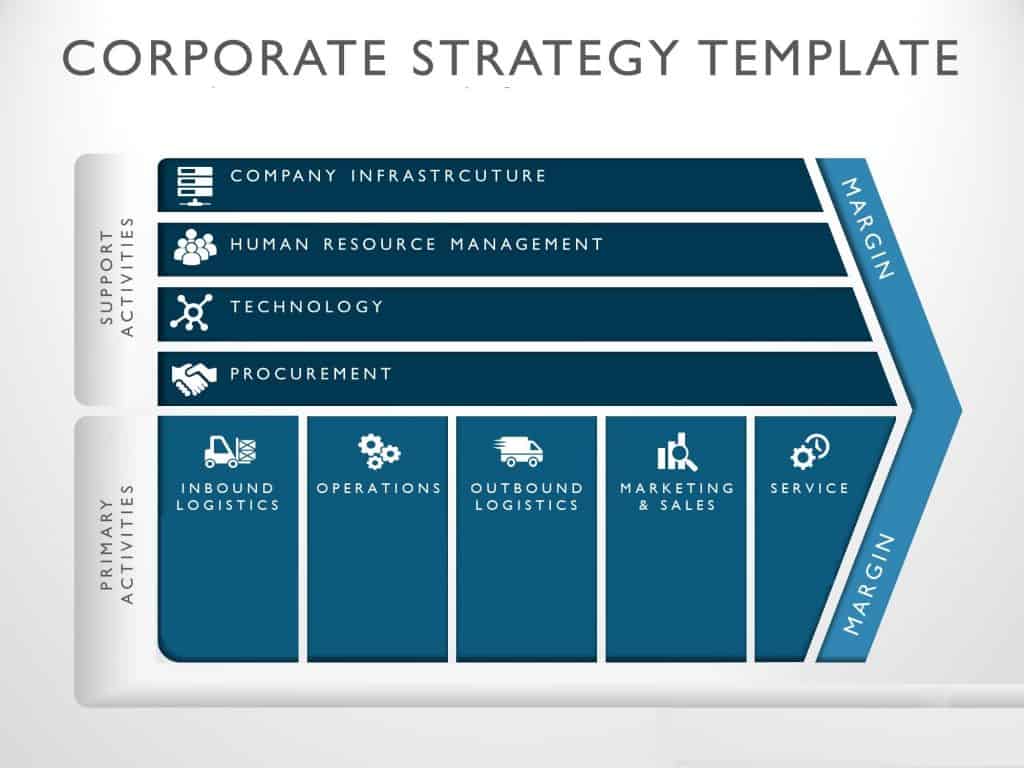
    Understanding Corporate Strategy

    To better understand what corporate strategy is, you should place your focus on a typical SWOT analysis typically conducted by businesses. The aim of the analysis always is to determine a company’s best positioning strategy viz strengths and weaknesses.

    The primary concern of business owners while formulating their corporate strategy is with how they would as a company, approach the marketplace – where to play and how to win.

    Have you ever heard about Judo, or seen a Judo fight session? I love Judo, and I have spent a considerable amount of time seeing Judokas do their thing.

    One major lesson I got from Judo is that size does not matter. Judo strategy is based on three elements—rapid movement, flexibility, and leverage—each of which translates into a competitive principle.

    With the rise of Internet-based competition, David and Goliath battles between companies are becoming more and more common. Fast, flexible entrants are taking on dominant incumbents, not only in high-tech sectors such as software and networking equipment but also in traditionally low-tech industries like retail – HBR

    There is no denying the fact that big companies, with their deeper pockets, and unlimited access to resources as well as A-list workforce can do big things that smaller companies can only dream of as a wild stretch of their imaginations.

    As a small company, though, the path to taking on these more prominent players can feel like going against a giant in battle. No matter how far you stretch, achieving the economies of scale that the bigger boys have as a result of their enormous purchasing power may seem beyond reach.

    That is what makes entrepreneurship so exciting. To be a successful entrepreneur, you must have guts, hubris, and grit. You must be nimble and find innovative ways to do more with less.

    To put you in the frame of mind for the suggestions here, let me remind you of one of the best-known cases of a startup taking on a giant in Nigeria.

    Cowbell Milk vs Peak Milk

    Peak Milk Profile Cowbell Profile
    Premium quality brand New Market Entrant
    High Price Cheap pricing
    Owners were cash-heavy Perception of lower quality as compared to peak milk due to significant lower pricing
    Wide market coverage No market presence
    Sold across all major stores and supermarkets in the country Zero sales or logistics network

    When cowbell wanted to break into the Nigerian market that was already dorminated by WAMCO and their premium brand Peak Milk, Promasidor, the owners of Cowbell brand, had to do some strategic manueverings.  

    Corporate Strategy – The Way Of Cowbell

    corporate strategy

    Cowbell started by carrying out very thorough market research to understand why Nigerians drank milk. First, the background. The year was 1993, an election year. Cowbell’s study showed that Nigerians who had experienced temporary wealth with the oil boom were now feeling the pinch as they could no longer afford to buy Peak Milk, which was very expensive. With the introduction of Cowbell, a large population of poor Nigerians could now afford to buy milk. Cowbell understood that for it to stand a chance to displace Peak, it had to be ingenious; it must disrupt the market.

    So, the first thing they did was to take a position, a seemingly smaller position; they positioned themselves as a brand for the underprivileged. That somehow massaged the ego of the owners of Peak milk, and it gave them the needed cloak to wield the sword unseen.

    Operational Strategy – The Way Of Cowbell

    Operational Strategy - The Way Of Cowbell

    The next challenge was in distribution. As a startup with lean pockets, they could not utilize major distributors and supermarkets who often bought on credit. So, how would they distribute a product like this across a broad market like Nigeria?

    Unlike Peak Milk, they did not have access to a deep pocket; they had no brand, nor was there a readymade logistics network that they were deploying. Cowbell came up with an alternative distribution network that boycotted supermarkets and major distributors – focusing on the direct kiosk to kiosk sales. This meant their sales were in cash, and they could push inventory at a fraction of the cost of their competitor. A masterpiece of a solution!

    Competitive strategy – Cowbell’s Final Stroke tactics and positioning to beat the competition

    Competitive strategy

    Another major innovation by Cowbell was to exploit a core weakness of Peak Milk – it came in tins that forced buyers to consume everything at one go because the poor power situation in the country made it tough to refrigerate open tins. Cowbell’s product was powdered milk that could be opened and preserved without refrigeration.

    The final piece was in the pricing. Pricing was the masterstroke of their whole market penetration strategy! Cowbell sold at 50kobo per sachet! Say what! Yes, you got that right. There was no way Peak Milk could water down their premium brand by competing with Cowbell at a 50 kobo price level.

    Little by little, Cowbell grew their brand and by the time Peak Milk finally woke up from her lethargic and arrogant slumber, the damage was already done and Cowbell had gained even middle-class acceptance and was a blue-chip brand status in Nigeria. 

    Strategy Lessons Learned

    Don’t be greedy – go for a piece of the pie

    When you are starting out as an unknown brand in a market that is filled with major established competitors, it is crucial that you niche down. Trying to take up more than you can chew can leave you with severe existentialist threats. 

    Be deliberate about your research and narrow down on a niche that can give you a credible entry point into the market. What kind of service can you provide that will be exceptional enough to stand you out from the shadows of the giants that you are confronting?

    For example, when Facebook was coming into the social media space, they did not confront MySpace head-on. Instead, they niched as a social media platform for students.

    As they gained acceptance with the student crowd, it became more comfortable for them to shift the boundaries of the segments that they served using the market recognition that they had already gathered.

    Wrap up: If you have to compete with an A-list brand in well-established markets, it is important that you find a way to disrupt the industry, differentiate your product or service and meet the needs of your market so well that they become brand evangelists for your products. 

    It is suicidal to go head-on with a competitor with a pocket that can swallow you without leaving a dent. Come in from the flanks and serve markets that your competitor is currently under-serving and make them your core market. 

    Does this guarantee that you will win? Hardly. 

    However, with detailed and creative thinking, grit, and innovation, you will be able to use the small size of your startup to your advantage. 

    Niche Down on Your Product and Market Segment

    The main reason why you are in business is to provide solutions to problems that your customers are facing. However, of what good is a solution if nobody knows that it exists? If you have found an angle, there is every reason to make sure everyone knows about that competitive angle you have and associates it with you.

    Selling is effectively about storytelling. It would be best if you found that angle that stands you out from others, which can be the reason you decided to get into your business, the value embedded in your products and services and what stands you out from the rest.

    Having decided on your angle, weave it into a compelling story that can be shared across your marketing co-laterals.

    Suggested reading – Learn Dropshipping in Nigeria, click here

  • How To Build Solid Business Systems And Structures

    How To Build Solid Business Systems And Structures

    Building a culture that promotes the building of business structures and systems in your business is one of the keys to running a successful business, especially for a startup with not so solid business experience.

    As an entrepreneur, the best way you might have a chance of claiming back your life while building a successful business is to set up effective business processes, systems, and structures.

    What Are Business Systems And Business Structures?

    A business system is a methodical procedure or process that is used as a delivery mechanism for providing specific goods or services to customers. While a business structure is the organization framework legally recognized in a particular jurisdiction for conducting commercial activities, such as sole-proprietorship, partnership, and corporation – BusinessDictionary

    Does Your Business Truly Need A Business System And Structure To Succeed?

    Have you ever been to a library? Now, imagine that you are in a library with over one hundred thousand hardcopy books and over five million e-books. How do you suppose the library would operate without a system to catalog and automate the rental and return processes associated with gaining access to books in the library?

    An effective business system breaks your tasks into smaller functional units; and then automates such processes for efficiency and effectiveness.

    Fortunately, there are lots of softwares out there that aid building business systems through process-identification and automation. Setting up an effective business system is not an easy feat, but if achieved, can help see your business grow as expected.

    4 Important Reasons Why Your Business Needs Business Systems and Structure?

    Here are some reasons for putting business systems and structures in place for your business:

    • Delivering Consistent Performance: 

    A well implemented business system and structure is designed to give you efficient, effectiveness, and scalable results, whether from the point of operational safety, quality, or timeliness.

    A sound business system will provide you with repeatable results that enable long term planning. The long and short of it is that a good business system gives you a “reliable process to prevent and fix your mess when they happen”.

    Suggested post: How well do you handle distractions

    • Exceeding Customer’s Expectations: 

    Having business systems in place affords you the opportunity to measure, analyse, and test variants of different possible needs of your customers. You will be able to see areas where improvements are needed in your product development, service delivery, and meet other needs that are unmet. With systems in place, the brand perception the community has for your business will grow, as predictability is usually associated with stability.

    Suggested Reading – When It Comes To Customer Service – Don’t Be Good, Be Outstanding.

    • Optimal Employee Engagement: 

    The objective of any system is to enable employees to complete their jobs effectively, eliminating the need for excessive handholding or babysitting. It also seeks to input their ideas and creativity into your standardized operations to avoid having lone rangers who only know how to get the work done, while their colleagues run around in circles. A business does not need ‘lone stars’; you need teammates¾those we are willing to work with others to produce shared victories. Another employee benefit here is that systems allow you to quickly integrate new hires and enable them to hit the ground running with a clear view of how they fit into your organization, what their job roles are, and what is expected of them.

    • Reduce Operational Costs and Increase Profits: 

    A well-optimized system reduces operational costs without having to use uncharted approaches that may reduce the quality of your outcomes. Again, when your people are not spending time moving around in circles, they are able to deliver results faster, which means more work gets to be done in less time.

    Here Is How Business Systems Help Businesses Scale.

    To highlight and put the importance of systems in proper perspective, let us imagine that you have a talent for cooking and everyone in the circle knows you as the best cook in town. Then you decide to set up a business made up of you alone. At some point, you would need to hire people and find a way to duplicate yourself.

    While these people may not have your knack for cooking, you must put down your processes for each dish in such clear and easy to follow manner that they are able to run the business for you, giving your dishes predictable and consistent tastes.

    It would be much easier to get such a system to run and scale beyond you to any levels you aspire, even if you were to run your restaurant in all major cities in Nigeria. You see, this can only happen if you embrace business systems and begin to see your business beyond yourself.

    A system breaks down your businesses into unit tasks with standardized and verifiable outcomes at the end of each job. Then it helps to connect all the interrelated processes that are required to work in sync towards achieving a business goal.

    If you genuinely want to thrive in the world of entrepreneurship, the systems and processes are indispensable building blocks for your business. All facets of your operations, on the storefront, factory, and office administration can be added as part of your system. Your system, once set up, can be analyzed and optimized for efficiency.

    The truth is, building business-systems is annoying, not as fun as regular startup topics like raising capital, product launch, or media appearances. When we think about systems and structures, we get the notion of a machine with multiple moving parts, very complex operations working in sync! However, when we think of our business, we do not yet see it as that complex. There is no difference.

    Sometimes, when working in sectors that you are very proficient at or passionate about, you could say things, like: I could do it in my sleep. Well, nice. I bet that you could! However, let us imagine that you received a mail to travel out of your country for about three months, what would be the fate of your business?

    Systems and processes are indispensable building blocks for your business if you truly want to thrive in the world of entrepreneurship. All facets of your operations, on the storefront, factory, or even office administration can be added as part of your system which you can manage using exact principles that optimize efficiency.

    This is particularly so because of our peculiarity to business, our family ties, culture, etc that makes it hard to separate business from the owners.

    I stumbled into entrepreneurship from my resolve to be more economically productive than my parents. I wanted a life similar to most 6 figure earning Americans I see on television, travelling around the world on first-class flights with the waiters at my beck and call.

    I envisioned that to be economically stable, I needed to do something different from my parents. I needed to start my own business rather than work a nine to five on someone else’s business. I knew that I must set up multiple steady streams of high income to live the life I desired.

    Similarly, for most people, starting a business is often motivated by their craving for an above-average lifestyle. Some of these people only seek blissful freedom believed to come from being bosses.

    In reality, however, only a handful of entrepreneurs get to live such lifestyles. The most dedicated entrepreneurs are often enslaved and are at the mercy of the businesses they set up, expecting to free up time.

    Such systems once set up, take away the number one impediments to entrepreneurial success – YOU. Functional structures and processes around your business help the business function without you having to scream your lungs out, and living reclusively.

    Unfortunately, most business owners, especially in Nigeria, hardly talk about putting the right systems and structures in place. Instead, they proudly recount with nostalgia how they hardly sleep and how everything would collapse if they ever took a day off work.

    The truth is, building business systems is boring, not as sexy as normal startup topics like funding raising, product launch, or media appearances. When we think about systems, we get the notion of a machine with multiple moving parts, very complex operations working in sync! But when we think of our business, we do not yet see it to be that complex. There is no difference.

    But let us imagine that something happens: for example, you have to take a sudden important trip out of the country, or you got hit by a bus (remember the bus test?) and are confined for treatment in an ICU.

    The big question is: What would be the fate of your business?

    For the entrepreneur with well-developed systems, it is just a matter of someone stepping in immediately or giving a run-through of how the system works, and a reasonably qualified person replaces us at our task without the business losing a beat.

    With too much to do and little time to get things done, you may just stretch yourself until you burst at the seams and you heave under the burden of burnout, or until your business suffers from the effect of too many things going wrong.

    As I said before, the solution to a problem like this is the right business system.

    Learn to delegate.

    The biggest challenge most startup founders have is the willingness to let go and leave the operational activities of their business in the hands of others. To grow your business, you must train your staff and be confident in them enough to transfer critical processes to them for implementation them to implement. u003cbr/u003eu003cbr/u003eMicro-managing every detail puts you in the way of your business growth. However, with systems and the right structures in place, your employees become accountable, and you can free up time enough to focus on growing the business.

    Setup Processes and Automate Where Necessary

    Try to seek out repeated tasks that follow the same path every time they are implemented. What if there are processes that you can adopt, simple tech tools that can allow them to run without you always having to be present?

    There are many companies in Nigeria that offer process automation as services. Take time out to research the ones that fit into your business and be willing to give them a try.

    Develop Process Manuals or SOPs:

    A standard business system consists of the following items: Training materials, Standard Operations Procedures, Worksheets, Sample completed orders, Documented troubleshooting steps, workflow charts, and any other resource that may be needed to render efficient customer service.

    For example, process checklists are essential to ensure that output remains consistent and predictable. Airlines, for instance, use checklists to complete takeoffs and landing, regardless of the experience of the pilot.

    Doctors use checklists too in carrying out routine surgeries, regardless of their experience. It is a known fact that a simple checklist can boost efficiency and maintain safety by more than 40%.

    What can a 40% boost in efficiency do for your business? Think about it.

    Hire Trustworthy and Competent Employees:

    Of course, you cannot possibly automate all processes in your business. There would always be some complicated situations that require someone to make bold decisions on how the process should flow.

    Because of this, it is crucial to accommodate for some process flexibility in your system by hiring the right people so that you can trust them to get the work done right. Line of sight decision making is the name I have for that.

    Typically, you are aware of the lapses of your system, but you trust your team to make the right decision on a case-by-case basis. For example, a client calls and insists that a job that was supposed to take a week to deliver, should be submitted in two days.

    Your people should be able to know how to work around your system to arrive at a decision that aligns with your business goals. Systems are meant to show the way, not rob your team of initiative or creativity.

    Create a bi-directional training flow.

    If you are to trust the initiative of your employee to do things right without you shadow hovering behind their backs, it is important that effective training is given to them not just on how things are done but also on why they are done that way.

    This will empower your team to question your processes and weed out inefficiencies and redundancies from your workflow. If you want a process that gives result, it should to open to critique from the people that use that process in their day-to-day work.

    And when process inefficiencies are identified, find a way to appreciate the staff who suggested the change. He just saved you money, so be generous. This will encourage others to have their creative juices flowing as they run process checks at work, and before long, you will have lean processes that run like clockwork.

    Measure the efficiency of your systems: 

    If you want your system to be successful, you need to build a feedback mechanism into it. This will make it easier to see when things are going as planned, and where there is a need for optimization, you make room for that.

    You could also set a process for reviewing feedbacks, and the duration between each feedback review. As your business continues to scale, these structured feedback loops will improve the focus of your system and enable it to deliver consistent results.

    Your system does not need to be perfect, yet:

    Some business owners feel that before they document a system, that they have to wait until they have a perfect one. The truth is, if you do not have a documented process, you cannot improve it in the real sense of the word. So, leave a margin for error and create your system by the way.

    It is not so strange that in business, as in life, things don’t always go as intended. When you have errors in your system, the important thing is to build the learnings into the system to ensure that the same error doesn’t occur twice.

    When your team is able to optimize the system in this manner while things are in production, it improves their confidence and helps them further take ownership of the system.

    The biggest businesses in the world are run with systems. If you want your business to outlast you, then build systems into your processes, measure, and track what works. Also learn to eliminate inefficiencies, hire the right people, and leave your system as a blueprint in their hands for implementation while you ensure control is installed.

    If your business will journey towards sustainable success, your system is the map.

    4 Important Reasons Your Business Needs Systems

    • Exceeding Customer’s Expectations: 

    Having business systems in place affords you the opportunity to measure, analyze, and test variants of different possible needs of your customers. You will be able to see areas where improvements are needed in your product development, service delivery, and meet other needs that are unmet. With systems in place, the brand perception the community has for your business will grow, as predictability is usually associated with stability.

    • Delivering Consistent Performance: 

    A business system well implemented is designed to give you efficient, effectiveness, and scalable results, whether from the point of operational safety, quality, or timeliness. A good business system will provide you with repeatable results that enable long term planning. The long and short of it is that a good business system gives you a “reliable process to fix your mess”.

    • Optimal Employee Engagement: 

    The objective of any system is to enable employees to complete their jobs effectively, eliminating the need for excessive handholding or babysitting. It also seeks to input their ideas and creativity into your standardized operations to avoid having lone rangers who only know how to get the work done, while their colleagues run around in circles.

    A business does not need ‘lone stars’; you need teammates¾those we are willing to work with others to produce shared victories. Another employee benefit here is that systems allow you to quickly integrate new hires and enable them to hit the ground running with a clear view of how they fit into your organization, what their job roles are, and what is expected of them.

    • Reduce Operational Costs and Increase Profits: 

    A well-optimized system reduces operational costs without having to use uncharted approaches that may reduce the quality of your outcomes. Again, when your people are not spending time moving around in circles, they are able to deliver results faster, which means more work gets to be done in less time.

    If your business will journey towards sustainable success, your system is the map.

    Impediments to Building Systems And Structures In Your Business

    Often, the success or failure of an enterprise depends on the entrepreneur’s mindset than any other external factor.

    Here are the 2 ways an entrepreneur’s mindset could be an impediment to the success of their ventures, and how to avoid them:

    1. Perfectionism 

    According to Wikipedia, perfectionism drives people to attempt to achieve unattainable ideals or unrealistic goals, often leading to depression and low self-esteem. 

    For entrepreneurs, practice doesn’t always make perfect; action does. You must learn how to take the plunge, you simply cannot wait until you have 100 percent of the resources you need before you dive into the ocean.

    When I wanted to start ExpertsNg, I remember thinking that I was coming late to the party, there are thousands of bloggers in Nigeria at the moment with new ones coming into my niche daily.

    I told myself that I needed to get things done right, I needed to write at least 50 blog posts, rank on Google for a few keywords and have some guest bloggers before I could launch my site.

    In reality, by the time my plan was done being “perfect”, there would have been about 50 to 100 more sites that would have launched and I would have to contend with eventually.

    The most important thing for an entrepreneur is to achieve set goals, unfortunately, perfectionism stands in the way, the earlier an entrepreneur learns to start with whatever is handy and at whatever level, the faster their chances at success.

    2. Anxiety

    Your decision to be an entrepreneur passes through fire as gold is validated by fire from the time you consider being an entrepreneur.

    Whenever I hear that word entrepreneurship, what readily comes to my mind is a picture of a mouse decked in helmet trying to get a piece of cheese from a mousetrap. The mouse is not scared of being mauled by the trap, instead focuses only on the goal – A mouthful of delicious cheese.

    Besides, entrepreneurs must overcome the fear of failure and focus on the goal. Not giving in to fear of failure or rejection was the secret to my success as an entrepreneur.

    Let me have your opinion on this article in the comment section below, thank you.

    SUGGESTED

    Understanding Product Trends

    7 Ways To Prevent Business Failure

    Understanding Product Trends

    Solved: Top 6 Challenges of Small Business Owners Today

    How To Solve Your Customers Pain Points

    Dropshipping In Nigeria: Complete 2019 How-To Guide

  • The Need To Document Corporate Entrepreneurial Experiences For Future Studies.

    The Need To Document Corporate Entrepreneurial Experiences For Future Studies.

    “If you look at the corporate history of Nigeria, there are many companies that did not transcend the first generation and no one has written about the reason why they failed so we could learn from it…” – In this episode of hashtag#BusinessInsightsWithAO, I speak on the need to document corporate entrepreneurial experiences for future studies. hashtag#ALA – Culled from the wall of my mentor – Austin Okere, Founder, CWG Plc and Entrepreneur in Residence, Ausso Leadership Academy

    While I studied at Harvard business school, every single time we worked on a case study on an American company, I would constantly ask myself how wonderful it would be to actually have a business case written on Nigerian companies.

    How wonderful it would be to know how some big Nigerian companies were founded, what made them thrive, and what made them collapse eventually. I notice with a passion that I could not point to any company that I know that has survived a generation after the demise of its founder.

    I recall the days of Kingsway stores, Leventis stores, SCOA motors, etc. It really hurts to know that apart from Mr. Biggs that has somehow stood the test of time, such businesses that gave us the likes of Cortina from Bata are no more.

    Standing inside any of the Shoprite stores springing up these days, though beautiful, I doubt if I can compare the feelings I get from going into Shoprite with the feeling Kingsway Stores left in me each time my mum took myself and my siblings shopping back in the days.

    Why did they just fizzle away? Is there anything we may learn from them?

    Is there anything the new kids on the tech block learn from rideshare companies that failed recently irrespective of their huge fundings?

    In his book “Why Companies Fail“, Harlan D. Platt opined that A business fails every hour of every day in the United States. He gives reasons as to why companies might fail, and what to look out for as indicators to a failing company.

    As to why companies do not transcend their first-generation, Rei Obaigbo has this to say – ” Data is key in documenting history, most of these corporate corpses were killed and buried by corruption, somewhere even born from corruption. Data exposes corruption, hence the corrupt will constantly fight against the harnessing of data. The want for data will keep coming up, and unless the root problem is resolved, it will keep dying.”

    Sad as it is, I am forced to take the stance of Rei, though I’ll add that most of them must at a point or the other changed their culture and became less customer-centric or they simply did not innovate accurately as and when they needed to.

    So, the question for me is – How do we get Nigeria owned companies to give accurate data of their affairs? Would a private company be willing to through data out there, and would the big companies in the guise of shying away from taxes be willing to give a true account of their affairs?

    And by accurate data of their affairs, I inquire on more than the numbers on the financial statements. I need them to disclose information investors need to put those numbers into context; not just the “how much?” but the “what?” and the “why?” !

    Please if you have a compelling answer to this question do respond by clicking here