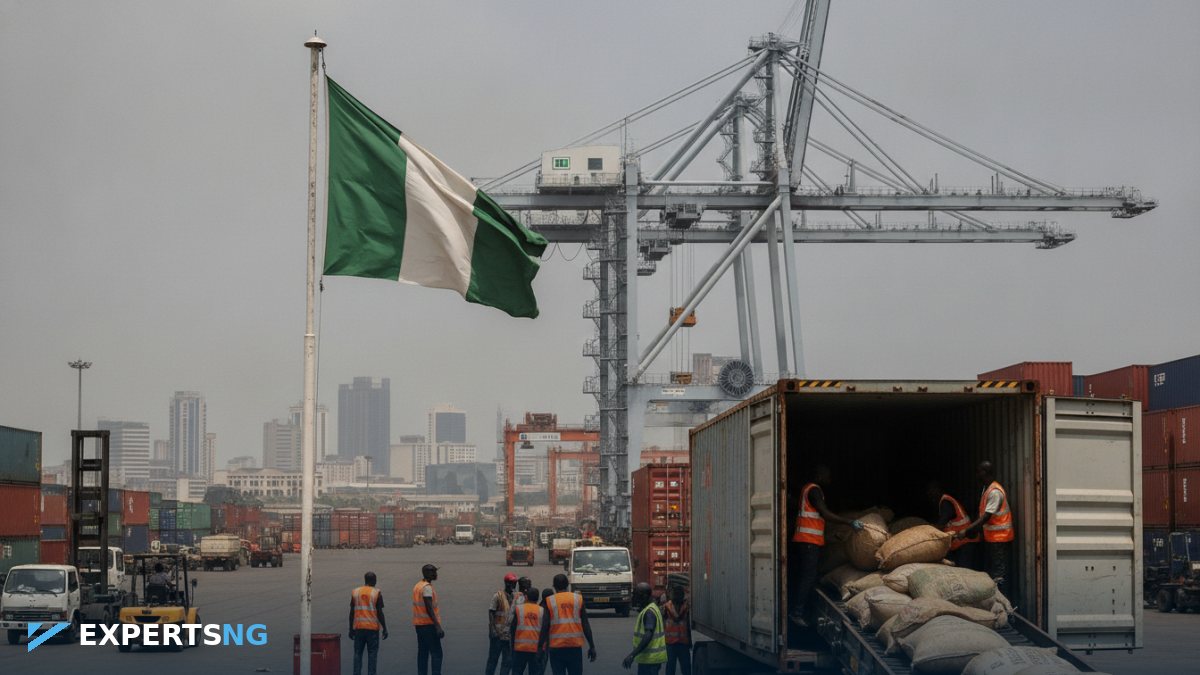


Nigeria’s non-oil export targets will not be met unless the country fixes fragmented trade processes, according to the Chief Executive Officer of the Nigerian Export Promotion Council (NEPC), Nonye Ayeni. She says overlapping agencies, excessive paperwork and avoidable delays are the main obstacles, and she wants them removed. She spoke in Abuja on Tuesday, as reported by Daily Post, while making the case for the Federal Government’s National Single Window initiative.
She said the platform is meant to simplify trade procedures and make Nigerian exports more competitive. Her remarks came with encouraging figures: non-oil export earnings reached a record $6.1 billion in 2025, up 11.5 per cent on the previous year.
For entrepreneurs and SME owners, this story is more than a policy headline. It speaks directly to how long it takes to move goods from your warehouse to a foreign buyer, and how much that journey costs. This guide explains what was said, what the National Single Window is meant to do, and how you can prepare your business now.
Key facts at a glance
| Who spoke | Nonye Ayeni, CEO of the Nigerian Export Promotion Council (NEPC) |
| Where and when | Abuja, on Tuesday |
| Main message | Nigeria cannot meet its non-oil export ambitions with fragmented processes, multiple agencies, excessive documentation and delays |
| Initiative being promoted | The Federal Government’s National Single Window |
| Non-oil export earnings, 2025 | A record $6.1 billion, up 11.5 per cent on the previous year |
| Non-oil export volume | 8.02 million metric tonnes, an increase of about 10 per cent |
| Products and markets | 281 products shipped to 120 countries, 36 of them in Africa |
| NEPC system status | Fully automated, but still needs to be linked through an Application Programming Interface (API) |
The numbers behind the push for non-oil export targets
The figures Ayeni cited show a sector that is growing. They also explain why she believes the next gains will come from process reform rather than output alone.
- Non-oil export earnings reached a record $6.1 billion in 2025, up 11.5 per cent on the previous year.
- Non-oil export volume rose to 8.02 million metric tonnes, an increase of about 10 per cent.
- Nigeria shipped 281 products to 120 countries, 36 of them in Africa.
Ayeni said the results show growing exporter capacity and a broader export basket. She added that higher output and wider market access are not enough on their own.
In her view, Nigeria also needs simpler procedures, better coordination between institutions and technology to cut the cost and complexity of doing business.
Put simply, the country is producing more and selling to more places. The bottleneck is increasingly the system that sits between the producer and the buyer.
5 critical reforms behind the call
Ayeni’s remarks point to five connected reforms. Each one addresses a specific pain point that exporters describe, and together they form the backbone of the argument for the National Single Window.
- Simpler procedures: fewer steps between packing a consignment and clearing it for shipment.
- Better coordination between agencies: institutions working from shared information instead of separate files.
- Technology that cuts cost and complexity: digital submission in place of paper-based, office-to-office routines.
- Clear responsibilities and data sharing: agencies moving beyond institutional silos and defining who does what.
- Active feedback from exporters: businesses learning the new processes, attending sensitisation programmes and reporting problems, with government staying responsive.
None of these is glamorous, but all of them affect the daily reality of moving goods. They are also practical enough that individual firms can prepare for them.
Why exporters are frustrated
According to Ayeni, exporters today often visit several government offices, submit the same documents repeatedly and collect multiple approvals before goods can be cleared for shipment. She said this leads to costly delays, unhappy foreign buyers and, in some cases, cancelled export contracts.
Delays also hurt perishable farm produce. She noted that changes in colour and physical condition can lead to rejection in international markets.
Anyone who has tried to export, even a small consignment, will recognise the pattern. A foreign buyer places an order with a fixed delivery window. The exporter then spends days or weeks chasing signatures, while the goods sit waiting. Every extra day raises storage costs and risks the buyer’s patience.
The cost of repeated paperwork
Submitting the same documents to several offices is not just irritating. It multiplies the chances of errors, mismatched details and rejected forms. Each correction restarts part of the process.
For a small business with a handful of staff, that can mean a founder spending more time in queues than on sales or production.
Why perishables suffer most
Fresh produce does not wait. Ayeni pointed out that changes in colour and physical condition can lead to rejection abroad. For farmers and agro-processors, a delay is therefore not only a cost but a direct threat to the value of the shipment.
This is why reducing clearance time matters so much for the agricultural side of Nigeria’s non-oil export targets.
What the National Single Window is meant to change
The National Single Window is meant to replace this repeated, office-to-office routine with digital document submission, closer coordination among agencies and a faster approval process. Instead of spending weeks moving between offices, exporters would have documents handled and approvals coordinated on one digital platform.
The idea behind a “single window” is straightforward. You submit your information once, in one place, and the relevant agencies work from that shared record. You are no longer the courier carrying paper between institutions.
If it works as described, three things should improve:
- Speed: fewer separate approvals to chase means a shorter path to clearance.
- Consistency: one submission reduces the risk of conflicting details across agencies.
- Predictability: exporters can plan delivery dates with more confidence.
These are the expected benefits of the design, not guaranteed outcomes. Results will depend on how well the platform is built, connected and used.
What the NEPC is doing
Ayeni said the NEPC is working with the National Single Window Secretariat and other agencies to bring its export services onto the platform. She said the council’s own system is already fully automated, but it still needs to be linked through an Application Programming Interface (API) for operations to run smoothly.
An API is a technical connection that lets two computer systems exchange information automatically. In this case, it means the NEPC’s automated system and the National Single Window can share data without a person re-typing or re-uploading it.
Without that link, an automated system can still leave exporters repeating steps.
She urged agencies to move beyond institutional silos, define clear responsibilities and improve data sharing. She also asked exporters to learn the new processes, attend sensitisation programmes and report problems they meet. The government, she said, must stay responsive to that feedback.
Responsibilities on both sides
Ayeni’s message was not one-directional. Agencies are expected to coordinate and share data. Exporters are expected to engage, learn and give feedback.
A single window only works if both sides take part, because a platform that agencies ignore or exporters avoid will not deliver the promised time savings.
What this means for Nigerian businesses
For small exporters, paperwork is a real cost. Every extra office visit takes time and money and keeps staff away from production. If the single window works as described, the time between packing a consignment and clearing it for shipment should shrink.
That matters most for anyone selling fresh or short-life goods, where a few days can decide whether a buyer accepts or rejects a shipment.
It could also lower the risk of losing contracts. Foreign buyers value reliability, and a more predictable process makes it easier for a small firm to promise delivery dates and keep them. Greater transparency may reduce the room for informal charges, though Ayeni did not make that specific claim.
There are risks. A new digital system can be hard to use at first, and Ayeni herself said integration work is still under way. Exporters should not assume the old routine disappears overnight.
Who stands to gain most
Businesses that export regularly, or that sell perishable goods, are likely to feel the benefit first. A firm shipping every month repeats the same paperwork every month, so any saving compounds.
Start-ups preparing their first shipment may also benefit, since a clearer, single process is easier to learn than a maze of separate offices.
Who should be cautious
Firms that rely on a single clearing agent or long-standing habits should not assume nothing will change, nor that everything will change at once. Transitions between systems can create temporary confusion.
Keep your existing records in order and confirm with the relevant agency which steps apply to your product before each shipment.
Practical steps for SMEs now
You do not need to wait for the platform to be fully live to get ready. The following steps cost little and put you ahead.
- Keep your company, product and compliance documents organised in digital form, so they can be uploaded once and reused.
- Watch for NEPC and National Single Window sensitisation sessions, and send someone from your team.
- Record where delays happen and what they cost you, then share that feedback with the relevant agency or your trade association.
- Tell overseas buyers about your preparations, since reliability is a selling point.
A simple export-readiness checklist
Use this list as a starting point before your next shipment. It is general guidance, so adapt it to your product and market.
- Confirm which approvals your specific product needs before it can be cleared for shipment.
- Scan and name your documents clearly, with consistent business details on every page.
- Check that names, addresses and product descriptions match across all forms, since mismatches cause delays.
- Agree realistic delivery dates with your buyer, allowing time for approvals.
- For perishables, plan packaging and transport so goods spend as little time waiting as possible.
- Keep a log of every office visit, form and fee, so you can show where the process slows you down.
Questions to ask your agent or agency
If you use a clearing agent or deal with agencies directly, these questions help you stay informed. Ask which of your current steps are expected to move onto the National Single Window.
Ask whether your documents can be submitted digitally and reused. Ask what happens if a system is down, and who to contact when it is. Clear answers early save time later.
Building habits that help you reach non-oil export targets
Government reform is only half the picture. Individual businesses also decide how ready they are to take advantage of it. Exporters who treat documentation as a routine, repeatable process tend to move faster than those who assemble papers at the last minute.
If you are still deciding how to approach foreign buyers, our guide on how to take your business overseas to a different market covers the wider planning questions. It pairs well with the practical steps above.
It also helps to know your legal obligations. Our overview of business regulations you need to know about as a business owner is a useful companion when you are mapping out which approvals and records your firm must keep.
Good market knowledge matters too. Understanding your buyers before you ship reduces surprises, and our piece on the importance of market research to business growth explains why.
Treat feedback as part of the process
Ayeni specifically asked exporters to report problems they meet. That request is worth taking seriously. A platform improves when users flag what is not working.
If a form is confusing, a step is duplicated or a delay keeps recurring, writing it down and passing it on through your trade association or the relevant agency is one of the few ways small firms can influence how the system develops.
The wider picture for the economy
The export sector’s growth also feeds into government finances, a theme explored in our piece on how FIRS linked improved non-oil revenues to tax reforms. Stronger non-oil exports and stronger non-oil revenues are connected parts of the same story: a more diversified economy.
For exporters, though, the test will be simpler: whether clearing a consignment takes fewer offices, fewer forms and less waiting. If it does, Nigeria’s non-oil export targets become far easier to reach, because small and medium firms can scale up without being slowed by process.
If it does not, the record figures of 2025 may be harder to repeat.
Frequently asked questions
What did the NEPC say about non-oil export targets?
NEPC chief executive Nonye Ayeni said Nigeria cannot achieve its non-oil export ambitions with fragmented trade processes, multiple agencies, excessive documentation and unnecessary delays. She made the point in Abuja on Tuesday while promoting the National Single Window initiative.
What is the National Single Window?
It is a Federal Government initiative meant to simplify trade procedures and make Nigerian exports more competitive. It is designed to replace repeated visits to different offices with digital document submission, closer coordination among agencies and a faster approval process.
How much did Nigeria earn from non-oil exports in 2025?
Non-oil export earnings reached a record $6.1 billion in 2025, up 11.5 per cent on the previous year. Export volume rose to 8.02 million metric tonnes, an increase of about 10 per cent.
How many products and countries are involved?
Nigeria shipped 281 products to 120 countries, 36 of them in Africa. Ayeni said this shows growing exporter capacity and a broader export basket.
Why are exporters frustrated with the current system?
According to Ayeni, exporters often visit several government offices, submit the same documents repeatedly and collect multiple approvals before goods can be cleared for shipment. She said this causes costly delays, unhappy foreign buyers and, in some cases, cancelled export contracts.
Why do delays hurt farm produce so much?
Ayeni noted that changes in colour and physical condition can lead to rejection in international markets. Perishable goods lose value quickly, so a slow clearance process can turn a good shipment into a rejected one.
Is the NEPC already on the National Single Window?
Not fully. Ayeni said the NEPC is working with the National Single Window Secretariat and other agencies to bring its export services onto the platform. Its own system is already fully automated, but it still needs to be linked through an Application Programming Interface (API).
What is an API and why does it matter?
An Application Programming Interface is a connection that lets two computer systems share information automatically. It matters here because the NEPC’s automated system must be linked to the National Single Window for operations to run smoothly.
What should exporters do now?
Ayeni asked exporters to learn the new processes, attend sensitisation programmes and report problems they meet. In practice, that means organising documents digitally, sending a team member to briefings and recording delays and their costs so you can give useful feedback.
Will the old paperwork disappear immediately?
Do not assume so. Ayeni herself said integration work is still under way, and new digital systems can be hard to use at first. Keep your records in order and confirm with the relevant agency which steps apply to your shipment.
Source: dailypost.ng