Author: B. Lois

  • Winners and Losers of 2020: How to Financially  Scale 2021

    Winners and Losers of 2020: How to Financially Scale 2021

    People were making money in 2020 and even scaled financially and I didn’t know!

    Did you?

    I thought everyone was staying indoors?

    So how come these businesses experienced a boom? I feel cheated.

    More importantly, what are these businesses and how can I get on that train?

    These bills aren’t paying themselves, hello!

    Reviewing 2020

    In 2020 we had a lot of expectations and plans on how we might grow stronger financially.

    Then least to our expectations, we were given a big surprise package – The Lockdown started.

    Yeah, it was the global pandemic and we stayed in doors to minimize the spread.

    Yeah, I’m not going back there.

    But while indoor, there were A LOT of expenses and yet, no money was coming back into our wallet.

    Did I hear there’s a mutant virus? Give me a break.

    Many were more depressed than ever before;

    I know I was.

    Many became broke; while some utilized the moment and saw lots of opportunities to make money.

    What really matters to anyone that wants to scale through financially is your ability to see opportunities and utilize it.

    Still going back to the situation, roughly 45% of individuals on a global scale were affected badly, reasons being.

    1. Some governments couldn’t cater well enough for its citizens. They did not have the database or capacity to disburse funds to each individual’s accounts directly. So passing downline the chain from one office to another, the allocated funds to suppose its citizens kept decreasing.
    2. Most citizens feed from hand to mouth. Job wages and means of livelihood was relatively low to an adequate standard of living. People went from a hundred thousand salaries to twenty thousand stipends. Hard.

    Basically if this next wave of Lock-down hits again, YOU ARE ON YOUR OWN.

    So how can we get prepared for the future and not get affected in any way?

    Preparing for 2021

    We all have been forced to go virtual with School, and work, having zoom meetings and other activities.

    While all of this was happening some people made a lot of money.

    Because they knew where the demand was coming in from and they saw the opportunity many others didn’t see.

    Here is a brief on opportunities many people missed but can help you scale financially in 2021.

    You can start off with virtually any of these options and maintain relevance in any instance of another lock-down.

    So in no particular order, the Winners in 2020 are:

    Recharge and Get Paid

    As the name implies you get paid for recharging your line and other utilities bills.

    Recharge and get paid is widely known all throughout Most African countries especially in Nigeria.

    Many people were concerned about not having daily money inflow and yet subscribed for internet.

    Analytically speaking the demand for data was at its peak from the month of April up until September. ISPs were forced to increase its bandwidth by almost 86%, in some countries to 120%.

    The demand for data was alarming. Some people scaled financially from sitting in their homes like you were during the lockdown with Recharge and get paid platform.

    Oh mama. I could have done that!

    Recharge and get paid created a means for anyone in Nigeria to buy airtime VTU, pay cable subscription, buy internet data, and pay electricity bill and other daily services that you pay for every day.

    You earn by selling Data and other bundles to individuals and to yourself. It was a really great place to start and still a good place to start with situations like what happened globally.

    Again with its affiliation marketing, you can earn more as it also has packages that you upgrade to increase your earning.

    Building up a strong network of friends and family would be a breaking point for you and a strong advantage to anyone venturing into this business. It also requires you starting with a capital.

    Want to learn how, SEE: Recharge and Get Paid: How it Works

    Timebucks

    Another opportunity that can still be utilized is Marketing surveys. Which brings us to this platform that pays you for making a survey.

    What is Timebucks?

    Timebucks is an online market survey platform, you get paid for performing tasks – Watching videos, uploading contents on your social media page, taking surveys, voting, playing games and more.

    Goodness. This was perfect for a lock-down. It matched my pajamas. Tears.

    I mean I do these things on a regular daily basis.

    And many individuals made money from this platform during the lockdown since they all needed to while away time and be happy.

    Here is the amazing part, TikTok users with high numbers of followers get paid as well.

    I thought we TikTok-ed purely for the cruise. Shocker!

    Now, Timebucks is an Australian based company owned by Australian Clearing Pty Ltd.

    You also earn a commission when you send out your links to friends that are shopping on Aliexpress or Alibaba.

    Timebucks is no exception when it comes to affiliate marketing, you earn from each friend you invite to use Timebucks.

    The good side of timebucks is they pay in cash worldwide as it makes use of popular payment gateway merchants like skrill, Payeer, Neteller and also in bitcoin.

    It doesn’t resist your earning to gift cards like other survey platforms.

    Timebucks pays weekly with a minimum of $10.

    With the survey earning, if you work hard you’d be sure of earning up to $4-$8 per day. That’s one cool way to scale up financially.

    Join TimeBucks HERE

    Investing in Indices, Commodities and Bonds

    Now this might sound absorbed, and you might be asking yourself right now, do you mean Forex? Yes absolutely. Many people have heard or experienced some downturns while trading. But my question to you is how do you trade?

    Do you trade to see the opportunities with the market news and sentiments? Or you choke up yourself with so many fundamental analysis(Indicators and patterns).

    From my experience so far while trading with professional traders, I came to realize trading works like a psychological game between the Big Banks and every other person outside the Big Banks.

    Come to think of it, if everyone wins, who would lose? There had to be losers whose loss goes to the winners.

    The Big Banks go against everyone, so suppose everyone knows there would be a price increase in cable pair(USD), they would intentionally wait for that price increase and sell instead, breaking almost 70% of traders stop loss. (Remember the ones with the higher liquidity controls the market).

    So How Does This Affect the Pandemic and Help you Scale Financially?

    Did you notice no one bought fuel to run their vehicle during the pandemic? Everyone was indoors! Certainly.

    Companies and factories that run on diesel were all on hold. The demand and the supply for Oil ridiculously crashed as Oil price fell to $0.10 (10cent) per barrel.

    This was the greatest opportunity a lot of people missed.

    But I wouldn’t blame them because the situation of the pandemic wasn’t looking promising like it would be ending soon.

    Imagine buying $100 worth of oil at 10 cents per barrel, that gives you Ten thousand (10,000) barrels of oil. Coming forward to December, oil now costs $50 per barrel, that gives you $500,000 in the space of 8 months.

    You should actually be looking into the forex market for visible opportunities, take in and leave, not spending all your day calculating patterns and indicators, because the blunt truth is, you have 60% chances of losing all your money.

    Also some people invested in other stocks like Zoom, Investors got almost 250% – 300% ROI from Zoom platform just from the pandemic. OPPORTUNITIES ARE ALWAYS MOVING, BUT YOU HAVE TO SEE IT.

    Enough of counting back on the woes, let’s look at the brighter future.

    Acquiring a Tech Skill

    With the way things are turning currently, with people now fully into the internet space than ever before, there is a high demand for various skills to become more relevant and gain more dexterity in what you aspire.

    The good thing about tech is you can be self-trained. Even a novice in tech can easily find opportunities to scale financially while growing their skill.

    I would really love you to take your heart off from what your childhood career aspirations were, frankly. In the near future from now, there would be fewer needs for Doctors, engineers (Petroleum, mechanical and chemical especially), teachers, a sales rep and so many more.

    As the world is evolving and technology is really growing at an exponentially high speed, the labour force gradually decreases, as Artificial intelligence also takes more Jobs in the Labor market.

    We can see this in some states in America and China where AI takes record of the sales of a store; Assembles a car initially assembled by 15 men; manufacturing textiles and materials.

     Thinking Tech is one of the ways one can upscale 2021 and beyond. Now when you hear tech there are so many things to think about.

    1. Cryptocurrency and Block-chain Development

    Blockchain is a decentralized digital ledger that saves transactions on thousands of computers around the globe. The demand for blockchain developers is skyrocketing at a very high rate and it’s also an emerging technology meaning that everyone who ventures into this field at its early stage is more likely to upscale in the near future.

    Last year was a good time to get into cryptocurrency. 2021 is a better time to scale up financially with block-chain.

    The good thing about Tech skills is that in most cases you don’t need a degree to get a Job, with the right practice and portfolio you’ve built gives you more likelihood for being known to get a Job. Blockchain as we speak currently is really in high demand as we have more and more people worldwide using cryptocurrency as a means of payment. Remember the opportunities are where the demand is.

    2. Data Science

    I’m sure you’ve heard people talk about Data Science.

    Well what is it?

    Deals with mining, analysing and sorting out big and complex data. Data science is related to data mining, machine learning and big data. We have over 3.4 billion internet users worldwide, who do various activities according to their interest. It’s for the job of Data scientists to look for ways to analyze this data, and build a predictive model for what exact use they need the data for.

    The demand for data scientists is also increasing at a very high rate, the only thing that holds back is most data science jobs require you to have a degree.

    If you can spare the time and get the right training, you’ll could scale financially.

    3. App Development

    Developing skills around building an app would come in handy for any developer as the Job is usually by contract the pay is also very much okay. There are various programming languages for building an app, so before delving into this ensure you make proper research on languages that would suit your learning process. So far the top languages for building an app are Javascript, Kotlin and python. Using Python programming language is a huge advantage as python becomes the most popular and easy language to use in building almost anything programmable.

    You get to meet clients and other programmers that might be interested in your work in their online community or Hub.

    4. Graphics Designing

    Graphics designing isn’t really high in demand but a great skill to pave way for you in any settings and help you scale financially.

    5. Motion Graphics and Animation

    Through the pandemic, a lot of companies need to make awareness with their brand on taking safety measures. The only way they could do that since there was no social gathering was to pay for motion graphics and animators to make video clips on that. It opened a new breaking point for people in this field as more and more people see the need of churning out concepts both minimal and precisive. Looking into animation and motion graphics is a good start as animation keeps developing into new concepts and ideas.

    6. Videography (Media)

    One very interesting thing that amazes me anytime I sit back and think about it is the entertainment and media industry.

    Except the world goes on extinction this skills would never fade away as long as there is a television and mobile screen.

    Companies and individuals get to make new concepts and commercials for their brands and products, acquiring this skill in this modern world gives you all the edge that you would be needing to scale financially.

    My advice is for you to not bother about any heavy gears, make do with what you already have, because if you keep waiting to get those expensive gears you just might not deliver an efficient and well todo Job.

    Next thing you should be looking out for in coming years is

    Energy

    Yeah energy!. Clean energy!.

    Clean energy can be said to be derived from renewable,  zero-emissions sources, as well as energy saved through energy efficiency measures.

    Renewable energies are obtained from natural processes, common renewable energies are solar, wind, hydropower and biomass.

    MEET the First Nigerian Solar Franchisor

    We have big companies and organizations like Tesla coming up with astounding ways to make good use of renewable energies. Australia is currently budgeting $1.2billion dollars to support research and investment in clean energy, energy storage and other sectors relating to energies.

     Researching and investing in energy in the coming years is ideal for startups. Building a sustainable model and products for improving the energy sector. Thinking of energy in an entrepreneur way it would be best to look into importing solar panels from China in little scales. There are so many opportunities that come out from going into energy. It’s way too expensive for an individual to startup on energy or thinking of building an energy plant. There are other ways that someone can invest in energy. That is either through ETFs(exchange-traded funds) or bonds.

    Investing in Equity

    Stocks and Mutual funds are both called equity, meaning that they have shares in a company that can be issued and traded through exchanges or over the counter market. Investing in stocks is an excellent way to grow wealth.

    One of the best and simple ways for totally anyone to start investing in the stock market is to open an online investment market that can be used to buy shares of stocks and stock mutual funds.

    • TD Ameritrade – The company’s Trade Architect platform is also straightforward to use, making it a popular option for first-time investors who want to get their feet wet.

    It has no account minimum making it really easy and convenient for people getting acquainted with the stock market.

    • E-trade – When it comes to continuous learning and market updates, E-trade by far surpasses other platforms with markets as it educates its investors on every market change.

    Charles Schwab – This company itself was ranked by J.D. Power from 2016-18 for Three Years in a row now as the “Highest in Investor Satisfaction with Full-Service Brokerage Firms”. For the 2020 survey, Schwab ranked top among do-it-yourself investors.

    They also have a good customer service policy that enables customers to get refunds on related commissions, a transaction fee, or an advisory program if they don’t feel satisfied.

    Great! So taking what you have viewed through the suggested recommended brokers to start with. Next, let’s consider if you are actually a very busy person who probably wouldn’t have time to undergo any financial training or be limited in some ways. I have got the right solution for you, so long as you’re interested in being part of the winners of 2021.

    I bring to you Robo-Advisers. Robo-advisors or Robo-advisers are a class of financial advisers that provide financial advice or investment management online with moderate to minimal human intervention. They provide digital financial advice based on mathematical rules or algorithms. So anywhere you are concerning the Stock Market this would be an excellent buy, as it helps with basically everything you would need to have a successful trade.

    Best advisors to start with:

    • SoFi – Starts with a minimum of $0
    • Betterment – A minimum of $0 and
    • Ellevest – A minimum of $0

    Also note that both the Robo-Advisors and the broker allows you to open an account with little money. Robo-Advisors is more like a passive means of getting in returns. It may sound expensive, but the management fees here are generally a fraction of the cost of what a human investment manager would charge: Most robo-advisors charge around 0.25% of your account balance.

    It’s quite easy to make your way around this whole market with the help also of some DIY reading.

    I would like to give you a heads up on the long run. Be sure to always look closely at different situations, because it’s what you see that gives you return. But with the Robo-Advisor, you wouldn’t need to worry about any of these. Trade with your head not your emotions

    Difference Between Stocks and Mutual Funds

    When you invest in a stock, you are purchasing a share of one company. A mutual fund offers more diversification by bundling many company stocks into one investment. So basically what this means is that the stock market just lets you invest in just one market, but mutual funds enable you to invest in assets like the stock itself, the bonds, the money market instruments and other assets.

    ALSO SEE: How to Succeed with Binary Options Trading

    Venturing into Local forms of trades.

    We have covered a lot, and I would be dropping off with this very last way of upscaling 2021.

    As we all know, trading has been the oldest currency as it evolves in its nature generations after generations.

    Truth is the world’s economy, and all it’s political forms of government all run because of trading. Imagine no one trades, then things crash. Now I’m referring solely to the local form of trade.

    This hasn’t been easy on itself, but it takes a while to establish as it requires you starting with a large amount of capital to make sales. And also a form of publicity to create awareness for your product. While that is still valid with clearly no much of a rush about getting yourself all out while trading locally, I bring to you DropShipping, DropShipping makes you trade(buy goods without money and sell to get the money).

    It might sound bizarre, but this works with the online market.

    Here’s how it works –  Let’s say you visit amazon, and you see a product quite cheaper than it is on other platforms.

    You take that product from amazon to the other platforms. When the customers want to make payments, they pay to you with their shipping address. You take those details to amazon to buy back that cheap product, inputting the customers billing address so that shipments go directly to the customers home.

    This doesn’t only apply to dropshipping; it applies to anything that has to do with trade. Get components, gadgets and other items, take the item online to sell. I guarantee you; more people would call you in demand for that product, as long as it is viable. So always keep this behind you. The opportunities are always there, but you have to see it yourself.

    Conclusion

    I’ve shared several opportunities on how to scale financially in 2021. The key point is: opportunities are always moving. learn to recognize them as they come and take advantage of seasons.

  • Preparing for the New Year: A Guide for Business Owners

    Preparing for the New Year: A Guide for Business Owners

    Did you heave a sigh when you saw 2020 coming to an end?

    I did.

    With the new year lurking around though, it’s time to strengthen your commitment to acting on your business goals.

    Considering how the year 2020 panned out for many businesses, with the unexpected global pandemic hitting the crust of major economies worldwide and in turn leaving scars on individual’s pockets; you may feel sceptical about making elaborate plans for 2021.

    However, now may be the perfect time to rid yourself of the unnecessary wait and launch out or expand on that business idea. What better time to make such bold move than the start of a new year?

    Reinvent; restructure; strategize.

    As with delving into new waters, it would be tricky going in blind. I am quite certain that failure isn’t a preconceived notion as you seek to embark on this endeavour.

    With this in mind, I have curated two mini lists, firstly about things to consider as you plan for the future, and secondly, the market evaluation and research you should do that would almost guarantee a smooth landing while you leap.

    Never had a business plan? Then read this article on writing a business plan.

    13 Things You Should Know While Planning for the New Business Year

    Here are things you should know as you plan to either start or expand your business in 2021.

    • Create a plan:  Look at the next twelve months with the business peaks and valleys in mind. Create a strategy and a plan for how you will prepare for the slack times when revenues are good. Your design will help you stay focused in the heat of battle. So many startups commonly overlook this as they go in hoping for the best, they seem to forget that the market can be unpredictable, and the best way to predict it is to plan it.
    • Stick to the plan: If budgeting for future expenses is an essential first step, and creating a plan is the second, you will need to stick to the plan for it to be successful. I’m not convinced that means a rigid adherence to a program if situations change, but make sure you consider the program and the ramifications of deviating from it in those situations. Discipline is one of the most emphasized qualities in most wall street journals; if that is true for conglomerates, then it is much more so for startups.
    • Establish benchmarks and goals: Poor cash flow management is one of the biggest causes of small business failure, so establishing practices and strategies for properly managing your cash flow should be a priority. Make sure you’re on top of your cash flow metric and consult with an accountant if you’re not sure of the best approach to take.
    • Stay on top of your customers: Let’s say you bill your customers by invoice, and now you’ve offered them 30 days to pay their bill. A slow-paying customer will eat up all the profit you may have had—making your busy season less profitable and putting the slower times at risk. To speed things up, you might offer your customers an additional discount to pay today or have a credit card on file you can charge against at the end of the month. The goal is to avoid the inevitable cash flow challenges associated with slow-paying customers. The quicker you have access to that cash flow, the easier it is to manage. One thing I have learnt is how to make things affordable for customers without making your product cheaper. You need your money at hand, give them payment structures that wouldn’t hamper your cash flow.
    • Start saving: Setting aside a little cash for a rainy day doesn’t just apply to your household budget. There are a lot of unexpected business expenses that could be addressed with some money in the bank. A good goal to shoot for is three to six months of operating capital, but anything is better than nothing. Some of the smartest business owners I know regularly set aside some of their profits to ensure they have at least a three- to six-month cushion should something unexpected happen.

    This outline are things to consider before starting a new business or expanding existing ones; now we’ll move to my second list: keeping your business afloat.

    SEE: Solved: Top 6 Challenges of Small Business Owners Today

    Tips on Staying Afloat

    To keep your business thriving, it’s all about foundations, so the proper market evaluation is always a key factor. Here are some pointers:

    • Need/urgency — Is your product needed? How badly do people want or need this right now? These are the most important questions you would have to answer because your product should ideally be solving a problem. At the start of the pandemic, demand on certain household items increased while others dropped.

    Vendors lost clients who had booked ahead for big events as there were now regulations on public gatherings. Jewellers couldn’t make sales because no one was dressing up for zoom weddings. Considering the world isn’t entirely out of the water, you may want to reaccess your market and align with new demands.

    • Pricing Potential — what is the highest average price a purchaser would be willing to spend for a solution?
    • Market Size — How many people are actively purchasing things like this?
    • Cost of Customer Acquisition — how easy is it to acquire a new customer? On average, how much will it cost to generate a sale, both in money and effort?
    • Cost of Value-Delivery — how much would it cost to create and deliver the value offered, both in money and effort?
    • The uniqueness of offer — how unique is your offer versus competing offerings in the market, what incentives are you offering or how are you doing it better that would make you preferred to your competitors
    • Speed to market — how quickly can you create something to sell?
    • Up-Front Investment — how much will you have to invest before you’re ready to sell?
    • Evergreen Potential — once the initial offer has been created, how much additional work will you have to put into it to continue selling?

    These are a few pointers you need to consider as you venture into the new year.

    Final Words

    These are only tips I curated because I believe they would be very helpful, but the ultimate success or failure of your business is down to you.

  • It’s Not Business It’s Personal: The Ideal Work-Life Balance

    It’s Not Business It’s Personal: The Ideal Work-Life Balance

    Balancing work and life takes a physical toll on us. But it also affects us emotionally.

    64% of consumers expect brands to be more human than business.

    Simply put, business is personal; very personal.

    Here’s a little back story.

    I recently got contracted to work with a leader who had just lost a much-valued employee in his startup to a fierce competitor. He had invested a large amount of time in mentoring and training said person and had high hopes and expectations of what they could achieve together with the business. The employee was identified as a top talent within the company’s ranks, and what’s more, the resignation came as a complete surprise. Expectedly, the team leader felt let down as he recounted the events to me and in an attempt to downplay these feelings he resigned to this;

    “I guess the conclusion I have come to,” he said, “is that I just mustn’t take this personally.”

    Is It Business, or Is It Personal?

    This is a sentiment we have all often heard in work contexts: “Don’t take it personally” or “Hey, it’s not personal; it’s business.”

    I’ve heard it said about feedback, conflict, difficult conversations, restructuring, losing deals, collaboration, dealing with career ups and downs — all kinds of workplace and business issues. And yet I feel it’s an absurd idea. In an attempt to protect ourselves, we have gone on to breed lacklustre and ineffectiveness among existing and new startups.

    In a 2018 article written by Lucy Brian of the six-vertical, she outlined the top five qualities of a successful entrepreneur which all happened to be “personal” qualities:

    1. Resolute motivation and passion

    2. Self-discipline

    3. Risk-taking ability

    4. Creative thinking

    5. Persistence

    If this is true of an entrepreneur, then it’s safe to say that taking things personally at work is the first step to maximizing capacity as an entrepreneur, leader or a team member.

    Furthermore, work is the place where I’m going to spend the bulk of my waking hours — indeed, the majority of my life — and yet I’m not supposed to take it personally? I should accept the idea that the bulk of my life from my twenties to sixties is somehow not personal?

    While I fully understand that by “not taking it personally” we are better able to protect ourselves in work contexts that can often be challenging, threatening, and relentless, there are benefits to making our work-business personal.

    Efficiency

    The first relates to success and well-being at work. Take a moment and think about the people you’ve encountered whom you consider inspired, energized, and successful. They probably take work personally. And the flip side is that the people who have depersonalized their work are probably not the people you have enjoyed their experience. Your own experience thus indicates that success seems to be linked to taking your work personally.

    But this is not about nuanced language and personal psychology; it is also about real business results.

    Consider the connection between engaged employees and business performance.

    What is engagement if not “taking it personally“? And when we consider the low levels of reported workplace engagement, it becomes clear that “not taking it personally” can have real costs.

    Consider these statistics curated from GetVoIP: 64% of consumers want brands to connect with them. This is to say consumers rely on you taking your work-business personally as this is the best way to connect with them truly, and that is a relatively high percentage. It would be disadvantageous to be on the wrong side of such statistics.

    Most of these consumers have grown increasingly aware of the facade or faux commitment from brands and can almost immediately tell when a brand takes them personally.

    Ethics

    Then there’s ethics. “Not taking it personally” lies at the heart of many corporate ethics scandals, from embezzling and accounting fraud to issues of worker safety and environmental protection. It’s when executives and teams adopt the mindless notion of “it’s not personal, it’s business” that they absolve themselves of their responsibilities as social actors, custodians of the planet, and guardians of the well-being of their employees, customers, and communities.

    For these reasons and more, it seems clear to me that if we are to fulfil our responsibilities and obligations as executives — and our potential as leaders — we need to take things deeply personally. Put simply; in a depersonalized workforce employees are likely treated poorly.

    Now, of course, there is a big, big difference between taking it personally and not being able to manage your boundaries. There is a distinction between having a passion for your job and attaching so much self-worth to it. Not being able to protect yourself psychologically, taking every mishap and mistake to heart that it penetrates the core of your self-esteem isn’t a good thing. If work becomes too dominant a part of your identity, that can also be dangerous.

    But surely, there’s an appropriate happy medium to be found; a place somewhere between workaholism and anesthetizing the spirit.

    Making it Personal

    Going back to our manager at the beginning of this article, I wish I had said a few things to him: 

    1. Don’t beat yourself up. Don’t overly introject this as a failure that is a representation of your value and worth as a person.
    2. Your life and your career are not defined by this.
    3. But do be disappointed. Be frustrated.
    4. Seek to understand what happened; to know if you could develop your management and leadership. Do seek to learn from this experience.

    But please, please don’t drop that soul-crushing curtain of “it’s not personal.” because it is.

    Losing an employee or a business deal is the same as losing a friend or a relationship you’ve invested. Being aloof doesn’t make you professional, in-fact being sensitive helps you relate better to employee and customer needs.

    Yes, if you take work personally, you will get hurt along the way. You will be disappointed, be let down, and sometimes wonder if it is worth it.

    But just like that other great mystery of life — being in love — what really is the alternative? To not love at all, to never be heartbroken? Surely not.

    To not take it personally so as never to be disappointed? Surely not.

    For your own sake, for the people who work with you, and for the sake of humanity, this is your life. Take it — all of it — personally.

    SEE: How to Position Your Brand in the Mind of Your Audience.

  • Price and Its Place in Marketing

    Price and Its Place in Marketing

    Price details value. It’s the first thing everyone wants to know. How much was it?

    It defines status. Shoppers want to brag about how expensive a product is or how well they bargained on a deal?

    Price is an intricate part of any business process, as it sets the market value of the product or service rendered by a business.

    This is why pricing is integrated into a company’s marketing plan.

    While marketing is the summary of activities that promote the buying and selling of products and services, price is essential to marketing.

    The price determines if a deal would close.

    Now, the aim of marketing is costumer satisfaction and business profit.

    This definition makes it look easy, but marketing entails a whole lot. It makes coming up with a product idea look easy.

    Drawing up a marketing plan, now that’s real work.

    As an entrepreneur, you have to anticipate consumer needs and proffer solutions that are timely and more efficient in other to attract customers and make sales.

    Then you have to consider the cost of acquiring goods, manufacturing, marketplace, competition, market condition, brand, and quality of the product.

    Then you have to consider other factors such as, the product, place and promotion in other to determine the price.

    These four Ps are the pillars in marketing: Product, price, place, promotion.

    1. Product refers to all services designed to meet consumer need. The product design, range and quality are put into consideration under this aspect of marketing decisions.
    2. Price refers to the amount paid by the consumer, and it takes into consideration the customer’s perceived value of the product.
    3. Place describes the channel of distribution and location of the business as well as other logistics.
    4. Promotion entails all details and channels for advertising and PR.

    Marketing strategies

    Marketing strategies can be based on any of the following marketing orientation:

    1. Product
    2. production
    3. Sales
    4. Marketing orientation which could be customer orientation or organizational.

    Your product may meet an immediate need of a customer or satisfies a customer’s wants, but demand chain determines sales.And demand is only possible when consumers have the buying capacity.

    In the Nigerian Market, one of the ways businesses have approached demand-related problems in Nigeria is by creating cheaper options.

    The market reacted unexpectedly in what is termed the Sachet economy. or as one user described it; ‘the sachetization of Nigeria market’.

    SEE: 5 Developmental Strategies For Small Businesses

    What is a Sachet Economy?

    https://twitter.com/YoungOtutu/status/1328385587695521793?s=20

    Sachet economy refers to the practice of buying consumer goods in single use packs. The term ‘Sachet Economy’ Derived it’s name from the mode of packaging.

    Pricing Strategy

    Note that your pricing strategy differs from pricing tactics. Your pricing strategy is a long term pricing model that is sustainable, while pricing tactics are short term goals to enable you to clear up inventory or beat competitive prices. Here are seven price strategies to consider:

    Customer-based pricing —Recognizing varied customer base and differentiating prices to cut across the different market.

    Relationship-based pricing —In other to attract new customers and maintain older clients marketers adjust pricing based on customer relationship with the business.

    Operational based pricing —simply calculating your costs and adding a mark-up the goal is to match demand and supply

    Revenue oriented prices —setting a price with the aim of Maximizing profit in other to create surplus income.

    Optional pricing — Creating product variety in other to give the consumer an option to add or remove certain features in other to alter the bargain.

    Value-Based Pricing — Setting a price based on how much the customer believes what you’re selling is worth, luxury brands and art creations are mostly priced based on perceived value.

    Social oriented pricing —These prices are set to discourage or encourage certain social behaviors.

    Pricing tactics

    Giveaways:

    This is a tactic used by marketers to attract or reward loyal customers. Depending on the model of your business, giveaways require a level of commitment from the client, in terms of participating in raffle draws.

    Price bundling:

    You’ve seen this often. Buy one get one free. Markets merge products that attract sales with other products in other to encourage sales.

    Discounted sales:

    Perhaps the biggest sales season is the black Friday discount sale. This is mostly done to discard old inventory and is often seasonal. The catch is these products are hardly truly discounted. It’s a tactic to attract customers to believe they’re getting more for less. Few brands run honest discount.

    Penetration pricing:

    This is a tactic employed by new brands. They enter the market at low prices and then increase it over time. Underdogs use this approach to poach customers from competitors. A good example is Bigi Cola disrupting the Lagos market, and threatening brands like Pepsi and Coca-Cola. How? At a time when Coke introduced a solo bottle for 100Naira, and bigger boy for 150Naira Bigi offered to sell at 100 for a bottle size slightly bigger than coke’s bigger boy. Bigi also targeted their promo to benefit hawkers and retail sellers, a strategy that had never before been used.

    Price skimming:

    Like penetration approach, but this time, brands approach the market with slightly higher prices. These prices drop when competition enters the market.

    Limited offers: Time-bound product and limited offers create a sense of importance and has had a great influence on the minds of consumers.

    There are no bad tactics; there are, however, tactics that do not suit your brand. Luxury brands avoid giveaway approach but may opt for the sales bundle tactics.

    YOU MIGHT LIKE: NESG: FG to Rethink Nigeria’s Economic Fundamentals

    Mistakes in Pricing

    The market is never stable as a result, brands have to constantly evolve to meet the market demand and consumer values.

    The factors that guarantee the success of a pricing strategy are fleeting.

    When Cowbell introduced sachet milk in the Nigerian market, it was well-received. It made a huge mark on the childhood stories of many Nigerians. In 2020, brands who used the same strategy met a rather hostile audience.

    This LinkedIn user says that; Although producing in sachets might be the best marketing strategy for Nigeria, especially with a high inflation rate – it leads to an increase in trials and sales among the underprivileged. It is a terrible idea for the environment as these types of plastics are almost impossible to recycle.

    Before you copy a brand pricing tactics, consider your users and social influences. Run close surveys and take note of feedback. This would save cost and business image.

    Conclusion

    Pricing is as important to the business as it is to the consumer, so it’s worth studying. Your goal as an entrepreneur is to make sales. Slow on sales? Try a new marketing strategy or change tactics!

  • The True Job of a CEO

    The True Job of a CEO

    Who is a CEO?

    A CEO is the Chief Executive Officer of an organisation. It is the highest-ranked office within an organisation.

    The position of the CEO can be assumed by the owner of a business or appointed by a board of directors. It depends on the complexity of the organisational structure.

     In some cases, a Chief Executive Officer may be outranked by a board of directors depending on the percentage of controlling share. Most times, Investors are more powerful than the CEO and the board of directors.

    If you run a start up, here are some qualities of a startup CEO

    Qualities of a Startup CEO

    Leadership

    Risk management

    Administrative Skill

    The ability to execute plans

    Communication

    Drive

    Trust

    Receptiveness

    Accountability

    Innovative

    What the Job Entails

    The success of an organisation rests on the shoulder of the CEO, which is why the CEO must be a skilled manager.

    The CEO must be a visionary, as his attitude toward the company robs off on the staffs and eventually influences the market perception of the business, this puts the CEO at a very delicate position within an organisation.

    Why is this Important to You?

    Whether you run a business or you’re just a salesperson within a larger organisation, you need to understand that being a Chief Executive Officer is beyond an office, it is an individual.

    Understanding how they operate as an individual may help you close a sale or even pitch an idea that could boost your position within the organisation.

    In Anthony Parinello’s Think and Sell like a CEO, he describes the CEO as the VITO person.

    VITO-Very Important Top Officer.

    Although Anthony’s book was written for salespersons, it did a great job in analysing the Position of a CEO and how you can relate with them.

    CEOs are passionate about their business and would engage with anyone that has ideas that can help them grow their business, which is why they make the best client base for a salesperson.

    As risk assessment officers, a Chief Executive Officer can make decisions on the sport as long as they align with his vision for the company.

    At the very heart of things, CEOs are the real salesmen. They are always on the look for opportunities to maximise sale and make a profit.

    In all, he manages risk to ensure growth and profit. In other to boost profit, sales must be made, so therefore, CEOs are the salespersons.

    And for them to function properly, Chief Executive Officers are guided by a set of principles which I’ll outline below.

    The Operating Principles of a CEO Who Sells

    1. know your ideal prospects. This is the person that she has several key traits with your best customers. Lookouts for shit demographic and operational traits. Spend time only prospects that much as ideal customers.
    2. CEOs buy goods in the same way they sell. Once you understand how he buys goods and services that support their organisation, you will on the stand help they sell. Do not call a company if you don’t know how they sell or even what they sell. That would be weird. For example, does the company aim for quality goods or low prices? If they insist on the quality of sale, then they’d likely buy quality too. The bottom line is, know the CEO’s selling criteria to understand their buying criteria.
    3. They have the final say. You do not see them, but they control things behind the scene. A Chief Executive Officer is involved in everything; that’s what they do!
    4. He is the model salesperson this is because he is the most passionate about the company’s vision and is, therefore, the most concerned about revenue, efficiency, and protecting the customer base.
    5. They establish personal visibility within the markets and the community. A good CEO networks by force of habit they make friends even with the competitors, so feasibility is a highly prized trait.
    6. They monitor the market personally; yes, they may have groups assigned to the task, but they keep in touch with the data collected.
    7. They Build on interpersonal relationships, in other to secure one-on-one loyalty. The Chief Executive Officers send handwritten thank-you notes to every one of their colleagues. Or text. This shows that they have close personal ties.
    8. They balance risks with gain.
    9. The CEO who sells makes intelligent decisions quickly and independently.
    10. Chief executive officers know how to stay focused, and they like to be right about expertise.

    A Small Note to Salespersons

    If you’re looking to build long-term customer relationships, get your CEO to help you close a deal by calling the CEO of the buying Organisation. Skip the long route and start selling directly to CEOs.

    At any level of leadership, the key to success is to THINK and ACT like a CEO.

  • What Entrepreneurs Can Learn From Tony Elumelu

    What Entrepreneurs Can Learn From Tony Elumelu

    Successful people rarely credit their achievements to luck. Yet Tony Elumelu is the exception.

    It’s immediately comforting to know that as a young person trying to succeed, it’s not always about how much work you put in, or how much passion and dedication you commit to your work. Sometimes it comes down to luck; plain old luck.

    Seed funding is an entrepreneur’s luck, and Elumelu through his foundation has come to define himself as that man that creates luck for entrepreneurs.

    In recognising the little things that helped him even the odds and made him lucky, Elumelu has today inspired a foundation that is defined by its efforts in institutionalising luck.

    TEF is institutionalising luck by creating financial institutions that assist entrepreneurs in achieving their dream.

    How Luck Redefined Elumelu’s Path

    Here’s a rule of thumb. People don’t care how much you know until they know how much you care.

    The series of events that lead to Tony’s early start in the financial Industry, he credits to two men; Toyin Akin-Johnson and Ebitimi Banigo.

    The back and forth between CBN and that led to Tony’s purchase of Standard Trust Bank, came through a series of financial assistance from friends that believed in his dream.

    Perhaps this has spurred the belief that everyone needs a little help.

    What if he never got that Job at Allstates Bank, what if his bosses never noticed his hard work and he never got to be the youngest branch manager at 27.

    Truly, everyone needs help.

    Tony cares about empowering young African’s with exceptional hunger for success. He recognises himself in them and identifies with their zeal.

    Indeed, no one is as hungry as a young African Entrepreneur. And the growth in annual TEF applications proves it. From 20000 applicants in 2010 to 45000 applicants in its second year.

    This hunger drives the constant search for some secret to greatness.

    I read a post that described Tony Elumelu as God sent – well when you invest that kind of money in people, you’re God sent.

    Your past may look nothing like your future, but it holds lessons that are relevant to your future.

    Tony Elumelu’s business journey was marked by three things; hard work, resilience and vision.

    Little wonder how these helped shape the basic values of the Tony Elumelu Foundation.

    https://www.youtube.com/watch?v=aXGUibB_Ol4

    Lessons From Tony Elumelu

    Networking/Economic ties

    People do business with people they are comfortable with, and nations with economic ties do not go to war.

    This is perhaps one of the most powerful secrets behind Pan African unity. As long as we don’t try to exploit ourselves for gain; because Nations have waged wars because of Economic ties.

    Build Confidence

    In examining, this Documentary on Tony Elumelu, I easily spotted how self-confidence helped him gain his first job with the now obsolete Allstate Bank.

    He had a firm belief that he could make a success out of any position he was placed in

    Perhaps he gained confidence from his home training, or from the kind of books he exposed himself to or from his educational background.

    Build your confidence; however, you can.

    You’d need it when you pitch to investors or new customers.

    Confidence is attractive. It makes a lot of difference on your countenance, and par the law of attraction, your energy affects the people around you.

    Part of confidence requires you know yourself; every part of it.

    Self-worth sterns from identity. The reality of our society is that there are lots of young entrepreneurs who may not have had opportunities that positively shaped their confidence in their identity. This may set you back, but you can work to excel.

    Exponential Growth

    At 27, Tony Elumelu was hired as an entry-level analyst, and in 12months he grew to become the youngest bank manager.

    It’s not enough to perform well. Exponential growth requires some level of excellence in your attitude to work.

    Vision/Legacy

    A vision is an idea, and every idea has a level of potential for success.

    You need to understand that as a young entrepreneur, your initial idea may metamorphose into something far more significant. Understand that your ideas are essentially a pathway with many twists and turns. Sometimes the initial idea would sprout other opportunities that would never open up if you never dared to take the first risk.

    For Tony Elumelu, his position as Manager in UBA at such a significant time in African history gave him access to observe the economy across the continent.

    The power of a dynamic idea is its ability to open up multiple channels. Tony Elumelu “We wanted to democratize banking – at the time, it was an economic, not a social act,” he said during a keynote speech at the Global Philanthropy Forum in Washington, D.C. “But we learned quickly that as we enhanced access to banking, the communities prospered. And as the communities prospered, we also did. The lesson for us is that, indeed, corporations can do well and do good simultaneously. If you integrate both, it can create even more wealth.” – Next Billion

    United Bank for Africa grew its business by offering banking services to customers that other banks refused to work with. The bank opened 1,000 branches across Africa and expanded into nineteen countries. One village, according to Elumelu, wanted so much for UBA to open in their community that villagers offered to donate a house for the bank’s local operations. As UBA grew, Elumelu became convinced that corporations had the power to create profits, economic change and social change all at the same time. He also saw the impact that an initial $5 million investment had across Africa and began to compare this to the impacts of the millions of dollars of aid that flood into the continent every month.

    A Lesson on Capitalism

    Africapitalism is an economic philosophy that embodies the private sector’s commitment to the economic transformation of Africa. This transformation will be made through investments that create both economic prosperity and social wealth. Private sector entrepreneurs and capital will be the key to developing Africa.

    Risk and Reliance

    “Africa is a land of opportunity. Challenges exist in Africa, but we also have a huge return on investment,” Elumelu said during a TIME 100 Talks discussion with contributor Kim Dozier. “There’s no better time to make that bet than the time we live in.” Time Magazine

    I don’t know what piques your interest in Tony; it could be fame, wealth, charisma or all of it.

    But I can assure you that there’s no new secret to greatness, their simple truths you don’t know or know but don’t apply. I’d urge you to take a closer look at these lessons.

    More on Tony Elumelu

    RECOMMENDED

  • What Entrepreneurs Can Learn From Femi Otedola

    What Entrepreneurs Can Learn From Femi Otedola

    Femi Otedola is the second Nigerian after Alhaji Aliko Dangote to grace the Forbes list of the wealthiest people.

    This article examines his life to tell you how he made his money. Perhaps, you might be able to follow in his footsteps and make yours. 

    Femi Otedola’s life holds several business lessons and more for us as entrepreneurs. His journey through challenging Nigeria’s business terrain, his failures and his eventual return to fame leaves most Nigerian entrepreneurs in awe. I believe you are likely aware of some of these stories.

    “Otedola with the money”, as he is fondly called, has a Twitter handle of Ote$. He is the father to the famous pink-haired DJ Cuppy, a philanthropist and an amiable person. 

    I believe that many that would come to read this post would do so for one thing only – to find answers to the question that many before them have asked – How Did Femi Otedola Make His Money?

    Before I give you an answer to that question, however, I would love to tell you about one of his many past mishaps in business. Perhaps, by analysing his past, you may have learned how he became the billionaire that he is today.

    In examining the past, we can find life lessons. In any case, Otedola’s life unravels vital lessons for every entrepreneur – Being an entrepreneur doesn’t necessarily make you a good business manager; like Otedola, learn you must, either in a classroom or by sheer experience.

    Background

    Otedola was born on the 4th of November 1962 in Ibadan, the capital of Oyo State, southwest Nigeria, into the family of the late Sir Michael Otedola, Governor of Lagos State, from 1992 to 1993.

    To be well suited to taking on the family business, Femi Otedola bagged a Diploma in Printing Technology in 1985 at the London College of Printing. 

    After a decade of managerial experience at the printing press, Femi sought to solve one of the many challenges of his father’s printing press. He wanted to make diesel readily available to the printing press, and so, he started his own trading company. One could say destiny called him at that point, as Femi, in his bid to make diesel available to his father’s company, ventured into what would make him the man he is today – An oil mogul.

    Though Femi has his hands in many business ventures, what truly made him the billionaire he is today started in 1999. In 1999, the company with which he would achieve dominance in the Oil industry, Zenon, was incorporated.

    1. Seek Problems that You could Find Solutions For

    It is almost impossible to talk about Femi’s rise to success without a brief history of his background in politics and the access it granted him later in his entrepreneurial journey.

    Femi Otedola’s dad was Micheal Otedola, a one-time governor of Lagos.

    Femi had talked his father into pursuing a political career; a risk that almost wrecked the family’s business. It took the help of Aliko Dangote and Mike Adenuga to help fund Michael Otedola’s political campaign. 

    In 1992, Michael became the governor of Lagos state, but his tenure was cut short by the Abacha’s regime. Michael would return to his career as a writer and consultant with positions on the boards of various businesses. Meanwhile, Femi Otedola was now in charge of the marketing arm for his father’s printing press.

    The printing press primarily relied on diesel generators due to the inadequate electricity supply in the country.

    At first, getting diesel was not a problem; the family had a few connections within the government. But when the political climate changed, the regular and very affordable supply of diesel stopped. Femi resorted to buying diesel from retailers.

    Business went well until one weekend when Femi made a more than usual order and opted to pay with a cheque, but his retailer refused the cheque.

    This incident led Femi to start his diesel supply business by creating a better and efficient network for diesel supply.

    So an otherwise disappointing venture would launch Femi Otedola into becoming Nigeria’s second richest man listed on Forbes.

    2. Be Courageous and Relentless

    Femi Otedola is one courageous and relentless businessman. Motivated by the disappointing events, he made a daring offer to buy a diesel depo for $20 million.

    The depot was at that time worth $4 million. And at the time he made the proposed $20 million offer, Femi did not have such an amount. However, one thing that he had going for him was his courage and understanding of the use of his network.

    3. Get Help When Needed

    To source the money he needed to buy the oil depo, he went to Zenith bank and sold his idea. Jim Ovia loved it and agreed to fund him, and that was the beginning of Zenon Petroleum and Gas Limited.

    Recommended: Sources of Funding for Small Business Owners

    Femi’s family connection gave him access to influential people, and as a result of this connection. The business was hugely profitable.

    Zenon customers consisted of banks and huge multinationals whom all needed diesel to run their generators. It was only a short while before Zexon gained control of most of the diesel supply infrastructure in Nigeria.

    4. Expand Your Operations To Attract More Prospects

    Soon, Femi discovered some challenges in his supply chain. There were significant lapses within the land transportation and shipping network involved in diesel supply, so he created F.O transport and Seaforce shipping to help move his products, both on land and in water. 

    Setting up F.O. Transport and Seaforce helped him save costs on transporting diesel. In a few years, Zenon competed with other oil companies in Nigeria.

    The success of Zenon served as a motivating factor for Femi to diversify into other lines of business.

    5. Learn Fast and Keep Moving

    Life is either a daring adventure or nothing at all:– Helen Keller, The Open Door.

    In 2008, disaster loomed, Femi was to have an experience that would define him in business. With diesel worth $400 million on the high sea, all it took was a tip in oil prices from $146 per barrel to an unbelievable $36. The government of Nigeria further devalued the Naira, and Femi’s business faced a shipwreck.

    If Zenon were the titanic, the managers were ship-hands too distracted to see the ship sailing toward an avoidable iceberg. Like the Titanic, the real tragedy wasn’t the iceberg, but aboard the ship, an ill-fated love affair brewed.

    Don’t get lost in this story; Jim Ovia and Segun Agbaje are the fated lovers in terms of huge loans they’d signed off to Femi from Zenith and Guarantee Trust Bank, respectively.

    Just like the Titanic, Zenon would sink as its assets were sold off to clear the debts. Unlike the Titanic, this captain would survive the horrible market crash of 2008.

    Was it an easy fit? No.

    Femi contemplated suicide, but in the end, he sold off his shares in different companies to pay off his debts. It was a long and dark moment in the oil mogul’s history.

    With a controlling share in AP, Femi wanted something new. With his debt cleared off, he turns his focus to AP instead of reviving Zenon. He completely restructured the company by changing its name to Forte oil as well as hiring a crop of young experts to manage the business.

    In his own words – “Being a good entrepreneur does not necessarily make you a good business manager. I learned to keep my hands off managing and leave it in the hands of experts”.

    This strategy seemed to work against all odds, and Forte oil share price increased yearly. It was in this season that Femi would be profiled on Forbes as the 16th richest man in Africa in 2015.

    Lessons for Entrepreneurs

    1. Opportunities. God speaks to us in opportunities. Our destiny unravels as we diligently travel down this path. If a chance leads you to a wall of debt, remember the next lesson.
    2. Tipping points. Tipping points always bring about significant changes. Read more about the Tipping point in Malcolm Gladwell’s book The Tipping Point. Rock bottom offers one thing; a platform to propel you upward.
    3. The beauty of growth. Growth is beautiful in retrospect but the agonising moments that shape an entrepreneur isn’t always lined with roses. It’s never lined with roses.

    READ MORE: Top Ten Richest People in Nigeria in 2020 and What You Can Learn from Them

    Conclusion

    Every successful business person has a story for young entrepreneurs. These stories aren’t told to excite but to enlighten you on your journey to success. 

  • How to Grow Your Business With Renmoney

    How to Grow Your Business With Renmoney

    Though there are a lot of money lending apps out there, When it comes to sourcing loans for your business, Renmoney is one of the leading microfinance banks providing financial solutions to small business owners.

    With its seamless interface and a convenient workspace in 25 out of 36 States in Nigeria, Renmoney offers financial solutions to individuals and small businesses in states where it owns an operating office.

    The biggest challenge of small businesses is access to funds.

    This is in spite claims by Financial institutions when campaigning about luxurious loan offers at presumably favourable costs to SME’s.

    Renmoney prides in its use of tech to provide financial solutions to businesses that fall below the Small and Medium Enterprise(SME) rankings, through easy access bite-size loans with a customized return policy that won’t break your back.

    What is SME Ranking?

    SME’s are ranked by staff capacity. Lower capacity may affect your chance at getting funds from investors.

    Of the 41.5 million enterprises in Nigeria, 99% of these enterprises rank as small scale enterprises.

    Yet, there are lots of small businesses that do not meet the criteria.

    Small firms are generally those with fewer than 50 employees, while micro-enterprises have at most 10, or in some cases 5, workers.

    This number varies across countries. In Nigeria, the upper limit designating an SME is 250 employees, as in the European Union.

    However, some countries set the limit at 200 employees. The United States considers SMEs to include firms with fewer than 500 employees. Source.

    If you run a solo outlet with no real assets or credible employment history, then accessing loans may prove difficult.

    With the upshoot of small businesses in Nigeria, a loan remains the best option in seeking funds that would help grow your business.

    The SME rank data may have placed a limitation on low-income earners when it comes to accessing funds for growing their business.

    But with Renmoney, you can access loans and grow your business with little to no hassle.

    What is Renmoney?

    Renmoney is a microfinance bank that prides itself as Nigeria’s most convenient lending company with innovations that deliver outstanding service experiences.

    They grant both personal and micro-business loans ranging from N50,000 to N6 million.

    What makes them different from other loan outlets?

    Renmoney covers a variety of loans to suit each individual’s needs. The loans can be for school fees, smartphone funding, point of sale and loan at work.

    It is open to self-employed and employed individuals.

    What Renmoney Offers:

    1. Flexible loan tenures
    2. Competitive rates
    3. No guarantor required
    4. Zero hidden fees.
    5. Does not require collateral
    6. Get money in 24 hours

    Why Get a Business Loan From Renmoney?

    At some point, you would need a business loan to scale up in other to reach a larger market that in turn guarantees profit and growth.

    1. It’s Fast and convenient
    2. No collateral or guarantor needed
    3. Flexible repayments
    4. Competitive rates

    Our loans are designed to meet your financial needs. So, whether you’re employed or run your own business, you can get a loan of up to ₦6,000,000 today.

    Renmoney currently operates in 25 out of 36 States in Nigeria.

    How Can I get a business loan from Renmoney?

    Step by Step Guide to Accessing Loan on Renmoney

    Step 1: Apply

    You can apply by visiting the official website.

    The first thing I noticed is that the user interface is cool and easy to navigate.

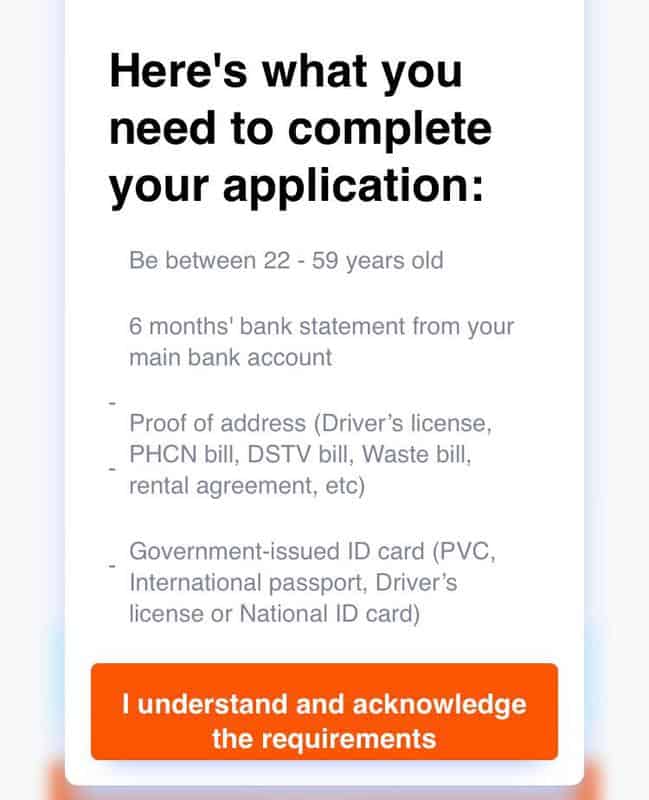
    Renmoney loans are accessible to anyone between the age of 22 and 59.

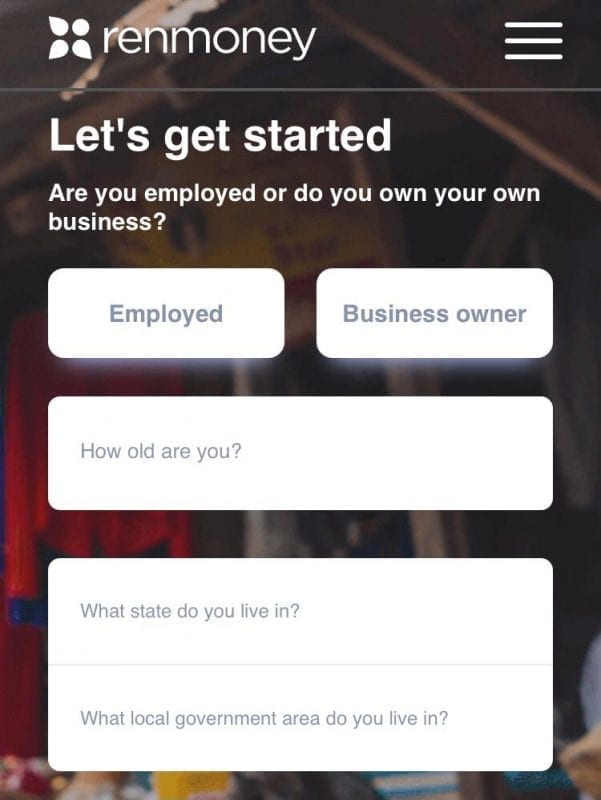
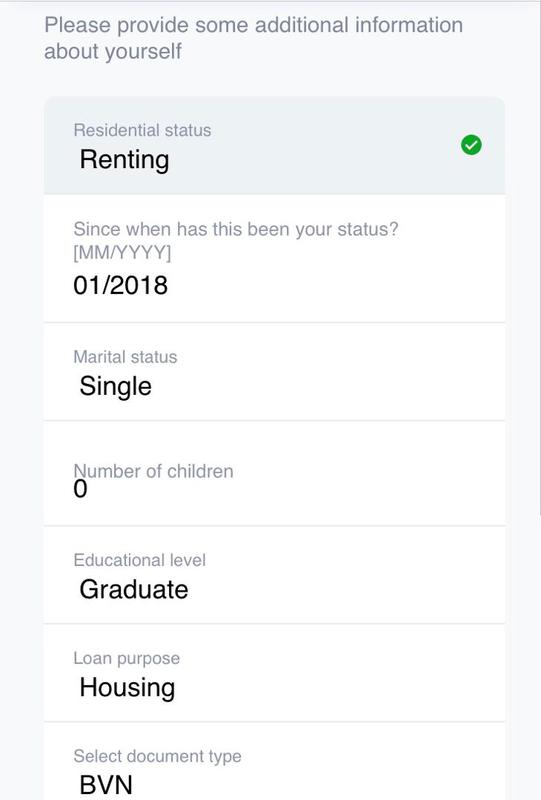
    The first part of the form requires your employment details. Next, you fill your name and other details as proof of identity and address.

    You’d notice there are two categories for employees and entrepreneurs. This would help Renmoney determine the kind of loan that is applicable to you.

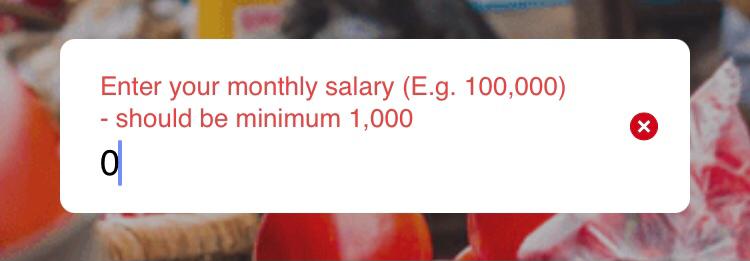
    I applied for a loan as an employee. The meaning amount that you can enter as monthly salary is N1000.

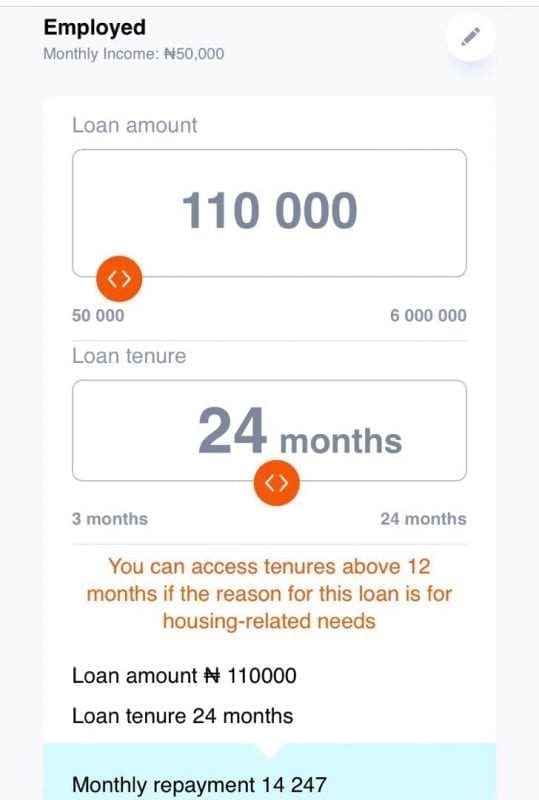
    I entered an estimated salary of N50,000 and the site suggested a loan of N110,000 for a 24month tenure.

    This does not imply that I am eligible for such loan.

    You may have noticed red ink stating that: I can access loans outside the 12 months tenure if the purpose is for rent.

    This implies that other loans may have a maximum 12 months tenure.

    With a monthly repayment of 14,247, I’ll be paying a total of 231,928 in interest.

    Renmoney does not out-rightly state it’s interest rate on any loan, rather it uses an inbuilt loan calculator to determine interest on loan.

    After Choosing a loan amount and tenure you can move to step 2.

    Step 2: Verify

    Verify the information that you’ve provided.

    More personal information is required at this point, including your ID number for whatever mode of identification you choose (but it’s optional).

    Renmoney would require your residential and marital status to enable them work out your financial responsibilities and advice on a suitable loan.

    Upload a clear photograph or take a quick selfie for identification.

    I did not get beyond this point, considering I didn’t need a loan in the first place.

    However I got a call from a customer management staff offering to assist in completing the the form.

    Step 3: Receive loan

    I guess this is where the disgruntled reviews come in when people get loans way below their expectations.

    Financial Institutions do not give loans in good faith. Understand that it’s a business risk, and they have to tread with caution.

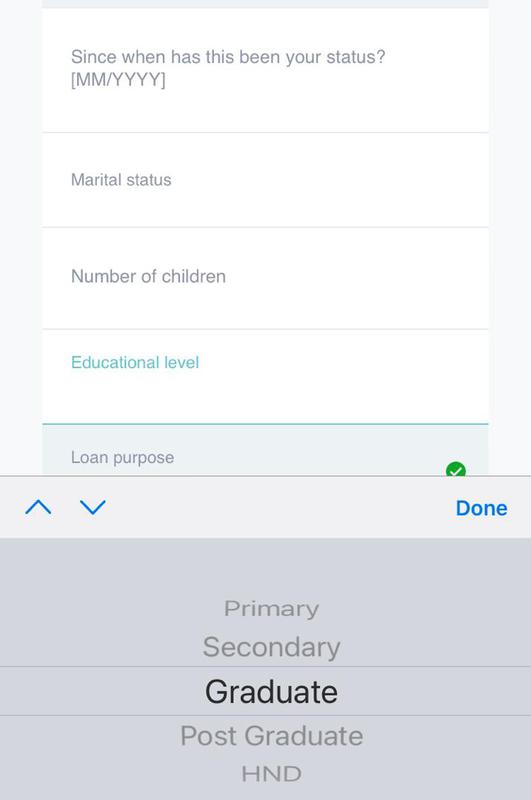
    Here are other aspects of the form that could guide you on what to expect when applying for a loan from Renmoney.

    Look through the questions in each image. Your answer might affect how you score. Work on improving your score.

    You could set a financial target to reach your desired loan and work toward it.

    Business requires planning. As you plan toward growing your business, prepare your business to be credible for loans.

    Get money in your bank account within 24 hours if your loan is approved.

    How to Get a Good Credit Score for Your Business

    If you are a sole entrepreneur who multitasks your few staff or doubles as everything, the first step to creating a good credit score is by separating business from personal finance.

    Keep proper financial records because Renmoney would request for a six months financial statement before granting a loan.

    The financial institution measures your credit score through the use of algorithms that determine if you’re creditworthiness.

    Most scoring models take into account your payment history on loans how long you’ve had accounts open, the types of accounts you have and how often you apply for new credit.

    1. Pay your bills. It’s hard to measure bill payment in Nigeria, and most financial institutions request for your Power bill at the time of opening an account. Renmoney tracks the amount of money that enters your account against the mode of spending to determine if you’d be able to meet the monthly payments. That is why it’s good to keep proper bank records for your business. If you earn cash, ensure to make deposits into the account as proof of your actual financial capacity.
    2. Don’t run your business account in the red. Set a minimum amount that must remain as a minimum balance every month. As a business owner with no real asset, your only asset is in the proof of consistent cash flow.
    3. Old credit records. Some banks offer small loans to their customers. If you plan on taking a business loan in the next 6months, try applying for a small loan. It doesn’t have to be large and ensure you refund in time. This would boost your credit score. In the absence of such record, your loan may be significantly reduced to an amount that Renmoney considers borrowable.
    4. Borrow now. Alternatively, you can start borrowing in small bits to build your credit score. As you repay loans, Renmoney increases the margin on the amount that can be borrowed to you.

    Reviews

    Before jumping into bed with any business, always consider a handful of reviews.

    While the interface was great and my short talk with the agent went smooth, here are some reviews from other customers.

    Note these reviews have been included in this post to help you make informed decisions when it comes to growing your business with renmoney.

    Hello my name is Mrs folakem, I filled out all of my information and on the final stage to get approved they went numb, waiting for the so-called code up till now to finalize my activation and still haven’t heard anything, I just hope these guys aren’t fraudsters because I have given all of my information to them Useful Share

    Source: Trustpilot.com

    I wish there was a no star option, that is the best to describe the type of horrible service that this company dishes out to her customers. I have been a customer for over 14 Months and everything was going fine but just before the corona pandemic, i had financial crisis which then was worsened by the shutdown of the nation. Through out the lock-down i keep getting calls from different agents with various threats as if threats will yield money, i tried severally to know if those agents were calling from another planet other than earth, cos i believed everyone on earth knows what is going on has the world is almost completely shut down, they told they are on earth and infact in Lagos, to me that shows the level of wickedness of a company whose only interest is how to recoup their money not even taking into consideration the payment history of the customer. Its extremely sad that at a time every corporate organization is looking for ways to impact the people by means of preaching hope, all that matters to Renmoney is their money. Let me emphasize here that threats doesnt bring about money,compassion does. I will be unfair if i do not single out a particular lady who was exceptionally different ” Ester” she spoke well and kept on encouraging me that things will get better and yes its getting better and i have since began paying, by God’s grace i will soon finish my repayment and i will warn even the worst of my enemy not to near anything that starts with REN……Its been hell of an experience. I will nominate RENMONEY for an award for the company with the most heartless set of customer care team, i am confident that you will surely have no rival for the award.

    Source: Trustpilot.com

    Yet one customer had this to say:

    Currently even having issues with renmoney , they claim you get your credit alert on or before 24hours, it’s just not true, the customer service is just inconsiderate, and some cases ill mannered.. They have no respect for client time, and they just switch off once the loan has been applied for and the payment mandate is placed on your account… Credit doesn’t come within 24hours as they advertise and their interest rates are high..i still have an uncredited loan as we speak, with a payment mandate on my account

    Source: Trustpilot.com

    Conclusion

    Now you know what to expect when applying for a business loan on Renmoney. From Snapshots of loan forms to client reviews, this article provides a step by step guide to loan application and insight on improving your credit score.

  • What Entrepreneurs Can Learn From Aliko Dangote

    What Entrepreneurs Can Learn From Aliko Dangote

    Aliko Dangote, like most billionaires in Nigeria, lives his life on a very lowkey, making it hard to demystify the secrets to his success.

    Yet as entrepreneurs, we know that every success story thrives on a set of principles.

    Hence, we continue to scavenge like hungry hounds, following each trail of a success story to unravel its mysteries.

    Here’s what entrepreneurs learn from Aliko Dangote?

    His lifestyle, ethical values, prudence, simplicity, ability to spot talents, the fear of God and other similar characteristics of other billionaires of the world are not hereditary but distinctly Aliko

    Excerpt from: “Aliko Mohammad Dangote: The Biography of the Richest Black Person in the World” by Moshood Fayemiwo. Scribd.

    Mind you; this is not another inspire to perspire type of post.

    What this Article Entails:

    While you may be familiar with motivational talks that don’t tell you anything new, this detailed breakdown may lead you to break bad financial habits and challenge you to dare like Aliko Dangote.

    When I wrote a post about the top 10 richest people in Nigeria, one of the things that caught my attention is that they are hardly open to interviews.

    No, they’re not trying to sell you another get rich quick scheme which is fronted as a book on how to succeed or 20 things Rich and famous people do.

    Before I go further, you might want to read the book; Aliko Dangote. It’s available on Amazon, or you can read it on Scribd.

    “A highly recommended book to anyone who enjoys learning about how different people of all walks of life become rich and successful, and what it takes to get to the top” —Readers Favorite Book (Starred Review), USA. “A compelling book about a unique personality in Africa” —Goodreads, USA. GoodReads

    There are no shortcuts to success, and while most of this post are lessons from the book Aliko Dangote, I’ll encourage you to read the book for yourself.

    Did you know Dangote’s maternal grandfather Sanusi Dantata was a wealthy trader in Kano? He traded in rice and oats. Sanusi’s father and founder of the Dantata legacy – Alhassan Abdullahi Dantata was also a wealthy trader whose cooperation with the Lever Brothers (Now Unilever), saw the establishment of the British Bank of West Africa now First Bank. But the era of the groundnut pyramid brought great fortune to Alhassan Danta. And few people recall that Dangote’s father was at some time the richest man in Nigeria.

    But not all the fortune of rich men can boast of such trans-generational impact.

    About Aliko Dangote

    Early life

    Born to Mohammad Dangote and Mariya Dantata, Aliko Mohammed spent very little time with his biological parents. For a while, he had come to know his mother’s sister as his mother and his grandfather as a father.

    The Dantata boys come from a linage of wealth and business legacy. Their avoidance in direct politics even up to their fourth and fifth generation sterns from an oath made to their father – Pa Alhassan Dantata. This promise was born from a terrible experience that led to the death of a family member who had at the time dabbled into politics.

    It was this commitment to stay off politics that led to Aliko stay in the Danata house.

    Mohammed Dangote at the time was a famed Politian, and when he showed interest in marrying Mariya Dantata, her father Sanusi Dantata instead that his daughter would remain I his house after marriage.

    So it was in  this house in Koki Quarters kano that Dangote was born. The patriarch of the Dantata house named him Aliko while he took hi other names from his father.

    The death of Mohammad Dangote further solidified Aliko’s opinion on dabbling into politics.

    However, he has had great influence on the government for sole reasons of preserving his business investment.

    Aliko disclosed in his biography that the reason he would be interested in the political future of Nigeria: he does not want “bad” politicians to control power and enact antiinvestment policies that would make him poor. “I do not want Nigeria to be another Zimbabwe so I am concerned about the political direction of my country, because if bad and inexperienced politicians control power in Nigeria, my wealth may turn into poverty.

    Failed Businesses

    Although Dangote is famed for his business conquest and house hold name, so much so that he was nicknamed Risk and who dares win.

    Dangote prides on risk. His matra is that avoidable risk is not a reciepe for success in business and in life.

    But Dangote hasn’t always won especially in an unstable business environment like Nigeria.

    In May 2007 umaru Musa Y’ar’Adua seized the two Nigerian-owned refineries in Kaduna and Port Harcourt that were earlier sold to aliko Dangote. Instead of being fazedout, Aliko set up to building his own refinery.

    Speaking about the refinery sale in his biograbhy, he says:

    “How much did the government spend in 1989 to build these refineries? Obviously there would be depreciation after these many years. Here is something that was run down. You don’t now go and recover your money. We paid the price of $1.1billion, because the $561million we paid for Port Harcourt is 51 percent of $1.1billion. We didn’t buy the whole refineries. The government still owns 49 percent. We only bought 51 percent. And 51 percent of $1.1billion is only $561million. That’s how we arrived (at) $561million. In the case of the Kaduna Refinery, the Chinese which Nigerians don’t mind, if it goes to a foreigner, the Chinese were given juicy oil blocks. The day that they signed the production sharing agreement that was the day that they said: “We are not bidding, unless we sign and collect the oil blocks.” These guys signed and collected the oil blocks and they still priced the refinery at $102million. And they vowed they would not pay more than $102million. Then we said, fine, rather than allowing this thing to decay like that, we wrote to say we were interested also in bidding. The price that they gave was far below the reserved price. And now, we gave 60 percent more than the Chinese. And the Chinese said they were not going to put a dime more than $102million.”

    Mr. Dangote continued; “We bought at $160million with all the challenges. But I thought this same refinery was given to Shell, to Chevron, to Texaco and they rejected them, saying they don’t want to even run them for nothing. And we have now paid over ₦100billion and people are shouting. I believe people should focus more on shouting about Eleme Petrochemical. Government spent almost $1.5billion and it was sold for $200million. And we bid. And we lost. And people didn’t see that. We bid for the same Eleme Petrochemical with a company that has never ever visited Nigeria. But because they are foreigners, they bought not even 51 percent, they bought 75 percent. And they were hailed. And they paid. And they got it. We lost as Dangote. And we spent more than $5 to 7million doing things like bringing experts to come and check and (follow) due diligence and all that. We lost our money and time. But Nigerians didn’t say anything because these are foreigners. That is by the side.”

    “Look at the way and manner foreigners bought Ajaokuta” referring to his nation’s largest steel complex located in central Nigeria. “Ajaokuta almost made Nigeria bankrupt. The government of Nigeria spent $4.4billion on Ajaokuta. And all these foreigners don’t bring their money in here. Majority of the money they borrowed locally. They didn’t bring fresh cash. And these same people paid a paltry $300million for 60 percent of a plant that government spent $4.4billion

    Delta Steel, government spent $1.45billion, then renovated it with ₦45billion (about $42million) and they sold it for $30million to be paid over three years. This one was also sold to an Indian company. They don’t have anything in Nigeria, but people now are not complaining. I am not complaining about the price these things were sold. What I am complaining about is that if you have to complain; then complain about foreigners taking our assets.”

    Similarly, he took swipes at the sale process of Nigeria’s aluminium smelting company that was sold to a Chinese company as well “At ALSCON the smelting company, government spent $3.4billion. The Russians that have never ever visited Nigeria bought the company at $200million, with the condition that it is after the government dredges the river they would pay the $200million. And the cost of dredging the river is $260million. So you can see that government had to give out $60million out of their pocket to get rid of ALSCON. Excerpt from: “Aliko Mohammad Dangote: The Biography of the Richest Black Person in the World” by Moshood Fayemiwo.

    Also, in his bid to purchase the Sugar plant at Bacita, Dangote went as far as making a marriage proposal to Mrs Josephine Oluwadamilola Kuteyi. The relationship did not work out for religious reasons and in 2006, Mrs Kuteyi would go on to own the Sugar plant after making a 2.5 billion naira down payment.

    Mrs kuteyi ran the sugar plant with her sons up till 2011 when she died in a plane crash, while flying from her sugar plant to her home town in Ondo, Nigeria.

    Going Global

    According to a confidential cable message quoted in dangote’s biography, In 2011, the United States Embassy in Nigeria sent another confidential cable message to the State Department in Washington DC about Mr. Aliko Dangote. “Alhaji Aliko Dangote (Dangote) is founder, president and CEO of Nigeria’s largest national company, Dangote Group of Companies (the Group).

    Dangote’s wealth and prestige are based on his family connections and political friendships yet he is esteemed by many Nigerians for his business acumen.

    He has led the Dangote Group of Companies to unprecedented success in Nigeria, starting the company as a trading entity in 1977 and growing it to an estimated $700 million manufacturing or semimanufacturing behemoth that it is today.” The cable continued: “The Group is a household name in Nigeria and comes closer than any Nigerian company to market domination in many sectors.

    The Group employs roughly 10,000 Nigerians and turns over a profit estimated at $1.3 billion. It runs 15 manufacturing and bagging facilities nationwide and has operations in industries as wide ranging as cement, sugar, wheat, textiles, polypropylene sacks, and property leasing. Part of the Dangote business strategy is to focus on provision of basic human needs: food, shelter, and clothing.”

    In a December 1996 interview, Aliko Dangote admitted that a government mandate once forced him to import so much rice that the local market crashed by almost 80 percent. The direction of Government of Nigeria trade barriers also suggests preferential treatment. High tariffs or outright bans on imported items favor the Group in nearly all areas in which they do business including wheat flour, cement, certain textiles, sugar and pasta.

    Further, the Government of Nigeria is normally slow in privatizing stateowned production facilities.

    Yet the Dangote Group swiftly won bids on Government of Nigeria-owned manufacturing installations such as the Benue Cement Company and the Savannah Sugar Company, and constructed its own berth at Government of Nigeria-owned Apapa port in Lagos where ships with production inputs offload directly at the Dangote Group factory.”

    The highly-classified cable concluded that Mr. Dangote was not operating according to market forces but like an insidertrading environment in which the Nigerian Government was his agents, disclosing that Dangote’s obvious unfair advantage and support from the Government of Nigeria are disturbing for US companies wanting to enter a market with over 130 million consumers. Conversely, some US companies indirectly benefit from Government of Nigeria restrictions protecting the Dangote Group of Companies, adding complexity to the Dangote paradigm. For example, Dangote allegedly receives unfair, preferential treatment to import bulk commodities. However, he is a loyal U.S. wheat customer and buys millions of dollars worth of other US products. General Electric makes much of Dangote’s machinery and the Group will buy about 300 used trucks (mostly made by International) from the US this year. Further, the Group secured a USD 310,000 grant from the Trade Development Agency in 2000 and aspires to a future Export-Import Bank loan.” – Excerpt from: “Aliko Mohammad Dangote: The Biography of the Richest Black Person in the World” by Moshood Fayemiwo.

    What Values Can Entrepreneurs Learn From Dangote?

    As the wealthiest man in Africa, Aliko Dangote has stayed true to the business niche as opposed to ploughing the political ladder. Another thing Dangote has proven is that one can be a jack of all trade and still master all. He started in construction then diversified to manufacturing and later fast-moving consumer goods (FMCG). One thing is clear he is not afraid to challenge the status quo.

    Beyond this, Aliko Dangote is a big fish that is impossible to hide.

    Although we know of his heritage, there may be more to Aliko Dangote’s. His success sterns from his mastery of the rules of success.

    Over the years, Dangote has learned to apply these rules to his business while maximizing the opportunities around him.

    Lessons for entrepreneurs: LEARN TO MAXIMIZE OPPORTUNITIES.

    The Laws of Success

    Recognize God’s Guidance and blessing:

    Aliko’s most outstanding value is his faith in God. Like most rich people, Aliko always credits his success to God. He recognizes that his efforts may quickly work against him but for the mercies of God.

    It’s amazing how people continue to make a mockery of religious organizations, yet the wealthy people continue to give their support to religious organizations. And these are not just by Nigerian standards only.

    Dangote believes that one can go from the very top to the very bottom, and with the help of God, such a person will not find it difficult to adjust.

    Like Rocke-Feller, Dangote belives that “the power to make money is a gift from God”.

    The Law of Discernment

    The law of discernment also refers to current information. Remember that one of the secrets of Dangote’s success was staying ahead of his competition. This comes through knowledge of the happenings around us.

    As an entrepreneur, it is dangerous to lack discernment.

    Aliko’s timely move from Kano to Lagos having discerned the capacity of the purchasing power of the residents in Lagos.

    Success is 90% per cent guts and 10% capital. – Raymond Akerman.

    Lessons for entrepreneurs: TAKE BOLD AND CALCULATED STEPS BY LEARNING TO READ EVENTS AND TRENDS INSTEAD OF WAITING FOR TIME

    The Desire to Create a Need or a Service

    Aliko, like other successful people in business, does not have money as their primary focus. Aliko understands the power of why.

    His business decisions are inspired by the need for countries to look inward toward private entrepreneurship.

    Little wonder why he consistently recognizes the opportunities within the manufacturing industry and conquered.

    For all my life St. Louis sugar has been the household brand of Sugar in Nigeria, but with his insight, Dangote was able to create a need for home-grown sugar brand, and in a short time he surpassed the competition.

    While most young entrepreneurs in Africa continue to explore the import trade, the tides are changing toward home-grown brands.

    Lessons for entrepreneurs: DO NOT CHASE MONEY. RATHER, UNDERSTAND THAT MONEY MATERIALIZES AS A REWARD FOR IDEAS CONCEIVED AND EXECUTED

    Savings and Prudence

    This is one law that requires a lot of discipline.

    Many are familiar with this law, but the challenge is in upholding it. And if you intend to succeed, you must pass this test with your finances.

    Some business never grows above a certain level not because the business module is wrong or that the market is unfavourable, but because of lack of prudence.

    Know this, Dangote was listed in Forbes as the richest man in Africa in 2012 and has held this position 12 years strong. It takes discipline, it takes guts, it takes a certain level of know-how and in the words of Dangote, it takes God.

    Here is how Moshood Fayemiwo describes prudence in “Aliko Mohammad Dangote: The Biography of the Richest Black Person in the World.”

    – Prudence entails punctuality, ability to exploit enterprising attitude for success, native intelligence, purposefulness, perseverance, and the spirit of not giving up in the face of multitudes of adversities. Prudence builds professionalism, optimism, inventiveness, versatility, tolerance, sociability, agility, efficiency, patience, and responsibility. As will be seen in the biography of Mr Dangote, the virtue of prudence permeates his entire business conglomerate. Excerpt from: “Aliko Mohammad Dangote: The Biography of the Richest Black Person in the World” by Moshood Fayemiwo. Scribd.

    The Law of Hard Work

    Passion is what drives me forward. – Aliko Dangote

    There’s this common saying among young people; “Work hard, so your children don’t have to work.” Or they’ll say “Work hard so you can make money while sleeping.”

    While it makes a catchy tweet, it’s built on the false notion that billionaires like Aliko Dangote sleep and make money.

    Billionaires work hard, especially those with a genuine source of wealth. They don’t consider hard work has been hard, and it’s become a part of them, it excites them!

    “I have never seen any Nigerian that has really made money from inheritance. It is very, very difficult. And that is why I would always encourage my own children to work very hard especially when it comes to making their own money. I am not saying that they shouldn’t rely on the fact that yes, they come from a rich home. But sometimes, it can be a great disadvantage. Because there are some certain businesses that you wouldn’t like to do because you name is so and so.” – Aliko Dangote

    The notion that you can get rich and stop working and yet stay rich is as ridiculous as the idea that adulthood is a time to have fun and do whatever you want to do. It downplays the level of work required to build a lasting legacy.

    Dangote’s passion for Nation building ahs kept him going strong. While he may have benefited from Nigeria’s privitization of it’s public assets, hi brand remains one of the most successful amongst all investors.

    He has ecome a house hold name not out of share luck but for consistentle delivering quality products to the Nigerian market.

    The Law of Contentment and Simplicity

    This law may be hard for the millennial entrepreneur, whose existence is hooked to the Instagram lifestyle.

    Aliko once said; “I am just myself, it does not matter if you have a dollar or a million; life is very transient.”

    In 2016 when Mark Zuckerberg visited Nigeria, one thing that stood out was the simplicity of his person.

    Many of the worlds wealthiest people live a simple and contented life.

    Often, it is the not-so-rich that tend to flaunt their wealth in a desperate attempt to flaunt their possessions and gain approval.

    Inspite of all of these, some still critize Aliko’s breakthrough to his link with the government, forgetting that like his father’s who succeeded in business, Aliko was raised to respect constituited authorithy.

    On Building Business Relationships

    Another credit to the Danatata legacy which dangote incorporated is in clan solidarity. A threat to one is treated as a threat to all. This has helped dangote in building the dominating brand Dangote in any field he has been involved in. from textile, to Cement, to Sugar and salt and all other fast moving consumer goods.

    His relationship with Obasanjo dates back to his days in Kano when young Dangote lived amongst his family, learning how to navigate the polital and business sphere of Nigeria. Dangote also builth a relationship with Atiku Abubakar in the days when Atiku was the chief of Nigerian Customs and Aliko was an importer.

    Dangote learned from the Dantata’s who were known to not create business partnership. They practised a neopatrimonial system of business which helped them maintain dominance. Though the brand Dangote as grown into a publically traded company, Dangote remains the highest share holder.

    Business Requires Dynamism

    Dangote has moved from being an importer to a manufacturer. This shift was inspired by a vist to brazil in the 1980s.

    Dangote saw that Latin America was able to sustain home-grown needs despite its foreign debts.

    He was particularly inspired by Arisco Produtos Alimenticios SA located in the Arisco region of Brazil. Arisco at that time could be regarded as the Wal-Mart of Brazil. Arisco manufactured canned and household goods, grew foods and groceries and concentrated on the three essential human needs of food, clothing and shelter, ranging from salad dressings, tomato products, canned soups, mayonnaise, seasonings, ketchups, noodles, to deserts, bouillons and many more. Today, the Brazilian food chain has been acquired by Unilever Best Foods Holding Corporation.

    This new revelation led to Aliko repositioning his companies through what he describes as “backward integration toward manufacturing instead of importation.”

    Lessons for entreprenuers: IN THE CHANGING ATMOSPHERE OF THE BUSINESS WORLD, BE WILLING TO EVOLVE, TO UNLEARN AND RELEARN AND IF NECESSARY, RESTRUCTURE.

    From the patriarch Alhassan Danatata, who rebuilt his father’s trade route at an early age, the Danata’s have made a legacy from rebuilding and refining ancient landmarks.

    Dangote was able to accomplish such fit by hiring proffessionals that

    “My story is the story of a man and a brand Nigerians have come to know, to love and to accept. Nigerians are investing in us because they believe in us, they believe in the name Dangote. Apart from believing in us, we have a track record which we have actually shown. If you look at all our factories, they have grown steady and gradually to where we are today. In all modesty, we can say we have done very well. There is no business that we are in and we are not No.1. The worse one that we have, maybe we have a second position. That in itself is our business strategy. We aim to dominate our market, to lead in every market segment. They have all been run efficiently and professionally by people who really know the business very well. We have a very good brand name and that is part of what many people are actually investing in. They are not really investing in Aliko Dangote only. They are investing in the Dangote brand. They believe in my own business acumen but it is not the only thing that people are investing in. – Aliko Dangote.

    Conclusion

    It takes a wise man to build a house, how much more a legacy. Wealth, like anything of value in life, is based on laws, principles, and secrets. While most of the books on wealth creation are mostly foreign. An in-depth study, such as this may reveal a lot about what it takes for an entrepreneur to succeed in the business terrain of Nigeria.

  • Top 10 Richest People in Nigeria in 2020 and What You Can Learn From Them

    Top 10 Richest People in Nigeria in 2020 and What You Can Learn From Them

    Find out which of these Famous billionaires still top the chart as the richest people in Nigeria, and which of their net worth has dropped since the 2020 Pandemic.

    From Aliko Dangote to Oba Otudeko, these names have been around for a while, but how rich are they and where does that leave the infamous billionaire Terry Waya?

    Did you know that 90% of Nigeria’s foreign exchange comes from oil? Little wonder why a fall in the oil market has a great impact on the financial status of the richest people in Nigeria.

    When the Coronavirus hit the global markets in 2020, many investments crashed and oil prices collapsed, but this isn’t the first time a market crash would affect the billionaires of Africa.

    Knowing how much Nigeria’s economy depends on oil, and that the majority of these richest people in Nigeria made their money in trading oil, export, and investments, one has to wonder: How rich are they?

    How hard did the pandemic affect the famous billionaires in Nigeria and where are they ranked now?

    Although the oil sector took one of the biggest hit in 2020, not all businesses and business owners completely lost out of trades and shares.

    Top 10 Richest Individuals In Nigeria

    Aliko Dangote $8.1 billion

    The CEO, Dangote Group Aliko Dangote has remained at the top of the chart since he was listed on Forbes Richest men in Africa in 2012. Dangote was worth 13.8 billion in 2011. But how much is he worth in 2020 and what can we learn?

    According to Forbes Real Time Billionaire list, Aliko Dangote is currently worth $8.1 billion. Despite the slight fall, Dangote still ranks as number 1 on the list of Billionaires in Africa and 247 in the world.

    Did you know Dangote’s grandfather Sanusi Dantata was a wealthy trader in Kano. He traded in rice and oats.

    What entrepreneurs can learn from Dangote

    As the wealthiest man in Africa, Aliko Dangote has stayed true to the business niche as opposed to ploughing the political ladder.

    Another thing Dangote has proven is that one can be a jack of all trade and still master all. he started in construction then diversified to manufacturing and later fast-moving consumer goods (FMCG). One thing is clear he is not afraid to challenge the status quo.

    Mike Adenuga $6.1 billion

    Mike Adenuga is the second biggest name in Nigeria and Ranks as number 3 in Africa and 366 in the world. From a net worth of 2 billion in 2011, the Telcom boss and “Bull” has made considerable strides in the financial market thanks to his keen eyes for business opportunities.

    Did you know: Mike Adenuga made his first million selling lace and distributing soft drinks. Despite his fame, Adenuga has lived his life on a very lowkey, granting interview ones to Bisi Olatilo on the then Bisi Olatitlo Show (BOS).

    What entrepreneurs can learn from Adenuga

    Hard work is the key to success.

    Mike Adenuga was ahead of his competition and it gave him an edge over others. His major business break came through the selling of removable car stereos.

    He believes in researching a business before going into it as it makes it easier to add value.

    He also admits to knowing the workings of government very well.

    Know your business, work hard and trust God.

    Abdulsamad Rabiu $3.1billion

    Did you know that Abdulsamad Rabiu is the founder of BUA Group, a Nigerian conglomerate active in cement production, sugar refining and real estate, and he owns 98.5% of its shares?

    He currently ranks at 846 in the real-time billionaires’ list with a net value of $3.1 billion as of 6 AM September 27, 2020. He is the 8th richest man in Africa.

    What entrepreneurs can learn from Rabiu

    In line with business development, Rabiu like his Aliko and Otedola appear to have diversified his business toward owing an oil refinery and power.

    This transition is nothing short of timing.

    As entrepreneurs, timing is key to success within any field.

    Amidst the pandemic, Bua Group signed an agreement with Axens of France for the supply of process technologies for its upcoming 10million tonnes per annum mega refinery and petrochemicals facility to be sited in Akwa-Ibom, Nigeria.

    Rabiu’s 200,000 bpd refinery and petrochemical plant aim at producing Euro-V fuels and polypropylene for domestic and regional markets.

    A few weeks after BUA Cement announced it was planning to establish a 3million metric tonnes per annum cement plant as well as a 50megawatts power plant in Adamawa State in North-East Nigeria.

    Famously Rich but Not Listed on Forbes

    Femi Otedola

    The Internet went wild a few weeks ago when Otedola bought 3 Ferraris for his daughters. So how much is the energy magnate worth?

    Ranking 16 among Africa’s 50 richest and formerly 1011 on the world’s real times list in 2017, Otedola has since dropped off the Forbes list.

    Since he sold his 75% shares in Forte Oil PLC to Prudent Energy services, Otedola’s current net worth is undisclosed.

    Following his divestment from Forte oil, Otedola reportedly invested $1bn in Nigeria’s power sector through Geregu Power Plc.

    With the current performance of Geregu Power PLC, Otedola may be making a comeback on Forbes list.

    Did you know: Femi Otedola is the son of the former Governor of Lagos state Sir Micheal Otedola.

    https://youtu.be/iTm2DUDHhmI
    What entrepreneurs can learn from Femi Otedola

    Resilience is the word that comes to mind when one thinks about Femi Otedola, from his years in his family printing and stationary business to his venture into supplying diesel and eventually into becoming an oil magnate.

    Femi Otedola’s path is littered with many stories of failure and a rise back to wealth.

    In an interview he discloses that “being a good entrepreneur does not necessarily make you a good business manager. I learned to keep my hands off managing and leave it in the hands of experts”.

    Femi has proved time and time again that one can lose it all and still bounce back.

    Folorunsho Alakija $1 billion

    Formerly ranked at 1914 on world list of billionaires, Folorunsho has since dropped out of the Forbes list in 2017 with a net worth of. She was last estimated in January 2020 at $1bn.

    Alakija recently dropped out from the Forbes real time billionaires list due to inconsistencies in oil prices. The tycoon who made her wealth from oil was at some point listed as part of the 80most influential women.

    Did you know Alakija’s first company was a fashion label whose customers included the wife of former Nigerian president Ibrahim Babangida.

    What entrepreneurs can learn from Folorunsho Alakija

    For a woman whose story has been passed around from parents to children, one lesson stands out in Alakija’s story – maximize opportunity.

    A lot of people miss opportunities even when they are glaring.

    Another aspect of Alakija’s story that stands out is her enterprising mindset. Be resourceful. Constantly look for opportunities to maximize and create wealth.

    Theophilus Danjuma

    The former Nigerian defense minister and the founder of oil exploration company South Atlantic Petroleum. He also owns real estate plus a stake in Notore Chemical Industries, a manufacturer of urea fertilizer, as well as a stake in NALComet, one of Nigeria’s largest shipping companies. His net worth fell a year ago due to the sustained weakness in oil prices.

    Theophilus Danjuma like Alakija is a famed billionaire based on old stories.

    Like other famed oil magnates in Nigeria, Danjuma dropped off the list of top 50 richest men in Africa in 2016.

    Danjuma was last estimated at $750 million.

    Tony Elumelu $700 million

    The renowned philanthropist and investor is no longer listed on Forbes, since he dropped off in 2016.

    His last known net worth was 700 million as at 2015.

    Before dropping off the list, he ranked 31 in the list of Richest men in Africa.

    Nigerian entrepreneur and investor Tony Elumelu owns a controlling interest in Transcorp, a publicly traded Nigerian conglomerate with interests in hospitality, agriculture, oil production and power generation.

    He came into the limelight in 1997 when he led a small group of investors to take over a small, floundering commercial bank in Lagos. He turned it profitable within a few years and in 2005 he merged it with the United Bank for Africa.

    That banking group now has subsidiaries in 20 African countries and in the U.S and U.K. Elumelu also owns extensive real estate across Nigeria and a minority stake in mobile telecom firm MTN Nigeria, among other assets.

    What entrepreneurs can learn from Tony Elumelu

    Speaking during the Tony Elumelu Foundation boot-camp for entrepreneurs, Tony Elumelu said; “I want them (the 1,000 entrepreneurs) to imbibe my own business values which include hard work, emotional and social intelligence, integrity, resilience, and discipline,“ he said.

    You have to dream the dreams, set the milestones, develop a saving culture, and ‎most especially, form visionable partnerships. If we imbibe these factors, then we are on the way to having future leaders in Africa,” he stressed.

    “What we are doing is a means to an end. The end is to see these entrepreneurs create jobs, develop society, and enable Africa to achieve an all-inclusive growth,” he added.
    Elumelu pointed out that there are lots of unemployed people in Africa, while also calling on other endowed Africans to support entrepreneurs to help reduce the joblessness plaguing the continent.” Source.

    Orji Uzor Kalu 1.1 billion

    The name Orji Uzor Kalu is legendary amongst Nigerian youths. As a kid, I sang songs about him in the playground.

    Like Dangote, Oriji Kalu is one of the few rich Nigerians whose wealth is not tied to oil.

    Did you know that Orji Kalu started his trade with a $35 loan from his mother and after diverse trade in palm oil, rice, and sugar, he later traded in furniture?

    He made his first million at the age of 20. He also made a huge profit in the military era in Nigeria, when he won a contract to supply ammunition to the Nigerian military.

    In 2015 however, Kalu dropped off the list of richest men in Africa. He had previously ranked 49 out of 50 richest men in Africa.

    Kalu’s net worth was last estimated in 2015 at $330 million a huge drop from 1billion as the previous year.

    Jim Ovia $550 million

    The founder of Zenith bank was at some point reportedly worth $1 billion, 850 million, and 2.3 billion.

    He was listed as the 37th richest man in Africa in 2015 but dropped off in 2016.

    His last estimated net worth was $550 million.

    What entrepreneurs can learn from Jim Ovia

    From his beginnings in sales of used cars during his NYSC, Jim Ovia success relies on a strong sense of intuition. As an entrepreneur, learn to listen to your inner self, it would guide you through instincts and impulse.

    What determines whether a great idea can ever come to fruition is the initial will to act on instinct…” says Jim Ovia.

    Your field of business may not turn out to be your biggest source of wealth but the experience will guide you as you grow.

    Jim’s experience in negotiation during his early days in car sales eventually helped him in obtain a banking license even though he did not qualify.

    Oba Otudeko $650 million

    With a net worth of $550 million, Oba Otudeko the founder and chairman of Honeywell Group was once listed as the 46th richest man in Africa.

    However, he dropped off the list in 2015.

    His conglomerate’s operations stretch across oil and gas, flour milling, real estate, and marine transportation. And he has a stake in the oceanfront Radisson Blu in Lagos, Nigeria.

    What entrepreneurs can learn from Oba Otudeko

    Otudeko’s life may hold lessons for young ones given the many opportunities for skill acquisition through online learning platforms.

    Otudeko began in the banking industry and diversified into manufacturing.

    Terry Waya $865 million

    Terry Waya is currently one of the richest and the most influential socialites in Nigeria with an estimated net worth of $865 million. Terry Waya Million Dollar Empire was brought again to limelight when his son, Teeseer KiddWaya appeared on the 2020 Big Brother Naija Reality TV Show. Since he resurfaced online, he has gone back to his old ways where he flaunts his flamboyant cars and posts live videos of himself counting huge piles of money.

    Other Street Famous Billionaires and Their Tentative Net Worth

    A few of these names pop on the news every now and then and they rank as one of the richest people in Nigeria.

    DISCLAIMER: these figures may not be accurate.

    1. Arthur Eze 5.7 billion
    2. Cletus Ibeto 3.7 billion
    3. Benedict Peters $2.7 billion
    4. Igho Sanomi $1.3 billion
    5. Bryant Orjiako $1.2 billion
    6. Bode Akindele 1.2 billion
    7. Emmanuel Ojei $1.2 billion
    8. Bola Ahmed Tinubu $8.4 billion
    9. Ibrahim Badamase Babaginda $5 billion
    10. Ifeanyi Ubah $1.7 billion
    11. Olusegun Obasanjo $1.6 billion
    12. Rochas Okorocha $1.4 billion
    13. Atiku Abubakar $1.4 billion

    Other Famous Millionaires in Nigeria

    1. Mohammed Indimi $670 million
    2. Tunde Folawiyo $650 million
    3. Hakeem Bello $600 million
    4. Cosmas Maduka $800 million
    5. Terry Waya UNKNOWN

    Conclusion

    Of all the famous richest people in Nigeria, only 3 still maintain a world record in 2020. Reed Hastings and Jeff Bezos may have made huge profits during the pandemic, but Nigeria’s billionaires weren’t as lucky. Arguably, Femi Otedola foresaw the fall of the oil market when he made the switch from Oil to Energy. Good call!

    See Article On: Empowering Female Entrepreneurs in Africa