Over time it has become evident that the secret to success is simply “finding your why.” The principle is rooted in a legitimate consideration: individuals tend to be persuaded by their reasons for doing something, and need that intrinsic motivation. In a personal development or business sense, this “why” stands for a sense of purpose. It’s more like a journey to self-discovery, personal fulfilment, clarity, and deeper meaning to life.
All of these may feel abstract, but those who initiated it have one thing right: finding your ‘why’ matters, because it leads to a greater sense of purpose in your work and in your business which can have significant effects on your sales, the lives of your customers and prospects, and within your personal life. However, for most people, the pressure on finding their “why” can be daunting, and it can be hard for them to connect within their work and other life endeavors as a result. It does not have to be like that. So, here’s what “finding your why” might really mean.
Finding Your WHY Helps to Drive You by What You Are Doing Beyond the Short Term
For some entrepreneurs, they start a business because they had an idea and thought that it would help them make quick money, so they end up investing their work for short-term ROI. And for others, they are continuing at the pace their businesses have been moving at because it feels comfortable for now and gets the bills paid.
However, when it comes to pursuing the “why,” it becomes dangerous to think only “for now.” In the absence of a “why” for whatever you are doing, it’s impossible to think long term because it feels discouraging to do so. You are short-term oriented if you are not rooted in your purpose.
When you think of what you are presently doing, do you imagine keeping up with the work years into the future? Does it excite you? Take charge of your overall long-term plan and how it integrates with what you are doing now or what you want to do. Your “why” can not only be to achieve fame, money, or success. It needs to be something more sustainable.
In the wise words of Jim Carrey in a commencement speech address, “I think everybody should get rich and famous and do everything they ever dreamed of so they can see that it’s not the answer.” Beyond the volume of wealth, you have or the number of followers you have, you need something that would keep your flame going for decades.
Your WHY is Genuinely Believing That What You Are Doing Can Help Others
There is no “why” better than serving others. As a matter of fact, humans are hardwired to want to serve others: believing that we have something of great value to give makes us feel a great sense of belonging. You will find unending satisfaction and a sense of fulfilment in giving out something of great value to others rather than just succeeding for your own personal benefits. This also means connecting to what it is that you are doing and help people with it, in many cases, it can be selling valuable products that can help them. Erik Fisher once said that a top component of success is in mindset, and mindset is composed by understanding your “why” for what you are selling.
This can be narrowed down to what it is that you are presently doing or selling. Finding your “why” does not necessarily mean finding your one, all-encompassing life’s purpose that you will do forever. Sometimes, it just means infusing some understanding and connection to what you are doing right now. “If you are selling a course or a product, connect to WHY you believe a customer or prospect should buy. What benefits will they get from it? How would it change their lives or impact positively on some aspect of it?” Becoming motivated by this pattern of helping others will lead to more sales success – and more happiness in your life while you are at it.
Finding Your WHY Can Be Your Light Up Whenever You Work
This sounds cheap, but there’s also an element of ‘lighting up’ when you do something that is connected to your “why.” You may discover many purposes throughout your life, rather than a single ‘calling’ that you must find in order to achieve absolute fulfilment and happiness. As business owners, we will always have menial tasks we want to keep aside, and we will always hit ruts. It’s normal. But if we can find some thread of passion or “why” within it, it will become easy going for us.
Ultimately, finding your “why” is more like finding your rocket fuel to keep you going when the entrepreneurship journey gets daunting. Whether that is finding purpose within one client relationship, one task, or one very great morning of deep focus at work, your “why” will always be within reach—and should be prioritized in big and small ways.
Anjali Sud is about 37 years old and she is the CEO of Vimeo.
Today, Vimeo is all over the news; you find it everywhere on the Internet, especially Ads on youtube. But this was not always the case. Vimeo was struggling at a point.
So, what happened, and how did Anjali Sud turn things around for the company?
How Vimeo Started
Vimeo started as a competitor to Youtube and Netflix. It was an ad-free video platform that provided premium video content to its users.
Vimeo had a clear mission – to create a higher-quality alternative to Youtube. That is to be like another version of Netflix, but with Youtube type of content.
To do this, Vimeo invested heavily in creating its own content and curating content on the platform. There was a lot of catching up to do, and they felt they were equal to the task.
They went after professional video creators and filmmakers. A few years down the line, things were not exactly working.
Anjali Sud and How She Led the Vimeo Pivot
Youtube is estimated in the year 2020 to be worth $170 billion, while Netflix hit $194 billion net worth in 2020. Now, take a moment to imagine a new company with maybe a few million dollars budget trying to compete with those two. That was a huge task before Anjali Sud when she joined Vimeo as Director of Marketing about 6 years ago.
Vimeo did not have the kind of money those two have for content, not to talk of marketing. It didn’t take long for her to see there was a problem.
However, Anjali started taking a second look at Vimeo’s strategy.
“I developed a point of view, myself and a few others within the company, that we probably weren’t going to compete well with Netflix in original content because we probably weren’t going to have $17 billion to spend on it”, Anjali revealed.
And people who wanted entertainment were already used to going to YouTube. It was going to be a hard-to-break habit.
“Vimeo had long been a software company for filmmakers, but the market was too small”, she said in an interview.
The Discovery of a New Market
So, Anjali Sud came up with an idea…
“There was another, much bigger market—businesses. What Squarespace and GoDaddy did for websites, we could do with video.”
Rather than wait idly for ‘management’ to steer the ship, Anjali went directly to the top.
She asked for a meeting with Vimeo’s parent company CEO, Joey Levin.
She pitched him her idea, which was – Pivot Vimeo from an entertainment and content source, to provide tools for small businesses to create video.
It didn’t matter where the video ended up (YouTube, Instagram etc.), Vimeo would help them make it.
Small businesses, mom-and-pop, and even big businesses realised that video and the internet were core to their growth.
But they didn’t have the resources or expertise to create high-quality content. That’s where Vimeo could come in.
Levin was fascinated by the idea. Vimeo was struggling and losing money. What’s the worst that could happen if they gave this a try?
He decided to give her a shot. Anjali put a small team together and started to pilot her idea.
She wasted no time and quickly made Vimeo a one-stop shop for filming, editing, and sharing video.
Sales, profit, subscribers – all the numbers surged significantly higher than they’d been the previous year.
The results were clear, and she was named CEO of Vimeo.
4 years after becoming the company’s chief executive, Anjali and her team took Vimeo public.
In conclusion
One of the most essential lessons from Vimeo and Anjali’s story is knowing when to pivot. You may also want to add this – understanding that pivoting is not an indication of failure, but rather of flexibility.
Youtube, Twitter, Airbnb, and Instagram are on the long list of successful companies that have had to pivot at some points. Vimeo may just be the latest addition to the list.
The World Health Organization (WHO) defines health as a “state of complete physical, mental and social well-being and not merely the absence of disease or infirmity.”
One of the three aspects of health, according to this definition by WHO, is “mental well-being”. Emotional Intelligence is an integral part of mental health, which, unfortunately, often gets left out in conversations about health. Many people focus only on the physical aspect of health, leaving out the mental and social well-being, especially in this part of the world.
As an entrepreneur who gets to deal with many people, emotional intelligence is a must-have skill. That is, for entrepreneurs who want to be successful.
But what exactly can emotional intelligence do for you as an entrepreneur?
1. It will help you identify customer needs more effectively
Getting inside your customer’s head and know what they need is a lot more complex than you think. You can make assumptions; that’s quite easy. But assumptions can be misleading and dangerous.
Therefore, direct communication with customers and data has been proven to be the best ways to identify customer needs. In other words, you need to be able to empathise with your customers to see how to improve your product to serve their needs better. Similarly, it will also help you discover new ways of marketing to your audience more effectively.
2. You will become a more effective communicator
It’s challenging to hold a deep conversation with people if you can’t empathise with them. If you can’t relate to others’ emotions, communication becomes less effective and more complex.
As an entrepreneur who always has to talk to employees, investors and clients/customers, you need a high level of emotional intelligence to see things from their perspective. With this, you’d be able to build strong relationships with all stakeholders and win people over.
3. Emotional Intelligence will help you unify your team through enhanced leadership
Even if you’re just starting your business, you should already be thinking ahead to when you’d have built a team that works with you.
Emotionally intelligent leaders get the best out of their employees. It’s the foundation for cultivating a unified vision, respect, and good morale, which results in improved productivity. Specifically, this is important for entrepreneurs who have employees working from home.
Emotional intelligence is vital for leaders who want productive employees.
4. You Improve your self-awareness
Knowing your emotional stand can be very useful to you as an entrepreneur. Your ability to identify and harmlessly express your emotions serves as a buffer against you having emotions that run wild and distort your perception. Hence, when you improve your emotional intelligence, you are able to make better decisions.
5. Better control over emotions
Entrepreneurship is not a child’s play. You would be faced with several roadblocks on your path to success. Therefore, as an entrepreneur, you will have to handle everything, from demanding clients, angry customers to difficult conversations and disappointing launches.
You may not have control over everything that happens, but with high emotional intelligence, you can get better at understanding your emotions in challenging situations without trying to suppress them or going off at a wrong time.
Also, the ability to control your emotions is crucial when relating with investors and other essential business stakeholders.
For instance, a team of co-founders learnt this the hard way when one of them got a heated debate with an investor. The investor then then started lobbying for him to be fired. And to solve the problem, the investor said there was only one way:
“You need to talk to a coach to work on your emotional intelligence.”
How to improve your emotional intelligence
Now that you’ve seen the importance of emotional intelligence to you as an entrepreneur, how do you go about becoming more emotionally intelligent?
Unfortunately, there is no quick-fix for it. We are talking emotions here so some work and learning has to take place. These steps below are a good place to start:
In your everyday conversations with friends, colleagues, and family, try to practice empathy. Pay attention to what they are saying, and try to understand what they might be feeling and thinking. Most times, we want the conversation to go in a specific direction, instead of actually listening and responding with empathy.
3. Talk to a coach or counselor
The above two are things you can do one your own or with people around you. However, it gets to a point when you need to talk to a professional. This is usually because you are either unable to practice on your own and you may need the help of a counselor to assess your progress.
A counselor or coach can as they’ll be able to regularly assess how you are doing and give you benchmarks. Feel free to ask for help when you need it as the process is not always easy.
What do startup founders do, really? What is the job as a startup ceo /founder?
Leadership has proven to be very important in every sphere of human existence. That’s why it is believed that most countries succeed because of their leaders and the ones that fail too have their leaders to hold responsible.
And as a startup founder, you are automatically the leader of the startup (even if you choose not to be the CEO). So, the success or failure of the company is mostly up to you.
Maybe you have established a startup, and you wonder what you should be doing as the founder. Or you plan to develop your startup someday, and you’re curious what your responsibilities would be. Not to worry, I got you covered.
I’ve had the opportunity to work with different startup founders in fulltime roles and freelance capacities. I also managed to have a couple of them as friends and acquaintances, and I’ve grabbed some lessons in my interactions with them.
So I will be sharing some of the things I learnt with you to help you understand your responsibilities as a startup founder.
Your Responsibilities as a Startup CEO / Founder
As the startup founder, you understand the company more than anyone else. You know your vision, mission and goals. In the words of Simon Sinek, you know your why.
However, you are going to need the help of others to make your vision a reality. You are going to need a team to bring those visions to life. You need people to handle the how.
With the above illustration, we can deduct that your job as a startup founder revolves around leadership and coordination.
Let’s try to break those two down further, so you get a clearer picture of your roles as a startup founder
1. Team Building
Like I mentioned earlier, you need a team to help make your vision a reality. But this team will not just magically appear; you have the responsibility to create one.
This is one of the lessons from the story of the boy who harnessed the wind.
So, as a startup founder, you have an essential responsibility to assemble a fantastic team for your company.
Of course, you will need the help of professional human resources personnel. However, you still end up being the one to make the final nod, so the bulk of the work is yours.
And it’s not a team if you don’t have the right people in the right places.
For instance, if you’re a football fan, you’d know that a team with Lionel Messi as its centre back is headed to colossal loss. But put him in almost any attacking position, and you’d see him deliver. That’s simply because Messi is a genius attacker and has no business in defence (well, except to offer some assistance when the need arises).
In your team likewise, get attackers in attacking positions and defenders defending. Put round pegs in round holes and square pegs in square holes.
2. Ensure Cash Flow
You run out of cash, and you’re out of business. There are no two ways about it.
You have a responsibility as the founder of a startup to not only ensure the money keeps coming in, but also that the money is appropriately managed.
We saw some companies taking some drastic decisions of letting staff members go and imposing pay cut on others due to the Coronavirus pandemic.
While the people affected may not like the decision, in most cases, the companies did what they had to do to manage their funds effectively. And hopefully, they would revert to normalcy when the pandemic is gone.
This is an example of the responsibility of a startup founder. Sometimes, you have to make difficult decisions for the greater good of the company.
By the way, if it ever gets to the point of imposing pay cuts on your staff, you know the first person to be affected is you. In other words, you have to be the first to take the pay cut before announcing it for others. You are not a Nigerian politician, so don’t act like one.
3. Chief Visionary
As the founder, you know just what you want for your startup.
That’s what happens when you have a clear and well-communicated vision.
You must ensure your team knows and is excited about where the company is headed. It has to be clear to them at all times.
Of course, it’s okay to make some adjustments here and there on your vision as the company grows. But ensure to carry your team along.
Findings have shown that most employees derive satisfaction from their jobs when they know their role contributes towards achieving the company’s vision.
One of the issues raised by the Nigerian lawmaker in this book is some wrong reasons people choose to become entrepreneurs. One of them is “so I don’t have to answer to anybody” (paraphrased).
Akin Alabi explained that even as a founder and CEO, you still have people to answer to. One of such groups or individuals you are accountable to our investors.
The day you take your first outside capital as a business is when you get a new boss. You have to make sure they are happy and informed to boost your chances of success as a startup.
You should know how often to send each of the updates and the exact type of update to send. They need to be adequately informed, but they don’t have to know everything. It’s up to you to know where to draw a balance.
5. Brand Management
You may have noticed some startup CEOs are always at events to speak, giving hot takes on social media, continually publishing blog posts on Medium and other platforms.
Fun fact is most of them don’t necessarily enjoy all these activities. In most cases, they are doing it for their brands.
As a startup founder, you are the number one ambassador for your brand. Even if you have some paid brand ambassadors, the bulk of the work is still yours as the founder and CEO.
Learn to be active on social media, especially Twitter. Engage in conversations that relate to your industry. Let your followers and others who come across your contents know that you are an expert at what you do and never miss any opportunity to chip in your brand name (as subtly as possible please).
Doing this will position you for the invitation to speak at industry events. Create time to attend as many as possible as it’s part of your responsibilities towards building a strong brand for your startup.
Conclusion
There are strict rules on how to run a startup. If you for some ten commandments for startup founders you will only end up confusing yourself.
However, the five responsibilities above broadly represent your duties as a startup founder. It is then up to you to add some flexibilities and personal touch to it as you deem fit.
If you are a startup founder and you think there are additional responsibilities that I missed, kindly state in the comments section.
A CEO is the Chief Executive Officer of an organisation. It is the highest-ranked office within an organisation.
The position of the CEO can be assumed by the owner of a business or appointed by a board of directors. It depends on the complexity of the organisational structure.
In some cases, a Chief Executive Officer may be outranked by a board of directors depending on the percentage of controlling share. Most times, Investors are more powerful than the CEO and the board of directors.
If you run a start up, here are some qualities of a startup CEO
Qualities of a Startup CEO
Leadership
Risk management
Administrative Skill
The ability to execute plans
Communication
Drive
Trust
Receptiveness
Accountability
Innovative
What the Job Entails
The success of an organisation rests on the shoulder of the CEO, which is why the CEO must be a skilled manager.
The CEO must be a visionary, as his attitude toward the company robs off on the staffs and eventually influences the market perception of the business, this puts the CEO at a very delicate position within an organisation.
Why is this Important to You?
Whether you run a business or you’re just a salesperson within a larger organisation, you need to understand that being a Chief Executive Officer is beyond an office, it is an individual.
Understanding how they operate as an individual may help you close a sale or even pitch an idea that could boost your position within the organisation.
Although Anthony’s book was written for salespersons, it did a great job in analysing the Position of a CEO and how you can relate with them.
CEOs are passionate about their business and would engage with anyone that has ideas that can help them grow their business, which is why they make the best client base for a salesperson.
As risk assessment officers, a Chief Executive Officer can make decisions on the sport as long as they align with his vision for the company.
At the very heart of things, CEOs are the real salesmen. They are always on the look for opportunities to maximise sale and make a profit.
In all, he manages risk to ensure growth and profit. In other to boost profit, sales must be made, so therefore, CEOs are the salespersons.
And for them to function properly, Chief Executive Officers are guided by a set of principles which I’ll outline below.
The Operating Principles of a CEO Who Sells
know your ideal prospects. This is the person that she has several key traits with your best customers. Lookouts for shit demographic and operational traits. Spend time only prospects that much as ideal customers.
CEOs buy goods in the same way they sell. Once you understand how he buys goods and services that support their organisation, you will on the stand help they sell. Do not call a company if you don’t know how they sell or even what they sell. That would be weird. For example, does the company aim for quality goods or low prices? If they insist on the quality of sale, then they’d likely buy quality too. The bottom line is, know the CEO’s selling criteria to understand their buying criteria.
They have the final say. You do not see them, but they control things behind the scene. A Chief Executive Officer is involved in everything; that’s what they do!
He is the model salesperson this is because he is the most passionate about the company’s vision and is, therefore, the most concerned about revenue, efficiency, and protecting the customer base.
They establish personal visibility within the markets and the community. A good CEO networks by force of habit they make friends even with the competitors, so feasibility is a highly prized trait.
They monitor the market personally; yes, they may have groups assigned to the task, but they keep in touch with the data collected.
They Build on interpersonal relationships, in other to secure one-on-one loyalty. The Chief Executive Officers send handwritten thank-you notes to every one of their colleagues. Or text. This shows that they have close personal ties.
They balance risks with gain.
The CEO who sells makes intelligent decisions quickly and independently.
Chief executive officers know how to stay focused, and they like to be right about expertise.
A Small Note to Salespersons
If you’re looking to build long-term customer relationships, get your CEO to help you close a deal by calling the CEO of the buying Organisation. Skip the long route and start selling directly to CEOs.
At any level of leadership, the key to success is to THINK and ACT like a CEO.
Femi Otedola is the second Nigerian after Alhaji Aliko Dangote to grace the Forbes list of the wealthiest people.
This article examines his life to tell you how he made his money. Perhaps, you might be able to follow in his footsteps and make yours.
Femi Otedola’s life holds several business lessons and more for us as entrepreneurs. His journey through challenging Nigeria’s business terrain, his failures and his eventual return to fame leaves most Nigerian entrepreneurs in awe. I believe you are likely aware of some of these stories.
“Otedola with the money”, as he is fondly called, has a Twitter handle of Ote$. He is the father to the famous pink-haired DJ Cuppy, a philanthropist and an amiable person.
I believe that many that would come to read this post would do so for one thing only – to find answers to the question that many before them have asked – How Did Femi Otedola Make His Money?
Before I give you an answer to that question, however, I would love to tell you about one of his many past mishaps in business. Perhaps, by analysing his past, you may have learned how he became the billionaire that he is today.
In examining the past, we can find life lessons. In any case, Otedola’s life unravels vital lessons for every entrepreneur – Being an entrepreneur doesn’t necessarily make you a good business manager; like Otedola, learn you must, either in a classroom or by sheer experience.
Background
Otedola was born on the 4th of November 1962 in Ibadan, the capital of Oyo State, southwest Nigeria, into the family of the late Sir Michael Otedola, Governor of Lagos State, from 1992 to 1993.
To be well suited to taking on the family business, Femi Otedola bagged a Diploma in Printing Technology in 1985 at the London College of Printing.
After a decade of managerial experience at the printing press, Femi sought to solve one of the many challenges of his father’s printing press. He wanted to make diesel readily available to the printing press, and so, he started his own trading company. One could say destiny called him at that point, as Femi, in his bid to make diesel available to his father’s company, ventured into what would make him the man he is today – An oil mogul.
Though Femi has his hands in many business ventures, what truly made him the billionaire he is today started in 1999. In 1999, the company with which he would achieve dominance in the Oil industry, Zenon, was incorporated.
1. Seek Problems that You could Find Solutions For
It is almost impossible to talk about Femi’s rise to success without a brief history of his background in politics and the access it granted him later in his entrepreneurial journey.
Femi Otedola’s dad was Micheal Otedola, a one-time governor of Lagos.
Femi had talked his father into pursuing a political career; a risk that almost wrecked the family’s business. It took the help of Aliko Dangote and Mike Adenuga to help fund Michael Otedola’s political campaign.
In 1992, Michael became the governor of Lagos state, but his tenure was cut short by the Abacha’s regime. Michael would return to his career as a writer and consultant with positions on the boards of various businesses. Meanwhile, Femi Otedola was now in charge of the marketing arm for his father’s printing press.
The printing press primarily relied on diesel generators due to the inadequate electricity supply in the country.
At first, getting diesel was not a problem; the family had a few connections within the government. But when the political climate changed, the regular and very affordable supply of diesel stopped. Femi resorted to buying diesel from retailers.
Business went well until one weekend when Femi made a more than usual order and opted to pay with a cheque, but his retailer refused the cheque.
This incident led Femi to start his diesel supply business by creating a better and efficient network for diesel supply.
So an otherwise disappointing venture would launch Femi Otedola into becoming Nigeria’s second richest man listed on Forbes.
2. Be Courageous and Relentless
Femi Otedola is one courageous and relentless businessman. Motivated by the disappointing events, he made a daring offer to buy a diesel depo for $20 million.
The depot was at that time worth $4 million. And at the time he made the proposed $20 million offer, Femi did not have such an amount. However, one thing that he had going for him was his courage and understanding of the use of his network.
3. Get Help When Needed
To source the money he needed to buy the oil depo, he went to Zenith bank and sold his idea. Jim Ovia loved it and agreed to fund him, and that was the beginning of Zenon Petroleum and Gas Limited.
Femi’s family connection gave him access to influential people, and as a result of this connection. The business was hugely profitable.
Zenon customers consisted of banks and huge multinationals whom all needed diesel to run their generators. It was only a short while before Zexon gained control of most of the diesel supply infrastructure in Nigeria.
4. Expand Your Operations To Attract More Prospects
Soon, Femi discovered some challenges in his supply chain. There were significant lapses within the land transportation and shipping network involved in diesel supply, so he created F.O transport and Seaforce shipping to help move his products, both on land and in water.
Setting up F.O. Transport and Seaforce helped him save costs on transporting diesel. In a few years, Zenon competed with other oil companies in Nigeria.
The success of Zenon served as a motivating factor for Femi to diversify into other lines of business.
5. Learn Fast and Keep Moving
Life is either a daring adventure or nothing at all:– Helen Keller, The Open Door.
In 2008, disaster loomed, Femi was to have an experience that would define him in business. With diesel worth $400 million on the high sea, all it took was a tip in oil prices from $146 per barrel to an unbelievable $36. The government of Nigeria further devalued the Naira, and Femi’s business faced a shipwreck.
If Zenon were the titanic, the managers were ship-hands too distracted to see the ship sailing toward an avoidable iceberg. Like the Titanic, the real tragedy wasn’t the iceberg, but aboard the ship, an ill-fated love affair brewed.
Don’t get lost in this story; Jim Ovia and Segun Agbaje are the fated lovers in terms of huge loans they’d signed off to Femi from Zenith and Guarantee Trust Bank, respectively.
Just like the Titanic, Zenon would sink as its assets were sold off to clear the debts. Unlike the Titanic, this captain would survive the horrible market crash of 2008.
Was it an easy fit? No.
Femi contemplated suicide, but in the end, he sold off his shares in different companies to pay off his debts. It was a long and dark moment in the oil mogul’s history.
With a controlling share in AP, Femi wanted something new. With his debt cleared off, he turns his focus to AP instead of reviving Zenon. He completely restructured the company by changing its name to Forte oil as well as hiring a crop of young experts to manage the business.
In his own words – “Being a good entrepreneur does not necessarily make you a good business manager. I learned to keep my hands off managing and leave it in the hands of experts”.
This strategy seemed to work against all odds, and Forte oil share price increased yearly. It was in this season that Femi would be profiled on Forbes as the 16th richest man in Africa in 2015.
Lessons for Entrepreneurs
Opportunities. God speaks to us in opportunities. Our destiny unravels as we diligently travel down this path. If a chance leads you to a wall of debt, remember the next lesson.
Tipping points. Tipping points always bring about significant changes. Read more about the Tipping point in Malcolm Gladwell’s book The Tipping Point. Rock bottom offers one thing; a platform to propel you upward.
The beauty of growth. Growth is beautiful in retrospect but the agonising moments that shape an entrepreneur isn’t always lined with roses. It’s never lined with roses.
Every successful business person has a story for young entrepreneurs. These stories aren’t told to excite but to enlighten you on your journey to success.
The Federal Government has given the NYSC approval to re-open all National Youth Service Corps (NYSC) camps across the country.
The announcement was made early today, Thursday, October 15th by the Minister of Youths and Sports, Sunday Dare.
“The Resumption of the NYSC Orientation Camp for prospective Youth Corpers has been approved and opens on November 10th, 2020. Full COVID-19 Protocols will be enforced,” Dare posted on his official Twitter handle.
The Resumption of the NYSC Orientation Camp for prospective Youth Corpers has been approved and opens on November 10th 2020. Full COVID-19 Protocols will be enforced.
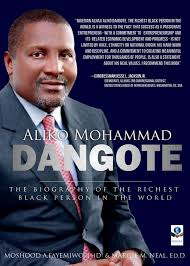
Aliko Dangote, like most billionaires in Nigeria, lives his life on a very lowkey, making it hard to demystify the secrets to his success.
Yet as entrepreneurs, we know that every success story thrives on a set of principles.
Hence, we continue to scavenge like hungry hounds, following each trail of a success story to unravel its mysteries.
Here’s what entrepreneurs learn from Aliko Dangote?
His lifestyle, ethical values, prudence, simplicity, ability to spot talents, the fear of God and other similar characteristics of other billionaires of the world are not hereditary but distinctly Aliko
Excerpt from: “Aliko Mohammad Dangote: The Biography of the Richest Black Person in the World” by Moshood Fayemiwo. Scribd.
Mind you; this is not another inspire to perspire type of post.
What this Article Entails:
While you may be familiar with motivational talks that don’t tell you anything new, this detailed breakdown may lead you to break bad financial habits and challenge you to dare like Aliko Dangote.
When I wrote a post about the top 10 richest people in Nigeria, one of the things that caught my attention is that they are hardly open to interviews.
No, they’re not trying to sell you another get rich quick scheme which is fronted as a book on how to succeed or 20 things Rich and famous people do.
Before I go further, you might want to read the book; Aliko Dangote. It’s available on Amazon, or you can read it on Scribd.
“A highly recommended book to anyone who enjoys learning about how different people of all walks of life become rich and successful, and what it takes to get to the top” —Readers Favorite Book (Starred Review), USA. “A compelling book about a unique personality in Africa” —Goodreads, USA. GoodReads
There are no shortcuts to success, and while most of this post are lessons from the book Aliko Dangote, I’ll encourage you to read the book for yourself.
Did you know Dangote’s maternal grandfather Sanusi Dantata was a wealthy trader in Kano? He traded in rice and oats. Sanusi’s father and founder of the Dantata legacy – Alhassan Abdullahi Dantata was also a wealthy trader whose cooperation with the Lever Brothers (Now Unilever), saw the establishment of the British Bank of West Africa now First Bank. But the era of the groundnut pyramid brought great fortune to Alhassan Danta. And few people recall that Dangote’s father was at some time the richest man in Nigeria.
But not all the fortune of rich men can boast of such trans-generational impact.
About Aliko Dangote
Early life
Born to Mohammad Dangote and Mariya Dantata, Aliko Mohammed spent very little time with his biological parents. For a while, he had come to know his mother’s sister as his mother and his grandfather as a father.
The Dantata boys come from a linage of wealth and business legacy. Their avoidance in direct politics even up to their fourth and fifth generation sterns from an oath made to their father – Pa Alhassan Dantata. This promise was born from a terrible experience that led to the death of a family member who had at the time dabbled into politics.
It was this commitment to stay off politics that led to Aliko stay in the Danata house.
Mohammed Dangote at the time was a famed Politian, and when he showed interest in marrying Mariya Dantata, her father Sanusi Dantata instead that his daughter would remain I his house after marriage.
So it was in this house in Koki Quarters kano that Dangote was born. The patriarch of the Dantata house named him Aliko while he took hi other names from his father.
The death of Mohammad Dangote further solidified Aliko’s opinion on dabbling into politics.
However, he has had great influence on the government for sole reasons of preserving his business investment.
Aliko disclosed in his biography that the reason he would be interested in the political future of Nigeria: he does not want “bad” politicians to control power and enact antiinvestment policies that would make him poor. “I do not want Nigeria to be another Zimbabwe so I am concerned about the political direction of my country, because if bad and inexperienced politicians control power in Nigeria, my wealth may turn into poverty.
Failed Businesses
Although Dangote is famed for his business conquest and house hold name, so much so that he was nicknamed Risk and who dares win.
Dangote prides on risk. His matra is that avoidable risk is not a reciepe for success in business and in life.
But Dangote hasn’t always won especially in an unstable business environment like Nigeria.
In May 2007 umaru Musa Y’ar’Adua seized the two Nigerian-owned refineries in Kaduna and Port Harcourt that were earlier sold to aliko Dangote. Instead of being fazedout, Aliko set up to building his own refinery.
Speaking about the refinery sale in his biograbhy, he says:
“How much did the government spend in 1989 to build these refineries? Obviously there would be depreciation after these many years. Here is something that was run down. You don’t now go and recover your money. We paid the price of $1.1billion, because the $561million we paid for Port Harcourt is 51 percent of $1.1billion. We didn’t buy the whole refineries. The government still owns 49 percent. We only bought 51 percent. And 51 percent of $1.1billion is only $561million. That’s how we arrived (at) $561million. In the case of the Kaduna Refinery, the Chinese which Nigerians don’t mind, if it goes to a foreigner, the Chinese were given juicy oil blocks. The day that they signed the production sharing agreement that was the day that they said: “We are not bidding, unless we sign and collect the oil blocks.” These guys signed and collected the oil blocks and they still priced the refinery at $102million. And they vowed they would not pay more than $102million. Then we said, fine, rather than allowing this thing to decay like that, we wrote to say we were interested also in bidding. The price that they gave was far below the reserved price. And now, we gave 60 percent more than the Chinese. And the Chinese said they were not going to put a dime more than $102million.”
Mr. Dangote continued; “We bought at $160million with all the challenges. But I thought this same refinery was given to Shell, to Chevron, to Texaco and they rejected them, saying they don’t want to even run them for nothing. And we have now paid over ₦100billion and people are shouting. I believe people should focus more on shouting about Eleme Petrochemical. Government spent almost $1.5billion and it was sold for $200million. And we bid. And we lost. And people didn’t see that. We bid for the same Eleme Petrochemical with a company that has never ever visited Nigeria. But because they are foreigners, they bought not even 51 percent, they bought 75 percent. And they were hailed. And they paid. And they got it. We lost as Dangote. And we spent more than $5 to 7million doing things like bringing experts to come and check and (follow) due diligence and all that. We lost our money and time. But Nigerians didn’t say anything because these are foreigners. That is by the side.”
“Look at the way and manner foreigners bought Ajaokuta” referring to his nation’s largest steel complex located in central Nigeria. “Ajaokuta almost made Nigeria bankrupt. The government of Nigeria spent $4.4billion on Ajaokuta. And all these foreigners don’t bring their money in here. Majority of the money they borrowed locally. They didn’t bring fresh cash. And these same people paid a paltry $300million for 60 percent of a plant that government spent $4.4billion
Delta Steel, government spent $1.45billion, then renovated it with ₦45billion (about $42million) and they sold it for $30million to be paid over three years. This one was also sold to an Indian company. They don’t have anything in Nigeria, but people now are not complaining. I am not complaining about the price these things were sold. What I am complaining about is that if you have to complain; then complain about foreigners taking our assets.”
Similarly, he took swipes at the sale process of Nigeria’s aluminium smelting company that was sold to a Chinese company as well “At ALSCON the smelting company, government spent $3.4billion. The Russians that have never ever visited Nigeria bought the company at $200million, with the condition that it is after the government dredges the river they would pay the $200million. And the cost of dredging the river is $260million. So you can see that government had to give out $60million out of their pocket to get rid of ALSCON. Excerpt from: “Aliko Mohammad Dangote: The Biography of the Richest Black Person in the World” by Moshood Fayemiwo.
Also, in his bid to purchase the Sugar plant at Bacita, Dangote went as far as making a marriage proposal to Mrs Josephine Oluwadamilola Kuteyi. The relationship did not work out for religious reasons and in 2006, Mrs Kuteyi would go on to own the Sugar plant after making a 2.5 billion naira down payment.
Mrs kuteyi ran the sugar plant with her sons up till 2011 when she died in a plane crash, while flying from her sugar plant to her home town in Ondo, Nigeria.
Going Global
According to a confidential cable message quoted in dangote’s biography, In 2011, the United States Embassy in Nigeria sent another confidential cable message to the State Department in Washington DC about Mr. Aliko Dangote. “Alhaji Aliko Dangote (Dangote) is founder, president and CEO of Nigeria’s largest national company, Dangote Group of Companies (the Group).
Dangote’s wealth and prestige are based on his family connections and political friendships yet he is esteemed by many Nigerians for his business acumen.
He has led the Dangote Group of Companies to unprecedented success in Nigeria, starting the company as a trading entity in 1977 and growing it to an estimated $700 million manufacturing or semimanufacturing behemoth that it is today.” The cable continued: “The Group is a household name in Nigeria and comes closer than any Nigerian company to market domination in many sectors.
The Group employs roughly 10,000 Nigerians and turns over a profit estimated at $1.3 billion. It runs 15 manufacturing and bagging facilities nationwide and has operations in industries as wide ranging as cement, sugar, wheat, textiles, polypropylene sacks, and property leasing. Part of the Dangote business strategy is to focus on provision of basic human needs: food, shelter, and clothing.”
In a December 1996 interview, Aliko Dangote admitted that a government mandate once forced him to import so much rice that the local market crashed by almost 80 percent. The direction of Government of Nigeria trade barriers also suggests preferential treatment. High tariffs or outright bans on imported items favor the Group in nearly all areas in which they do business including wheat flour, cement, certain textiles, sugar and pasta.
Further, the Government of Nigeria is normally slow in privatizing stateowned production facilities.
Yet the Dangote Group swiftly won bids on Government of Nigeria-owned manufacturing installations such as the Benue Cement Company and the Savannah Sugar Company, and constructed its own berth at Government of Nigeria-owned Apapa port in Lagos where ships with production inputs offload directly at the Dangote Group factory.”
The highly-classified cable concluded that Mr. Dangote was not operating according to market forces but like an insidertrading environment in which the Nigerian Government was his agents, disclosing that Dangote’s obvious unfair advantage and support from the Government of Nigeria are disturbing for US companies wanting to enter a market with over 130 million consumers. Conversely, some US companies indirectly benefit from Government of Nigeria restrictions protecting the Dangote Group of Companies, adding complexity to the Dangote paradigm. For example, Dangote allegedly receives unfair, preferential treatment to import bulk commodities. However, he is a loyal U.S. wheat customer and buys millions of dollars worth of other US products. General Electric makes much of Dangote’s machinery and the Group will buy about 300 used trucks (mostly made by International) from the US this year. Further, the Group secured a USD 310,000 grant from the Trade Development Agency in 2000 and aspires to a future Export-Import Bank loan.” – Excerpt from: “Aliko Mohammad Dangote: The Biography of the Richest Black Person in the World” by Moshood Fayemiwo.
What Values Can Entrepreneurs Learn From Dangote?
As the wealthiest man in Africa, Aliko Dangote has stayed true to the business niche as opposed to ploughing the political ladder. Another thing Dangote has proven is that one can be a jack of all trade and still master all. He started in construction then diversified to manufacturing and later fast-moving consumer goods (FMCG). One thing is clear he is not afraid to challenge the status quo.
Beyond this, Aliko Dangote is a big fish that is impossible to hide.
Although we know of his heritage, there may be more to Aliko Dangote’s. His success sterns from his mastery of the rules of success.
Over the years, Dangote has learned to apply these rules to his business while maximizing the opportunities around him.
Lessons for entrepreneurs: LEARN TO MAXIMIZE OPPORTUNITIES.
The Laws of Success
Recognize God’s Guidance and blessing:
Aliko’s most outstanding value is his faith in God. Like most rich people, Aliko always credits his success to God. He recognizes that his efforts may quickly work against him but for the mercies of God.
It’s amazing how people continue to make a mockery of religious organizations, yet the wealthy people continue to give their support to religious organizations. And these are not just by Nigerian standards only.
Dangote believes that one can go from the very top to the very bottom, and with the help of God, such a person will not find it difficult to adjust.
Like Rocke-Feller, Dangote belives that “the power to make money is a gift from God”.
The Law of Discernment
The law of discernment also refers to current information. Remember that one of the secrets of Dangote’s success was staying ahead of his competition. This comes through knowledge of the happenings around us.
As an entrepreneur, it is dangerous to lack discernment.
Aliko’s timely move from Kano to Lagos having discerned the capacity of the purchasing power of the residents in Lagos.
Success is 90% per cent guts and 10% capital. – Raymond Akerman.
Lessons for entrepreneurs: TAKE BOLD AND CALCULATED STEPS BY LEARNING TO READ EVENTS AND TRENDS INSTEAD OF WAITING FOR TIME
The Desire to Create a Need or a Service
Aliko, like other successful people in business, does not have money as their primary focus. Aliko understands the power of why.
His business decisions are inspired by the need for countries to look inward toward private entrepreneurship.
Little wonder why he consistently recognizes the opportunities within the manufacturing industry and conquered.
For all my life St. Louis sugar has been the household brand of Sugar in Nigeria, but with his insight, Dangote was able to create a need for home-grown sugar brand, and in a short time he surpassed the competition.
While most young entrepreneurs in Africa continue to explore the import trade, the tides are changing toward home-grown brands.
Lessons for entrepreneurs: DO NOT CHASE MONEY. RATHER, UNDERSTAND THAT MONEY MATERIALIZES AS A REWARD FOR IDEAS CONCEIVED AND EXECUTED
Savings and Prudence
This is one law that requires a lot of discipline.
Many are familiar with this law, but the challenge is in upholding it. And if you intend to succeed, you must pass this test with your finances.
Some business never grows above a certain level not because the business module is wrong or that the market is unfavourable, but because of lack of prudence.
Know this, Dangote was listed in Forbes as the richest man in Africa in 2012 and has held this position 12 years strong. It takes discipline, it takes guts, it takes a certain level of know-how and in the words of Dangote, it takes God.
Here is how Moshood Fayemiwo describes prudence in “Aliko Mohammad Dangote: The Biography of the Richest Black Person in the World.”
– Prudence entails punctuality, ability to exploit enterprising attitude for success, native intelligence, purposefulness, perseverance, and the spirit of not giving up in the face of multitudes of adversities. Prudence builds professionalism, optimism, inventiveness, versatility, tolerance, sociability, agility, efficiency, patience, and responsibility. As will be seen in the biography of Mr Dangote, the virtue of prudence permeates his entire business conglomerate.Excerpt from: “Aliko Mohammad Dangote: The Biography of the Richest Black Person in the World” by Moshood Fayemiwo. Scribd.
The Law of Hard Work
Passion is what drives me forward. – Aliko Dangote
There’s this common saying among young people; “Work hard, so your children don’t have to work.” Or they’ll say “Work hard so you can make money while sleeping.”
While it makes a catchy tweet, it’s built on the false notion that billionaires like Aliko Dangote sleep and make money.
Billionaires work hard, especially those with a genuine source of wealth. They don’t consider hard work has been hard, and it’s become a part of them, it excites them!
“I have never seen any Nigerian that has really made money from inheritance. It is very, very difficult. And that is why I would always encourage my own children to work very hard especially when it comes to making their own money. I am not saying that they shouldn’t rely on the fact that yes, they come from a rich home. But sometimes, it can be a great disadvantage. Because there are some certain businesses that you wouldn’t like to do because you name is so and so.” – Aliko Dangote
The notion that you can get rich and stop working and yet stay rich is as ridiculous as the idea that adulthood is a time to have fun and do whatever you want to do. It downplays the level of work required to build a lasting legacy.
Dangote’s passion for Nation building ahs kept him going strong. While he may have benefited from Nigeria’s privitization of it’s public assets, hi brand remains one of the most successful amongst all investors.
He has ecome a house hold name not out of share luck but for consistentle delivering quality products to the Nigerian market.
The Law of Contentment and Simplicity
This law may be hard for the millennial entrepreneur, whose existence is hooked to the Instagram lifestyle.
Aliko once said; “I am just myself, it does not matter if you have a dollar or a million; life is very transient.”
In 2016 when Mark Zuckerberg visited Nigeria, one thing that stood out was the simplicity of his person.
Many of the worlds wealthiest people live a simple and contented life.
Often, it is the not-so-rich that tend to flaunt their wealth in a desperate attempt to flaunt their possessions and gain approval.
Inspite of all of these, some still critize Aliko’s breakthrough to his link with the government, forgetting that like his father’s who succeeded in business, Aliko was raised to respect constituited authorithy.
On Building Business Relationships
Another credit to the Danatata legacy which dangote incorporated is in clan solidarity. A threat to one is treated as a threat to all. This has helped dangote in building the dominating brand Dangote in any field he has been involved in. from textile, to Cement, to Sugar and salt and all other fast moving consumer goods.
His relationship with Obasanjo dates back to his days in Kano when young Dangote lived amongst his family, learning how to navigate the polital and business sphere of Nigeria. Dangote also builth a relationship with Atiku Abubakar in the days when Atiku was the chief of Nigerian Customs and Aliko was an importer.
Dangote learned from the Dantata’s who were known to not create business partnership. They practised a neopatrimonial system of business which helped them maintain dominance. Though the brand Dangote as grown into a publically traded company, Dangote remains the highest share holder.
Business Requires Dynamism
Dangote has moved from being an importer to a manufacturer. This shift was inspired by a vist to brazil in the 1980s.
Dangote saw that Latin America was able to sustain home-grown needs despite its foreign debts.
He was particularly inspired by Arisco Produtos Alimenticios SA located in the Arisco region of Brazil. Arisco at that time could be regarded as the Wal-Mart of Brazil. Arisco manufactured canned and household goods, grew foods and groceries and concentrated on the three essential human needs of food, clothing and shelter, ranging from salad dressings, tomato products, canned soups, mayonnaise, seasonings, ketchups, noodles, to deserts, bouillons and many more. Today, the Brazilian food chain has been acquired by Unilever Best Foods Holding Corporation.
This new revelation led to Aliko repositioning his companies through what he describes as “backward integration toward manufacturing instead of importation.”
Lessons for entreprenuers: IN THE CHANGING ATMOSPHERE OF THE BUSINESS WORLD, BE WILLING TO EVOLVE, TO UNLEARN AND RELEARN AND IF NECESSARY, RESTRUCTURE.
From the patriarch Alhassan Danatata, who rebuilt his father’s trade route at an early age, the Danata’s have made a legacy from rebuilding and refining ancient landmarks.
Dangote was able to accomplish such fit by hiring proffessionals that
“My story is the story of a man and a brand Nigerians have come to know, to love and to accept. Nigerians are investing in us because they believe in us, they believe in the name Dangote. Apart from believing in us, we have a track record which we have actually shown. If you look at all our factories, they have grown steady and gradually to where we are today. In all modesty, we can say we have done very well. There is no business that we are in and we are not No.1. The worse one that we have, maybe we have a second position. That in itself is our business strategy. We aim to dominate our market, to lead in every market segment. They have all been run efficiently and professionally by people who really know the business very well. We have a very good brand name and that is part of what many people are actually investing in. They are not really investing in Aliko Dangote only. They are investing in the Dangote brand. They believe in my own business acumen but it is not the only thing that people are investing in. – Aliko Dangote.
Conclusion
It takes a wise man to build a house, how much more a legacy. Wealth, like anything of value in life, is based on laws, principles, and secrets. While most of the books on wealth creation are mostly foreign. An in-depth study, such as this may reveal a lot about what it takes for an entrepreneur to succeed in the business terrain of Nigeria.
The discussion on whether NYSC has outlived its importance remains an impassioned debate among Nigerian youths. Many youths are of the opinion that it’s high time the program took a new turn, while many believe it’s a total waste of time. Whether you are for or against the program, you have to agree that NYSC is a necessary evil.
Both government and private organizations have been mandated to request for NYSC dispatch certificates before employing graduates. Even if you don’t intend to work for anyone in the near future, you can’t tell when having an NYSC dispatch certificate would give you an edge when pursuing a political position or a contract.
The NYSC, just like everything in life, has its pros and cons. If you are a new or a prospective corp member who wants to grasp what the program is all about, and how to best put that one year into excellent and productive use, then, this article is for you.
What You Should Know Before Going in for The NYSC Program
Before embarking on a life-changing journey like NYSC, it is important to research into what awaits you and you might best leverage what lies ahead.
Here is a list of some the things you should know before going for your NYSC program:
Community Development Service (CDS): Corpers are to work together to positively impact their host communities. This is usually once a week.Download the CDS survival guide here.
Place of Primary Assignment (PPA): After passing out of the orientation camp, the next stop is the PPA. PPA is the place that corps members are posted to, to serve for the next 11 months. It can be a school, private organization, local government, hospital, or other places. Your place of primary assignment is essential to your future. It is a place that has been a determining factor to the success or otherwise of the most corps member. You may find information on how best to leverage the Place of Primary Assignment here.
2. Understand the Purpose
The best way to get the best out of anything is to identify its purpose. Quite a number of corpers and ex-corp members are passing or have passed through the program without adequate knowledge on why the program was established. The main purpose of the program is to bridge the gap in cultural diversity among Nigerian youths.
Involve Nigerian youths in nation-building, raise the moral tone, inculcate discipline through industrial work and impact the spirit of self-reliance through skill development. A proper understanding will help to rightly position yourself to make the most of NYSC.
3. Research About Your Choice States
While registering for the program online, you are to choose four states out of four regions you’d like to be posted to. It is important you ask the right questions, carry out proper research before choosing any state, because you are likely to be posted to any of the four states if you register early. Ask recent ex-corpers that served in those four states everything about the state. Here are a few things to consider before picking the four states:
Security
Standard of living
State allowance
Growth potential
Network coverage
Power supply
Distance from your base
Business opportunities
Social life
4. Have the Right Mindset
A large percentage of people who never got the best out of the program were mostly people who went with prejudice. They already passed judgment on the program before they started the program. Most people concluded it was a waste of time and didn’t do much to make the program worthwhile.
Don’t conclude before starting the program that it will be a wasted one year. Leave an open mind until you get there and see things for yourself. See opportunities where many people see problems, think growth where people think stagnation, and believe that everyone’s experience mustn’t be the same.
5. Be Ready to Associate
Have it on your mind that you will meet Nigerian youths from different ethnic groups. This is one of the core purposes of the program – youths to meet other youths of different cultural backgrounds. The people you’ll meet during the program goes a long way to determine how fun and worthwhile it will be for you.
Some of the people you’ll mingle with will become life-long friends and helpers when you least expect them. Don’t be a lone ranger because you’ll end up missing out on other perspectives.
Documents Required For NYSC Clearance
You are to present the following documents on your arrival in the orientation camp:
1. NYSC call-up letter: A print out of this letter serves as proof that you were called up by NYSC to attend the program. You’ll need about 5 copies of this letter. Please, note that you are not to laminate your call-up letter for any reason.
2. Green card: The green card contains your bio-data. You are required to present the signed copy during your registration.
3. Medical report: This was introduced in 2017 to prove that you are physically and mentally healthy to partake in the orientation camp. You are required to present a medical report from any government or military hospital as a clearance. If you have any illness, it is advisable to make it known in your medical report. Without this document, you will not be allowed to register in the orientation camp.
4. Statement of the result: Your statement of result from your school proves that you are a bonafide graduate of that school. Mind you, you shouldn’t laminate your statement of result because if anything happens to the seal on the document, it is declared invalid.
5. Valid school identity card: You’ll be needing this as a means of identification in the camp until the original NYSC identity card is given to you.
6. Licenses and certifications: Lab scientists, nurses, pharmacists, doctors, and other medical graduates are to present their licenses and certification. Pharmacists are to present their certificate issued by the Pharmacists Council of Nigeria (PCN), Nurses are to present a certificate issued by the National Association of Nigeria Nurses and Midwives (NANNM), and doctors are to present their license from the National Medical and Dental Council of Nigeria (NMDCN).
7. Passport photographs: You will have to provide about 15 passport photographs taken in a white background.
8. Foreign students: Foreign students are to come along with ALL the documents they uploaded when they registered online.
9. Photocopies: To save your time, money, and energy, and help you quickly settle in, it is advisable you make 5 photocopies of every document.
Your Daily Needs
White shorts, and white t-shirts
Plain white tennis shoes or sneakers
Waist bag or pouch
Treated mosquito net
Small padlocks for locking your bags
Toothbrush and toothpaste
Drugs like painkillers, antibiotics, anti-cold, cramps, allergies, catarrh. Aboniki balm and shea butter for massaging your legs.
Towels, soap, detergent, disinfectant, and antiseptic
Face towel and handkerchiefs
Sunglasses and anti-sunburn cream
Bed covers, pillow, and pillowcase
Plate, cup, flask, spoon, water bottles, and fork
Beverage, golden morn, cornflake, oat, and custard
Cash and ATM cards
Extra SIMs: Get all the network services if you can. You don’t know the network service that will be active in the camp.
3 colored clothes for Sunday services.
Running or football boots if you are a track or football lover
Camera for capturing the moments
Advantages and Disadvantages of The NYSC Scheme
The NYSC like everything in life has its pros and cons. A large percentage of these debates about the NYSC hinge on the positives and negatives.
What are the Importance/Positives of the NYSC?
1. Self-discovery: NYSC has given corpers the platform for self-discovery. Through Skills Acquisition & Entrepreneurship Department (SAED), many corpers were able to discover themselves and create a path for their lives and careers. SAED classes are a bedrock on which a number of enterprises are being born. As mentioned earlier, the program will be profitable if you embark on it with the right mindset.
2. Federal immunity: As a corper, you’ll enjoy federal immunity due to the fact that you are seen as federal government property. The uniform or identity card gives you an audience in places ordinary people can’t get through to. You’d be given preferential treatment unlike every other civilian because you are seen as a person who is serving his or her nation.
3. Networking and socializing: People have met people who positively influenced their lives during their service year. Some found love, while some found friendship and connections. NYSC is a platform that brings the rich, poor, and influential youths to the same level.
4. Creation of job opportunities: This is arguable, but we can’t deny that ex-corpers who were exceptional haven’t been retained in the places of primary assignment (PPA). It is common among those corpers that served in private organizations.
5. Dispatch certificate gives you an edge: This is the most important reason most Nigerian youths partake in this program. The dispatch certificate issued by the NYSC makes them employable. Most companies in Nigeria would ask for your NYSC dispatch certificate before employing you.
6. Respect and recognition: The respect and recognition that comes with the NYSC uniform is quite enviable. People will respect you, give things to you, and even sell things to you at cheaper prices for simply being a corper. Those who serve in rural areas enjoy a little privilege from their host communities.
7. Soft loans: The NYSC in collaboration with the Central Bank of Nigeria CBN and Bank of Industry (BOI) grant loans to interested corpers who would like to start a business. Your collateral is your dispatch certificate.
What are the Disadvantages/Negatives of the NYSC?
1. Time wastage: People who are calling for the cancellation or the restructuring of NYSC say so on the basis of time wastage. They believe that if a large percentage of corpers are forced to teach in classrooms, work in government parastatals, and places not relevant to their career growth, then, it’s a waste of time. Everyone can’t be classroom teachers.
2. No insurance scheme protects corpers: It’s absurd that a program as big NSYC doesn’t have any insurance scheme protecting corpers from harm and risks. People have lost their lives in the process of serving Nigeria, and the federal government didn’t do anything for their families. Training a child to the level of serving Nigeria and losing that child during NYSC is something most parents are scared of.
To make the matter worse, the program keeps posting corpers to dangerous environments that endanger their lives.
3. Lack of job security: It is devastating to pass through the program only for youths to go back to joblessness. NYSC to an extent should serve as a means of employing exceptional youths into the civil/public service. When this is done, youths will take the program seriously and not only do so because of the dispatch certificate.
Survival Tips For NYSC Orientation Camp
How Corp Members Can Channel Their energy During NYSC
1. Skill acquisition: You don’t need to pass out of NYSC to know that there are very limited jobs for Nigerian youths. To avoid frustration and depression while job hunting, it is advisable to learn a skill or two to help keep body and soul together before the dream job comes. There are many skills you can learn during your NYSC. Here are some of them:
Decoration and event management
Cake baking
Makeup and hairstyling
Barbing and dreadlocking
Driving
Auto repairs
Digital marketing and social media management
Video and photo editing
Graphic designs
Sound engineering
Cosmetology
Car tracking
2. Take professional courses: Entrepreneurship isn’t for everyone, so if you fancy corporate life, you can improve and update your knowledge by taking some professional courses. Some of the certificates issued after completing the courses help boost your chances of getting a job. These courses are discounted to corpers.
Here are some of the certificates you can acquire during your NYSC:
National Institute of Management (NIM)
Project Management Program (PMP)
Advertising Practitioners Council of Nigeria (APCON)
Health, Safety, and Environment (HSE)
Environmental Impact Assessment (EIA)
Institute of Chartered Accountants (ICAN)
Chartered Institute of Personnel Management (CIPM)
3.Learn how to apply for scholarships: If you are among those that have concluded that Nigeria is no longer for them, the best time to strategize on leaving the country is during your NYSC. There are many scholarship tutors that will teach you how to successfully apply for scholarships. Make sure you take your IELTS and TOEFL exams while you are learning and applying for scholarships.
4. Intensify your jobhunt: If you’re already well-equipped for the labor market, there’s no need to wait until you pass out of NYSC to start applying for jobs. You can decide to dedicate your service to applying for jobs and going for interviews. People have done this and they landed jobs even before they were done with service. Your monthly allowance can help you scale this phase.
5. Start a business: You can make money while serving by starting a business. Look around and see what people lack that you can easily sell to them. There are business opportunities everywhere, so it’s up to you to locate them. With the loan from the Bank of Industry (BOI) and Central Bank of Nigeria (CBN), you can kick start that amazing business idea you have.
Possible Changes To the NYSC
We’ve heard a lot of suggestions from people regarding how the program should be restructured to make it more efficient for everyone. But, there’s a problem with all the suggestions we’ve received about the program.
Here are some of the popular suggestions:
1. NYSC should be optional: You must have heard the “NYSC shouldn’t be compulsory” statement a couple of times. People are of the opinion that youths should decide if they want to participate in the program or not. We all know that if this is made possible, the program will die a natural death because youths won’t participate, especially when the certificate is no longer a compulsory employment requirement.
2. Financial empowerment for corpers after orientation camp: People with this opinion believe that after the three weeks orientation camp, that the government should pay the corpers the sum of the total allowance at once. They believe that teaching and working in other government parastatals are a total waste of time and resources. And, that the full allowance should be given to corpers to help finance their dreams.
If this is to happen, we’ll have to agree that a lot of people who are employed by the NYSC and vendors with losing their jobs/businesses. Aside from that, the main purpose of uniting Nigerian youths will not be accomplished.
3. NYSC should be scrapped: As shocking as it may sound, this is the most popular opinion regarding the NYSC. People have come out to talk about how disadvantageous and dangerous the program has become. Their pain is based on the killings, kidnapping, and raping of corpers. These people also believe the program has outlived its relevance, and that the country isn’t worth the sacrifice.
4. Corp members should serve in their regions: These are from people who still have a little faith in the program. They support everything about the program, but they are of the opinion that corpers from each region should serve their region, and not travel to other regions due to the killings and accidents. If this opinion is adopted, it means the main purpose of the program has been defeated.
How do they bridge the gap in cultural and tribal differences if corpers are to serve regions?
Has NYSC Been a success?
For something to be a success, it must have impacted up to 80% of the population. Sadly, only a very few can say that NYSC has been a success. NYSC has left many voids to be filled and many unanswered questions. Take away the N33,000 monthly allowance and dispatch certificate, and there might be nothing left to pick on the positive sides of the NYSC scheme.
The Experience of A Corp Member
Grounds For NYSC Redeployment
Redeployment is a process that should be initiated by the corp member. Redeployment can only be started in the camp after the swearing-in ceremony which can only be implemented only after the camp. There are however laid down conditions/factors that make the redeployment possible – Awajis
Here are some plausible factors why your redeployment might be granted:
Marital reason: Female corpers who are married are to apply for redeployment after the swearing-in ceremony. They are to write a letter to the Director-General addressing it through the State Coordinator. Attached to the letter are their marriage certificate, change of name in any national newspaper, and a letter from the husband’s place of work which shows that he lives in the state the wife wants to redeploy to.
Medical reason: If you are redeploying on medical ground, you’ll need a medical report from any government or military hospital stating that you have such an illness. Mind you, the medical report isn’t the only clearance you’ll need. They are likely to further investigate your claim.
Security reason: Security is a good reason to seek redeployment if the corper feels he/she isn’t safe in a state of deployment. Corpers posted to Gombe, Borno, and other northern states are plagued with security issues tend to redeploy to other states.
The issue of Boko haram in these northern states has made it possible for corpers posted there to seek redeployment. Besides, families aren’t at peace whenever their loved ones are posted to any of those states.
How to Redeploy While in NYSC Orientation Camp
There’s no need to get worked up if you don’t like your state of deployment. While in camp, you would have the opportunity to apply for redeployment. You won’t be the only one redeploying, you’d find other corpers seeking redeployment.
You’re to write an application letter, fill a redeployment form, and attach your documents/evidence that back up your reasons for redeployment.
How to Apply for NYSC Redeployment/Relocation Online
Log into the NYSC Portal with your email and password
Click on the “Relocation” option to register.
Fill and answer each question
Wait for your approval or rejection of SMS/email.
You’ll be notified via SMS/email if your redeployment was approved or rejected.
Application Requirements for Relocation/Redeployment in the NYSC Orientation Camp
Letter of application
Redeployment form
Documents/evidence backing up your reasons for redeployment.
How to Print Out Your Online NYSC Redeployment/Relocation Letter
Log on to NYSC Portal with your email and password.
Click on “Manage Relocation.”
Make a payment of N1000 through Remita.
Print out your payment receipt.
After payment, you’ll see “Print out relocation/redeployment letter” on your dashboard.
Print your relocation letter and photocopy.
Take the letter to your new state of deployment.
What is the Age Limit for NYSC?
The age limit for eligibility for the NYSC scheme is 30. If you’re 30 years after completing your HND or BSc, you’re to apply for the NYSC exemption certificate. Click on the link to find out more about the certificate of exemption.
What is FAQ?
Lorem ipsum dolor sit amet, consectetur adipiscing elit, sed do eiusmod tempor incididunt ut labore et dolore magna aliqua. Ut enim ad minim veniam, quis nostrud exercitation ullamco laboris nisi ut aliquip ex ea commodo consequat.
Have you ever heard the words – “Your network is your net worth”?
Friends that do not discuss ideas that can help you generate money would either get you broke or may not be able to bail you out if you get broke. Your friends determine your value, choose them wisely.
I bet you have heard a lot of quotes on money. One such quote is – “Money can’t buy happiness”. Well, I’ve got an advice for you, if you believe a bit of that, you need to stop reading this article, right now. Who believes such in this age and time anyway?
Of the many money quotes out there, the one that I find to be so hilarious is “Money is the root of all evil”. That statement has so gotten into the heads of the majority of people in our society that it has become taboo amongst some friends to discuss their success stories.
Most friends now find it easier to let their friends know when they are not doing well financially, but unable to tell them when they are successful and making more money than their peers
What is even worse is that some friends do not want you to talk about your success stories when you are around them. This may sound odd, but did you know that you will eventually get to be affected by the energies given out by your friends? Friends who feel bad about your success would do anything possible to pull you down.
Friendship is an elevator – It is either taking you up, or taking you down. It is therefore imperative to choose the friendships you go into carefully.
Here Are 5 Secrets To Help You Find Productive Friendships:
Define What You Want in A Relationship
Take some time to evaluate your relationships. There is no better way to know what you want than to evaluate yourself and get to truly understand you. By evaluating yourself you would be in a better position to set the right expectations for your relationships, know what you lack, and what is needed to achieve your expectations.
Most people expect the best from their relationships but only a few define what they truly expect and know what it takes to get what they expect. Learn to define your relationships and you would not be easily disappointed by your friends.
Take control: Evaluate Your Friendships
Unlike family, you have the power and the right to choose the people you mingle with. Without mincing words, we get affected by the energies of the people closest to us – Our friends.
Studies have suggested that having solid friends can help us live longer and thus by extension, having toxic friendships may affect our life’s expectancy level. It is important to always take a step back and evaluate the friendship you are in.
While evaluating, however, do not forget those good friends may also have their bad moments. What you should look out for is how often those shaky moments come and if you are getting as much as you are putting into the friendship. If you feel that you’re not getting out as much as you’re putting in, and you find yourself thinking hard on this regularly, your friendship could be unhealthy, or even toxic.
No Unnecessary Freebie For Friends
Years back, I went into a business relationship that became a friendship. We met through a mutual friend of ours. I was told that he was having some issues with his staff and he needed to get them trained so I was called in to help train his staff.
Somehow, our business relationship turned into a friendship and he was somehow able to pull me in to fill the void created by his staff, the one whom he sacked after I trained them. It turned out that the said staff lacked the qualities the organization needed to grow.
Long story short, we became friends and I agreed to stay and fill the void while he does everything to get the staff replaced. Unknown to me, my newly acquired friend did nothing to replace his staff and he managed to keep me in a rat race. I received no compensation for my work and all I did was work for a friend, freely.
Do not get caught up in such a rat race – friends who would not pay you for your professional services are not real friends. Every true friend should support the other to grow. Seriously, Change Your Circle of Friends If They Don’t Discuss Money Often.
Associate With Friends Higher Than You
Some researchers have suggested that you cannot be richer than the average wealth of 5 of your closest friends, in fact, your net worth tends to mirror that of your closest friends. It, therefore, means that it is better to always associate with people on higher levels than yourself if you ever want to take your career, or business to the next level.
One of the benefits of moving with people higher than you is that they affect your mindset positively and expand your mind to greater possibilities. It is natural to feel most comfortable with people who are like you or below you, and that is not so much of a bad thing.
However, no one ever gets rich within a comfort zone, it is good to step outside of your comfort zone once in a while and spend time with people who can expose you to greater things, new friends and useful that you may not have gotten fro mingling with friends on your level.
Give what you expect to get.
If you expect great friends, you first have to be one yourself. If you live by the Golden Rule of treating others as you would want to be treated, then you won’t be disappointed — you will find your friendships fulfilling and rewarding.
Do your friends meet the criteria above? Can you call any of them your purpose partners? If so, then great! If not, then it’s probably time to branch out and start establishing some new relationships. With the secrets above, you can boost the quality of your relationships and your long-term success.