Author: Omoleye Omoruyi

  • CBN says businesses in Nigeria must accept eNaira

    CBN says businesses in Nigeria must accept eNaira

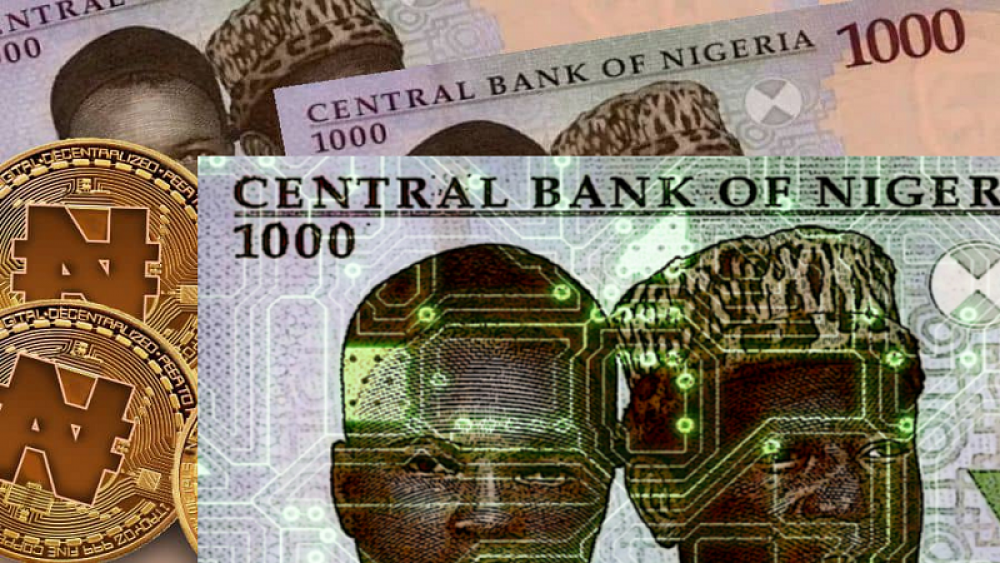
    The Central Bank of Nigeria (CBN) Director of payment system management, Musa Jimoh, disclosed during an interview on Channels TV’s ‘Business Morning’ show Monday that Nigeria’s digital currency, eNaira, is a legal tender just like the naira that must be accepted by all merchants and business outlets as a form of payment in the country.

    “Today, anywhere you present naira to pay, compulsorily it must be accepted because that is our fiat currency. So, the same way naira is accepted that you can’t reject it, is the same way eNaira must be accepted,” Jimoh said.

    While urging Nigerians using android and iPhone mobile devices to download the eNaira wallet from October 1 from the application stores respectively, Jimoh said the CBN will bear all liabilities of the digital currency.

    “The liability of the eNaira money is directly on CBN which is similar to the cash you hold. The liability of the cash you hold today rests with the CBN. So, it gives Nigerians the opportunity to bank with CBN,” Jimoh said.

    Read also: Nigeria Announces Own Digital Currency eNaira in Partnership With Bitt

    Asked if Nigeria is ready for the eNaira implementation due to the technological challenges in the country, the official said that he does not expect it to pose any serious problem.

    “ENaira is a journey. We don’t expect that on October 1, all business merchants in Nigeria will accept it. We don’t even expect that come October 1, all Nigerians will have eNaira. It is a journey. It will continue to grow,” he said.
    eNaira and the CBN

    He added, “remember there was a time in this country when you had to practically beg business outlets, merchants and others to accept POS transactions. But we have come to a point where traders now beg for POS terminals.”

    Jimoh noted that one of the benefits of the eNaira is that it would save the cost of printing new naira notes, and that charges incurred while transferring funds would be lower for those using the eNaira.

    “Today the cost of producing the naira and coins is very high. It costs money to print naira in this country. Now, the minting of eNaira is electronic, so it reduces cost,” he said.

    When asked why the CBN chose a foreign firm to collaborate with on this, Jimoh said it had to do with capacity.

    He said Bitt Inc. which will handle the project, had done similar projects for other countries and already had the capacity and experience, but that the company would be registered and managed in part by Nigerians while the technological aspect would be handled by the foreign arm.

    “What we did is to partner with an entity that has done it, that has that experience because we know that eventually, the system is going to run in Nigeria.”

    “So, we also want to domicile some responsibilities here. So, the arrangement is such that you are going to have a Nigerian incorporated company, Bitt Nigeria, which will be running the system,” he added.

  • CBN governor says abokiFX owner, Olumide Oniwinde, will be prosecuted

    CBN governor says abokiFX owner, Olumide Oniwinde, will be prosecuted

    Coming out of the recently concluded MPC meeting by the Central Bank of Nigeria (CBN), the CBN Governor, Godwin Emefiele Friday, September 17, 2021, referred to Olumide Oniwinde, the owner of abokiFX as an illegal FX dealer who will be prosecuted for acting against the Nigerian economy.

    AbokiFX is a website that publishes the parallel market exchange rate of the Naira against other currencies of the world on a daily basis.

    According to the governor, Olumide Oniwinde started abokiFX in 2015 and has since milked the economy by taking position, while manipulating the exchange rate. “The CBN act section 2, does make it clear that only the Central Bank can determine the value of the naira, and yet a single individual living in England continues to manipulate the exchange rate and make huge profit which he withdraws through an ATM in London,” Emefiele said.

    Read also: 5 ways we think work will change

    He stated that abokiFX has been filing the same figures of 1,000 pounds in its financial statements for the past four years, but Oniwinde and the company has over 25 bank accounts in Nigeria with about 8 banks both in naira and dollar with significant turnover.

    He also confirmed that the apex bank wrote a memo to banks to provide the information about abokiFX as he stated that the CBN has been studying the activities of abokiFX in the last two and half years.

    “There was a particular time I asked our colleagues to call the so-called owner of abokiFX, that we want to understand his model and how he came about advertising those rate, we find him as someone, a Nigerian who lives in England and conducts this nefarious activity on our economy.

    “It is economic sabotage and we will pursue him, wherever he is, we will report him to international security agencies, we will track him, Mr Oniwinde, we will find you, because we cannot allow you to continue to conduct an illegal activity that kills our economy.” Emefiele said.

    Emefiele reiterated that their preliminary findings suggest that the website was built and is being used purely for the purpose of foreign exchange manipulation and speculations. “They get naira loans, use to purchase dollars, take a position, change the rate over a given period, sell the dollars they purchased and make a profit, this is completely illegal, unacceptable and we will pursue them,” he explained.

  • 5 ways we think work will change

    5 ways we think work will change

    Someday, sometime, maybe soon, when vaccination becomes a pop culture, the world may want to reverse to what is now called the new normal. But in its wake, a phenomenon as massive as a global pandemic will leave many things different, including how we work.

    High skilled workers whose jobs are computer-based will likely see (already see) the most changes, from physical locations to technology changes and upgrade to the ways productivity is determined. The changes we experience are really going to affect our personal lives to new inventions and the society as a whole.

    The changes also highlight a chance to remake how we define work and learn from the mistakes of the past. We listed these changes that may stay after the pandemic:

    Read also: The question persists: Are Nigerians ready for the future of work?

    Work from home is a permanent phenomenon

    If there is going to be a time when work from the office is going to be enforced again, it is not going to be after this pandemic – knowing that many people will continue to work from home. This is because working from home has worked in tremendous ways for both employees and their bosses.

    Productivity has hardly been an issue and many of the things we thought won’t work – homeschooling and working – are going to become constant realities.

    Working from home allows people to skip their commute – talk about the traffic in places like Lagos – and can give them more flexibility in the hours they work. That is surely deal employees are willing to put their signature on.

    The office will be to some other use

    The office will still play an important role in people’s work – thought differently. The office will now be a tool in our toolkit to get it done differently. Time in the office will be geared toward collaborative work that’s more challenging at home.

    When that becomes normal, we will think of our offices only as shared spaces.

    We will pay more attention now to AI, automation, and freelancing

    Cliché, but what does not kill you makes you stronger, and that’s when you clean the blood from the fight and move on. A lot of workers lost their jobs in 2020 because companies had to prune their gardens, but it made the freelancing industry bigger.

    Also, now we understand that with more automation and artificial intelligence, more barriers to getting work done will become history. So, we are looking at quicker, more intelligent, and possibly even more creative work.

    Productivity will be redefined

    We used to measure productivity using the time workers spent in front of their laptop acting busy, the time they resumed work, the time they left and their countenance interacting with other co-workers. All that will change.

    Productivity metrics will be more qualitative. We will look at productivity using results rather than quantity. That metric will excite workers because attention will now be paid to quality rather than time spent on a task or project.

    ‘Company culture’ may phase out

    We were just beginning to intensify on the concept of company culture before the pandemic came to disrupt our lives. And, because work from home will become a culture, it will be much harder to talk about company culture – after all, workers won’t be working from the same room.

    We will observe that workers now limit communication to co-workers they directly work with. So, even if the pandemic goes, that trend may continue. Without interactions with a wide range of people at the company, company culture suffers since people aren’t exposed to the same set of behaviours and values.

  • 100 days of Twitter ban: Small businesses collapse, others struggle

    100 days of Twitter ban: Small businesses collapse, others struggle

    100 days after Nigeria banned Twitter, the microblogging platform has lost about 23.44 per cent out of its 25.52 per cent market share before the ban. This is as other social media platforms like Facebook and Instagram gain massively from Twitter’s losses. According to Statcounter, a global social media statistics platform, as of May 2021, Twitter had a market share of 25.52 per cent in Nigeria, but this has drastically reduced to 2.8 per cent as at August 2021.

    This is as Netblocks, a watchdog organisation that monitors cybersecurity and governance of the Internet, said since the ban, the country’s economy has lost over ₦217 billion. The platform said it relied on the booking institution method which uses development indicators, approximated digital economy extent of 0.05 and classic free app GDP impact technique to arrive at its conclusion. 

    But, the economy is largely driven by small businesses and those who have incorporated Twitter into their operations are suffering from the ban.

    According to the president of the National Association of Telecoms Subscribers of Nigeria (NATCOMs), Chief Deolu Ogunbanjo, many small businesses have collapsed and there are huge job losses in the country.

    Nigeria’s president, President Muhammadu Buhari said the ban would be reversed after having reached an agreement with the social media company on a number of issues. But, there are no developments in that light and, it seems the ban will continue until the end of the year.

    Businesses, especially Small and Medium-scale Enterprises (SMEs) and governments at different levels continue to bear the brunt of the suspension as the economy continues to take a hit.

    In its report, NetBlocks revealed that each hour of the suspension costs Nigeria $250,000 ( ₦102.5 million), bringing the daily loss to ₦2.46 billion.

    “Many small businesses have collapsed and there are huge job losses after 100 days. We appeal to the government to have a rethink. 

    “With the COVID-19 Delta variant now escalating in the country, the government should not deprive people of access to social media, especially those who get their daily information from the platform. Some peoples’ lives are practically online, so, the government should not kill that space.

    “We appeal to them to bring Twitter back as fast as possible so that the economy can bounce back as well,” Ogunbanjo says.

    RELATED ARTICLES

  • 3 things to know before you take in investors

    3 things to know before you take in investors

    As a small business owner, the idea of embracing investors and getting a big check can seem like a complete win for you and your business. In fact, when SMEs want to expand their business, or are going through a financial crisis, they hardly examine their options before they take on investors.

    With a $50,000 dollar investment fund, SMEs could give as much as a 30% stake in the company, and before the money is spent, the investor and the founders are already at loggerheads as to how to make profit.

    Early and late disputes show the importance of having an intelligent governance structure, such as a board, and outlining the rights an investor has in company decisions. When you decide to add an investor, be sure to clearly understand how much of a stake they’ll have in your company.

    Read Also: What is Your Job as a Startup Founder?

    First, network

    Every small business or startup needs working capital, and that means finding good investors. It is not always about finding who to work with, it is about building smart relationships. It’s important to remember that investors are investing in you as much as they’re investing in the company.

    Before you take on an investor for your small business, you should first build and maintain a network. Oftentimes, we find good investors from our network, from family, from friends. It could also be people from secondary school, your university or professional associations.

    When investors get in to your company, they are going to be there a while, and they will be there to help you – and guide you – through the difficult times and stages of the business’ growth. But, those kind of relationships take a while to develop.

    Talk to your mentor

    You can have a series of conversations with your mentor who can give you advice on your journey. Your mentor may be more helpful than getting an investment manager or lawyer.

    Understand the agreement

    Talking to an investor usually seems it is going to be an easy ride. But, in truth, there are a lot of legal clauses you need to understand and negotiate before you finalise plans to take on an investor.

    When on the negotiating roundtable, you won’t get all of these clauses completely in your favour, nor should you. But understanding the implications of the clauses, instead of just signing whatever is put in front of you can be the difference between an investor option that leaves you a multi-millionaire and one that leaves you looking for another job.

    While crowdfunding platforms may also be a good way to raise capital, angel investors and venture capitalists are more expensive and tend to be more for technology-based companies than Main Street businesses.

    investors provide guidance and feedback, you need them…only at the right time.

  • Why SMEs must tech up their operations

    Why SMEs must tech up their operations

    Digitisation is a big deal for Nigerian SMEs. Sometimes, it is not for the fact that they do not want to key in to new technologies, it is sometimes because they are held tight by hostile policies. Yet, market volume or business growth opportunities, should keep SMEs motivated – unless they do not have long term goals.

    Organisations still drag their feet to resolve skills related issues: top management lack digital leadership skills, IT professionals are almost non-existent, and employees lack adequate skills. All these – skills shortages and gaps – hinder startups from defining their growth strategy and enable employees adapt new technologies.

    Indeed, the pandemic caused a quick shift and SMEs are still struggling to survive the tide. In fact, the average SME is trying to absorb shocks to demand and labour while adapting to what is now regarded as new normal. And, when there was talk of SME funding and aids, many SMEs could not step forward, knowing that they are outside the realm of the formal economy, making it almost impossible to access funds to step up their game.

    Read Also: The question persists: Are Nigerians ready for the future of work?

    It is for this reason that SMEs must rise to the occassion. The slow pace of digitisation is the key reason Nigerian SMEs have underperformed relative to their potential. Digitally-enabled SMEs can grow profits up to two times faster than offline SMEs, according to a study by KPMG and Google. They can also employ more people, expand their operations with ease and get a share of the international market.

    Digitised SMEs are better prepared to deal with changing customer behaviour influenced by events such as a pandemic and a recession, knowing they will have the capacity to continue operations and expand their area of service.

    Digitisation should be priority, considering it is the backbone of a self-reliant enterprise, as it gives businesses access to skills and tools to access funding, customers and competitive advantage in markets.

    If Nigeria’s SMEs are restructured to integrate technology into their business models, they can close the digital gap to avoid liquidation before they even begin. They can be self-reliant, and no longer have to depend on banks and investors for financial security.

    Organisations with big data and the Internet of Things can produce higher quality services or products at lower costs, and push lagging SMEs out of the market.

  • The future of work | ExpertsNG

    The future of work | ExpertsNG

    Whether we key in to the changes or not, the world of work is changing. There is a global process of replacement going on and it is not a ‘far future’ of work. Automation and thinking machines are replacing human jobs, in turn, changing the skills organisations need.

    Competition to get the right talent is chippy and ‘talent’, some years ago, is not the same as now. Also, academic excellence used to be the yardstick for graduate talent. Now, differentiated talent is indicated by creativity and innovation.

    What does all this mean for businesses and human resources? How are talents preparing for these?

    In a report titled, “The Jobs of Tomorrow“, the Managing Director, World Economic Forum, and Head, the Forum’s Center for the New Economy and Society, Saadi Zahidi noted – in the wake of a COVID-influenced world – that so many jobs will disappear and others will emerge as the world faces a dual disruption.

    future of work

    Read also: Nigeria Announces Own Digital Currency E-Naira in Partnership With Bitt

    The report says the workforce is automating faster than expected, displacing 85 million jobs in the next five years.

    “Automation, in tandem with the COVID-19 recession, is creating a “double-disruption” scenario for workers. Companies’ adoption of technology will transform tasks, jobs, and skills by 2025. Some 43 percent of businesses surveyed indicate that they are set to reduce their workforce because of technology integration, 41 percent plan to expand their use of contractors for task-specialised work, and 34 percent plan to expand their workforce as a result of technology integration. Five years from now, employers will divide work between humans and machines roughly equally.“

    The report also notes that remote work is here to stay, notwithstanding Nigerian company’s insistence on a ‘physical presence’ in the work conversation.

    “Some 84 percent of employers are set to rapidly digitalise work processes, including a significant expansion of remote working. Employers say there is the potential to move 44 percent of their workforce to operate remotely. However, 78 percent of business leaders expect some negative impact on worker productivity, and many businesses are taking steps to help their employees adapt.“

    It is no news that Nigeria comes late to the party and the reality of the disruption the pandemic has caused has yet motivated businesses, HR departments and even talents to begin changing the definition of differentiated capabilities.

    A tour round Lagos sees businesses insisting employees resume work physically even when there is a possibility to do the work from home. Employees have also not begun upgrading their skill set to meet the realities of the new world – a world which is already spinning on the wheels. And, if we said HR is a little bit confused, we may not be mincing words, knowing that companies have not yet created departments or renamed departments to meet the new realities.

    Nigeria – Nigerians – needs to act now. Leaders should already be getting a depth of understanding into the changing technology landscape. Organisations cannot protect jobs made redundant by technology, but they have a responsibility to their employees – reskilling.

    Nigeria cannot afford to sit back and enjoy the ride from outside the track. We need to accept new technology, build relevant skills, upturn old processes and be ready for the revolution.

    It is here – The Future of Work. Where are you in the scheme of things?